Facing the Tweetbook: Getting Linked into Social Media
by Danielle Trevino
From the Editor: Danielle is the coordinator for social media and member engagement for the National Federation of the Blind. She is taking us into the new frontier of social media by demonstrating its value and teaching us how to use it with assistive technology. Here she offers a primer to help those who are just trying to get started in this sometimes-confusing world of the internet and social media.
Social media was once considered a fad. A mere twelve years ago, “liking” something didn’t mean double-tapping on a button and “tweeting” was a verb reserved for birds and anyone singing Rockin’ Robin. Once smart phones became more affordable, available, and accessible, the world saw a rapid increase in the use of social media.
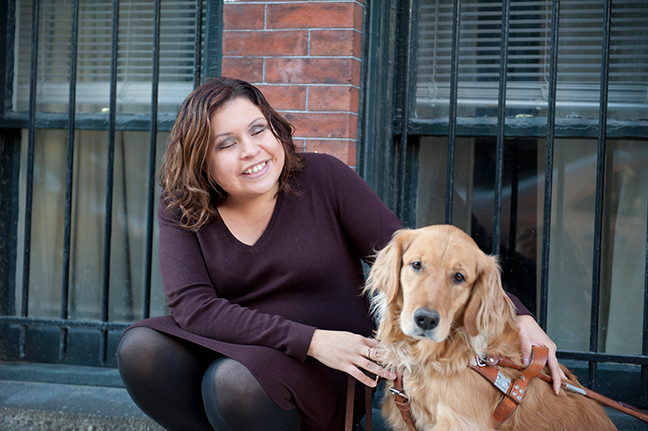
Nowadays, you’d be hard pressed to find anyone over the age of six who doesn’t know what social media is, and just as the general public has embraced these networks, so have businesses and nonprofits.
So of the hundreds of thousands of nonprofits on social media, what sets the National Federation of the Blind apart? Why should people join us and/or fund us? The answer is simple: we change lives. Whether it’s putting a free cane in the hands of a person who hasn’t been able to get around independently, advocating for changes to laws on Capitol Hill, establishing BELL programs across the country so that blind children can practice their Braille skills, or giving away thousands of dollars in scholarships, the NFB really does work every day so that blind people can live the lives we want. Ours is a story worth sharing, and today the most powerful way to do that is through social media. I know that for many, the idea of using Facebook or Twitter is daunting, but I can assure you, it’s as easy as one, two, share.
Let’s start with a bit of history. In 2004 Mark Zuckerberg, a student at Harvard, created thefacebook, a website designed for his fellow students to connect with one another. It was very simple back then and one of its draws was the exclusivity of it. The site quickly expanded to grant access to all students with a .edu email address. By 2006, Facebook was available to anyone age thirteen and up. More features were added, and today it is a robust platform on which we can share every bit of our lives if we want to. Once you’re signed up the amount of content you create is up to you. You can do anything from occasionally posting a picture or status update to giving your network a play-by-play account of your day complete with photo, video, and web links. Organizations, such as the NFB, can leverage the page feature which allows users to create profiles specifically about the company or nonprofit they want to showcase. Most of our affiliates and some of our chapters and divisions have very active Facebook pages.
In 2006, just as Facebook was being opened up to the world, Twitter came along. A couple of friends wanted a way to send messages to the internet using text message, and they called their invention Twitter. Though much simpler to use, it is much more limiting in its features. For example, a Tweet has a limit of one hundred and forty characters. However, that is more than enough to share Federation news. You can also upload pictures and video to Twitter, but these options can end up taking up all of your character count. The best way to post is to say a few words and then send your followers to a web link.
Though there are other platforms such as Linked-in, Pinterest, and SnapChat, Twitter and Facebook are the most popular and accessible.
So now that you know the background and basic functions of the two platforms, let’s take a minute for a short vocabulary lesson, starting with Facebook. The two words you need to keep in mind are: like and share.
To like something in the normal sense of the word is to approve of, appreciate, agree with, or believe in something. That’s exactly what it means on Facebook, only the secondary definition is to hit the “like” button. It looks like a hand giving a thumbs-up, and this is something you want for your posts; you want people to “like” them. The more likes, the more popular your post is.
Sharing posts is also something you want, even more than having people like your post. When someone shares your post, all of the people in their network of friends see it, including people that you don’t know and aren’t friends with. In this way, your post can spread and be viewed by thousands more, and might reach someone who needs the NFB in their life.
On Twitter the case is very similar. You want people to “favorite” (like) and “retweet” (share) your posts.
So now that you know the basics, how do you use your newfound knowledge to spread the Federation word? It’s quite easy! You can always start by liking and sharing the NFB’s posts. You can find the national organization on Facebook by searching for “National Federation of the Blind,” and liking our page. You can find us on Twitter by following @NFB_Voice. Most affiliates have established social media pages that you can follow and share content from. You can also simply write your own posts about how the NFB helps you live the life you want. Your networks will like and share your words, and they just might reach someone who needs to hear our message of love, hope, and determination.Media Share
