Of Sleeping Dogs and Prancing Ponies: It's Time for the NFB to Act on Discrimination Against Blind Hams
by Curtis Willoughby
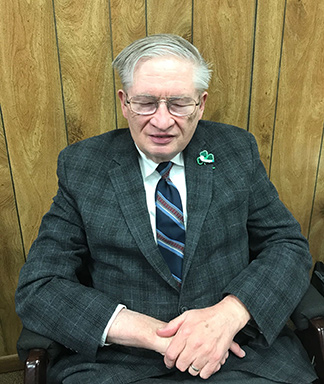 From the Editor: Curtis Willoughby spent his career as an electrical engineer, no small feat given that the school to which he applied did not want to take him. In addition, more than a few would-be employers doubted his ability to do a job they might have. Curtis is a licensed amateur radio operator, more commonly known as a ham radio enthusiast. The largest organization representing amateur radio operators is the American Radio Relay League (ARRL), and as you will see from the email that is part of Curtis’s article, the organization publishes four magazines. Foremost among them is a publication called QST, a code meaning calling all stations. For a number of years this magazine has been made accessible by the National Library Service for the Blind and Print Disabled, but the technical content of many of the articles requires more than an audio representation. Amateur radio operators also participate in contests in which part or all of a weekend is given to a competition for the number of other operators one contacts, the number of states he or she may contact, or the number of countries he or she reaches. As Curtis notes, information from the library is often so delayed that blind amateur operators find the contests have come and gone before they read about them. This is not so much a criticism of the library but a statement that the ARRL should be producing accessible material and not rely on the library for the timeliness of its publications to blind people. Here is what Curtis says:
It has been several years since the National Federation of the Blind Amateur Radio Division had an all-out effort to get the nation's amateur radio organization known as the American Radio Relay League (ARRL) to eliminate its discriminatory practices against its blind members. We have been like sleeping dogs, but the ARRL just gave us a big kick. It publishes four magazines on the web in a form that is inaccessible to the blind, while claiming that all of its members can read them online.
When we were actively pushing for literature accessibility, several of the members wrote our ARRL board members concerning this discrimination and were ignored or told that someone would look into it. As unbelievable as it may sound, sometimes we were told that we should be satisfied that the ARRL's premier publication, QST, was available through the Library of Congress. Never mind that QST is delayed about a month to allow for it to be recorded, which often causes blind hams not to be able to obtain the rules for contests until the contests are over.
Many other groups and individuals are worked up about this, too, but none of them are as well organized or as influential as the NFB. It is time for us to act in such a way that will get the discrimination eliminated once and for all! I am planning to prepare a resolution for the Resolutions Committee this year that will condemn and deplore this discrimination and will demand an immediate end to it.
We have a lot of good friends in Congress now, but none so good as one who attended Dr. Jernigan's “caucuses” as described in the James Omvig book Jernigan in His Own Words. He has been our friend ever since, and I think he would count it a privilege to get some ARRL leaders into his office and read the riot act to them. It might go something like this: “Now you folks go out there and clean up after these ponies, and don't you leave anything lying in the street either, or we will have to crack the whip, do you understand!”
Here is an email I received from a ham, David Allen, from New Zealand:
Hi, Curtis. Seeing this should have excited me. It only frustrates me because I know that it doesn’t mean what it says. True, I am a member of this organization [ARRL], but my numerous attempts to get true accessibility on its radar has gotten me nowhere. Therefore, I am hoping you may be able to help. I got your address in an article on the NFB website. I might indeed find lots of good reading in QST and the other magazines, but only if I were sighted. Can we ever make them get it? The notion that my needs are met by QST that is being served up by NLS is laughable. I would hope that a resolution at this year’s convention might address this discriminatory practice.
Here is the email David received from the ARRL, precipitating his letter to Curtis:
ARRL members now have digital access to all four magazines! No matter your level of experience in ham radio, you’ll find articles and stories for you.
New ARRL Member Benefit
ARRL members will now receive digital access to four ARRL magazines beginning with its latest issues. Joining QST and On the Air on a digital platform will be the bimonthly editions of QEX, the Forum for Communications Experimenters, and NCJ, the National Contest Journal. QEX includes articles, columns, and other features ranging from construction projects to more advanced technical information in radio theory and practice. NCJ targets radio amateurs active in radio sport and includes scores, technical articles, contributions from top contesters, and advice for radio sport enthusiasts alike.
“All members can enjoy specialized content and a high-quality reading experience whether at their desk or on the go. Offering this suite of digital magazines is an opportunity for us to give members more of what they want while adding value to ARRL membership,” said ARRL Publications Manager Steve Ford, WB8IMY. ARRL’s digital magazine editions provide replicas of the printed editions with added functionality, allowing users to fully search issues, enlarge pages, share articles, and more. All four are easily accessible through any web browser from members-only links. The free ARRL magazines app also supports downloading complete issues for offline reading. It is available for iOS and Android in the Apple App Store and Google Play. For more information visit www.arrl.org/arrl-magazines.
Editor’s Note: For more information on this issue, contact Curtis Willoughby by email at [email protected].
Media Share
