What Does It Mean to Be Part of a Civil Rights Organization Today?
by Maurice Peret
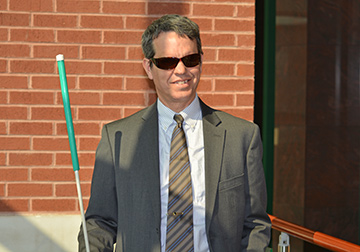 From the Editor: Maurice is a frequent contributor to these pages. He and I love one another, and with each of his articles we wrestle about which of his views belong in our magazine and which belong in different forums. He is always good natured about my extraction of pearls of wisdom he has inserted, and though I extract them, I admire his attempt to make sense of the world and his different take on politics, economics, and the danger of corporations. With thanks for what he contributes to us, here is what he has to say about not making too much of our differences when they lead to conflict and estrangement:
As I sit before my PC, planning learning activities for youth and employment engagement opportunities for adult job seekers and employers for our Federation, I am constantly aware that the office that I occupy in either our Jernigan Institute or the condominium from where I telework twice per week sits inside the Baltimore City limits, within the state of Maryland, inside the United States of America, and in an ever-shrinking world.
The blind of America need jobs, independence, financial and personal security, along with the hard-won rights that must be persistently defended. There are more of us than we are aware of who lack basic housing, medical care, and decent living and working conditions. In these circumstances, we are well integrated into the social and economic fabric of millions struggling to keep hearth and home together.
That we co-exist in a class-divided society plagued by disparities of all kinds is indisputable. The point is to properly understand the nature and scope of these systemic inequities. Individuals may be forgiven for harboring certain misunderstandings based often upon a lack of experience or exposure to groups of people who are different from us. However, the same megaphones controlling the airwaves, educational institutions controlling learning platforms and materials, and profiteers governing our ability to sell our labor power, they who would point to us individually for being to blame for prejudices, are in fact the very ones who have denied and continue to deny equal access on a hierarchy of power and money. We should not allow ourselves to be taken in by the real divisions that exist among a tiny minority who monopolize the message by deflecting their prejudices onto us. Division makes news, tribalism makes news, and news sells advertising. So I am reluctant to let my world view be largely shaped by the cynicism, mistrust, and tribalism that are all too focused in the public arena.
The organized blind movement is but one clear example to me that we, in our vast majority, are the solution, not the problem. The obvious remedy to all the noise, of course, is to just simply tune out, turn off, and focus upon the immediate important work before us. On the other hand, the world happens around us and affects us in ways of varying urgency and severity. Some of us worry about putting enough of our earnings away for retirement. Others of us are concerned about where our next meal will come from or if there will be enough work to avoid being laid off in the short term.
I find it useful to draw from proven strategies shared by the mighty mass movements in our proud history. The most fundamental is instilling a strong sense of individual empowerment, self-efficacy, and a positive self-concept. This is a common thread through the Black rights movements both in this country and abroad, the sense of connection to ancestral lands communicated through the authentic lived wisdom of elder leaders among indigenous peoples, and the close family, social, ethnic, and linguistic ties of immigrant communities. Only when we can recognize our own individual worth and human value can we even begin to see ourselves as part of a powerful collective movement of people, many just like us, capable of societal transformation.
Tremendous examples can be found in any of the publications on the website of the National Federation of the Blind https://nfb.org/publications. There, as our banner reads, you will find the true and authentic voice of the nation’s blind. There is no shortage of stories about overcoming adversity, but the emphasis is not so much upon external adverse factors as it is on the internal and collective response to them. They are not merely stories of victims of societal misunderstandings about blindness but about blind people themselves and others who overcame those misperceptions.
How can our local chapters better position themselves to respond to a diversity of needs? How can our local chapters tap into the resources available in our communities in order to point blind and low vision folks with whom we come across in the right direction? How can they be more visible and accessible in the community? In other words, how do affiliate and chapter members find blind members of our communities, and how do they find us?
Our chapters and affiliates must be like magnets, attracting anyone experiencing vision loss to our dynamic movement. Members should be encouraged to function like little magnets in the community where we will inevitably meet friends and family members of blind and low vision folks who need the Federation in their lives. Even as we more clearly define what responsible membership looks like in the Federation, we should also be available to meet new candidates for membership where they are in their blindness journey, understanding that, for most of us, it took years to absorb and internalize the philosophical tenets of our organization. We should also take an interest in what new members have to share about their lives. In a sense, we should be prepared not only for them to join us but also to join them. That is essentially what won me to the Federation: the fact that a leader in my affiliate took enough interest in what I was involved in to recognize in me the value in my potential contribution to the movement.
It seems to me that something has been lost or forgotten as we strive to extricate ourselves from the imposed isolation due to the COVID-19 crisis. As wonderfully creative and innovative as we have been in putting teleconferencing tools to our maximum use, there is simply no virtual substitute to getting together. This struggle against inertia, I believe, is also the challenge before any effective social movement worthy of the name. I, for one, am looking forward to reacquainting myself with the enumerable benefits of interacting, people-to-people and person-to-person, in the full range of activities that define our movement from conventioneering, marching, working, and playing together.