Resolution and Concerted Action: Colorado Business Enterprise Program in Disarray
by Kevan Worley
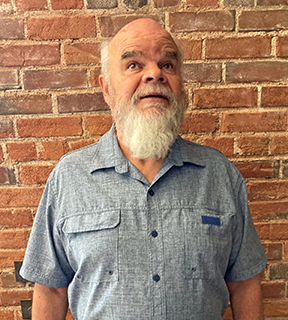 From the Editor: Kevan Worley is a longtime Federationist and leader. He is well known for his work on our Independence March, his leadership in the National Association of Blind Merchants, and his service as a national representative. He wears many hats, one of them being a blind merchant. Here is what he said in the March issue of The Blind Coloradan:
The Blind Coloradan Blog has been relatively silent regarding the Colorado Business Enterprise Program over the past year. We have heard from operators and staff about challenges that are seemingly crippling the program from meeting both its statutory and human mission. As members of our Federation may recall, at its 2019 in-person convention this affiliate unanimously passed a resolution expressing our concerns about the lack of transparency, lack of progress, and lack of active participation in the Business Enterprise Program. At that time no progress had been made to meet the expectations of the general assembly that passed a sweeping piece of legislation in 2016 that should have dramatically expanded the program. (Note, after the passage of HB 16-1048, with the Division of Vocational Rehabilitation (DVR) under the stewardship of the then-director of the Colorado Department of Labor and Employment (DLE) Ellen Golombek and the director of DVR Steve Anton, a group of blind operators, staff, and other stakeholders was convened to develop the procedures and marketing efforts to expand the program consistent with the legislative mandate. However, changes in management and staff at the agency left that initiative moribund.)
[Taken from the Colorado Legislature]: (HB 16-1048 Expand Scope Business Enterprise Program. Concerning modifications to the Business Enterprise Program to be administered by the Department of Labor and Employment under its authority to administer Vocational Rehabilitation programs. Governor Signed 5/4/16 Sponsors: Representatives Primavera and Lundberg).
Following our 2019 resolution, our then-president, Scott LaBarre, had at least two meetings with the director of the Colorado Department of Labor and Employment, Joe Barela, to express the concerns of our organization. Those meetings extensively focused on the manner in which the elected committee of blind operators was being excluded from having a significant role in the hiring of management and staff. Judging from the motion and resolution passed by the elected operators committee on March 18 of this year, little has changed in the program. (Note, Joe Barela remains the director of The Colorado Department of Labor and Employment, CDLE).
Resolution and Motion
Elected Committee of Blind Operators
Adopted on March 18, 2022
WHEREAS, the Colorado Department of Labor, Division of Vocational Rehabilitation, Blindness and Low Vision Services Unit, Business Enterprise Program (BLVS-BEP), also known as the State Licensing Agency (SLA), is subject to the Randolph-Sheppard Act (Act), 20 U.S.C. § 107 et seq.; and
WHEREAS, the Act mandates that the SLA actively participate with the elected committee of blind operators in all “major administrative decisions and policy and program development” of the Program, 20 U.S.C. § 107b-1(3); and
WHEREAS, currently, the position of Lead Business Consultant is vacant and needs to be filled carefully for the health of the Program; and
WHEREAS, next to the BEP Manager, the Lead Business Consultant is absolutely critical to the effective management of the Program, making the hiring of the Lead Business Consultant a “major administrative decision” for which the Act mandates that the SLA actively participate with the Elected Operators; and
WHEREAS, upon information and belief, there may be an effort by the SLA to fill this position internally and not go through a full employment search where the Elected Committee and operators would have input on such an important hiring decision which would be a violation of the Act: Now, therefore
Be It Resolved by the Elected Committee of Blind Operators of Colorado that we urge the Colorado Department of Labor and Employment through BLVS-BEP to engage a full employment search and process to identify and hire the next Lead Business Consultant; and
Be It Further Resolved that pursuant to the Randolph-Sheppard Act’s mandate of active participation, we insist that the Department through BLVS-BEP fully engage the Elected Committee in the process to search for and hire the next Lead Business Consultant in compliance with the Randolph-Sheppard Act.
By way of full disclosure, yours truly has been somewhat reluctant to write about the Business Enterprise Program for fear of reprisal. I am a licensed operator doing business under the program. Moreover, it must be said that, in large part, the program has met its responsibility to continue to pursue the military dining contracts at the Air Force Academy and Schriever Air Force Base. There have been no overt threats against me or other operators for our advocacy.
As we go to post, Krista Hedlund, manager of Blindness and Low Vision Services (BLVS), has responded to the operators’ resolution above, although she was not willing to clearly and forthrightly discuss the hiring of a new lead business consultant with the operators on Thursday, March 17, citing what she said was the necessity for her to get clearance to do so from State Human Resources. This posture seemed odd to committee participants and other long-time observers of state government. It seemed to lend credence to the Federation’s assertion of a complete lack of transparency and lack of an inclusive welcoming culture in the program. From the perspective of leading operators, the formalized mechanism for the hiring of a lead business consultant, with a short turnaround time from within state government was only one part of a larger and more insidious threat to the program. The current agency has been extremely effective and parsimonious in the way they have chosen to provide a “by the book” management of the program. Meanwhile, blind operators are engaged in the serious hard work of managing their businesses and working long hours under difficult circumstances throughout the pandemic. It is the contention of many, including former staff, that rather than seeking a culture of inclusion, uplift, and success, this agency seems committed to a paternalistic approach that condescends and denigrates the humanity, capacity, and former successes operators have brought to this program for decades. Operators and staff have commented that the current regime at the agency has acted as though the program was invented when they came to town. The real-life experiences of operators and recently departed staff have been treated with disrespect boarding on disdain.
The dust-up between operators and BEP management, as demonstrated by the resolution above, is just the latest in a long string of disagreements between operators and the current administration. Without significate change in the management of The Business Enterprise Program of Colorado, a dysfunctional culture and denial of opportunity will become normalized. The National Federation of the Blind of Colorado will not allow the behavior of the current management to continue. This is who we are; this is why we have The National Federation of the Blind.
As a concluding note, given the state of conflict within the program, we feel it is important to point out that this article is a statement of fact, reporting, and opinion. In no way should it be considered menacing or threatening. There is no place in our society for disrespectful behavior in the workplace.