The 2022 Convention Roundup
by Gary Wunder
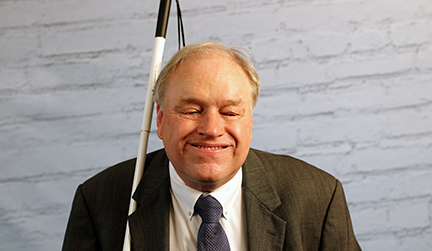 What do you think of when you hear the word July? For me it is summer heat, the season well underway, but mostly what I think of is the annual convention of the National Federation of the Blind. It is the time when I am both recharged for a year and at the same time temporarily exhausted by the effort of attending and then writing about it.
In 2020 and 2021, we harnessed the benefits of technology that let us meet together while remaining safely at home. We had spectacular events, but there is something no electronic involvement can replace: the sheer joy of being together, talking together, sharing meals together, and much of it beginning or ending with a handshake or a hug. In part, this is what 2022 will be remembered for, not so much in the record books but in the hearts and minds of those who attended.
For some of us the decision about whether to venture out was difficult, and people with spirit and loyalty were divided on the issue. Some of us decided the risk of COVID was still too great; others of us decided we would play the odds, risk the consequences, and restart being together again. More than two thousand of us made the decision to be together. We tested for the virus, and most of us wore masks to do what we could to avoid our event being a super-spreader. Although some of us did catch the disease, as we knew would be the case, we were fortunate that it was not widespread and didn't result in serious illness or death.
For many of us, the long season of COVID has meant a period of isolation that made mobility skills we normally consider second nature require more of our attention. Not only did the Convention pose unique mobility challenges, as in the case of the elevators, but it required us to “harness our inner patience” as President Riccobono remarked. The Convention experiences were like none other in terms of getting around. With that inner patience, the confidence that we can do it, and the determination not to be imprisoned by challenge but to be liberated by it, this, like other conventions, is what makes our gatherings so meaningful and life-changing.
Seminar Day began on Tuesday, July 5, and what a jam-packed offering of programs were available. During the Convention, one could attend more than 180 different meetings. In this article we cannot begin to describe all of them, nor can we do justice to any of them. It is the responsibility of those who conducted the meetings to do what they can to get us information that we can publish, and the Braille Monitor has every reason to believe they will.
The National Organization of Parents of Blind Children has what we have sometimes called a convention within a convention. While parents are certainly encouraged to attend our general sessions, this division has made certain that it is well worth the time and expense to attend a convention of the NFB, if your primary interest is in finding out information about where your child is now and how you can be more active in seeing that they receive quality service. The length of the parents’ agenda exceeds that of many agendas used for state conventions, and it was absolutely filled to the brim with anything you might want to know as the parent of a blind child.
When the Convention began on Tuesday morning, the Parents Division hosted a seminar on math accessibility, independent movement and travel, and advocacy in difficult times. There were also sessions on remote Braille instruction, how to raise your expectations and defeat your fears, and even a session on blind kids and interacting with robots.
The Ambassadors Committee is comprised of volunteers who work hard to make the Convention run smoothly. While we certainly have paid staff who attend the Convention, there is no way that they can do all the work that needs doing without dedicated volunteers. The most visible role of the Ambassadors is to serve as human talking signs, and we proudly call these volunteers Marshals. On every morning from July 5 to July 10, this group met at 8:00 a.m. to coordinate the day’s activities, discuss problems, and figure out innovative ways to address them.
Our Jernigan Institute conducted a number of seminars including a Structured Discovery approach to access technology training, advocating for accessibility, and discussing the accessibility of the Chromebook, an Android computer that is much cheaper than many Windows equivalents. There was even a fascinating seminar on how to produce tactile graphics and 3D models.
Freedom Scientific was back with its ever-popular seminar on “What’s New with JAWS, Fusion, and ZoomText.” The always anticipated update from HumanWare also took place, its title being “Glad to Be Back: News from HumanWare.” As a retailer, that has made a significant effort to see that its products and services are accessible, Target was once again presenting and asking for feedback from its customers.
The National Federation of the Blind Sports and Recreation Division held a number of seminars, one of them being “Making Health and Fitness a Lifestyle” in which we were encouraged to learn about being lean and how we do that as part of our everyday activity.
As we work harder to recruit people with intersecting disabilities, it is important for us to learn about other resources, networking possibilities, and deepening our understanding of members. A session was devoted to this activity. The NFB Employment Committee held a Job Seekers Seminar, a session devoted to making and reading art tactilely was offered, and the National Association of Guide Dog Users conducted a session on how guide dog users could become their own best advocates. Since websites are often the first contact people will have with us, we need to increase the number of people who can make significant contributions to them, so a seminar was held for affiliates and divisions to discuss how to go about learning how to do this work.
Since a big part of reaching out and including others involves communication, we had a session on the importance of learning about inclusive and consensual language. The Technology Evaluation Committee’s Exhibitor Showcase gave all interested exhibitors a chance to talk about what could be seen when people came to the exhibit hall, and a report of that meeting will be found elsewhere in this issue.
Given that our organization is diverse in the religious beliefs of its members, the agenda was filled with meetings such as The NFB in Judaism, the second annual meeting of the NFB Muslims Group, and the meeting of our Communities of Faith. We also took the time to celebrate the Islamic Eid al-Adha, one of the major holidays in the Islamic calendar.
The students helped to finish off Tuesday evening by holding a division mix and mingle event, a Rookie Roundup was available for newcomers to the Convention or those who wanted a refresher, and, of course, many of us created our own activities with walks, meals, and much conversation.
Wednesday morning began with a discussion of Braille by the Committee for Advancement and Promotion of Braille. Given how important this tool is to us, the committee discussed its teaching, its delivery, and strategies for bringing more improvements to increase its availability. To provide an environment of inspiration, mentorship, and strategies for success to the next generation of blind Latina trailblazers, Mujeres of the Federation also held an early morning meeting. “Blind and Mina: A Different Type of Brown” held a seminar for members who are American Arab, North African, Middle Eastern, South Asian, Muslim, and Sikh. Their goal was to discuss unique challenges in post 9/11 America. Blind Asian Americans also met to connect and to share practices and strategies for approaching vision loss in a culture in which blind people are too often hidden away and discouraged from involvement outside the family.
The National Federation of the Blind Resolutions Committee conducted its annual meeting, and anyone who observed it learned a great deal about the issues confronting blind people and the strategies proposed to address them. Equally important, however, we learned that people with greatly diverging opinions can talk with and not around one another and share their disagreements without being disagreeable. The great resolve to come from the committee was that we would do our best to be positive, constructive, and, after all of our competing opinions were heard, we would leave with a unity of purpose that can shine for other movements in the country.
One of the flashier titles on the agenda was “Apple, Alexa, or Alexander Graham Bell,” and the subject of this intriguing title was NFB-NEWSLINE®. For several decades this invaluable service has been helping blind people get information in a free-of-charge, easy-to-use package. Many people’s favorite way to use the service is over a cup of coffee, but human beings cannot live on liquid alone, so a session on “NFB in the Kitchen” was held to discuss how to put some spark and inspiration into one’s daily bread.
Mostly when we think about the work of the Sports and Recreation Division, we think about physical activity. At this convention, however, the division sponsored a workshop on “Mindfulness and Meditation.” The relaxation techniques they taught might be really helpful if one decides to “Learn to Host an NFB Youth Program,” a learning session sponsored by successful coordinators of our numerous youth events.
When Thursday morning came, so did the meeting of the National Federation of the Blind Board of Directors. President Riccobono began the board meeting with the traditional roll call, and all of our members were present with the exception of our dearly departed treasurer, Jeannie Massay. In her honor, the board was wearing the color purple. To commemorate Jeannie and others, we began with the traditional moment of silence, noting that this year we have lost many Federationists and a significant number who were prominent leaders in the organization.
After the Pledge of Allegiance to the American flag and the Federation Pledge, the President expressed his enthusiasm for how great it was to be back together. This convention, like all others before it, came with certain strains: for some of us it meant being mobile after a long period of immobility; for others it meant wearing a mask when we weren’t always comfortable with one; for still others it meant exercising patience as we navigated a noisy hotel, an elevator system that was different from many we have faced before, and the heat of the outdoors and the chilliness of the indoors. Many of us believe we are best when we are challenged, and this convention provided just the right balance of challenge and nurture.
We next reviewed positions on the Board of Directors, noting first those that would continue and then those that would be up for election this year. Of course, this year would require us to fill one extra position, being the one formerly held by Jeannie Massay. Amy Buresh called for the floor and announced that she would not seek another term. She said that sixteen years ago she was elected to this board, and she cannot fully express the honor of the assignment and the confidence that it brought to her knowing that so many people believed in her leadership ability. She believes she should now pass that honor to someone else, and she gladly forfeits the title of board member for the title of member, knowing that this is the backbone of what makes up the National Federation of the Blind.
John Fritz called for the floor, welcomed everyone to the Convention, and announced that he has attended more than thirty conventions. He became a board member fourteen years ago, but one of his core beliefs is that it is very important for us to train and pass on responsibilities and skills to others. He learned this as a parent. As a parent, he has learned about passing the torch from other life activities, and this is what he intends to do by no longer seeking election.
Amy Ruell asked for the floor and began by expressing her appreciation for being able to serve on the Board of Directors. She wishes not to stand for reelection. She very much respects our addressing issues of injustice while at the same time remaining true to our traditions. President Riccobono recognized Amy's service, some of her roles being less visible than the one she played as a board member. The Convention gave all of those who decided not to run in 2022 a big round of applause, both in appreciation for all they have done, and what we know they will continue to do.
Normally we hear from the chairperson of the board at the end of the board meeting, but in this case the chairperson was also the president of the host affiliate, the National Federation of the Blind of Louisiana. Here is some of what she said:
Good morning and welcome to New Orleans! Your Louisiana crew is so honored and delighted to be your host for our 2022 National Convention as we welcome you to the Big Easy where there is something for everyone … from our world-renowned restaurants (hundreds within just a short distance from our hotel) to the vibrant nightlife to our rich cultural heritage and music… there is so much to explore. Isn’t it uplifting and restorative to be together again?
Whether you are joining us virtually—and we want to give a special shout-out to our First Lady Melissa and all of those online, or you are here in person—isn’t it refreshing to step out of our daily routine and join together at this convention, the world’s largest gathering of blind people, in a spirit of unity and love? Together, we share our message that blindness does not stop us from living the lives we want.
President Riccobono, your unwavering faith, steadfast commitment to listening to our members, attention to hearing all voices and experiences, openness to change and growth, your democratic and loving leadership has moved our organization to the next level. During the past three years since we last gathered in-person, we have faced challenging and difficult times, and our transformative work is more far-reaching because of your leadership and because of the courage and work of so many! As demonstrated in the history of New Orleans, our diversity and resiliency make us stronger! And, like this incredible city steeped in so many diverse traditions, the most important part of the Federation is the people, our members, who are the driving force behind our revolutionary work! I also want to take a moment to acknowledge and welcome those attending their first convention—so happy you are here with us to share your hopes and ideas! Thanks to Tracy Soforenko and our Jernigan Fund Committee and all who helped with our Rookie Roundup last night!
As we gather together and experience all that New Orleans has to offer, you will notice the influence of our multi-cultural historyNative American, Acadian, African, Spanish, French, Irish, Italian, and Haitian. This diversity is reflected in the food, architecture, and music of our city! Whether you are sampling some jambalaya, étouffée, a po’boy, a muffuletta, or enjoying some beignets—those delicious squares of fried dough covered generously with powdered sugar at Café du Monde, the café of the world, while sipping café au lait—or cruising on the mighty Mississippi listening to jazz, or simply being entertained by any of the amazingly talented musicians who perform all around the city, including on the streets of the French Quarter, we are sure this trip to the Crescent City will keep you coming back again and again! Don’t forget our convention t-shirts designed by our beloved artist, Merilynn Whittle. T-shirts are gold with black writing and feature the NFB logo on the front with a picture of a beautifully detailed riverboat on the back and the New Orleans skyline along with New Orleans and laissez les bons temps rouler, which means, let the good times roll, and we are certainly doing that! Shirts can be purchased online at nfbla.org. You’ll want to purchase yours to commemorate this wonderful week!
I want to express my sincere gratitude to all of our dedicated NFB of Louisiana members and LCB staff, students, and alumni who have so generously given of their time, creativity, and energy leading up to this convention and throughout this week. They exemplify the heart of our Federation, and I commend them for their tireless hard work!
We are carrying out the work of those who came before us who are no longer present, most recently in our Louisiana family: Don Banning and Tolita Mitchell, whom we have lost in this last year. But we feel their pride and strength, and it gives us motivation and hope!
As we reflect today on our past and dream together for our future, our dedication to each other and our belief in what is possible are restored! We hope that you feel energized, that your commitment will be renewed, and that you will take that spirit home as you work each day in chapters and affiliates to listen to each other’s stories and to help transform the dreams of all blind people into reality! Thanks to everyone for being here and for taking part in our convention! You are the reason we are here! Laissez les bons temps rouler, and let’s go build the National Federation of the Blind!
President Riccobono thanked the hundreds of volunteers who make the Convention work smoothly and also recognized that a big part of the success we have is due to the staff who do so much behind the scenes to make things work. To talk about convention organization and activities, he introduced the Chairman of Convention Organization and Activities, John Berggren. John said that one of his most exciting challenges for this convention would be to talk about things the way they used to be before Zoom. He noted that there were almost ten ways for people to access the agenda, everything from hardcopy Braille and print to a scheduling app. When it comes to the agenda, we shamelessly parrot Burger King: you can have it your way. John offered a big thank-you to the National Association of Guide Dog Users for sponsoring two guide dog relief areas. It is no easy matter to develop and maintain relief areas that will satisfy all of the guide dogs who come to the Convention, but every report this writer has heard offers tremendous commendation to the division and its leaders.
There are two restaurants in the hotel, but to make things more convenient and affordable, a grab-and-go facility was created for us. Lunch was available from twelve until two, and dinner from five until seven. At twelve dollars and fifteen dollars respectively, this was a bargain given hotel prices. The food was also excellent.
In addition to our in-person session, the board meeting and the general sessions of the Convention were broadcast on Zoom in both English and Spanish. Information was also captioned so that it could be read. As usual, Daniel Martinez was very active in bringing our convention to Spanish speakers, and this he continued to do even while he undertook the rigors of being a scholarship winner and the demands that this involves.
Dan Burke serves as the chairperson of our Ambassadors Committee, the core of volunteers that helps to deal with issues before they become problems, address problems once they surface, and help all of us navigate through areas with which we are unfamiliar with voice marshaling and other activities. This year Dan was assisted by Co-chair Corbb O'Connor, and both gave a superior effort that made the Convention pleasurable for us all.
President Riccobono reviewed the top ten states and concluded by announcing that registration as of the board meeting stood at 2,322 attendees. Given the concerns about the virus and those among us who judged it unwise to travel, we considered this a very good initial number.
The president announced that our next convention, that being 2023, will be held in Houston, Texas, from July 1 to July 6. The rates for the Convention will be $119 for up to four in a room, and the Texans amongst us vowed that it will be one of the greatest conventions we have ever seen.
President Riccobono made his traditional announcement about the respect with which we treat all of those who come to our stage. Division that we see in our country is no excuse for bad behavior on our part, and, whatever the message, we want the messenger to go away knowing they were treated with dignity and respect. When we disagree, ours is a contest of ideas, not a judgment on the worthiness of someone who may hold a different opinion.
Much to the glee of yours truly, President Riccobono requested articles for the Braille Monitor, our flagship publication, as well as encouraging people to be active readers. This magazine belongs to all of us, so let us make it the valued resource it can be by reflecting who we are and the future we intend to shape.
Last year we rebranded Meet the Blind Month and now call it Blind Equality Achievement Month. This is our chance to get out into the world and to share our message of hope and opportunity for the blind. Now is a great time to start thinking about the projects we will do and to share the good news about who we are and what we do in the world. To begin that month, we are going to take the Presidential Release on the road, and chapters are encouraged to make a proposal that President Riccobono and Vice President Pam Allen come to their location for the release. Chapters interested in hosting the Presidential Release should write to [email protected] no later than August 28.
Our Code of Conduct was the next topic of discussion, and President Riccobono noted that everyone attending the Convention was asked to agree to it. Those unfamiliar with it can find it on our NFB website, and it was available at the Convention in Braille and print as well. From December 1, 2021, to present, 131 complaints were filed. Ninety-four of those concerned sexual misconduct or abuse. Of those ninety-four, eight led to expulsions, twenty-four people were suspended, five people were put on probation, and seven reports led to other disciplinary action. Thirty-four of the ninety-four reports were not substantiated. One report was withdrawn, and seven reports resulted in people being banned from further participation in the Federation. Banned is a term we use when people who committed offenses were not members of the organization so cannot be removed from membership. Instead, they are prohibited from participating in Federation activities. Of these ninety-four, we still have eight pending reports that are being processed.
Last year the Federation created a SAFE Fund for those who have been victims and who may benefit from financial assistance. This fund is being administered by a third party. We do not get involved in the details of what each person gets or why, but we do get information about how many people were assisted and how many dollars were spent. So far sixty-six people have been contacted about using the fund, but the fact that they have been invited does not mean they will use the offered assistance. So far we have distributed no money from the SAFE Fund because its activity has just commenced, but the fund remains for people who have suffered abuse in the past and for those who may experience misconduct in the future. While we hope this doesn't happen, we believe that the Fund remains as a positive support to create healing within the organization.
A constitutional amendment was recommended by the Board of Directors, and the announcement was that it would be considered on Saturday and read during general session on July 8. It appeared in the June issue of the Braille Monitor and was discussed on the Presidential Release. President Riccobono urged everyone to read it, think about it, and if the Convention decides that the proposed amendment is not what we need, reject it and help devise one that is. Otherwise, the amendment should be passed, and the Constitution will further clarify how we deal with the alleged misconduct of members.
In an attempt to recognize all religious holidays and not plan events that conflict with them, we have generated a five-year calendar listing them. This convention falls on a significant Muslim holiday, so we will try to avoid that in the future, and the agenda shows a number of activities throughout the week for Muslims to honor the holiday.
Shawn Callaway is one of the co-chairs of our Diversity, Equity, and Inclusion Committee, and the other is Collin Wong. Shawn addressed the gathering, observing that our DEI efforts have helped to build the Federation and have helped those who are already members to feel more comfortable in our organization. Shawn announced that Mr. Malcolm Greene is a new member of our staff who has been hired to coordinate our national efforts to support diversity, equity, and inclusion. Anyone with questions or suggestions about our efforts should write to [email protected] or write directly to Malcolm at [email protected]. Please note that Mr. Greene spells his name with an E at the end.
Denise Avant addressed the board on the subject of membership. The co-chair of the Membership Committee is Tarik Williams. Given that Jeannie Massey was the previous chairperson of the Membership Committee, Denise began by recognizing her, noting that her name will forever be synonymous with the phrase “Federation family.” Every day Denise, Tarik, and all of the members of the Membership Committee are motivated by Jeannie’s spirit as we build the National Federation of the Blind. We want to use the programs that we have already created and at the same time be open to innovations that will increase our effectiveness. The committee has several requests: that chapter presidents participate in monthly calls, that affiliate presidents appoint a membership chair for their affiliate, and that all of us advertise the open house which is available for those who are not yet members but wish to ask questions of our leadership. When we say that we want to expand and innovate, this really means that we want to hear from you. Please write to us at [email protected].
The Distinguished Educator of Blind Children is an annual award we proudly present to recognize someone truly outstanding, and Carla McQuillan took the microphone to present this award. Her presentation and the remarks of the 2022 winner are found elsewhere in this issue.
This day is often known as Board Meeting Day, but it is also known as Division Day. President Riccobono reminded divisions that they have reports that are due on August 15 and that we want to know about changes in officers and board members. These should be given to Beth Braun, and if she receives them in Braille, the President will be her reader.
Much of the work of the Federation is done by committees, and all are appointed by the President with the exception of the Nominating Committee. Every member is invited to express their interest in serving on committees. This can be done at the information desk when at the Convention or by filling out a form on our website, the address being https://nfb.org/about-us/divisions-committees-and-groups/committee-interest-form.
Sponsors and exhibitors play an important role at our convention, and one of our sponsors this year was Netflix. It announced that it would be hosting an exclusive showing of Stranger Things a few blocks from the hotel, and free concessions would be available.
Another of our significant partners is the World Blind Union, and President Riccobono mentioned the concert that was held in April to raise funds for blind Ukrainians. There is a new chief executive officer at the World Blind Union, and although he was invited and accepted our invitation, the coronavirus he contracted in his world travels necessitated some change in plans. Given this, he joined us by connecting through the Zoom platform, and he expressed the hope that, since he was already in New Orleans and his symptoms were declining, he might be able to join us before the end of the Convention. CEO Marc Workman said that he first learned about the National Federation of the Blind as a college student, using this new tool called Google. It led him to speeches that virtually consumed days of his time. He said that it is safe to say that he would not be in work with the blind had it not been for the speeches and the philosophy that he found from the National Federation of the Blind. Marc concluded his remarks by thanking the Federation for its participation in the concert and the check that came from that participation. He said, "because of you, thousands of Ukrainians, inside and outside Ukraine, are going to receive support and assistance that they would otherwise not have received. So please, Twitter, YouTube, or whatever you prefer. That is the best way to keep in touch with us and to stay updated on and hear the latest on the Ukrainian Unity Fund. Thank you, President Riccobono; thank you to everyone, and I hope to be able to join with you soon."
Patti Chang came to the microphone to discuss many of our outreach efforts. She asked that all convention attendees do what we can to thank the sponsors and exhibitors who are supporting us. She then thanked each sponsor individually, and we take this opportunity to do the same:
Elite: Kellogg
Platinum: eSSENTIAL Accessibility, Google, Horizon Therapeutics, Meta, Microsoft, UPS Foundation, Vanda Pharmaceuticals, Vispero, and Wells Fargo
Gold: Amazon; Brown, Goldstein & Levy, LLP; Oracle; Target; and Waymo
Silver: Aira Tech Corp, APH ConnectCenter, AT&T, Cruise, HumanWare, iSenpai, JPMorgan Chase & Co., Market Development Group, and Pearson
Bronze: American Printing House for the Blind, Chris Park Design, Charter Communications, Educational Testing Service, Election Systems & Software, McDonald’s Corporation, Tusk Philanthropies, and VitalSource Technologies
White Cane: The Chicago Lighthouse; Clusiv; D2L Corporation; Democracy Live; Duxbury Systems, Inc; En-Vision America; Envision, Inc.; GoodMaps, Inc.; HIMS, Inc.; IKE Smart City, LLC; Independence Science Tactile Engineering; Leader Dogs for the Blind; McGraw Hill; National Industries for the Blind; Personal.ai; and Rosen, Bien, Galvan & Grunfeld, LLP.
We have a new donate page that is easier to use and integrates with our Connections Database. The Federation still operates our vehicle donation program, and anyone we can get to donate a vehicle should call 855-659-9314. Green Drop still operates in Maryland, Virginia, Pennsylvania, Delaware, New Jersey, New York, and the District of Columbia. Anyone who can get donations from those states should call 888-944-3767. Patty concluded by mentioning our legacy society, the Dream Makers Circle. Anyone interested in leaving a legacy gift and joining the Dream Makers Circle should contact Patty at extension 2422 or writing to [email protected]. One of the benefits of being a member of this group was a special chance to meet and participate in a question-and-answer session with Dan Parker, the man who broke the land speed record that was discussed extensively in the May issue and which would be featured in a presentation by Dan later in the Convention.
Everette Bacon took the microphone to talk about the Give $20 program, the goal being to match a most generous donation from HumanWare of $50,000. This we were able to do using generous contributions from our members and a very nice donation from Netflix.
At the end of his presentation, Everette proudly presented from the National Federation of the Blind of Utah a check in the amount of $14,250 received from a bequest. President Riccobono thanked all donors to the Give $20 campaign and expressed appreciation for the spirit of sharing that the donation from Utah represents.
Sandy Halverson chairs our Shares Unlimited in the National Federation of the Blind Fund, which we affectionately refer to as the SUN Fund. In this fund we accumulate money to provide sunshine should we encounter rainy days in our financing. As much as we hope this will never happen, it is prudent that we have a savings account, and Sandy Halverson is a tremendous champion for reminding us that having savings on hand is prudent whether we are talking about individuals or our organization. Currently there is just over $1.6 million in the fund, so if we are to sustain our programs for a significant period of time, it is clear that we need to pay more attention to this effort.
Scott LaBarre next addressed the board and the audience with a report on the Preauthorized Contribution Program known as PAC. This fund is supported by members who wish to give a monthly contribution to the Federation. It is a substantial part of our member-generated income, and one of its greatest values is that it is predictable. Last year we were very proud that we reached over half-a-million dollars annually in this program. Unfortunately, that amount has declined some, and our goal, of course, is to match and exceed it as the year goes along.
After Scott's PAC report came a presentation of the Blind Educator of the Year Award. The chairperson of the committee is Robin House, and her remarks and those of the winner will be found elsewhere in this issue.
One of our closest working partners is the American Action Fund for Blind Children and Adults, and President Riccobono announced that calendars for 2023 are now available. Calendars can be ordered from the Action Fund website starting in August or by writing to [email protected]. The Action Fund sponsored a Braille Book Fair, and 132 boxes of Braille books were shipped to New Orleans for this event. Our partner operates the largest free Braille book program in the world, and more information is available on the website.
Last but not least, the Action Fund sponsors the Braille Readers are Leaders Contest, and more information about it will be available in the fall. Watch the Braille Monitor for more details as they emerge.
Tracy Soforenko is the chairman of our Jernigan Fund, which for more than twenty years has supported first-time attendees to come to the national convention. This year eighty-nine individuals and families were supported in their effort to attend. Our only request of winners is that you share with us your stories. Please send your story to [email protected] or by calling 410-659-9314, extension 2020. As an example, Tracy gave his own story. He wanted to become a blind parent but was a little unsure about whether he could do it. His first convention of the National Federation of the Blind dispelled his doubts. Not only is the Federation a family, but it helps us build our own.
Kathryn Webster chairs the Jacobus tenBroek Memorial Committee. The tenBroek Fund owns the building at 200 East Wells Street, and many programs serving the blind operate from this location, including our national headquarters. As many will know, significant renovations were made to our national headquarters for hosting events. This work, as well as the maintenance and the upkeep of any facility, requires that we pay attention to its funding.
Cayte Mendez was next introduced in her capacity as the chairperson of our Scholarship Committee. Each finalist in the 2022 class was given an opportunity to address the assembled, and those remarks, as well as ones made by the chairman, will appear elsewhere in this issue.
After hearing from our scholarship finalists, the Board of Directors voted to fund a similar program in 2023. The motion passed unanimously.
As the organization’s legal counsel, Scott LaBarre was given a few moments to discuss cases. He started by urging that anyone having legal issues they wish to discuss begin by contacting Valerie Yingling at extension 2440 or by writing to her at [email protected]. Scott can also be reached by writing to [email protected] or by calling him at extension 2424.
USA Hire is a company that does employment assessments, and our understanding is that they are not accessible. People having information about this are encouraged to contact us. Anyone who has encountered barriers in Section 508 compliance is likewise encouraged to reach out to us. We are quite concerned that problems in Section 508 compliance seem to be getting worse, even though it has been thirty-six years since the law was enacted. We intend to turn this around.
The Federation has been promised by the Social Security Administration that they will make all of their kiosks accessible, but experience does not bear this out even though the promise was made several years ago. Please let us know about your experiences with these kiosks and whether or not you have found them usable.
Anyone interested in our legal services should go to NFB.org/legal. There you will find toolkits that can be used to help resolve commonly encountered problems. Of equal importance are the numerous surveys we have that help us set legal priorities and develop strategies.
Scott ended his report by encouraging everyone to pay attention to the Presidential Report for a sampling of the cases in which we are involved.
President Riccobono adjourned the meeting, urging all to participate in the activities of the afternoon and evening and to be with us for the opening session that would occur on the following day.
The afternoon and evening of Thursday were filled with meetings, many of them discussed in the general overview presented earlier. Our DeafBlind Division met to discuss relationship building, communication challenges, and DeafBlind-friendly alternative techniques. Our ever-present and active Merchants Division met to discuss new and creative ways to flourish in a difficult and ever-changing economy. The Assistive Technology Trainers Division met to encourage current and aspiring technology trainers and to discuss how to build sustainable literacy skills through remote training. The Performing Arts Division held a workshop on voice acting and voiceover work. The Diabetes Action Network invited blind diabetics to learn about being self-sufficient and managing their disease while at the same time recognizing the deficiencies in medical technology and doing what they can to address them.
Each of our three training centers held an open house where their students could meet, reunite, and discuss the unique program offerings for those thinking about center training. These three events did not occur on the same day or at the same time, but all of them offered the opportunity to turn NFB philosophy into everyday life skills that further our ability to live the lives we want.
The American Action Fund for Blind Children and Adults held its Annual Braille Book Fair, and books selected were boxed and shipped to happy Braille readers by volunteers.
The Science and Engineering Division presented an ambitious program featuring several interactive graphics methods, blind-friendly math education strategies, a discussion of the NFB SABER project for students, The Pearson Nemeth Code Curriculum, and the mentoring available through the division. The always active Employment Committee presented yet another seminar, this one for blind people who are employed but who wish upward mobility. Earlier this year President Riccobono encouraged each affiliate to appoint a historian, and a session to introduce these volunteers to their new jobs and to one another was held.
The first inaugural meeting of the Blind Survivors Group was held, the intention being to reflect, support, and plan for future survivor and victim-centered programming within the Federation. “LGBT+: Let’s Talk about the Plus” held a hybrid meeting to discuss definitions that sometimes confuse people who are not sure whether or not they belong.
Since money provides the way for us to purchase the tools required by our builders, a meeting of the White Cane Committee was held to discuss fundraising both at the national and the state level.
On Friday morning, with enthusiasm President Riccobono dropped the gavel on the first general session of the Convention by announcing, "The 2022 convention of the National Federation of the Blind in person is in order! We're back together again!" Referring to the last two years in which we used the Zoom platform, he flippantly remarked, "no mute button required," but then proceeded to repeatedly ask for our attention, the in-person opportunity to chat having built up over our prolonged absence from one another.
The chairman of the NFB Judaism group was called on to do the invocation, and Stewart Prost asked that we join him in thanking God for all that we have and for all that may be given to us. After the invocation, the Convention was treated to a $200 door prize. Some of the prizes were for those in attendance and some for those who registered to participate online.
Pam Allen was introduced to kick off the formal welcoming ceremonies offered by the National Federation of the Blind of Louisiana. Much of the presentation featured the Jackson All-Stars Band, who marched up and down the hall with a variety of music found in the Big Easy. Darryl Durham gave us an additional welcome, he being from the Treme Artists Collective, an organization that does much to promote the city and its rich heritage.
We were treated to the attention of some New Orleans majesty, her name being Queen Kalinda Marie Laveaux. She defines herself as a Mardi Gras Indian, a black Indian, and right now she is a renegade queen. She came dressed in a suit made of cloth, beads, and feathers, it being quite attractive. The suit took her six months to make, and she said the work is difficult enough that some people take up to a year to construct their apparel. But, as the Queen is quick to point out, this is not really a matter of construction but a matter of creation, because as one is beading her suit, she is adding spirit through meditation, putting her intention inside the suit, putting her energy inside the suit.
Chef Harriet, a woman of eighty-one years, talked about the food traditions captured by New Orleans and prepared pralines on stage. Those close enough to the stage could smell them as they cooked, and what a treat they turned out to be.
The celebration ended with moving remarks by a most precocious ten-year-old named Narjis Karimipour. Her remarks were well-written and quite moving. Like all of this celebration, it is best heard and not read. Experience it for yourself by going to https://nfb.org/sites/nfb.org/files/2022-08/01_welcoming_ceremonies.mp3
Our celebration of freedom was hosted by the National Association of Blind Veterans and its president, Master Sergeant Vernon Humphrey, Retired. The ceremony began with the entrance of the color guard and our reciting the Pledge of Allegiance. We sang the National Anthem, led by Angelina Angelcyk.
A group from the Performing Arts Division sang “God Bless America,” and President Humphrey concluded his remarks as follows: “The thing I learned while I was in the Army is that it's about family; it's about taking care of one another. The Marine Corps has a wonderful saying, Semper Fi, Simper Fidelis, meaning, always faithful, and we are faithful to our family. When I got out of the Army, I was looking for that family that I no longer had, and I found it here at the Federation. So, I thank you. We greatly appreciate the Federation, we greatly appreciate you, Mr. President. Thank you all for what you have done for us, and hopefully we can continue to do for one another.”
In our roll call of states, there were a number of prominent themes. The most prominent of these was a special callout to President Riccobono and Vice President Pam Allen for all they have done over the last several years to see the Federation through difficult times with generosity, optimism, compassion, and a desire that all be heard. The second theme was that many states brought a large number of first-timers to the Convention.
Others who answered the roll call made comments that are deserving of notice here:
The state of Alabama acknowledged with sadness the passing of Joy Harris, but she was assured that her work in Alabama and beyond would forever live on. After California gave its requested information, Tim Elder said, "I personally know the heart, the commitment, and the passion that Pam and Mark have for all blind people. Both of you have received unfair personal attacks and criticism of you as you have been working hard to improve our movement. Any winning leadership regards constructive criticism as useful, but unproductive criticism is detrimental to the whole community. Yelling from the sidelines is easy: leading from the front lines is harder. Mark, Pam: I stand with you, I support your leadership, and I’m excited to see where you are taking us. As long as the Federation is fighting to ensure the rights of blind people to live the life that we want to live, California will be at your side, and so will I. Let's keep building the Federation."
When Colorado got its turn, Scott LaBarre started to take the floor and was reminded by Jessica Beecham that there had been an election. She began her presentation by sending a special thank-you to Door Prize Queen Diane McGeorge who was listening to the presentation from her new home, which is still in Colorado. The state of Connecticut expressed its sadness at the passing of longtime member and former president Jackie Billy, a person who worked so hard not only to strengthen the affiliate but to lead the membership efforts of the National Federation of the Blind. Idaho expressed special appreciation for and recognition of Jan Gawith, the sister of James Omvig. Jan is celebrating her sixty-first consecutive convention in 2022. She celebrated her ninetieth birthday in June.
Iowa acknowledged the passing of James Omvig, Ted Hart, and others. Tom Page announced that the governor of Kansas signed the Parents Rights Bill into law on June 8 of this year. Amongst all of the progressive programs that are being conducted in New Jersey that were recited, President Linda Melendez acknowledged the passing of Joe Ruffalo.
Missouri was represented by President Shelia Wright, who announced with pride that Missouri has passed the BRITE Act. President Audrey Farnum of Oklahoma acknowledged with sadness the passing of former president Jeannie Massay. The great state of Rhode Island announced that at the end of June, the governor of that state signed a bill that will allow blind people to vote by mail accessibly and to return their ballots accessibly. Tennessee announced that it is now celebrating two independence days, one of them being July 4, and the second being July 1. The reason for the new Independence Day on July 1 is because this is when the governor of Tennessee, with the concurrence of the state legislature, made the payment of subminimum wages in Tennessee illegal. In this legislative session the affiliate also got an accessible prescription label bill passed, so it is clear that legislatively they are on the move, and once again it was great to hear James Brown at the microphone.
When Utah came to make its presentation, Everette Bacon acknowledged Karl Smith for the attendance at his forty-fifth national convention.
The roll call of states was concluded with the acknowledgment of fifty-one delegates, there being no person present from the state of Wyoming. The President announced that our virtual registrations numbered 1,454 at the conclusion of the morning session. He concluded the morning session with a reading of the top ten states that registered the most participants, a generous door prize was drawn, and we adjourned for a lunch break, knowing that the afternoon session would begin with the Presidential Report.
When the gavel fell and the first general session of the Convention was adjourned, in addition to grabbing lunch, attendees could attend a session on “What’s New with Amazon Accessibility.” One might have been hard-pressed to decide what session to attend given that “What’s New in Google Accessibility” was held at the same time. It is gratifying to see these and other high-tech corporations paying attention to access for the blind, and the Federation has played a large part in urging the creation of and supporting these efforts within our nation’s technology industry.
A “Leader Dog Meet and Greet” session was held so that those attending could learn about free services provided by Leader Dogs for the Blind. “New Aira Desktop App Enhances School and Work” was the title of a session where this innovative company could talk about enhancements to its visual interpreting service that now go beyond the smartphone.
Promptly at 2 p.m., the second session of the Convention was called to order. First on the agenda was a report from our President. As it always does, the Presidential Report both describes our victories and our challenges over the last twelve months and at the same time begins to set the course for what our next twelve months will involve. The magic of hearing this report presented with live feedback from the audience is one which we missed for too long and one which audio readers of the Braille Monitor will recognize immediately. The well-written prose is not only evidenced in the delivery but can be felt under the fingers of every Braille reader and seen by all who take this magazine in print. The Presidential Report will immediately follow this article.
The conclusion of the report was greeted by prolonged applause and the repetition of the president's name in the rhythmic style that articulates each syllable. The standing ovation not only represented appreciation for a good report, but it was equally important for sending the message that our determination to stand strong for the principles of the National Federation of the Blind and those with the courage and wisdom to lead it is unshakable.
Next to talk about the power and magic of partnerships were the CEO of HumanWare, Bruce Miles, and the president of the American Printing House for the Blind, Craig Meador. Before the presentation, everyone in the audience was given a wand-like device that was in fact a noisemaker and a lightbulb. The challenge to us was to raise this device in the air and press its button anytime we heard the word “partner.” It was great fun. The partnership of these two giants in the blindness field and the National Federation of the Blind is to develop “The holy Braille,” a multiline tablet capable of displaying Braille and graphics. A full report of the partnership between the American Printing House for the Blind, HumanWare, and the National Federation of the Blind to build this innovative device will appear elsewhere in the fall.
Moving on is a good transition phrase to describe our next agenda item, which began with a video presentation about the record-breaking effort of Dan Parker and the National Federation of the Blind to set a new land speed Guinness World Record for the fastest car driven blindfolded. The video was a splendid introduction to what would be an even better presentation by Dan Parker himself. The video and Dan's remarks will appear later in the fall, but part of what made his presentation really special is that Dan Parker did not consider the Federation just a sponsor; Dan Parker is a Federationist who remained with us throughout the Convention and actively participated in activities that went beyond his racing and his accomplishments. He is one of us and believes in all of us.
The constitutional amendment proposed by the board of directors was next on the agenda, and it was read by the assistant to the president, Beth Braun. President Riccobono announced that discussion of the amendment and a vote would occur on the following day.
The three training centers of the National Federation of the Blind are an important part of providing the training that makes the philosophy we espouse real. They demonstrate that actions come from words spoken with intention and commitment. In turn, new words come from those actions and take us to greater heights. To make this presentation were Joanne Wilson, Julie Deden, Pam Allen, and Jennifer Kennedy. Their remarks will appear in full later in the fall.
“Federation Safe: Blind Survivors Leadership and Our Shared Commitment” was the last item to appear on the afternoon program. This presentation was made by Kathryn Webster and Danielle Montour. Making sure that people are safe is as important a task as any we can perform when conducting Federation events, and so clearly was this articulated in this presentation that it will appear in an upcoming issue.
President Riccobono announced the sad news that Ruth Stewart of Maryland came to the Convention, suffered a heart attack, was taken to intensive care, and there she died. We are all saddened by the loss of Ruth and can only hope that her recent memories of preparing for, coming to, and beginning to participate in the Convention were an ending she would have desired to a life well-lived.
With the drawing of a door prize, the Friday afternoon session of the Convention was adjourned.
As soon as the gavel fell, a meeting of the National Federation of the Blind Research Advisory Council was held to discuss current research, getting published in the Journal of Blindness Innovation and Research, and sharing ideas for increasing the research and academic presence of the NFB. Those wishing to talk more about the code of conduct process were encouraged to have a discussion with our chief investigator, Tonya Baña. There was a two-hour opportunity for those who wanted to visit the exhibit hall, while a number of us interested in communication got together to discuss best practices and tools for getting out our message. The big event of the evening was the “Welcome Dance and Reception” sponsored by our Louisiana affiliate, who constantly urged us to “let the good times roll!”
To begin Saturday morning, President Riccobono announced that today, Saturday, July 9, 2022, was the Muslim holiday al-Adha, and we very much appreciate our blind and sighted members who participate in the Muslim faith and still made the sacrifice to be with us during this holiday.
The person who presented our invocation is a staff member at SAAVI Services for the Blind, and the prayer was given by Abdul Schooley. He said that the Muslim holiday we celebrate today is a time to spend with family and loved ones, and there is no bigger family than the Federation family.
Our first item of business was the financial report, and, as might be expected, it was a mixed bag. The report for 2021 found our income up for the year, both in terms of what we generated and what came from our investments. Even with our increased expenses, we finished the year a little over $2 million ahead. All of the information that is contained in the report can be found online for those wanting more detail.
Given the reversals in the stock market, the financial picture from January 1 through June 30 of 2022 are not as positive. Despite the diversity of the investments we have, some losses in today’s market are inevitable. Of the $3.2 million we are down, most is attributable to changes in the stock market, but we are in the stock market for the long haul, and experience suggests that it does have its ups and downs but is good for those who can maintain their course. Our revenue numbers look good for this time of the year, and our expenses are below those expected. So, while we are certainly concerned and keeping a watch on our finances, no one need hit the panic button. We must continue to do what we do to fund the programs of the organization, and we should all take pride in the way we raise money and manage our financial resources.
Traditionally we have done a roll call of states, but this year we have asked that contributions and pledges be made ahead of time. Contributions are crucial to what we do, and we appreciate the fact that state affiliates and divisions have thus far donated $109,275. Some divisions and affiliates intend to donate later, so although your contribution is not listed in this number, it is nonetheless appreciated. A list of these numbers will appear prominently in a future issue.
Elections were our next item of business, and Pam Allen was acknowledged to give the report of the Nominating Committee. The recommendations were as follows: president, Mark Riccobono; first vice president, Pam Allen; second vice president, Ron Brown; secretary, Everette Bacon; treasurer, Norma Crosby; board position number one, Shawn Callaway; board position number two, Carla McQuillan; board position number three, Adelmo Vigil; board position number Four, Shelia Wright; board position number five, Donald Porterfield; board position number six, Barbara Manuel; and, if Everette Bacon was elected to the office of secretary, the Committee recommended Grace Pires of Rhode Island for board position seven. This would be a one-year term.
The chairman kept the floor while the position of president was elected. Mark Riccobono was elected unanimously. He thanked everyone for the faith and the trust that we have placed in him through this election and noted that none of the work that he does would be possible without the support of his family. The love, the commitment, and the honest caring we share is what nurtures his promise to serve as president and to do so in whatever capacity we may wish in the future.
Pam Allen was nominated and elected by acclamation. Pam thanked those who had unanimously elected her, talked about the special bond she feels when called to service, and pledged to do everything she can, along with President Riccobono and the rest of the board, to advance the cause of blind people.
Ron Brown was nominated for the position of second vice president, and he was elected by acclamation. Ron introduced himself as the husband of Jean, said that his motto is "living is giving," and expressed his sincere appreciation for being allowed to serve on the Board of Directors since 2001. The day of this election happened to be the thirty-fifth anniversary for Ron and Jean, and he gave her special thanks for not only allowing him to do the work that he does but helping him in it.
Everette Bacon was elected by acclamation to the position of secretary. Everett said that not only was he proud to be elected to the office and to accept all the work that comes with the job, but he is elated to be serving with people who are not only his colleagues but his friends. He gave a special callout to Jim Gashel, a person who served for a long time as secretary, and said that he was delighted to follow in his footsteps.
Norma Crosby was nominated by the committee and was elected to the position of treasurer unanimously. Norma said that this day was a bittersweet day for her. She is always willing to serve, and yet she is sad for taking over from a woman she loves so much. Norma promises to do the same work with the same enthusiasm that Jeannie did, and she expressed her appreciation to all who have shown their trust in her.
Shawn Callaway was elected to fill board position number one, and his election was unanimous. Shawn acknowledged the three departing board members, his wife Latonya, and President Riccobono. Shawn notes that the Federation has given him many titles that he values, but the one which means most to him is the title of father. Before he became a Federationist, he did not believe he could be a father, but through joining the organization and meeting a lot of outstanding parents, he decided that he could. His daughter Camille appeared with him as he made his acceptance speech. Both received a tremendous round of applause.
Adelmo Vigil was nominated to fill board position two and was elected by acclamation. He thanked the Convention for allowing him to serve, gave great credit to his wife for her support, and promised to do everything in his power to help us transform dreams into reality.
For board position three, the committee nominated Carla McQuillan, and she was elected by acclamation. Carla related that she lost her vision when she was ten years old, and the only person she knew who had similar vision loss was her brother. He believed that blindness was the reason why one could not do what he or she wanted. Because this was her impression of what blindness would mean, Carla spent twenty years pretending she was not blind. In 1988, she came in contact with the National Federation of the Blind through a scholarship, having every expectation that she would take the money and run. Instead, she found competent and capable blind people who gave her a new lease on life and a commitment to give as well as to receive. Next month Carla and her husband celebrate their forty-first anniversary, and she credits him with much of what she has been able to do for the Federation.
President Riccobono noted that, not only should we congratulate Carla and thank her for her previous board service, but we should also acknowledge that she has been running NFB Day Camp for twenty-six years, an accomplishment worthy of tremendous praise in itself.
For board position four, the name of Shelia Wright was placed in nomination. Without opposition, she was elected by acclamation. She said that she came to the Federation as a struggling blind person, having been told that she would never make it through half a semester in college. When the National Federation of the Blind, through its then-President Donald Capps, weighed in on her behalf, rehabilitation services in South Carolina looked at Shelia in a whole new light. The Federation believed in her so much that frequently it asked her to do things she thought she could not do, but with every accomplishment, she became the woman she is today. She expressed her appreciation for being elected to the board and promised to give everything she has to the position.
Donald Porterfield was nominated to fill board position five. He was elected by acclamation. He attended his first national convention in 2011 and realized that this was exactly where he belonged. He thinks it is very important that the story of the blind be told, and he is certain that he wants to play a part in telling it through the organization. He concluded by thanking his Federation family for giving him the opportunity to serve.
For board position six, the committee submitted the name of Barbara Manuel. Barbara was elected by acclamation. In accepting, she said: "I stand before you honored yet humbled by this tremendous opportunity to serve in this remarkable organization at a greater level. . . . I don't believe that any blind individual in the United States has not been positively touched by our organization, and it is our mission to advance this further and further until equality is the norm and not the exception."
The last nomination from the committee was to fill the board position vacated by Everette Bacon. The name of Grace Pires was placed in nomination, and she was elected by acclamation. Grace recounted the warmth with which she was received at her first chapter meeting and her first state convention. She knew she was dealing with family, and it is to advance the cause of this family that she proudly pledges herself.
The Convention gave yet another round of applause for our board members who will relinquish their seats at the end of the Convention. Their service has been stellar, their commitment unshakable, and what they have given from their hearts will assure that they continue to hold a space in ours.
Denna Lambert next came to the microphone to address us on the topic of “Living the Life She Wants: Staying Grounded and Shooting for the Moon with Federation Philosophy.” She is a former scholarship winner and has been a member of the Federation for about twenty-five years. She now works for NASA, and as she looks at the proposals they are encouraged to fund, she sees efforts like the Blind Driver Challenge differently from the way she did eleven years ago. Dena's presentation was first-rate, and it will appear later in the fall.
Jack Chen followed Dena to the microphone to address us on a similar topic: “Living the Life He Wants: Stoking Employment Opportunities through Movies, Sports, and Achievement.” He is an important lawyer who works at Meta, but we invited him to talk about raising expectations through athletic challenge, teamwork, and occasionally not only exceeding one's comfort zone but doing so way beyond what he thought he could do.
Jack began his story by saying that both he and his brother were mostly written off by their parents because in the Chinese culture in Taiwan, the belief was that blind people could accomplish next to nothing. He went on to explain how he raised those expectations for himself and decided that he needed to help raise the expectations for all blind people. To do this he would engage in a great cycling challenge and would invite the National Federation of the Blind to be an executive producer of a movie that he hopes will reach the minds and the hearts of the business community and of blind people. The movie is entitled Surpassing Sight, and members were invited to an exclusive showing later in the evening. Jack’s remarks will appear in this magazine later in the fall.
The Convention next turned its attention to the constitutional amendment that was read on the previous day. It was read once again, and the floor was opened for debate. President Riccobono reminded us that a constitutional amendment must pass with a super majority, meaning that at least two thirds of the delegates present and voting must approve it. After several members spoke for and against the amendment, the Convention moved to a vote. The results of the voice vote being unclear, a vote of the delegates occurred, and the amendment passed with 80 percent of the delegates voting yes.
At the conclusion of the Saturday morning session, there was another chance to visit the exhibit hall and the Independence Market. Those wanting to know what was new with Instagram and Facebook were invited to a session in which accessibility was discussed. For some there was the matter of getting lunch, a process made much easier by the arrangements made for an on-the-go meal.
When President Riccobono convened this session on Saturday afternoon, he began by asking whether we had anyone in attendance who was at a convention in the 1950s. Tom Bickford shouted out; he will turn ninety years old later in July. As noted earlier, Jan Gawith is attending her sixty-first national convention, is ninety years old, and was a longtime Idaho resident who now lives in Kentucky. Of all the decades called out, the group, which seem to be the loudest were the First-Timers, definitely a good sign for the Federation.
We next heard from the Honorable Troy A. Carter, a congressman representing the Second District of Louisiana, the first African-American to be elected from the District to the United States Congress. His topic was “A Champion for Equal Opportunities: Making a Difference from Louisiana’s Second Congressional District.” Congressman Carter represents the city of New Orleans and served as the youngest-ever floor leader in the Louisiana House of Representatives. He is a champion for advancing civil rights and eliminating economic disparities. It is pleasant to observe that Representative Carter's cousin attended and joined a Federation meeting last month. Congressman Carter supports all of our legislation, and his remarks will appear later in the fall. He concluded them by saying: “Thank you for your attention, thank you for your advocacy, and thank you for what you do to make our world a more equal and accessible place. I am proud to be your partner in this work to extend equal opportunities to all, and I stand ready to assist in every possible way. God bless you, and thank you for the opportunity to be with you today."
Everette Bacon has long been interested in movies and in particular seeing that those movies have descriptive audio. The Federation has also been interested in this topic, first concerning ourselves with whether emergency information scrolling across the bottom of the screen would be articulated and later coming to demand that description not be considered as a nice, charitable thing to do but something that is essential in both education and entertainment. To moderate the panel "Who Owns This Story: Audio Description as Art Not Charity," Everette came to the stage. He was joined by Elisa Beniero, dubbing title manager for Netflix; Rick Boggs, CEO and founder, Audio Eyes; and Roy Samuelson, founder, The Audio Description Network Alliance and Kevin’s Way. This panel discussed the history of audio description, the expertise required to do it right, the importance of providing good training to develop that expertise, and the special role that Netflix has played, not based on government mandates but on its own decision to provide quality entertainment for all. The questions and answers that were discussed will certainly be of interest to those who did not hear them, and they are available at https://nfb.org/sites/nfb.org/files/2022-08/12_who_owns_this_story.mp3
No convention would be complete without a review of our advocacy and policy efforts, and to present it was our capable advocacy and policy team. John Paré has been its executive director for fifteen years. The presentation he and his team addressed was “Owning the Change We Want: A Report from the Federation’s Advocacy and Policy Department.” John's talk focused on the importance of persistence and not confusing temporary setbacks with defeat. As a nonpartisan force fighting for the rights of blind people, we are unstoppable. John’s presentation will appear later in the fall, as will the comments of two of his capable staff members: Jeff Kaloc and Justin Young.
Eighteen resolutions were passed by the Resolutions Committee and presented for consideration by the Convention. Resolutions are the way we make clear our Federation policies, and they do much to help us decide on the programs that we will pursue. As you would expect, some resolutions were passed unanimously, and others generated some debate. All of the resolutions that were passed will appear elsewhere in this issue.
With the passage of the final resolution, the afternoon session was adjourned, and members were invited to attend a screening of Surpassing Sight, a film that documents the journey of Jack Chen and Dan Berlin. The Twentieth Annual Showcase of Talent was held and provided an enjoyable evening of entertainment.
Sunday morning began with an Eid al–Adha prayer service in honor of this major Islamic holiday. Devotions were also held for those of the Christian faith, and at 9 a.m. sharp the gavel dropped and the Sunday morning session was called to order.
The session began with an invocation by Treva Olivero, the first vice president of the National Federation of the Blind of Louisiana. Two door prizes were given: one for a virtual attendee and one for someone in the room.
Our first presentation of the morning was given by Suman Kanuganti, the title of it being “Owning Your Creative Content: Crypto Currency, Accessibility, and the Organized Blind Movement.” In his remarks Suman talked about the evolution of the internet; first, people simply read what was posted on mainframes; then came the ability to interact through applications; now we have what Suman calls Web3, the ability to be creative and to put our own data on the internet to share with the world. Now that we can and do put it there, the question is who should own that data and the extent to which we should be able to access and control it. Suman's remarks will appear later in the fall.
Because our Executive Director of Blindness Initiatives Anil Lewis fell ill, we moved to the next presentation on the agenda which was entitled “Stretching the Dimensions of Nonvisual Learning: Blind-Led Youth Programming and Engineering.” It was hosted by none other than Dr. Natalie Shaheen, the project director of the NFB SABER project, the NFB EQ Program, and an assistant professor at Illinois State University. Each chair in the convention hall contained four pieces of origami paper and six index cards. The object was to be creative while at the same time following directions to make something of these objects. As we were given instructions, music was played while we carried them out, and in some cases former students presented videos talking about their experience with these programs. Madeline Mau is a high school junior who lives in New Jersey. She talked about the difficulty of actively participating in STEM programs given the attempt of her teachers to steer her away from courses, the lack of accessible materials, and a mindset that was conditioned to say that perhaps this work was fit only for people with vision. She told us about the NFB EQ program and how it has changed her perception about what she can do in the STEM field. Her remarks will appear elsewhere in the fall.
At the end of a complicated set of instructions in which members of the Convention created and then helped others, the result after folding and tearing was the creation of a cube. The point of the presentation was for us to come to understand that STEM isn't visual; STEM is spatial. To listen to this presentation and attempt to follow its instructions, go to
https://nfb.org/sites/nfb.org/files/2022-08/15_stretching_the_dimensions_of_nonvisual_learning.mp3
The next agenda item was “Accessibility Awareness on a Global Scale,” and its presenter was Jennison Asuncion. Jennison is one of the motivating forces behind the creation of Global Accessibility Awareness Day. After his experiences with several events dedicated to bringing an understanding of accessibility to the tech community, Jennison tried having one of his own. It was mildly successful, but he wasn’t satisfied. One evening while reading through Twitter, he came across a person who thought that the effort should be a global one, and together he and Joe Devon decided that they would declare May 9 Global Awareness Accessibility Day. Jennison contacted his accessibility friends, Joe did the same for his technical friends, and on May 9 of 2011, there were about fifteen events that took place around the world. Global Awareness Accessibility Day has now been moved to the third Thursday of May, and the hope is that in 2023 we will see GAAD events in all fifty states and in many local communities where we have chapters. To learn more about GAAD and how to participate, go to accessibility.day. The website name was recommended to Jennison by President Riccobono, who thought that there could be no effort better deserving of this name than the one headed by Jennison and Joe. To hear this presentation as it was delivered, go to https://nfb.org/sites/nfb.org/files/2022-08/16_accessible_awareness_on_a_global_scale.mp3.
“Creating Content with Accessibility as the Default: Celebrating Drupal’s Olivero Theme and Calling for More Blind Contributors” was the next topic on our agenda, and it was ably presented by Mike Gifford, senior strategist, CivicActions and Drupal Core Accessibility Maintainer. Mr. Gifford talked about his intention to make Drupal accessible when he started in 2009, believing that it might take one or two years. It has now taken well over a decade and is an ongoing process. Drupal accessibility was given great visibility by Rachel Olivero, and a version of Drupal bears her name. Mr. Gifford’s remarks will appear later in the fall.
Being quite concerned about websites, and believing that both by law and the need to set an example the federal government should be a model of accessibility, the message of the next presenter was especially welcomed. Anne Raish is the principal deputy chief for the Disability Rights Section at the United States Department of Justice, and the topic that she brought was “The Right to Participate Fully in Twenty-First Century America: Civil Rights Advancement at the United States Department of Justice.” She began by saying that at the Justice Department they recognize that nothing is more fundamental to participation in the twenty-first century than technology. If there was any question about the truthfulness of this statement, the pandemic provided any evidence we might need. Her goal in addressing us was to share the department’s role and tools as it relates to enforcing the ADA, recent work done in this area, and the way we can work together in advancing participation. While the Justice Department is currently working on regulations to make clear the obligation of all entities to be accessible, it believes that such requirements already have the force of law. Her remarks will appear in full later this fall.
At the end of her presentation, President Riccobono asked that the crowd affirm its belief that the Department of Justice has lots of tools at its disposal to bring about web and application accessibility and that these should be used with vigor. The crowd responded affirmatively and enthusiastically.
Registration having closed, President Riccobono announced that our final in-person attendance was 2,478, and fifty-seven of those came from foreign nations. In addition, 1,497 people registered for the Convention virtually, and we can see that many more listened and learned.
The last presentation of the morning was presented by the new director of the National Library Service for the Blind and Print Disabled. The new director, Jason Broughton, did not just show up for his presentation but was present throughout the Convention. He was warmly welcomed to speak on the topic “Leading through Literacy: A New Library Director Committed to Partnership with the Organized Blind Movement.” His was unquestionably a very spirited presentation filled with humor as well as very meaningful quotations such as "accessibility leads to discoverability which aids in literacy. Democracy depends on literate people navigating through the bureaucracy, dealing with the hypocrisy, being pushy about equality, ensuring there is diversity, while keeping their curiosity." This presentation will appear in full in an upcoming issue.
At the conclusion of Mr. Broughton's remarks, President Riccobono expressed his appreciation for the presentation and said that we would definitely stand with the library in our joint efforts to see that it is once again located on Capitol Hill. The morning session was then adjourned.
A number of divisions and affiliates had conducted raffles during the Convention, and on the adjournment of the morning session those drawings were held. Meanwhile “Help Us Shape the Future” was a listening session held by the National Library Service to show its latest technology and to recruit beta testers for the technology that is being developed. A session was held to get those interested in web technology to contribute to making Drupal even more accessible, and those attending the banquet had their last opportunity to do banquet exchange.
The Sunday afternoon session began with the annual presentation of the Dr. Jacob Bolotin Awards. Everette Bacon is the chairman of that committee, and this year was the first in which he could present these awards in person. The introductory remarks he made, the video with the comments of winners, a description of the information that appears on the award, and the remarks of the winner who won the largest prize of $20,000 appear in an article elsewhere in this issue.
“Going My Way: Driving Accessibility through Innovative Autonomous Transportation” was our second presentation of the afternoon, offered by Michelle Peacock, global public policy director for Waymo. We are putting ever more energy and attention into the topic of self-driving vehicles, and our work in this area has helped us build relationships with leading developers in the industry, Waymo being one of them. Waymo stands for a new way forward in mobility, with a mission to make it safe and easy for people and things to move around. The vehicles that Waymo develops run the gamut from fancy cars to large trucks, but the goal is not to sell one but to operate a fleet of these vehicles. This is the first company to have a blind person ride on public roads in a fully autonomous vehicle, and the presentation will appear in an upcoming issue.
President Riccobono moved the agenda along by saying: “Now we’re moving from transportation to “Transformation in Employment.” We first really got to know our next speaker through her legal work helping to advance civil rights for people with disabilities, including serving as our legal counsel in important efforts to advance competitive, integrated employment. We value her expertise and, equally as important, she values ours; that's why our partnership together is really powerful. As you heard in the Presidential Report, we are working together to find new, innovative ways to raise expectations. She is the founder and managing partner of Enable Ventures as well as founder and chair of SmartJob. Here is our friend and innovative partner, Gina Kline:
It is clear from her presentation that Ms. Kline believes that we have plenty of qualified and employable blind people, and what we need is to connect those people with the money that will allow them to become entrepreneurs. It is estimated that hundreds of thousands of jobs will be gone by 2030 due to automation and artificial intelligence, so it is up to us to make sure that we have quality access to technology and that we are part of creating replacements for the jobs that are lost. It is obvious through her companies that this woman believes in blind people, believes in the power of being an entrepreneur, and has many strategies to see that talent combined with opportunity and investment forges careers and economic success. Her remarks will appear in full later this year.
President Riccobono made these introductory remarks before our next presenter took the stage: "Our partnership with Kellogg has been growing over the years. I think the first time they participated in this convention is when they launched our partnership on the Braille Love Notes—yeah, that was pretty cool wasn’t it? This year they are our Elite sponsor, which is our top sponsorship level. Now some of you may not realize that to get to stand on the stage and speak to this audience, you don't get to pay for that privilege. So, as much as we love our Elite sponsor, it does not earn them the opportunity to come speak. That means that the fact we have invited Kellogg to speak indicates a deeper and more substantial partnership. We do not have a pay-to-play model in the National Federation of the Blind; you have to earn it!
Our presenter is the senior director of retail operations at Kellogg Corporation based in Battle Creek, Michigan. He has been at Kellogg for over twenty-eight years. In addition to his professional credentials, he exhibits the spirit of determination that we share in the National Federation of the Blind. During the COVID pandemic, he set a goal of running the Chicago Marathon, and in October, he did so, his third Marathon. Here to present “Diversity at Kellogg: a Commitment that Raises Expectations for Blind Empowerment” is a gentleman who I should tell you is also, in observance of our mask policy, wearing a mask that makes him look like Tony the Tiger. So please, welcome our grrrrrrrreat Elite sponsor, Wilson Ray."
It was obvious from the beginning that Mr. Ray not only came with prepared remarks that were delivered enthusiastically, but he was well aware of convention happenings and was a part of them in the days leading up to his presentation. He is proud of his time at Kellogg, proud of its direction, and proud that it is a good corporate citizen. His remarks will appear later in the fall.
Everyone in the world has been somewhat inconvenienced by the coronavirus, but as blind people we have found it particularly difficult when it comes to testing. First was the difficulty of getting tested when testing was a public affair. How could we get to a testing site? How far away would it be? Who would be willing to take us? Then came the advent of at-home testing, and we thought that at last we might have turned a corner. But our relief was premature because the at-home tests delivered by the government and made available for sale were not ones that blind people could use independently. The questions were remarkably familiar: who will help us administer the test, and who will be around to read it? While we certainly value our health, do we have the right to put others at risk in order to determine the nature of our sickness? So we went to the government, told them that our needs were not being addressed, and though the progress has been slower than we might like, we observe good faith responsiveness being made in the creation and distribution of at-home tests that blind people can administer and read.
The advent of the coronavirus is not only changing where we take tests but is expanding the number of tests that will be available for at-home administration. In the month of February 2022, more Americans took at-home COVID tests than took at-home pregnancy tests in all of 2021. This means that this is a great time to innovate and to work with the innovators to see that these tests can be administered and read by the blind. Through the persistence of the National Federation of the Blind and to the credit of the federal government, we have formed yet another partnership, one that will have a direct effect on our ability to remain independent and healthy. To speak to us on this issue was Dr. Jill Heemskerk, the deputy director at the National Institute of Biomedical Imaging and Bioengineering at the National Institutes of Health. Her topic was "Engineering a New Response: Transforming At-Home Testing through Partnerships with the Blind.” The intro music played for her was, of course, Hit Me with Your Best Shot by Pat Benatar.
Dr. Heemskerk began her remarks by saying "Wow, what a hoot!" She explained the transformative nature of home testing and the improvement in health that should be derived from it, but this cannot be done without us, and, as she said, "The big story today is our partnership with NFB to make home tests more accessible for people with blindness and low vision. . . . We completely agree and recognize that everybody needs tests that can be taken easily, independently, and confidentially." She stressed that all of the work around this testing must not stop with a single engagement but must result in long-term relationships with organizations that want to play an active part, and she said that NFB has been incredibly generous with its time, education, and resources. Her remarks will be published in their entirety in an upcoming issue.
Our next-to-last presentation of the day was introduced in this way by President Riccobono: "We've talked during this convention about the difficulties in getting support through the courts of this nation for the viewpoints that we hold about disability and equal access. One reason that we struggle with the courts is that, when you look at the judiciary, especially at the federal level, you don't see any people who exhibit the qualities that we have, especially as it relates to disability. In fact you might think by the folks who are serving on the bench that America doesn't have any people with disabilities. Well, our speaker here is a blind person, and he is serving in a significant position in the courts. And he's doing so in the state of Michigan. He's bringing his lived experience to our effort. You will recall that, in our lead-up to the 2020 elections, one of the states we worked in was Michigan on accessible voting. Blind people face trouble with voting all the time, but when one of the blind people who has trouble voting is a justice to the State Supreme Court, it gets a lot of people's attention. Don't think that just because he serves in a significant position that he is immune from the problems that blind people have; he is still a blind person, and he brings that authenticity, that lived experience to the work he does every day. It drives his passion, and he uses his legal talents to advance our nation. Also through his lived experience, he advances our cause. He has come to our convention, we are glad to have him, and he is someone who is at this convention for the first time. Here is the Honorable Richard Bernstein.”
The topic the justice addressed enthusiastically was "Supreme Action to Shatter Low Expectations: Living Blind and Serving on the Bench.” He began with a story about a recently received call from a young prosecutor who wanted to become a judge but was told that he could not because he was blind. The justice asked the obvious question: “In what other group would that be okay—to say to somebody the only reason you can't have this job, the only reason you can't be promoted, the only reason you can't have advancement is solely and exclusively because of the way that God made you and the way that you were ultimately created?" I am certain that every single person in this room throughout their educational process or at their workplace has had to contend with that self-appointed expert that feels that they know everything about blindness when they have no knowledge, no training, and no expertise. And yet, so often in our workplaces, we have to be subservient to this mindset and to these types of people." With this fiery start, the justice proceeded to deliver the kind of speech we have become accustomed to hear from civil rights leaders, and the fact that it came from an influential member of the judiciary was a refreshing change for all of us who believe that it is far too difficult to be heard and truly understood by this branch of government. The justice’s remarks will run later in the fall.
The last session of the afternoon was presented by a woman who has become known to most Federationists as the Blind History Lady. Her name is Peggy Chong, and the topic she addressed was “Owning Our Stories: Raising the Impact of Individuals by Sharing the History of Our Movement.” In her presentation, Peggy made it clear that assembling the history of blind people is much like putting together a puzzle, but we have to be smart enough to know when we have the puzzle pieces that can be used to tell our story. If we don't, it won't be told. The remarks she made will be found later in the fall.
While many of us were excited by meeting in person, we have noted several times that much of the convention was available virtually. What we have not discussed is the special program we provided for these attendees. A week or so before the Convention, we held an exhibitor showcase and a showcase of our sponsors. On the first day of convention, those attending virtually got an orientation to the convention featuring President Riccobono, Vice President Allen, and then board member Amy Buresh. There was a presentation about the Give $20 program, and several people talked about the joy of attending physically. On the second day, we held a division showcase in which each division was invited to submit a video or an audio clip describing the purpose of their division and its ongoing activities. On the third day (Thursday) Dan Parker was interviewed by Kevan Worley and Melissa Riccobono, and many who participated electronically thought this was a stellar offering.
At several points Melissa Riccobono offered her email address so she could answer questions, respond to comments, and ensure that the convention was more than just a one-way broadcast for those at home. As with all segments of the convention, we are looking for feedback. Please send it to [email protected], and be sure to say whether you are talking about the virtual or the in-person experience.
When the banquet was called to order by Mistress of Ceremonies Pam Allen, Ever Lee Hairston delivered the invocation. The banquet was then treated to interviews from those holding banquet parties virtually.
After a brief musical interlude, Scott LaBarre was called to the podium. He reported that we ended our drive by increasing our annualized PAC donations to $496,319. Though this is a little shy of the half-million dollar annualized income we have had before, these increases represent a remarkable stride forward on our path back to our all-time high.
Our mistress of ceremonies took this opportunity to thank everyone—individuals, chapters, and affiliates—who donated door prizes for our convention. Their generosity always helps make the Convention more fun, the hope always being that the name that will next be heard over the public address system will be yours.
Because the 2020 and 2021 Conventions were virtual, we offered the opportunity for scholarship winners from those years to come to a reunion. All of those who did were recognized by Pam and received the in-person applause that they would have gotten had we been able to express our enthusiasm for their accomplishments in person.
Tracy Soforenko briefly addressed the banquet about our Give $20 campaign and the attempt to match the most generous donation of $50,000 from HumanWare. At the time of the banquet, we had raised $38,043, and with the money from those who called to make their donation and a generous donation from Netflix, we met our $50,000 match, meaning that the Federation now has $100,000 to use in the service of blind people.
Donations made to the Jernigan Fund go toward helping someone attend the convention in the following year. Peter Tucic of HumanWare was the person who announced the winner of the package: two round-trip tickets to Houston, registration and banquet, and $1,000 in walking-around money. The lucky winner was Peg Halverson from Nebraska.
After Chairman Allen introduced the head table, she came back to the person she had skipped. She introduced our President, noting his hard work, commitment, and tremendous responsibility. President Riccobono spoke about the vitality of our movement, how it must be many things to many different people, and how it must embrace the needs and aspirations of those people. "The strength of the togetherness in a movement is measured by how well it reflects the values that are shared among the people of that movement. . . . The three questions we must address are: who are we? Are we different from what we were before? What do we want to be, and how critical is our working together?” In keeping with the finest traditions of the Federation and the Braille Monitor, President Riccobono's remarks will be featured prominently later in this issue.
After the banquet speech, Ray Kurzweil was introduced for thoughts he might have about the nature of our movement, the role we play in society, and the direction established by President Riccobono in his remarks. Dr. Kurzweil expressed his surprise and admiration for the number of people attending the banquet given the state of the COVID variants flourishing in the land, and he noted that this was a tribute to the kind of commitment we have in the Federation. He said that he appreciated the quotations used in President Riccobono's speech and that one very similar quotation from Lyndon Johnson was “There are no problems we cannot solve together and very few that we can solve by ourselves." He said that he met President Johnson in 1964 when, as a student, Dr. Kurzweil was recognized for inventing a machine that could make music. This pioneer in the development of the reading machine said that he was celebrating his forty-eighth year as a member of the National Federation of the Blind and that in that time he had only missed one banquet.
In addition to meeting Lyndon Johnson, Dr. Kurzweil also participated in marches led by Martin Luther King and was inspired by his view of how society could change. When he met Kenneth Jernigan in 1974, he felt right away that this man was the Martin Luther King of the blind civil rights movement.
Ray Kurzweil, who has been called the Restless Genius, believes he has made two significant contributions in the world: one is in the field of artificial intelligence; the other is in creating machines to give blind people access to more information and working closely with an organization that is run by blind people themselves.
Our mistress of ceremonies put on a different hat as she presented the Jacobus tenBroek Award for 2022. The comments she made as the committee’s chairman and those made by the award recipient are found elsewhere in this issue.
Mrs. Jernigan came to the podium and announced that, in the absence of being able to meet in-person in 2020 and 2021, we withheld awarding the Jacobus tenBroek Award. 2022 is the time to set that right. Her presentation on behalf of Former Chairman Marc Maurer and the remarks of the winners will likewise be found elsewhere in this issue.
At the conclusion of the tenBroek Awards, our MC thanked committee members Ron Brown, Norma Crosby, Dr. Mauer, and Barbara Loos for their service. All of these awards were celebrated with the drawing of two door prizes, one being for virtual participants and the other for those in the audience.
President Riccobono took the microphone to announce the formation of two new divisions. We do not take the creation of these entities lightly, for all too often they can lead to the dispersing of energy that would otherwise go into other activities of the movement. In this case, however, the decision to create them has been made very deliberately. We have restructured the Government Employees Division and have created the National Federation of the Blind National Association of Blind Government Employees. Ronza Othman accepted the charter as the NABGE Division’s president.
To elevate the work of Black leaders and to stimulate real conversations about the intersectionality of race and blindness, we have decided to acknowledge the unique challenges and contributions of our Black leaders by the creation of the National Federation of the Blind National Association of Black Leaders. A charter was given to its newly elected president, Shawn Callaway.
While he still had the microphone, President Riccobono took the opportunity to present to Pam Allen, director of the Louisiana Center for the Blind, a copy of the official certificate commemorating the fastest car driven blindfolded, which of course was piloted by a graduate of the Louisiana Center for the Blind.
To recognize the Scholarship Class of 2022 and to officially move them from finalists to scholarship winners, our mistress of ceremonies introduced Cayte Mendez, the chairperson of our Scholarship Committee. The remarks that Cayte made about changes in the scholarship program, her introduction of the thirty winners, and the remarks made by the winner of the Kenneth Jernigan Scholarship all appear elsewhere in this issue.
After the drawing of a generous door prize, Pam Allen turned the microphone over to President Riccobono. He expressed his joy at what we experienced at our 2022 Convention, thanked everyone who made it possible, and pledged to see us all in Houston for our 2023 gathering.
With the end of every convention I ask myself what my major impression was, and sometimes I've been brave enough to claim the convention had a theme and then announce what it was. Just how presumptuous that was came clear when Former President Maurer said he couldn't wait to see the Roundup to know what that convention theme was. He said he often agreed with the conclusion, so that felt good; but knowing I was just speculating and had no inside channel has given me pause.
If this convention had a theme, I think it was that there is beauty in being a part of the People's Movement of the Blind. Though we adapt to remain relevant in our ever-changing society, we don't have to accept the unacceptable; we don’t have to focus more on division than unity. We can alter our direction without leaving our course. We need not leave some behind or push others out of our way. We are hard to categorize but even harder to stop. The brightest light pointing to the future for blind people is us, the National Federation of the Blind, and with love, hope, and determination, we will one day reach the place in which equity and equality for blind people are expected, and the long and difficult fight to get there will be a valued part of America's history and progress.