Do You Really Know What It’s Like?
by Trevor Attenberg
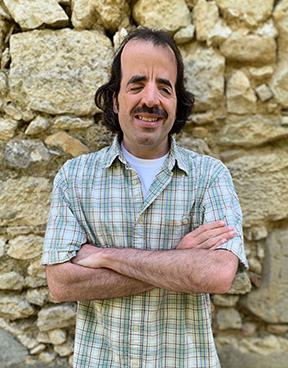 From the Editor: Trevor has been in several states in which he has been a part of or has helped found a National Association of Blind Students affiliated division. Among these are the Massachusetts Association of Blind Students (MASSABS), Connecticut Association of Blind Students (CTABS), and Oregon Association of Blind Students (ORABS). He has also been a part of the At-Large Chapter of the NFB of Connecticut and the Portland Central Chapter of the National Federation of the Blind of Oregon.
Trevor offers his opinion about the ways in which we will educate people with sight, concluding that there is no magic bullet or no one way that will work. Still he believes that we are better for any positive change we bring to folks who need to learn what we want to teach. Our desire to have them know more than they do is understandable, but our own lack of knowledge about so many people and situations they confront demands a good bit of patience and understanding. Here is what he calls his opinion piece:
The realization that we are divergent from the norm doesn’t just come in a single flash. It happens repeatedly, as marginalia—additions to our daily experience, as well as slaps on the cheek, as though to awaken us from a daydream that things could be otherwise. Even our closest sighted friends and family forget our needs, perhaps not offering help where it is required, but nevertheless grabbing us by our clothes, excluding us from social gatherings, or discouraging us from an adventure or career pursuit. They rub in the fact of our differences, training and years of education be damned.
Wouldn’t it be nice to have a well-tested toolkit for spreading understanding? If only people knew what it was like. Would we still be poorly understood, ignored, avoided, persecuted, and simply treated as something alien—angels with big floating question marks instead of halos above our heads—by the people who can get away with calling themselves mainstream? It seems unlikely.
I’m a believer that knowledge is the most powerful tool of all. Give me something that could enlighten a few close allies or the guy that won’t hire me, and the payoff would be exponential. But can this even be done?
Purveyors of post-modern philosophy state that we really can’t pretend to put ourselves in another’s shoes unless they are actually our shoes. Such thinking is a driving force behind the backlash to everything from having sighted persons play blind characters to having authors describe fictional people that don’t fit their own ethnicity or religion. Their solution, if any, is to let those repressed voices speak for themselves through direct representation—a lofty order. Instead of dissecting this, I’ll touch on a couple fine points of representation and its efficacy.
I was accompanying some teenaged students of mine from a blindness training center at the conclusion of the National Federation of the Blind’s March for Independence in Detroit back in 2009. This was a large-scale demonstration of blind people’s solidarity, capabilities, and overlooked civil rights struggle. The crowd was likely well over a thousand, many of whom were steadily employed laborers, college students and graduates, successful professionals, parents, or some combination of these. If popular statistics tell us anything, a likely majority struggled with fulfilling aspirations, finding steady employment, and achieving financial independence: all but the most delusional faced daily bouts with inaccessibility and discrimination beyond quantifiability.
Speaking then was successful businessman, Hall of Fame Pistons’ legend, and city mayor Dave Bing. There’s really only one thing I remember Mayor Bing saying, which is a lot from a politician. It was a reference to a basketball-sustained injury, resulting in a detached retina, temporary blindness, and a half-season’s worth of games missed on the court. “I know what it’s like,” said Mayor Bing.
Did he though? Bing fully recovered his sight and health to the point that he was back on the top of his legendary game in a few months. I’m thinking that if anyone in the crowd was in a similar boat, they’d be at home recovering and not invested in any kind of long-term campaign with a crowd they’d hopefully soon not have to identify with. Temporary disability is real disability, blindness included, and folks dealing with such conditions deserve as much access and freedom from discrimination as anyone. But is it the same as someone who’s lived the life of a blind person for years, with no prospect of improved vision? Is switching the light off at night the same as going blind? Is being asked to put on blindfolds or to sit in a darkened dining hall and eat lunch the same as going day to day, adopting new adaptive skills, and perceiving the deeply entrenched discrimination and poor, pitiful expectations bestowed on blind people? I think not.
Ample critics and scholarly inquiry demonstrate that short-term simulations of blindness typically reinforce fears and negative perceptions about people and their abilities. I’d surmise that temporary blindness offers little in additional perspective. But wait, what do I know? Twenty years ago, after a large reconstructive surgery on my face, I suffered scratched corneas and needed to cover my face in bandages for weeks. Was I experiencing total blindness for the first time? Not really. The visual experience may have been similar, but I was largely still in recovery from the surgery at this time, resting, weak, scared, and emaciated. I wasn’t really out trying to acquire better cane skills, Braille-reading, or other adaptations that would allow for a good livelihood as a totally blind person. I was busy seeing to it that that unfamiliar path wouldn’t be mine. Alright for me.
No sir, I speak for blind people often enough, but I’m not even totally blind myself. Few that identify as or legally qualify in the US as blind live without color, shape, or light perception. I’d use the term total darkness to describe having none of these perceptions, though most totally blind folks I’ve talked to do not describe their lives in this way, particularly when they’ve never had any vision.
I’d still appreciate others understanding what I go through. One thing I dislike doing is describing my own eyesight. I don’t know what my acuity is, and too often the conversation ends up being overly long and predictable, and it doesn’t result in any productive change in behavior towards me. I prefer steering away from those questions until everyone’s drunk and likely to whimsically switch gears any second. Alcohol sometimes diminishes the importance of that big question mark over my head.
James Robinson, in his Adapt Ability video series for the New York Times, attempts to present firsthand accounts of disability through quick bios and artistic representations of what’s going on in the disabled subjects’ bodies. The objective is to crack this veil of mystery that separates out disabled people acutely from the main crowd. One such video, entitled “I’m Going Blind, but This is What I Want You to See,” looks at an individual with retinitis pigmentosa (RP)—a relatively common congenital cause of progressive sight loss. I can’t see the video very well myself, but it purports to show the viewer what seeing through the eyes of someone with RP is like, including proliferating floaters and a narrowing field. A useful message of the piece is the refutation of the baffling all or nothing view of sight—that lights are on or off, and there’s nothing in between. To this day, folks are shocked—even disappointed to learn that I actually have some vision—like I’m just not the innocent, unseeing phenomenon folks thought I was. I do not have RP myself, and my vision has been mostly stable since early childhood. I tell people I remember when I had better vision, but I don’t remember how this made my life any different. But I do know dozens of people with RP and thus am cognizant that most of them are quite a bit human like the rest of us.
A question that people should have about attempts to represent disability like this, whether from a first-person account or from a distance, is does it do something like what I described from my knowing a bunch of representatives? Does it make them look like humans? Have we cracked the mystery of the floating question mark above the head so that we can get around to talking about squirrels in the park, odd time-signatures, or the antiquity of sandals?
What I found problematic about the film is that it focuses almost entirely on the subject’s declining vision. This isn’t to say that we should ignore disability or blindness as something unimportant. But when it is portrayed purely as what makes a person interesting, that’s a bit out of proportion or so we would hope.
One thing disabled people could use is multidimensionality in the public mind’s eye. Being a blind person does not mean being blindness incarnate. Let’s not make such conditions more exotic than they already are. Perhaps by introducing unfamiliar conditions, like RP and progressive sight loss, and by giving blind people human faces in front of the camera, we’re seeing positive first steps.
We need to judge representational or message-based works of art on the results. I looked at the Access Ability video’s comments on the New York Times website and on YouTube. I saw what I both feared and expected—lots and lots of “you are inspiring” and “makes me appreciate what I got”—typical inspiration and pity, often in the same breath. Any signs that people are picking up on the idea that disabled or blind individuals just might not be the strange bearers of darkness they are regularly envisaged as? None whatsoever so far as I can tell, and no wonder. This is just another example of disability simulation, not far removed from telling people to eat in the dark or accomplish a task with blindfolds on. In a nutshell, these lack the context of an actual life lived. Unlike in the case of a person literally switching the lights off or even the case of Mayor Bing, most blind people don’t get to switch the lights back on. What they do get is to live their lives as disabled people, including opportunities to learn, acquire unique skills through experience, and adapt. But becoming disabled in an instant can be scary and confusing. No wonder those just on the short ride aren’t exactly sketching disability as something mundane. Even providing alternative impressions of blindness, like portraits of progressive vision loss, and hosting a first-person narrative of the matter doesn’t give us the representation we need.
What will cut the mustard? I speculate it will have less to do with artistic one-off jobs and a few authentic representatives on the public stage, and more to do with opening the floodgates so that blind and other disabled folks fill up the public commons: media, the streets, the dirt paths, and buildings, on something like parity with others. Then the question is, can this come without a vanguard? Won’t there need to be people whose job it is to bring about acceptance, break ground, and change the spoken and unspoken rules? Ideally no. We as disabled people need to interfere and get in the way more than inspire.