What Do We Do to Help Blind Diabetics?
by Debbie Wunder
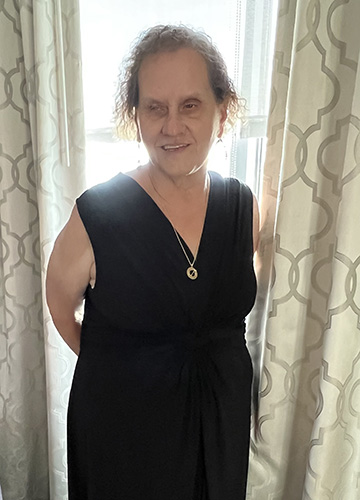 From the Editor: Debbie is the president of the National Federation of the Blind Diabetes Action Network or DAN for short. In her article she defines why we have a division and what it intends to do to help blind people who are or may soon be diabetics. Here is what she says:
When we ask for and are granted division status in the National Federation of the Blind, it is because we have a specific mission dealing with blind people who have some special interest that requires our attention and action. In no case could this be truer than with the Diabetes Action Network. Diabetes is the leading cause of blindness, second only to aging. Unfortunately, the medical attention required to test blood sugar and administer medication to control it both require performing activities many newly blind people don't believe they can do, and often the same is true for the medical professionals who serve them. The emphasis is too often on the caretaker, and not enough emphasis is placed on being independent or at the least interdependent.
This is where we come in. If you don't think you can care for yourself, then getting that care either means being dependent on family members or being placed in an assisted living or nursing facility. Neither option is good for those who can remain independent. These facilities impose limits that are premature and cost more than living on one's own. Part of our job is to let people know about the technology that they can get to help them measure their blood sugar, label their medications, and, when necessary, measure them. Part of the education is learning the skill; part is coming to believe one can and that it is not risky or unreasonable to do so.
This would be plenty of work if that is all we had to do, but of course there is more. As technology develops, the path for blind diabetics should become easier to walk. But, like other technologies and perhaps even especially medical technology, the assumption is that we won't be the operator of the equipment but the recipient of the equipment that will be run by others, our caretakers.
An insulin pump can be a life saver for many diabetics because it can continuously monitor blood sugar and administer small doses to control one’s blood sugar level before it becomes elevated or depressed. The fewer the fluctuations in sugar, the healthier those of us with diabetes are and the longer we are likely to live. But do insulin pumps talk? They don't. Do they offer helpful beeps or clicks that make it possible to use them? Again the answer is mostly they don't. The problem is that the designers think of us as patients, not as responsible consumers who can run equipment crucial to our health and well-being.
So in addition to the education we do for blind people, we are actively working with the developers of insulin pumps, continuous glucose monitors, and medicine dispensers to ensure that their designs give us a nonvisual way to do what others do to take care of their medical needs privately and independently.
Much of the technology we advocate to have delivered accessibly in the Federation determines the quality of life we enjoy, but in our division, what we bring to the table in terms of initiative, ideas, and follow-through not only determines quality of life but may well determine the length of that life and whether it is lived with freedom or enforced inactivity. This may sound extreme, but ask people who are in assisted living and don’t want to be just what they think of their lives. Then consider that often it doesn't have to be this way. This makes the work of our division all the more serious, because the way life turns out for people is often dependent both on them and on us.
If you are a diabetic, have been told you are on the path to becoming one, or you just want to learn more about this disease, please consider joining our division. You may write to me at [email protected]. You may also join our listserv by going to https://www.nfbnet.org and clicking on Add or Drop mailing lists. Then search for Diabetes Talk, fill out the simple form, and wait to receive a message asking if you truly want to join. Reply to that message. You need not add or change anything; just do a blank reply.
Please join us in our march to achieve better health for blind diabetics. Our health and yours depend on it.
I have a motto that I try to follow daily, just say AMEN to diabetes. Take Action, be Motivated, Exercise, and practice good Nutrition. This is an acronym you can live by.