Promoting Current Event and Media Literacy with NFB-NEWSLINE: A Parent's Perspective
by Heather Bird
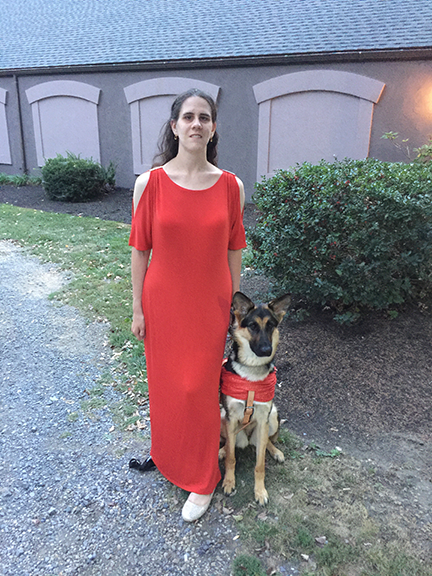 From the Editor: The National Federation of the Blind of New York has a newsletter focusing on NFB-NEWSLINE®, and this article is taken from it with appreciation:
This month's NFBNY-NEWSLINE subscriber contributor is Heather Bird. Ms. Bird lives in Rochester, New York, with her husband and two children.
In the NFB we stress the importance of Braille literacy. However, today literacy has taken on many forms. One of these forms is media literacy or being media savvy. I certainly encourage Braille literacy for both of my boys, who are blind, but I also work hard to make them as media literate as possible.
Listening to news stories on the radio or television isn't a bad place to start, but it is a very bad place to stop. There may be a temptation with kids, because of their somewhat shorter attention spans, to stick to stories that they can "watch" or "listen to" on the radio or the TV. It is true that listening or watching a news story can make the news accessible, especially if the televised news program is audio-described. However, it is important to get children to understand that what fits into a sound bite or predefined clip length doesn't always provide the complete story. As a parent I stress to my children the importance of reading a full newspaper or magazine article as one way of getting a more detailed and hopefully broader picture of current events.
For a child with a print-related disability, NFB-NEWSLINE is a fantastic resource for increasing media literacy. One helpful exercise you can do with a child is to have them watch a short news story on the television or listen to one on the radio. Then, using NFB-NEWSLINE, find an article on the same incident, event, or topic in a newspaper or magazine, and ask them critical thinking questions about how much more information was given and how differently it was presented and explained in the various forms of media.
Recently, I was working in the kitchen and listening to NPR on my Amazon Echo Plus. My son overheard a story about a controversial and sensitive topic, the pro-life versus pro-choice issue. At such a moment, it is tempting to shape a child's view on such a difficult and controversial subject.
I decided not to do that. Instead, we talked about how the station I was listening to was generally considered to be a liberal news source. We also talked about how the stories shared on radio are often going to be, much like those on television, simplified and shortened compared to those which can appear in print media.
So, we got on NFB-NEWSLINE and found a few articles on each side of the issue, from varying perspectives. We also accessed a scientific article from a magazine rather than articles strictly from newspapers. We then got into a discussion about the Constitution and United States history. We did more research on the topic using Bookshare.org, an accessible digital library containing over a million books. In addition, we accessed the Braille and Audio Reading Download application (BARD) from the National Library Service for the Blind and Print Disabled (NLS), which also provides access to hundreds of thousands of recorded and Braille books.
In the end my child made up his own mind about the issue, after exploring various viewpoints and perspectives. Having a child who is blind or otherwise unable to read print doesn't mean you can't help them become a citizen of the world, an explorer, a researcher, a scientist, a journalist, or a critical thinker. In fact, with resources such as NFB-NEWSLINE, you have increased opportunities to help them to achieve these goals.
I recommend signing up your child for NFB-NEWSLINE, a service that is entirely free to the user and intended for anyone with a print-related disability. This will give your child access to hundreds of newspapers and magazines that can be accessed using a landline phone, smartphone, Alexa device, specialized readers such as the Victor Reader Stream, the portable book player provided free of charge by the National Library Service, and through the web on a desktop or laptop computer.
NFB-NEWSLINE has content for younger readers. However, for younger children, I recommend that parents preview and download suitable articles from the "Kids Reading Corner" of the magazines section. Then use this material to let them develop and practice their technology and reading skills.
NFB-NEWSLINE is an excellent resource to foster development of Braille reading and writing skills either by producing hard copy Braille content, using a Braille display, and/or showing a student how to access and download content from NFB-NEWSLINE to a Braille notetaker or other device capable of producing Braille.
As the child matures, NFB-NEWSLINE can serve as an excellent resource to teach basic media literacy, research, and notetaking skills. An older child can access NFB-NEWSLINE content using any of the platforms and devices through which NFB-NEWSLINE content can be retrieved and read.
While every child has differing needs, I recommend that you do everything you can to encourage blind children to use a Braille display, paired with their computer or smart device, whenever possible. Subtleties, such as the spelling of a politician's name, the letters that make up an acronym representing an organization, or the exact words in a speech are going to be more readily absorbed if read in Braille. This will also aid in citing sources of information for a school assignment.
The sign-up process for NFB-NEWSLINE is relatively simple. I recommend NFB-NEWSLINE as a place to start working with a child on technology and media literacy because of the large volume of accessible and current information provided by the service daily.
If you are looking for additional reading services for a member of your family who can't access print due to a disability, I recommend the National Library Service, Bookshare.org, and Learning Ally, all invaluable services with thousands of recorded and digital books.
Today there are a large and growing number of free and commercial sources of online books and magazines available with varying degrees of accessibility. However, NFB-NEWSLINE was and remains a pioneer in bringing barrier-free newspapers, magazines, and other information to people who can't access print due to a disability. Whether you are a parent or a teacher, I encourage you to make use of NFB-NEWSLINE as a learning tool for your child or student.