More Than an Emotionally Touching Case for Braille?
 Braille is a code that enables us to read with our fingertips using a system of six raised dots. It was created in 1824 by a French boy named Louis Braille who was born on January 4, 1809. Today, Braille is used all over the world in many languages.
Each year, we work to get Braille into the hands of more blind people. January 4 marks World Braille Day in celebration of its creator, Louis Braille. Every day, thousands of blind people use Braille for everything from shopping lists to labels for canned goods, from reading novels to solving math and scientific equations, from learning a piece of music to composing one. In January 2022, Google launched their new domain opportunity to promote special days and events for promoting a cause. We celebrated World Braille Day with the new URL www.Braille.day. So what does proficient Braille look like?
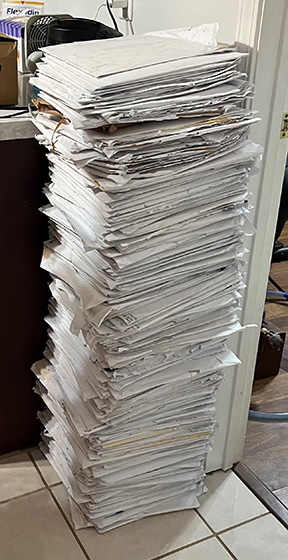
Here is a stack of Braille that is forty-four inches tall from a recent Braille One class of twenty-six educators learning Braille.
2,715.5 pages of Braille were completed by the participants in just ten weeks.
Building Speed: Four participants went from knowing no Braille to reading Braille—that’s zero words per minute and at the end of ten weeks a minimum of thirty words per minute.
Beginning Braille Readers: Ranged from 30 to 44 words per minute.
Highest Speed: 149 words per minute (that was for one who was already a Braille reader).
Reading Levels: In ten weeks, beginners went from reading simple words to reading a fourth grade chapter book.
Lifelong Learners: Of the four Braille readers that were lifelong Braille readers, they all four increased their reading speed between 17 wpm and 34 wpm.
Braille Rocks! Thank you to Casey Robertson Ed.S., NCUEB [National Certification in Unified English Braille], for sharing this great work with all of us.