Touring and Facilities
by Ramona Walhof
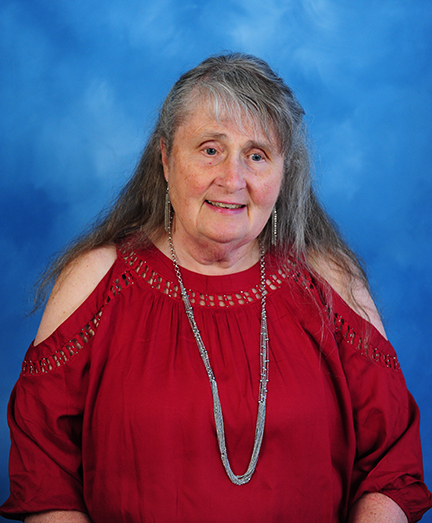 From the Editor: Ramona has been in the Federation since before I came, and she has always been a strong and dedicated leader. In recent years she has taken fewer leadership roles, but it is obvious she is living well, having fun, and experiencing new things to share. Here is her most recent contribution:
Many blind people travel and enjoy it immensely. Still, I hear comments about boring museums where everything is behind ropes or under glass. And indeed, I have experienced this and the frustration that goes with it. On the other hand, many who operate museums and tours are making an honest effort to make museums enjoyable and informative to the blind and other disabled people. Just for fun, I will share some of my most enjoyable experiences, many of which are in other countries.
After retirement, I have been fortunate to be able to take several trips. I was delighted to find a friend who was eager to cruise with me through the Panama Canal. There were at least six stops along the way. We chose three tours, all of which turned out to be high points of our trip. Going through the canal was a very interesting experience. Ship personnel described the canal and the equipment as the ship went up through the locks, across the manmade lake, and down the locks on the other side. There was definitely a lot to see visually, but not only were there good descriptions, but also the comments of fellow travelers provided information and interest. For example, there were many exclamations about the movements of the workers on the narrow islands between the ship lanes in the canal. I could hear the voices of some of them. It took all day to complete the passage across the Isthmus, and my friend and I went to various parts of the ship for perspective from high above and closer to the work outside. My friend had difficulty keeping track of the ship layout, so I was the guide for getting around the ship.
At the time of this trip in 2016, they were just opening new lanes across the canal to accommodate larger ships. We were fortunate to do this on a sunny day, and most of the passengers were outside enjoying the refreshments, the views, the other people, the information, and, of course, taking pictures.
In Cartagena, Colombia, we decided to take a jewelry-making class. I was a little concerned that there would be someone standing in front of the group saying: Do this; do that. I was very glad to have underestimated this class. Each student was given silver wire and taught to make a necklace, a ring, and earrings. Each traveler was assigned a Colombian jewelry school student as an instructor. I spoke only a few words of Spanish, and my instructor must have known about that much English, but it did not matter! She handed me the materials and guided my hands when I needed it. I completed the projects and was very pleased with them. We chose unfinished Colombian emeralds for each piece of jewelry, and I had Christmas presents for my daughter and daughter-in-law.
After visiting the sales room to admire much more elaborate jewelry, we toured the jewelry school. As we passed the machine used to form silver wire, we were offered the opportunity to try it out. I took an uneven piece of silver and passed it through the machine several times. Each time it came through narrower and smoother. In order to give others a turn, I did not finish the process, but it was fascinating to learn how very fine silver thread can be made from a lump of silver. I would never have known without this experience. And of course, I have a picture in my iPhone to show my friends and family at home.
In Costa Rica we joined a bus tour to a McCaw reserve. Upon arrival we had the opportunity to walk from one flock of birds to another. We were asked not to talk when we were near the birds because they can learn human speech, and it was desirable to keep them wild. When people came near, each flock would become very loud, showing a lot of interest in the people. Flocks of birds were kept separate to prevent cross mating. This reserve was to care for animals that were not able to remain in the wild for various reasons. Some native birds would later be released. We passed very near a jaguar and other animals native to the tropics. I found this visit much more meaningful than most zoos in this country because there were many animals and we were much closer to them.
In southwest Mexico we joined a tour to a large private farm. They explained to us that there was no medical facility nearer than fifty miles, so they grew many herbs to treat a variety of conditions. I was offered the opportunity to touch and smell many different herbs and plants. At one point a group of us were led to the kitchen where a grandma was frying tortillas. As we watched, someone placed a piece of paper in my hand and soon a hot tortilla. After another minute or two, someone plopped a gob of refried beans on top of the tortilla. Then I was expected to roll it up and eat it. It was delicious! The kitchen was primitive; people were friendly; and I had a delightful experience. We had the opportunity to examine rugs, blankets, baskets, etc., made by those living and working at the farm. We even had a sample as they said to taste some liquor from the "big blue cactus."
When my oldest granddaughter completed her junior year in high school, I decided we should take a family cruise before they all began to scatter. We debated whether to go to Australia or the Mediterranean. But the kids chose the Mediterranean. My daughter and I flew to Madrid while other family members made other choices for their first stops. We all joined back together in Barcelona. The music in Spain is everywhere, and we enjoyed it. There were blind people working in stands around the city and traveling on the subways. ONCE is a very well-funded agency for the blind. They are proud of their museum for the blind, and we visited. They have three sections: one on history, one on Braille production, and one showing models of famous buildings from around the world. The people were very friendly, and it is very much a hands-on place, a most enjoyable day.
Our cruise took us to Gibralter at the southern tip of Spain. People looking at Africa across the narrow straight commented on the weather and the terrain. The most memorable part of that stop was the monkeys or small apes who live there. A colony of three hundred are wild animals, but are looked after just the same. We were admonished not to reach out to them, but all of my grandchildren had a monkey come to them. Their parents were rather concerned, but the kids loved it. The monkeys passed very near all of us. They know they are protected.
We visited an olive farm near Marseille and many spots in Italy. One of my granddaughters found an iPhone app with a great deal of information about the Coliseum in Rome, including who sat in which locations, and where the gladiators were allowed to go and more. We could check it all out as long as our feet could last. As we walked from the Coliseum through the tunnel to the Spanish Steps, we found people playing accordians just like in Madrid and Barcelona.
I will not bore you like someone showing two hundred slides of a trip, but I could tell of many other events, to say nothing of food and people and shopping.
There are blind-friendly places in the United States as well. When my children were small, we lived in Des Moines, Iowa. We visited the Living History Farms there, where they showed how agriculture in Iowa was in 1840, 1880, and 1920. They showed equipment and buildings from each of those times, and it was all hands-on. I hope it is still as friendly.