Idaho’s Blind Share Our Stories on YouTube
by Ramona Walhof
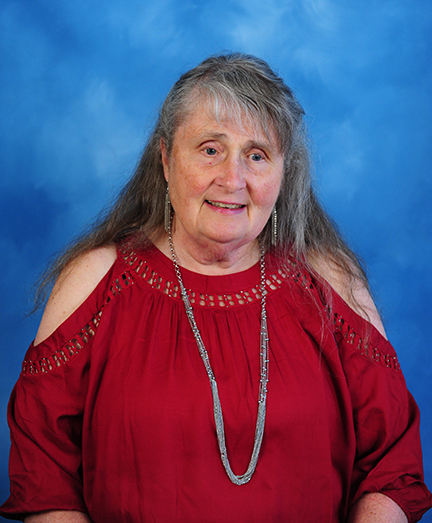 From the Editor: Ramona Walhof needs little introduction. She has served in various capacities in the National Federation of the Blind for the past six decades, including as secretary of the national organization. Ramona is always eager to share what she has learned through her various leadership roles with other national, affiliate, and state leaders, and she has a knack for finding and explaining good ideas to grow our movement. Even as she steps back from the spotlight, she is still learning and sharing, and we all benefit from her wisdom. In this article, she tells us about Idaho’s journey starting and maintaining a channel on the video-sharing platform YouTube. Although Ramona acknowledges that, like many of us, she still has much to learn about making and editing videos, she understands the importance of visual storytelling and has gained a great deal of insight about what kind of content drives engagement. Here is what she has to say:
I have been active in the National Federation of the Blind since the 1960s. I have held both state and national offices, and I have lived and worked in four different affiliates, the latest being the National Federation of the Blind of Idaho. Since I am growing older (I am almost eighty), I am no longer a primary leader, which is as it should be. But as long as I am able, I hope and believe that I will never stop finding useful things to do. Long ago I learned that the best way to get something done is to pitch in and do it yourself or to lead the way and hope that others will catch the fever. They usually do.
In 2016, a member of the National Federation of the Blind of Idaho who was a senior in high school offered to create a YouTube channel for us. What a good idea to help more people learn about blindness and to give our members a chance to share their stories! This young lady, Siera, created the channel and helped us shoot an introductory video. Then she moved out of state for college. For a while, we struggled to keep the channel going. Our webmaster, Kevin Pirnie, put up a few more videos and used some material from our national site. A few videos were shot at state conventions. We added a few more during the COVID pandemic, but none of this was enough to build real momentum. Too few of us had experience shooting and editing high-quality video, and it was too expensive to hire professionals more than occasionally.
I have always struggled with computer technology. I didn't get started learning about it until after I retired, and using it does not seem to come as easily as using things that I can get my hands on physically. But recently I have had a teacher a couple or three times a month and have been learning slowly and painfully to do some things with my iPhone. Then I hired a reader who is a college student and is interested in shooting videos. An NFBI member who is a YouTube afficionado also began helping. Bailie Weir found some inexpensive Rode lapel microphones on Amazon; these connect to an iPhone and produce good-quality sound. Stephanie Cascone, who directs communications and marketing efforts at the NFB Jernigan Institute, advised me to chop up some longish videos into shorter ones for new posts. My daughter has editing experience and is willing to do a limited amount. Our treasurer, Don Winiecki, has done some simple editing as well. I recruited people I barely knew or just met to shoot videos at our recent national convention in Houston, and Linda Hurlock from Montana and Grace Anderson from Alabama shot some particularly good stuff! Also during national convention, our Treasure Valley Chapter President, Susan Bradley, shot some videos and learned to operate WeTransfer, the platform we use to share the videos with each other prior to posting. I want to take this opportunity to thank everybody who has helped and everybody who has been the subject of one or more videos, whether you are named here or not. With all of this recent acquisition of knowledge, equipment, and helpers, our YouTube effort has really begun to take off. We will have more people involved as we go along, hopefully some from every chapter! I will never run out of ideas for videos, and I know that more blind people from Idaho and beyond have interesting stories to tell. So, as we grow our collective capacity to shoot and edit videos, the opportunities to use YouTube as a platform become more exciting.
One of the wonderful things about YouTube and other social media is that there are ways of measuring whether your messages are reaching a wide audience. YouTube shows us how many people view, like, and comment on our videos, and this number is steadily increasing. As of this writing, we have 120 subscribers and 125 videos posted, with an additional twenty-five or so ready to be posted. Many people are intimidated by social media because they are unsure what to post. We have found that the only way to learn what messages resonate and engage our audience is to try posting a wide variety of videos and then to observe audience reaction. It is impossible to predict which videos will be most popular, but videos of people using a white cane independently are often viewed by many. Indeed, the first video on our channel to receive three thousand views was of me crossing the street with my white cane. Not surprisingly, kids are often fun to watch. Although a close-up of somebody talking about a hobby or experience may be viewed a lot, interesting locations and activities make a high number of views more likely. The titles matter, too. They should be catchy, descriptive, or both. Kevin Pirnie is naming most of our videos; one called “Beautiful Blind African Lady Riding Idaho Cowboy's Horse into the Sunset” is very popular. Kevin also creates themed playlists: state convention, Cycle for Independence (our annual fund-raising bike-a-thon), national convention, employment, BELL and Beyond, and "kids loving Braille.” At last count, twenty-two of our videos had been viewed more than a hundred times each, and this will change soon because several have close to a hundred views. So far our highest number of views is 3,100, but you never know when something new will take off. And you never know when something not so new will suddenly get some attention. We shot a video about library services for the blind which sat there with little attention for a month or more. Then suddenly it shot up to 153 views in a couple of days. It is fun for Kevin and me to track our video metrics and learn from what we observe. Right now we have more than 21,000 views altogether, and that number will hopefully be much higher by the time you read this. This means that we have reached somewhere between 3100 and 21,000 people with a bit of the Federation message.
Our videos are intended to interest, educate, and entertain sighted people about blindness and blind people. Of course, we also welcome blind and low-vision subscribers and viewers, their family members, and professionals, all of who may benefit from exposure to our positive philosophy of blindness. The videos have turned out to be an excellent way to help members learn more about each other as well.
I do not believe that every affiliate needs to do a similar channel, but I do think it is wise for as many affiliates as possible to have a presence on social media. Many affiliates already have a presence on Facebook, X (formerly known as Twitter), TikTok, Instagram, or some other platform. While some of these platforms allow text-only posts, many also allow the posting of images and videos, and TikTok, like YouTube, is primarily intended for video content. As mentioned in an informative article in the July issue of the Braille Monitor, affiliates are now being encouraged to establish a presence through our new nfb.social instance on Mastodon. The NFB national channel there, @[email protected], is helpful to all of us and sets a high standard. With all of these platforms, as Idaho has learned from our YouTube experience, there is no substitute for posting items that might be of interest and then seeing what sparks engagement.
I have plans for many more videos when I have time and have help to shoot them. Perhaps I can eventually learn to shoot some of the videos myself, as many of my blind friends do. In the meantime, I am always looking for more help shooting, editing, and thinking up new things to post. As long as the NFB of Idaho remains active and new people join, we have new raw material! Everybody has stories worth sharing.
Our YouTube channel is an important part of our activities during Blindness Equality Achievement Month, but like many such efforts, it will be most successful if we keep it going strong all year long! Blind Equality Achievement Month is intended to be a time when we share our experiences as blind people with the public. While the in-person events that we create during the month are a part of this sharing, posting videos and other content expands the potential audience, allowing our friends and neighbors to learn about our lives whenever they wish to do so.
The NFB of Idaho welcomes you to subscribe to Idaho's Blind on YouTube. You can do so by visiting https://www.youtube.com/@idahosblind. We will appreciate your comments, since feedback will help us create more engaging content, but you are also welcome to just silently “lurk” there. We often post five or six new videos in a week. You will recognize some of your friends, and you will meet people you do not know! If you want to contribute something, we love to receive videos from outside Idaho as well. After all, you are our friends and our Federation family! See you soon!