Country of the Blind: A Memoir at the End of Sight
by Andrew Leland
Reviewed by Deborah Kendrick
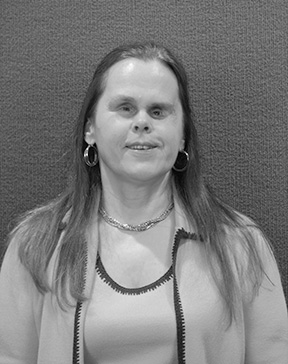 From the Editor: Few people I know write better than Deborah Kendrick, and with this review she retains the high place she holds in my rating of authors. Like Deborah, I too have read Andrew’s book, and the Columbia Chapter to which I belong was the one he visited without introducing himself, deciding that this was not where he wanted to be at this time in his blindness. Many of us in the chapter remember the picnic he describes and our discussion of the best way to advertise our trivia night. He speculates as to whether we knew he was there, and by the time we did, he and his bride were gone.
My thanks to Debbie Stein for getting this review and for sharing it with the Braille Monitor:
News of Andrew Leland’s book was flooding my inbox for weeks before its actual release. A journalist and podcaster with a reputable track record, and let’s not forget that he “just happens” to be Neil Simon’s grandson, was publishing a memoir with a title borrowed from a 1904 short story by H. G. Wells: The Country of the Blind. I couldn’t wait to read it. And I vowed not to read it. Those conflicting emotions prevailed after my first read of the book, and this review is my attempt, for me and you, to understand the ambivalence.
Andrew Leland is a fine writer. His prose is snappy, smart, and occasionally borderline brilliant. A few lines reverberate again and again, haunting, hovering, raw and real.
But something is off-key here and I keep scrabbling among my responses to sort out where or why the tone rings less true.
Let’s start with the title. It’s sort of like three titles. The Country of the Blind: A Memoir at the End of Sight.
First, there’s The Country of the Blind, his remake of the 1904 science fiction story. Then there’s the memoir (the best part of the book, for my taste, in which we meet some major characters in his life story), and finally, the chronicling of the end of sight.
In the H. G. Wells story, Nunez is a sighted traveler who tumbles down a mountain into a valley populated entirely by people without sight, tries to join the tribe, and has a narrow escape. (Sorry for the spoiler; I recommend that you read the story for yourself.) Like Nunez, Leland is a visitor to the country of the blind, sometimes claiming his citizenship as one heading toward blindness, but acknowledging that he may never get there. As our tour guide, he chronicles the history of blindness and disability rights. All of the right components are there—the stigma, status as beggar, Louis Braille and the emergence of education followed by literacy. He includes the news that it was disabled people who were the first to be murdered in the holocaust, reports on some of the inventions enjoyed throughout the world that were initially designed for or by blind people. He covers the disability rights milestones of the last century—including the formation of the NFB, the ACB, the ground-breaking work of the Rolling Quads in Berkeley, and the 1977 takeover by disability rights activists that led to the signing of the 504 Regulations to the Rehabilitation Act. He introduces many of the primary individual contributors to civil rights and culture enjoyed by 21st century blind people.
If you aren’t familiar with these stories, this book is a great place to learn. He hits the high points, tells the tales admirably well. I knew all the players, had written about all of the events and discoveries myself, and was more than pleased to read his accurate and intelligent recounting. For some, these passages might be tedious. For me, they were a welcome familiar song, one with which I was happy to sing along.
He also does an admirable job of summarizing the key blind players in literature (Oedipus, King Lear, Tiresias) and writers from Homer to John Hull.
As he explores the world and culture of blindness, he attends an NFB chapter meeting, but hovers outside the circle, observing and admittedly uncomfortable. Later, though, he engages in conversation with blind people, clearly considers them peers, and presents them with warmth, respect and admiration.
The best parts of the book are the memoir elements–where we meet his wife Lily and his little boy Oscar and fall in love with both of them right along with Andrew. While the true memoir elements are the best of the narrative, the most skippable segments are the science lessons on eyesight, eye diseases, and Leland’s end of sight that is not ending.
How could a guy “going blind” tell people what it was like to BE blind? And how much traction would we gain as blind people, always considered one-down on the social hierarchy, when our story was told by this guy who could see facial expressions as he walked down the street with his white cane.
As a reader who mastered this blindness stuff in childhood, I found myself screeching at the author with parental impatience. When his knife on the cutting board disappears leaving only the radish behind, his palpable panic strikes me as ridiculous. “Just put your hand on the damn board,” I want to tell him. Oddly, he never mentions getting around to that epiphany on his own.
He refers to the slowed pace of blindness as though it is a given that all blind people will walk more slowly than their sighted counterparts, a definitely wrong-headed assumption, and refers to his stumbling over the collection of products Lily leaves on the bathtub as though this would be recognized by all blind people as universal affront.
His descriptions, on the other hand, of some one-down moments universal to the experience of blind people, are stunningly on-point. Standing in a Starbucks line with his white cane in hand, he describes the sudden sensation of hands on his shoulders, moving him out of another’s path. “Strangers, I’m learning, frequently touch and guide blind people like this in public, without warning or consent, feeling the need to manage us like furniture…”
This passage represents one of the moments when he gets the notes right, is on key, sings like one of us.
The author spends three days at a national NFB convention and two weeks at the Colorado Center for the Blind. He attends as a journalist, but as a journalist trying on the experience of blindness to see how it fits.
The most memorable passage in the book for me, possibly because I recognized my own stance in his description, and have never heard it referenced at all, was his description of the pose taken by blind travelers which he dubs “Addressing the Void.” In the vast general session convention hall, he observes people working out their locations like this:
The expression on the face of a blind gazer paused in the world takes on an inwardly whirring, computational, deep-listening aspect. After a few moments posed in frozen, careful attention, this person would announce, firmly and loudly (to whisper was futile; whoever responded would need to both hear them and realize they were being spoken to), “IS THIS NORTH DAKOTA?” Because the hall was so dense with people, this approach usually worked. “Nebraska!” someone cheerfully replied, her own gaze aimed past the questioner. “Keep going!”
While this is spot-on accurate reporting and fascinating in its own way, it also felt a bit disturbing. He is reporting, after all, but it feels somehow voyeuristic and violating. Of course, all of us, whether we see with our eyes or not, run the risk of being scrutinized by others every day, but there is a twinge of discomfort in reading how this maybe-blind-one-day observer evaluated this alternative technique.
To balance that discomfort, however, is the relief I feel at reading his take on the dressed-up banquet crowd. He sits in the lobby, watching convention attendees streaming toward the banquet hall, again observing as journalist until he finally takes a seat himself at one of the tables. He pokes fun at himself for asking the question why do blind people need to look nice if they can’t see? But then, with the sound of the other shoe dropping, concedes that “people did look fantastic coming out of the elevators.”
Happily, unlike Nunez, Andrew Leland does not leave the country of the blind as an escapee or believe that he is a better human than its inhabitants. With each chapter and each tiny diminishment of his vision, we feel him becoming increasingly aware that things might be OK in this other country, even if he is not eager to go there. While he can write that blindness is not about pity and charity, he does seem to feel sorry for himself at times. But then, why should we expect that all of us will respond to blindness in the same way? When he sees his diagnosis as tragic, is that coming from the retinitis pigmentosa, the Jewishness, the inherited tendency toward hypochondria that he acknowledges having received from his famous playwright grandfather, or something else entirely?
Some of us know intuitively how to play any melody we hear on the piano, while others can play only by studying the written musical score. Like music, some of us arguably take to the alternative techniques of blindness more comfortably than others, enjoying a more natural inclination to use work-around techniques. And why shouldn’t it be exactly that way? We all know by now that some humans learn visually, others aurally, and still others with a lovely potpourri of sensory approaches. When describing firsthand experiences, Andrew Leland comes only intellectually, not intuitively, to the alternate techniques of blindness, but in his pursuit to explore those alternatives, he has developed a quality guidebook of sorts for others interested or obliged to become travelers.
By book’s end, he does indeed seem to recognize viscerally that there is gain and beauty to be found in both the worlds of blindness and sightedness (or blindlessness). He appreciates and revels in the gift of sight, and I hope he gets to enjoy it for many decades to come. If he writes another book, a true memoir, he could begin it exactly where this one stops: with the realization that love, the love of a spouse, a child, or life itself, feels the same with or without sight.