Governor Morehead School: An Interview with Director Melvin Diggs
by LaShawna Fant
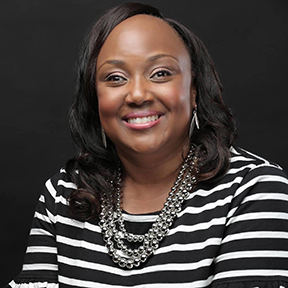 From the Editor: LaShawna has been introducing us to important people in the education of the blind. Our hope is this will build and enhance relationships we have and that they will also come to know more about us. Here is her latest interview:
LaShawna Fant: I am excited to conduct this interview with you! Please introduce yourself to the readers of this publication.
Melvin Diggs: My name is Melvin Diggs, Jr. I am the proud school director of the Governor Morehead School for the Blind in Raleigh, NC. I have been the school director for the past two years.
LF: What information is good for us to know about Governor Morehead School?
MD: Governor Morehead School (GMS) is the flagship school in North Carolina that serves the special needs of visually impaired students in a unique residential setting. The innovativeness of the Governor Morehead School extends back to its roots. When the school was established in 1845, it was the eighth school for the blind in the United States. Equally impressive is that North Carolina was the first state to serve the African-American blind and deaf population, beginning just four years after the Civil War. The school moved to its current location on Ashe Avenue in Raleigh in 1923 and was renamed in 1964 in honor of former Governor John Motley Morehead. African-American students attended school at the Garner Road campus until an exchange of students began in 1967, with full integration achieved in 1977. The school provides services to children from five to twenty-one years of age.
LF: Wow! The Tarheel State has been educating blind students for a long time. What are some of your goals for Governor Morehead School?
MD: As director, I have three main goals interwoven into our school's new strategic plan.
- Enhance and improve our visually impaired students’ overall academic progress by engaging them in rigorous classroom instruction with a focus on literacy/Braille literacy and personalized learning opportunities for our students;
- Improve post-secondary outcomes for students with visual impairments so they are better prepared for success in the workforce and higher institutions of learning; and,
- Provide unique learning opportunities for visually impaired students that can rarely be duplicated or supported in larger school settings.
LF: That's great! Mr. Diggs, what is your educational background?
MD: I am a proud graduate of Elon University and North Carolina Central University. North Carolina Central University prepared me for my career in special education and working with students with disabilities. I also gained further certification for school administration at the University of North Carolina at Greensboro.
LF: Since you have served in education for several years, what have been some of your jobs?
MD: My previous career experiences include special education teacher, assistant principal, special education program specialist, consultant for special education policy for the North Carolina Department of Public Instruction, and executive director of special education and academically/intellectually gifted programs for a local school district.
LF: Mr. Diggs, What inspires you and drives your passion for serving?
MD: We provide these opportunities through the school's vision: NICE – Nurture, Innovate, Challenge, Empower. As a teacher, seeing a student's eyes light up when they have learned something new inspired me to learn more about special education. As a literacy coach, seeing their smile when they knew they successfully delivered the lesson motivated me to learn about being a school administrator. As a school administrator, jointly developing a plan for implementation and seeing it come to fruition sustains me.
LF: Mentorship can be highly beneficial. Who have been some of your mentors, and how important have these connections been for you?
MD: I was fortunate to have one of the best special education teachers in North Carolina as a mentor. Helen Cagle Crumbley took me under her wing and helped me quickly value the role a special education teacher plays in all students' lives. She was a phenomenal teacher and colleague. I was blessed early in my career to come in contact with Dr. Norman Webb, who is known for research and implementation of the Webb Depth-of-Knowledge (DOK) framework. This affected me greatly as it supported my understanding of curriculum and how to support lessons or intervention more appropriately for my students in class, whether in an inclusive setting or the special education classroom. Even though his work is more aligned with testing and assessment, the role of a special education teacher and a visual impairment teacher is to support the student's learning by understanding curriculum requirements and accessibility needs with various learning modalities, training, and having a knowledge of your student's strengths.
LF: To find balance, what are things you enjoy doing?
MD: When I have moments to relax, I enjoy coastal saltwater fishing and spending time with my family, as well as serving the Lord and my church family at Full Gospel of Christ Ministries Church.
LF: I enjoy fishing also. Do you have any final words?
MD: Finally, I want to give a special word of gratitude to the following people and organizations. I want to thank the students and staff at Governor Morehead School for allowing me to be their school director. I want to thank Emily Coleman, Superintendent at Texas School for the Blind and Visually Impaired, as she has been the ultimate thought partner for academics, curriculum, and policy concerning Schools for the Blind. I also have to thank the numerous external organizations such as the Governor Morehead Alumni, Governor Morehead Foundation, and local Lions Clubs. Your support makes the difference in our students' experiences, activities, and lasting memories regarding the school and life.