Simple Accessibility Solutions
by Dan Tevelde
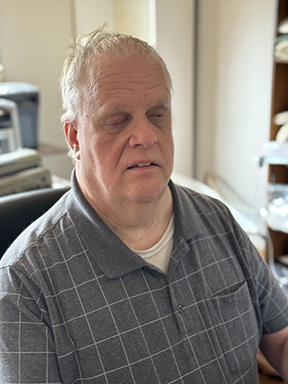 From the Editor: When many of us hear the words assistive technology, we think of something computer-based, how much it costs, and how difficult it might be for us to replace it. But as Dan reminds us, not all assistive technology is complicated or expensive. It is a good reminder, for as helpful as technology is, its use depends on the confidence we have in ourselves based not only on training but the attitude we hold about the things we can do.
Dan lives with his husband Chris in the Chicago suburbs, and they are active in the Chicago NFB chapter. He is also the chair of the Illinois Website Committee. Dan works in the accessibility testing field and is seeking future opportunities. At sixty-three years of age, he considers himself semi-retired, and to fill the time he enjoys reading, travel, and living with their ten-year old feisty cat. He’s passionate about Braille literacy, accessibility, and advocacy. Dan and Chris have been members of the Chicago Chapter since 2014. Here is his article:
I recently had an experience using a cane which made me think about how some of the tools we use do not need to be associated with a computer or mobile device. I want to point out that my experience using a cane is a matter of personal preference. I am not suggesting that using a cane is better than using a guide dog. Whether a person travels with a cane or dog is a matter of personal preference. I work in the accessibility field and have learned that accessibility is not just about making websites and mobile applications accessible. Accessibility includes any tool a blind person may use to function independently. A cane, guide dog, or a slate and stylus are some of the tools blind people use. This thought occurred to me while I was at a doctor’s appointment. I had just checked in and was invited to take a seat. I could tell by the ambient sound that the room was not large. I decided to use my cane instead of asking for help. I turned away from the check-in counter and started walking toward where I thought I might find a seat. I was slowly sweeping my cane left and right until the tip touched a solid surface. I decided to move toward the object while keeping the cane tip in contact with the object. I could tell that changing the angle of my cane from horizontal to vertical moved me closer to the chair. I touched the object and determined it was an empty seat. I turned around, sat down, and put my cane away.
It occurred to me that I had used the cane as an accessibility tool. I identified a task I needed to do and completed it independently. If I had not used a cane, I might not have found the chair or aimlessly wandered around the office. I would have given the impression that I was helpless and could not do something as simple as navigating an office building. I do not know if anyone was paying attention to me, but I assumed that someone was observing if I needed help finding a chair.
I felt a sense of pride and satisfaction that I had used a simple device to solve a simple problem. We often get caught up by the idea that we need complex tools to be independent. There is a place for computers, phones, screen readers, Braille displays, and any other technological devices we may use daily. I would encourage anyone to use a cane and think about ways they can be creative while traveling. Never feel ashamed to use a cane. It does not matter what a sighted person thinks or, more accurately perhaps, what we fear they think. Every time I attend a chapter meeting of the National Federation of the Blind, I hear people using a cane and know they are living the lives they want. I appreciate the value the National Federation of the Blind places on independence by making slates, styli, and canes available to anyone free of charge.