A New Definition of Disability: Embracing Our Shared Humanity and Redefining How We Perceive Abilities and Differences
by Michael Hingson
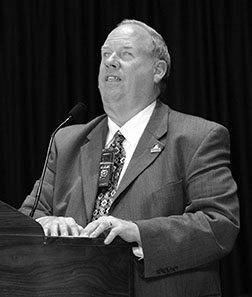 From the Editor: Michael has a message that he transmits every chance he gets, and each new experience gives him that chance. Michael has lived a life full of experience from being a physicist who worked on the Kurzweil Reading Machine and then to a career in finance that found him coming down from his seventy-eighth floor office on September 11. What is most important to me is that this man has consistently chosen to be a part of us, even after his training, natural aptitude, and motivation could have let him sell himself as a very exceptional blind person. But he is unabashedly one of us, and he still wants to change the world so that it better understands who we are and we too come to share that understanding. Here is what he says:
Before getting to the crux of this article, let me briefly explain why I wrote it. In March, 2023, I happened to be at a hotel in Los Angeles with my niece and nephew. As we walked down the stairs toward the first floor about 3:00 p.m. on a sunny Saturday afternoon, suddenly I heard most people on the first floor begin to scream and panic. My niece, being very used to me did not panic. When I asked her what was going on she said that the hotel and the surrounding area had just lost power. My niece told me that people were scrambling trying to find smart phones and flashlights so that they could get light again even though there was plenty of sunlight streaming in from outside.
As I thought about this later, I realized just how dependent sighted people really are on having direct light on demand. I realized that in reality the people who panicked in the hotel and most sighted people have their own disability. What follows contains the results of my thinking and why I believe it is high time that we reframe the definition of “disability.”
In a world that often classifies people based on what they can or can't do, let's rethink the term "disability" and look at it in a new, more inclusive light. Instead of seeing it as a lack of ability, let's embrace it as a unique characteristic we all share, manifesting in various ways.
To embark on this journey of understanding, it's important to recognize that each person has a unique blend of characteristics, abilities, and limitations. By embracing the idea that disability is a part of being human, we can build a society that values diversity and promotes inclusivity.
Let's consider the concept of light dependence, not just for individuals who are sighted but for everyone. Thomas Edison's invention of the electric light was more than just a technological breakthrough; it responded to a fundamental characteristic we all share—our reliance on light.
Sighted individuals, relying on eyesight, are fundamentally dependent on light. Edison's electric light wasn't about superiority; it highlighted a unique manifestation of a universal characteristic. This light dependence is hidden in our daily lives, especially with the prevalence of artificial lighting, making it easy for sighted individuals to navigate seamlessly.
Acknowledging this shared "disability" prompts us to reconsider how we perceive abilities and limitations. When we realize that everyone, regardless of their abilities, has inherent characteristics that might be considered disabilities in certain contexts, we lay the foundation for empathy, understanding, and unity.
This new definition encourages empathy and understanding among individuals with diverse characteristics. Instead of perpetuating a hierarchy of abilities, we can appreciate the unique contributions each person brings to the human experience.
Consider individuals who are blind or have low vision, facing challenges in a sight-oriented society. Acknowledging that both sighted and blind individuals share the characteristic of light dependence, albeit in different ways, helps break down the barriers that divide us.
Embracing this new definition opens the door to a more inclusive society, where diversity is celebrated, and everyone's contributions are valued. It challenges the notion that disability is a rare exception and positions it as an integral part of the human experience.
The goal shifts from accommodating perceived differences to creating environments that consider and embrace the diverse characteristics inherent in all individuals. It's about creating a world that accommodates the full spectrum of human characteristics, from physical spaces to inclusive design principles in technology.
Changing the definition of disability requires a shift in perspective, moving away from viewing differences as deficiencies and toward recognizing the shared characteristics that connect us. This transformative perspective empowers individuals with disabilities by emphasizing their abilities, contributions, and unique strengths.
Understanding disability as a universal characteristic challenges stigmas associated with perceived limitations. It prompts us to rethink the language we use, replacing terms that reinforce negative stereotypes with inclusive and empowering expressions. For example, persons who have little or no eyesight are often referred to as “visually impaired.” The very fact that the word “impaired” is often included in describing these individuals implies that they are less than persons with full eyesight. If we replace “visually impaired” with “blind or low vision” we take a major step toward recognizing that having, or not having, a dependence on light to live and function does not represent an impairment or lack of one. Instead removing “impaired” from a description of a person who is blind or who has low vision helps level the playing field and helps to influence all of us not to view a lack of eyesight as anything other than a particular characteristic that some people manifest.
In conclusion, by redefining disability as an inherent characteristic, we move towards a more compassionate and inclusive understanding of the human experience. Recognizing that everyone carries their own set of characteristics that might be considered disabilities in specific contexts breaks down artificial barriers and allows us to celebrate our shared humanity.