Bullish on BLAST and the Blind
by James Gashel
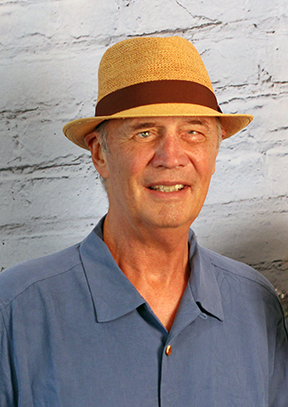 From the Editor: The following article is adapted from remarks given by James Gashel at the Business Leadership and Superior Training (BLAST) conference held this past November in Nashville, Tennessee, by the National Association of Blind Merchants, a division of the National Federation of the Blind primarily consisting of participants in the Business Enterprise Program (BEP). Long-time Federationists will know that Jim Gashel served for over thirty years as director of governmental affairs for the National Federation of the Blind. He has also been the organization’s secretary, and he now lives in Hawaii with his wife Susan, an accomplished attorney who defends the BEP in court. Jim continues to be a staunch Federationist and is helping to build the Hawaii affiliate. His remarks tell the story of how the BEP sprung from humble beginnings in 1936 to the outstanding opportunity for blind entrepreneurs that it is today, largely due to the 1974 amendments to its enabling legislation, the Randolph-Sheppard Act. Jim was present for and a key participant in the passage of these amendments, and he was invited to speak to the conference to reflect on the progress made in the fifty years since their adoption. Following his reflections, Jim was presented with a Lifetime Achievement Award by the NABM, although he is humble about his role. Jim’s remarks also touch on the program’s future and the role of the National Federation of the Blind in securing it. Here is what he had to say to the conference attendees:
It's good to be back at BLAST. Conferences like this make you proud. Fifty years ago, I was proud to be part of the National Federation of the Blind (NFB) working to get a bill through Congress that became the Randolph-Sheppard Amendments of 1974. Kenneth Jernigan was president of NFB then. He hired me to be chief of our Washington office. The title was chief, but I was actually the bell, the clapper, and the cord, too. I'm sure some of you can relate. I started as chief on January 1, 1974, and soon I met Senator [Jennings] Randolph. He chaired the Senate Subcommittee on the Handicapped, later renamed the Subcommittee on Disability Policy.
Jennings Randolph was first elected to Congress in 1933, coming from Elkins, West Virginia, serving in the House. He sponsored a bill on vending stands for the blind after its original sponsor, Senator Thomas D. Schall from Minnesota, was struck by a car and killed in 1935. Representative Randolph was drawn to the Schall bill as a member of the Lions Club, which supports efforts to help the blind. He recruited Senator Morris Sheppard of Texas to move the bill forward in 1936. FDR signed it into law on June 20, 1936. That was fast, but it wasn't easy. There was actually little support outside Congress, except for Leonard Robinson, a blind attorney. There was no organized effort of blind people, no NFB until 1940. The Federal Public Buildings Service, then in the Interior Department, opposed Senator Schall's bill from the beginning. They didn't want a preference for the blind on anything, especially not cafeterias. Opposition from the Public Buildings Service was only part of the problem. Lack of interest, and even some outright opposition voiced by professional workers for the blind, was more troubling. The American Association of Workers for the Blind defeated a resolution of support that Leonard Robinson proposed and asked them to pass. Some even wrote to Congress opposing the bill. They wanted a different bill, which became the Wagner-O'Day Act when passed in 1938, today known as AbilityOne, where blind people work in direct labor, not as entrepreneurs. It's a different idea altogether. You can almost say that Randolph-Sheppard was ahead of its time.
There were few work opportunities for the blind in the 1930s. Many states had agencies for the blind, but the Federal Vocational Rehabilitation Law excluded them from getting federal funds until the law was changed in 1943. After that, and more so after the [Second World] War, things improved a little, but not so much for the Randolph-Sheppard program, which was essentially stuck with small vending stands that were being squeezed out by automatic vending machines, cafeterias, and other competing businesses. Amendments passed in 1954 did little good. Vending machines were preferred by [federal] employees, since proceeds after sales and commissions funded their morale, welfare, and recreation activities. By 1970, competition from vending machines threatened to stamp out Randolph-Sheppard opportunities altogether, which could have happened but for Jennings Randolph, by now a US senator from West Virginia. Also, unlike in 1936, the blind were organized, and agencies for the blind were mostly more enlightened.
Let me just step back and share a little bit of my background. I grew up in Iowa. Kenneth Jernigan was the main director there of our state agency, the Iowa Commission for the Blind. He started there in 1958. Ten years after that, he was elected president of NFB. In Iowa, before Dr. Jernigan, the best thing a blind boy could hope for—and I was a blind boy at that time—was to get the Commission for the Blind to set you up in a popcorn stand, or weaving rugs at home if you were a blind woman. That was what the Iowa Commission for the Blind would do for you before Dr. Jernigan. I kid you not, because I was there.
By 1970, Dr. Jernigan was on board for ten years. By that time, blind people were running large cafeterias in all the main state office buildings and in the state capitol in Des Moines.
I actually worked my first experience—I wasn't the entrepreneur, I was a dishwasher—in one of these cafeterias for one summer, starting at seven o'clock in the morning and working until, I think, around 3:30 in the afternoon. We served two thousand patrons at this cafeteria. We used regular plates and actual flatware. There was no plastic throwaway stuff for the Iowa state workers at that time. I don't know what they do now, but this was my early work opportunity as a college kid, made possible by the BEP and Neil Butler, the blind entrepreneur who hired me.
A new federal building was opened in Des Moines in 1966, when the Randolph-Sheppard Act still excluded cafeterias, but that didn't stop Dr. Jernigan. The building opened, and the cafeteria serving employees and the public was operated by a blind person from the first day until many years later when they ceased having a cafeteria in that building. But it was always operated by a blind person. It was under a permit that designated it as a “manually operated snack bar,” but it was truly a full-blown cafeteria. It took Dr. Jernigan and help from the Congressional delegation to get it that way because the law wasn't adequate to support it; we got it done through political influence.
It wouldn't be an exaggeration to say that Dr. Jernigan was bullish on blind entrepreneurs. In fact, he had been one; he had a small business of his own building and selling furniture as a young man growing up here in Tennessee. He showed me that furniture. Dr. Jernigan helped to convince me that blind people can be entrepreneurs.
By 1974, when I started at NFB in Washington, quite a lot of work had been done to get a bill in shape to strengthen the Randolph-Sheppard Act, but there was still lots of opposition. The Public Buildings Service, now part of the General Services Administration (GSA), was still against putting cafeterias under the Randolph-Sheppard law, as they had been since 1936. In fact, Senator Randolph told me he had to promise GSA back in 1936 that he wouldn't try to put cafeterias under this law. Well, he broke that promise in 1974, but they didn't forget about it either. But we had proof by 1974 that blind people can run large cafeterias. We proved that in Des Moines and some other places. So Senator Randolph agreed to take the battle on. I was thrilled. I recall sitting in his office talking this through and he said, “Well, I'll just go to the mat on this.” Imagine me; I was kind of a kid, and a US senator told me “I'll go to the mat on this.”
Well, we had to agree to exclude certain contracts; it was a bad agreement, but we had to make it. You don’t always get everything you want, but the priority was still supposed to apply, so that was good. The question of what to do about vending machine income almost upset the applecart. Federal employees just didn't want to give up vending revenue that they were getting to fund their morale, welfare, and recreation funds. Eventually this was resolved when a fifty-fifty split on indirect competition vending income, and additional concessions applying to the Postal Service, were agreed to.
The bill first (not last, but first) passed the Senate on June 20th, 1974, and that was thirty-eight years to the absolute day that FDR signed the original law. But the battle wasn't over because the vending machine deal wasn't done; it was still hanging out there. I remember organizing members from our nearby affiliates to make day trips into Washington to meet with members of Congress in September and October 1974. Carl Perkins of Kentucky was chairman of the House Education and Labor Committee. There was a need to extend some must-pass money authorizations in the Rehabilitation Act to keep services going in that program. So I learned that that's how you get things done in Washington: You find a bill that kind of has a deadline that has to pass, and then you just hitch a ride on that bill. Carl Perkins made our day when he agreed to make the Randolph-Sheppard Amendments Title II of the rehabilitation bill. That bill had passed the House months before without the Randolph-Sheppard provisions included, but Carl Perkins told us that what he would do is agree to include Randolph-Sheppard if the Senate would pass the bill with Randolph-Sheppard included. That was another lesson. When you want to get something done, hitch two bills together so they both have a better chance of passing. Elementary, but I was a kid out of college. I didn't know all that at that time. Perkins taught me that.
Here's another phrase I learned: The train was leaving the station. That's what we say in Washington when a bill's going to pass, and you might want to be on that train. The rehabilitation bill with Randolph-Sheppard included passed the Senate on October 10, 1974, and passed the House on October 16, 1974. But on October 18, 1974, President Ford vetoed the bill. He was having a dispute with the Congress over some unrelated matters, and it took about six weeks to work that out, and the bill had to pass Congress a third time, this time in November. But when the dust settled, President Ford signed Public Law 93-516 on December 7, 1974, with Title II as the Randolph-Sheppard Amendments.
Under the amendments, the preference for vending stands became a priority for vending facilities. The definition of vending facility was made much broader, including cafeterias. The bill declared—this was completely new—one or more vending facilities are to be established on all federal property to the maximum extent feasible, and priority shall be given to licensed blind persons. Couldn't be clearer. Of course, this isn’t what always happens, but it is what the law says. Every state must have an elected committee of blind licensees to participate with the state licensing agency in making major administrative decisions and doing other things. Vendors became entitled to income from vending machines, within specified limits. Hearing and arbitration rights were added to the law. New training opportunities were to include helping blind vendors achieve their maximum vocational potential. What strong words! That's not even in the Rehabilitation Act, but it is in the Randolph-Sheppard Act--their maximum vocational potential. How fast can you say the word entrepreneurs! And there was more, but we don't need to go through all that.
Eight years later, we got the priority extended to interstate rest stops as well when Connecticut Representative Barbara Kennelly sponsored an amendment to the 1982 highway bill. I didn't think representing the blind would ever get me into the highway bill, but it did. But getting that done was a walk in the park compared to the 1974 amendments.
The regulations implementing the ‘74 amendments came out in March 1977, and that's when I learned the battles weren't over. You could pass a law, but you still had battles. GSA still wanted more limits on cafeterias, for crying out loud, and that's when they got the bidding provision. That's in the regulations, not the law. Well, they got that, but we got the option of direct negotiations on contracts. So you lose some and you get some. The state committees’ role was emphasized in these regulations. This is where the word “actively” came from before “participate with.” In the first draft of these regulations that I saw—and I got it over the transom, I wasn't really supposed to see it, I think—instead of “participate with,” it had “consult with.” But we protested that and got it changed to “actively participate with.”
So, fifty years later, how's it going? In 1973, the average net vendor proceeds were $7,428. That's $51,025 after fifty years of inflation. By contrast, the average of net vendor proceeds in 2023 was $103,085, so that's a hundred percent above inflation. The total gross sales figure was $747,455,000. Twenty percent of this amount after expenses ends up in the pockets of blind people. That is just about three quarters of a billion dollars in gross sales.
The number of vendors and the number of facilities is going down every year, no question about it, and that is a problem. But the people who can solve that problem are in this room. You don't need amendments to the Randolph-Sheppard Act to solve that problem, you need to get to work. The facilities are much better, much more rewarding than the more prevalent vending stands before the 1974 amendments. There were no Randolph-Sheppard dining facilities on Department of Defense (DOD) property in 1974. So all things considered, I would say that today's vending facilities, and especially the work done by entrepreneurs, are by far a better demonstration of the abilities of blind people than the vending stands of fifty years ago. No question. Be proud.
What about the future? Well, there's the short-term and there's long-term, as they tell you when they talk about the stock market. Short term, I'm very troubled. Long term, I'm absolutely bullish.
Why troubled? Donald Trump announced that Elon Musk and Vivek Ramaswamy will head a department—I didn't think you could just create a department if you were president-elect or even president, but anyway—they're going to add a Department on Government Efficiency. That raises red flags. Who isn't for efficiency? But Musk and Ramaswamy are private-sector billionaires who have made lots of money on federal contracts, and they would like to make more and to help their other private-sector buddies do the same. Privatizing is what they mean when they say government efficiency. Don't forget that food service and other concessions on federal property are very likely—I don't say they will be, but are very likely to be—low-hanging fruit. They have been before. How much longer will the Postal Service make it in competition with Amazon, Federal Express, UPS, and other delivery services? How many blind vendors do you know who are at work within private delivery service facilities as compared to USPS? Well, we'd like to think there are some, but I'm guessing it's not too many.
Consider this: employees who worked on accessibility for screen readers were the first—this is literally true—were the first group to get pink slips when Musk bought Twitter, now called X. That's why we've all fled to Mastodon and whatever those other services are. That's efficiency according to Elon Musk. Susan Gashel, that's my wife, she calls it ableism. She's really good at spotting that, taught me the term and how to think about it. There is talk that the Department of Education will go away, and the programs will be block-granted to the states. Programs like Rehabilitation and Randolph-Sheppard would be transferred to other federal agencies, and some of that block granting may happen too. Nobody knows for sure what's going to happen or even if this will be officially proposed. There's just talk, but you have to think about this: it is a time of uncertainty. The only certainty is it's a time of uncertainty, and uncertainty is not our friend. Be organized, be ready to mobilize.
I've seen this movie before. I remember when GSA and DOD tried to replace cafeterias with fast-food chains—McDonald's, Burger King, Pizza Hut, what have you. It helps to be around a long time because you do see these things coming back around. If you don't think that could happen again, you aren't on the same planet that I'm on. GSA’s out-leasing program, which excluded the blind from potential priorities, was another similar transgression. Thanks to our lawyers, we've fought these violations and most of the time won, but not always. Could violations like these happen again? You have to assume they will. Tough words, but you have to assume they will. Blind licensees have something other people want, and you know what? We're going to keep it. The question is, will what passes for government efficiency trump the blind priority? You have to be concerned. You don't have to panic. You have to be concerned.
I am concerned, but like I said, I'm also bullish because I've seen our power at work. We won in 1974 over opposition from federal employee unions, the postal workers' union, GSA, DOD, the Postal Service, and others. We believed we could win, and we did. Years later, we mounted a full court press when the Department of Veterans Affairs snuck an exemption from Randolph-Sheppard into a veterans health care bill. We got the provision pulled from the bill within hours of it going to the House floor under suspension of the rules, no floor amendments allowed. We also stopped a similar exemption effort by the Park Service.
When an effort was made in Congress to merge vocational rehabilitation with other federal job training programs, making funds less available for blind business enterprises, we got an amendment passed on the House floor to remove the Rehabilitation Act from that bill. Getting that done is almost unheard of under the House rules. It's like defying gravity, but that didn't stop us. After we beat him hands-down on the House floor, the chairman of the committee told me: “You guys won. We won't bring this up again on my watch.” Well, he's not in Congress anymore, so it’s somebody else's watch. He won't have to break the promise. Somebody else may try. Let them try.
I'm bullish on the law because I know it can work. I see it work. I watch it close to home. Susan Gashel represents states on arbitration panels where they're trying to rein in the federal violators. She's won 100 percent—she says, “Don't jinx it!”—100 percent after court review, twenty-five out of twenty-five. Wouldn't you like to have a batting average like that! Hats off to the state agencies who stand tall for blind vendors. Lawyers working with us often—not always, but often—win. Let's hear it for the lawyers! It's not to minimize the problems. There are problems. We need to get remedies—recovery of money damages—restored for blind vendors. We have the ability to do that.
I'm bullish because of your collective success, which I referred to earlier, gross receipts approaching a billion dollars a year. It's a reasonable goal to top a billion dollars in annual sales in 2026 for Randolph-Sheppard’s ninetieth anniversary. We should be able to do that if we think about that, if we work on that. Just don't live in fear; live in victory. A billion in sales would mean two-hundred million or more going to blind people. Be proud of what you're doing and what you're about to do, but don't be satisfied. Be bullish. Do more.
The Business Enterprise Program is by far the single most successful ongoing effort ever made on behalf of blind people in this country or anywhere else in the world. Just think about that. You know it's true. No matter your role—it could be managing, servicing, supporting, or advocating—you're important to the total effort. Successful business performance by blind entrepreneurs builds opportunities for all blind people way beyond BEP, so just keep it up, keep building, make more money. It is a win-win. That's the genius started by Randolph-Sheppard, but Randolph-Sheppard is only the floor, not the ceiling. Think of that. The ceiling is as high as we together can build it. I’m bullish on today's and tomorrow’s blind entrepreneurs because of what we do in our movement, what we can do working together. The smart money is on us. It's not on Elon Musk. He'll make his billions somewhere else. We'll make more than a billion right here. Don't ever bet against what we in NFB can do. Never bet against us. Just when you think we can't, we do. Dr. Jernigan taught me that. I've seen it happen over and over again in sixty years participating in NFB. Yes, I'm troubled. I'm concerned, worried, but I'm bullish and I just want to say you should be bullish too. I'm bullish on BLAST and on the future we are building together for the blind of 2074 and beyond. Thank you very much.