Raising Expectations for the Blind of the World
by Nicholas Hoekstra
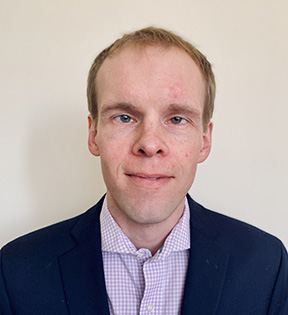 From the Editor: Nicholas (Nick) Hoekstra lives with his wife and two-year-old daughter in Lawrence, Kansas, where he is finishing a PhD in special education. The focus of his research is on how artificial intelligence can support individuals with disabilities. Among his other interests, he is an avid martial artist and tries to promote the inclusion of people with disabilities in sports whenever possible. He won a National Federation of the Blind Scholarship in 2004. Here is what he says about his work with blind and disabled people around the world:
“We didn’t ask you to visit the school to teach English. There is nothing you could teach the students in a single day. We just wanted the students to meet you.”
In 2008, while working as an assistant language teacher in Japan, I was asked to spend a day volunteering at the local mogakko, or school for the blind. I agreed immediately and then spent the next several evenings frantically preparing English lessons that incorporated tactile materials, music, and movement. As a blind individual myself, I felt acute pressure to prepare English lessons that would engage the students, despite the fact I had no formal training as a teacher of the blind.
When the day for me to visit the mogakko arrived, the head teacher led me from classroom to classroom, visiting students that ranged in ages from elementary school to high school. I spent the following six hours answering questions—“Do you have a girlfriend?” “What is your favorite Japanese food?”—and using my limited Japanese, combined with the students’ limited English, to talk about my experiences living in Japan and their own hopes for the future. The lessons I had so carefully prepared were forgotten.
When I apologized to the head teacher for not having taught any English, she waved my concerns away. “These students are taught that they have very few options for their lives. They can become massage therapists or musicians. We wanted the students to see that you are a blind adult who is traveling the world and living an independent life. You are an example of a blind person who has made his own choices, and I wanted the students to know that they can do the same.”
That interaction—among many others during my nearly four years living in Japan—changed the course of my life. Having grown up in the United States, I took for granted the education I received. I was always taught that I could do whatever I put my mind to; that my disability was not the characteristic that defined me. This is not often the case for the estimated 240 million children with disabilities around the world, many of whom still do not have the chance to attend school in the first place. I decided, from that point forward, that I would dedicate my career to the improvement of education for individuals with disabilities globally, in whatever small way I could.
Over the past ten years, I have had some amazing opportunities to work with people from around the world on projects that advance the right of education for people with disabilities. In 2016, for example, I became the capacity-building focal point for the Accessible Books Consortium. This project of the World Intellectual Property Organization (WIPO) helps implement the Marrakesh Treaty to Facilitate Access to Published Works for Persons Who Are Blind, Visually Impaired, or Otherwise Print Disabled. The treaty, in a nutshell, is a commitment by countries to allow for exceptions in their copyright laws that permit the production of books in accessible formats and the sharing of these accessible books with other countries that have ratified the treaty. If a library in the UK has already produced an accessible copy of, for example, Harry Potter, they could share this book with a library in the United States. The real impact of the treaty, though, is on small organizations of the blind that have limited resources. Under the Marrakesh Treaty, an association of the blind in Ecuador can request an audiobook from Argentina and thus save the small Ecuadorian association valuable time and money.
In my role as capacity-building focal point, I worked with organizations of the blind from around the world to finance projects that allowed them to receive training on how to produce books in digitally accessible formats. Typically, the projects also came with financing so that these organizations could use their recent training to produce a number of local textbooks for elementary or high school courses. During this time, I met with dynamic leaders of the blind from Argentina, Bangladesh, India, Mexico, and Nepal, among so many others. These were men and women who fought tirelessly for a better future, holding their organizations together with what funding they could find from local and international donors. In every case, I was astounded at the resiliency of these organizations that survived, often with very limited resources, to promote the rights of the blind. It made me appreciate how we, as blind individuals, are united in a singular fight for our right to education, work, and respect, no matter where we live. It also made me so proud to be a member of this global community.
While producing books in accessible formats is one important aspect of educational inclusion, I had always wanted to work more closely with teachers and schools on the education of students with disabilities. I found my calling working with projects financed by the United States Agency for International Development (USAID). For the past several years, I have collaborated on the implementation of projects throughout Latin America, Africa, and Southeast Asia, ensuring that the work of USAID has been inclusive of students with disabilities. Every project is different. In some cases, I have supported individuals with disabilities as they attend college for the first time. In other instances, I have trained local partner organizations on accessibility standards, classroom accommodations, and Universal Design for Learning (UDL). In Liberia, my team supported a teacher-training institute in establishing its first Braille department, where future teachers began learning to read and write Braille, while in El Salvador I provided training to teacher trainers on the inclusion of students with disabilities in low-resource classrooms.
People often do not understand exactly what it is I do when I say I work in international development, and in recent months I have been referred to as “evil,” “criminal,” or a “waste of money.” This rhetoric—for rhetoric is what it is—is disheartening and dangerous. Even more, though, it devalues the lives of the people from around the world who we have worked to support. By saying that the work of USAID—or other aid organizations—is a waste of resources, we are also saying that the lives of those men, women, and children we have cared for are no longer valuable, simply because they were not born in our communities. This includes thousands of students with disabilities globally who are even now losing educational opportunities. Even more concerning is that, when we stop recognizing the value of people with disabilities in other countries, it’s a very short time before we’ll stop recognizing the value of people with disabilities at home.
I have wanted to share my experiences in an article for the Monitor for years, but it never felt like the right moment... until now. If there is one thing I’ve witnessed while working on projects in over twenty-five countries, it is that we, as individuals with disabilities, can only succeed when we work together. When we work together, we change the world. Unfortunately, the United States is increasingly backing out of any international collaboration. In the end, the people who will suffer most are our brothers and sisters with disabilities, because we are always the people who suffer most when decision-makers refuse to see beyond our borders or their own misconceptions.
In 2016, President Mark Riccobono shared the following sentiment in an opening address to the World Blind Union: “We invite our brothers and sisters from around the world to our home to share with us the ideas, insights, innovations, and dreams that come from your unique perspectives. We also share with you our progress along with our desire to continue to test the limits and raise expectations for the blind anywhere in the world.” I write this article not because I want recognition for any of the work I have done, but because I want to help others in our community understand what it is when we talk about USAID, international development, or foreign aid. There is a lot of false information being shared, and it creates a smoke-screen that hides the true work that we do. The majority of individuals who work in international development share President Riccobono’s wish to learn from the unique perspectives of a global community and, if possible, work together to improve the lives of everyone.
I encourage each of you to remember that we are a global community, and—even while we fight to improve the conditions of people with disabilities in the United States—we must never stop lending a hand to our international family.