Living by Standards: When Blindness Isn’t the Limitation
by Kristopher I. Crawley
 From the Editor: Recently I have decided that I need to walk more. This is not just a fitness goal or an effort to impress my friends with how many steps I take in a day; rather, it stems from my sense that when I do walk independently with my white cane, particularly in unfamiliar areas, my travel skills don’t seem to be quite as sharp as they once were and I would personally like for them to be. I have concluded that I have come to rely a little too much on Uber and Lyft for my transportation needs, and thus my cane travel skills have slipped a little. Also, I’m spending more money on transportation than I would like. Obviously I can’t walk everywhere, but lately I’ve been summoning a rideshare car to my door when I could walk just a few blocks to the bus stop for a less expensive ride. In making this observation, I am not judging others or even comparing myself to some hypothetical, and probably nonexistent, ideal blind person. At least, I hope that’s not what I’m doing. I am measuring my own comfort and skill levels against what I think is reasonable given my own training and past experience.
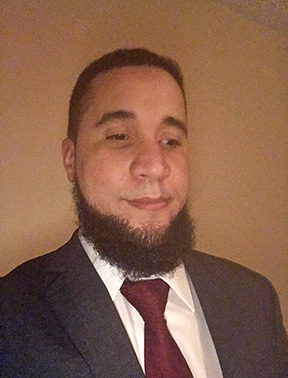
Kristopher Crawley is a husband, father of five, and passionate access technology professional with more than a decade of experience serving the blind community. He currently works as the Program Manager at SAAVI Services for the Blind in Phoenix, Arizona, where he helps manage one of the nation’s premier blindness training programs. He also serves as second vice president of the East Valley Chapter of the National Federation of the Blind of Arizona and as secretary of the National Assistive Technology Trainers Division. In this article, he writes beautifully about what I have tried to describe above: the importance, for each of us, of setting our own internal standards and goals. Here is what he says:
The Power of Perspective
Few forces shape our lives more profoundly than the expectations others place upon us. From the time we are children, we are surrounded by assumptions, spoken and unspoken, about what we can or cannot do, who we are supposed to be, and how far we’re expected to go. These expectations come from every direction: teachers, parents, employers, and even well-meaning strangers. Sometimes, they motivate us to rise, to prove something, or to stretch a little further. But more often than not, these assumptions create invisible fences around our potential, penning us into a space far smaller than what we are capable of occupying. For blind people, these fences are built not from facts or lived experiences but from long-standing misconceptions about blindness and what it supposedly means. The weight of these expectations isn’t just inconvenient, it’s stifling.
Society tends to frame blindness through a deficit-based lens, automatically associating it with dependence, inability, or diminished ambition. These assumptions manifest in education systems that deny blind students the full rigor of academic challenge, in hiring managers who discount qualified blind candidates, and in casual interactions where strangers assume we need help simply because we are navigating the world differently. Over time, these small signals become a steady drumbeat of limitation. But what took me years to realize is that expectations, however prevalent, are ultimately external. They come from outside voices, opinions, and projections. Standards, on the other hand, are internal. They are the principles and demands we place upon ourselves, not because someone else insists, but because we choose to live by them. That distinction, between living under expectations and living by standards, has shaped my journey as a blind professional and person.
This isn’t just philosophical musing, it’s a lived truth with real-world consequences. When you live by standards, you begin to reclaim your agency. You stop allowing the world’s assumptions to dictate your direction. Instead, you begin to define your own measures of success, your own benchmarks for growth, and your own understanding of what it means to live fully and independently. For me, this realization didn’t arrive as a lightning bolt. It was gradual, a slow-burning awakening shaped by frustration, perseverance, and moments of clarity. I experienced it while sitting in classrooms where teachers underestimated me, while navigating the often disempowering landscape of vocational rehabilitation, and while rising through the ranks of a system that once saw me as little more than a client. In those moments, I learned that nothing could be more powerful than choosing to hold myself to a higher standard, one set not by what the world thought I could do, but by what I knew I must.
This article is my effort to shed light on that internal shift. It is a call to rethink the expectations placed on blind individuals and a case for why they are not only inadequate but also dangerous when internalized. More importantly, it is a tribute to the power of personal standards, to the quiet, disciplined resolve of refusing to settle for less than we are capable of. Whether you are blind yourself, working in the field of blindness, or simply someone seeking to understand how bias works in subtle but destructive ways, I hope these reflections resonate. At the very least, I hope they challenge the narratives we too often accept without question. Because ultimately, the question is not what the world expects of you, but what you demand of yourself.
Understanding Expectations: The Unseen Limitations
Expectations operate silently, yet powerfully, influencing how we’re treated, what we’re offered, and how far we’re allowed to go. For most people, they may never be consciously acknowledged, but for those of us who are blind, their presence is felt constantly. From the moment a child is born, people begin making predictions, usually rooted in fear or ignorance, about what that child won’t be able to do. These assumptions quickly make their way into decisions made by doctors, educators, and even loving family members who simply don’t know any better. A child may be discouraged from learning complex subjects like math or science. They may be excluded from physical activities or kept from opportunities to lead or participate fully. Often, these limitations are cloaked in concern or protection, but make no mistake, they are limitations all the same.
What makes these expectations especially dangerous is how deeply embedded they become. Over time, they stop being external opinions and start becoming internal beliefs. When blind individuals are constantly told that they’ll need help, that certain careers are unrealistic, or that independent travel is too risky, they may begin to accept those limitations as truth. This process is rarely conscious. It starts small, with a subtle suggestion here or a denied opportunity there, but it snowballs until the person begins to self-regulate, shrinking their own aspirations to fit into what others say is possible. I’ve seen this happen time and time again, in blind students who once dreamed big, in clients who lost hope, and even in myself during my earlier years. It is one thing to be underestimated by others. It is something far more devastating to underestimate yourself.
I remember, at one point, catching myself doing exactly that, dimming my light to fit into the world’s idea of what I could handle. I hesitated to take initiative, avoided advocating too loudly, and rationalized missed opportunities as unavoidable. It was easier to accept what was given than to fight for more. But that mindset wasn’t serving me, it was suffocating me. That realization marked a turning point. I had to confront the ways in which I had let external expectations dictate my internal standards. I knew I had to rewrite the narrative, not just for myself but for those coming after me. Because if the world is going to expect less of us, then we must learn to expect more from ourselves.
It’s easy to say that expectations are “just opinions,” but the reality is they shape the allocation of resources, the tone of conversations, and the boundaries of opportunity. They determine whether a blind person is taught Braille or expected to rely on audio alone. They influence whether someone is encouraged to pursue higher education or steered toward something “safer.” And they often dictate whether someone is seen as a potential leader or simply a sympathetic figure. These outcomes are not theoretical, they are lived. And they are avoidable, but only if we replace those expectations with something stronger and more sustainable: personal standards that are high, uncompromising, and rooted in self-respect.
The Power of Personal Standards
Personal standards are different. They are not handed to you. They are not shaped by the limited imagination of others. They come from within, from a sense of purpose, identity, and unrelenting self-belief. When I finally began to develop and commit to my own standards, everything changed, not because the world suddenly expected more from me, but because I expected more from myself. I no longer waited to be told what I was capable of. I stopped needing permission to be independent, to lead, to take risks, or to succeed. I began asking myself a question that I still use to this day as a compass for my actions:
What do I demand from myself?
That question became a guiding force. It drove me to master non-visual techniques, to excel professionally, and to hold myself accountable for my own progress. I realized that no one was going to hold me to the standard I deserved, so I had to do it myself. This shift wasn’t about arrogance or rebellion. It was about refusing to let anyone else define the scope of my ambition. Living by standards meant pushing beyond comfort zones, embracing discomfort, and refusing to settle for mediocrity just because it was expected of me. It meant being relentless in the pursuit of skills, knowledge, and self-reliance.
And most importantly, it meant redefining what success looked like on my terms. No longer was success simply the absence of failure or the approval of others. Success became about growth, resilience, and integrity. It became about setting a high bar, even when others weren’t watching. And it became about modeling that standard for others, especially other blind individuals who had yet to see what was possible. When you live by standards, you don’t just elevate your own life. You become a catalyst for change, pushing against the current of low expectations and carving out space for others to rise with you.
Structured Discovery and a Positive Blindness Philosophy
One of the most transformative tools in my journey was the Structured Discovery approach to blindness training. This philosophy, championed by our own National Federation of the Blind (NFB), teaches blind individuals to become critical thinkers, problem solvers, and independent actors, not just passive recipients of instruction. It rejects the assumption that blind people must be led, managed, or sheltered. Instead, Structured Discovery is built on the belief that blind people are fully capable of navigating the world on their own terms, provided they are given the opportunity and support to develop the necessary skills to achieve their goals.
This approach aligned perfectly with the shift I was making internally. If I was going to hold myself to a high standard, then I needed an environment that expected the same. Structured Discovery challenged me, not with hand-holding, but with real expectations and high standards. It forced me to problem-solve, to adapt, and to grow. And in doing so, it affirmed what I already suspected: that independence is not about what others do for you, but about what you’re willing to do for yourself. It was less about technique and more about mindset, an insistence on ownership and agency in every aspect of life.
What makes this model so powerful is that it refuses to apologize for expecting more from blind individuals. It doesn’t pity. It doesn’t patronize. It believes. And that belief, paired with rigorous, respectful instruction, creates the conditions in which blind people thrive. Structured Discovery confirmed for me that standards are not only personal but teachable. They can be modeled, reinforced, and nurtured in environments that treat blind people as capable human beings, not as projects to be managed. In embracing this philosophy, I found not only my independence but also my voice.
Expectations, Standards, and the Federation’s Message: Clarifying the Distinction
The National Federation of the Blind has long led the way in redefining what it means to be blind in a society filled with misconceptions. Central to the Federation’s philosophy is the recognition that low expectations are among the greatest threats to independence, growth, and achievement for blind people. These expectations don’t simply shape how others treat us, they shape how we begin to treat ourselves. The NFB challenges this narrative directly, making it clear that blindness, in and of itself, is not the defining limitation people assume it to be. While that message has resonated with many, it’s important that we dig even deeper to understand the true nature of the call to action behind it. At the heart of our movement is a powerful distinction, one that too often goes unexamined. It’s the difference between what the world expects of us and what we demand of ourselves.
The NFB’s Belief Message puts it plainly. It says in part:
“The National Federation of the Blind knows that blindness is not the characteristic that defines you or your future. Every day, we raise the expectations of blind people, because low expectations create obstacles between blind people and our dreams.”
On the surface, this may sound like a call for society to expect more from blind individuals, and to some degree, it is. But for those of us within the movement, we understand that it goes much further than public perception. Raising expectations isn’t merely about shifting how the world sees us; it’s about transforming how we see ourselves. If the world begins to expect more from blind people, that’s progress. But it will be hollow progress if blind individuals don’t simultaneously hold themselves to meaningful, personal standards. High expectations are only powerful when they are matched with high standards, standards that govern how we train, how we grow, and how we choose to live. The Federation’s true mission has never been about just asking for better treatment; it has always been about also cultivating stronger, more capable people.
This is precisely where the Structured Discovery model of blindness training finds its relevance and strength. In Structured Discovery, raising expectations is not about telling blind people what they should be able to do, it’s about giving them the tools to demand excellence from themselves. It is not an abstract idea; it’s a practical, intentional method that challenges students to think critically, act independently, and solve problems without waiting for permission. We do not merely teach blind individuals to travel; we expect them to travel with skill and confidence. We do not simply expose them to technology; we expect students to dedicate themselves to developing the skills necessary to adapt to change. Structured Discovery works because it aligns perfectly with the Federation’s philosophy: that competence is not something given, it is something earned through high personal standards.
In this way, the NFB’s message about raising expectations is not aimed solely at the public, it is directed inward. It is a message for blind people themselves to rise up, to push beyond comfort and complacency, and to take complete ownership of their futures. We cannot build independence through slogans alone. It must be earned through action, discipline, and a refusal to settle. That is the unspoken truth behind the Belief Message. It’s not just encouragement, it’s accountability. And in that accountability, we find real transformation.
Living by Standards in Everyday Life
Living by standards is not just a concept to reflect on, it is a daily practice. It means showing up, even when no one is watching. It means confronting excuses, both from others and from yourself, and refusing to let them win. Living by standards requires an ongoing commitment to growth, even when it’s uncomfortable. I have found that the most meaningful progress in my life has come when I chose to challenge myself rather than rely on someone else’s belief in me. It wasn’t enough to want success. I had to work for it, prepare for it, and demand it from myself at every step. When I made that shift, I stopped chasing opportunities; I started creating them.
Too often, people live by the expectations placed upon them, waiting for someone else to tell them what they are allowed to pursue. They seek validation before action, and permission before progress. But that is not how greatness is built. Expectations are passive, they come to you, whether you like them or not. Standards, on the other hand, are active. They originate from a decision to live differently, to train harder, to lead by example. When I embraced that mindset, I began to see my blindness not as a barrier but as a part of the context in which I would thrive, not in spite of it, but with it. Living by standards became the difference between simply coping and truly excelling.
One moment that brought this distinction into sharp relief occurred during my very first week of Brazilian Jiu-Jitsu (BJJ) class at a new school in West Palm Beach, Florida. I was new to the environment, still learning the feel of the mat, the structure of the drills, and how to orient myself without relying on vision. During one of those early classes, we began a movement drill that involved crossing the mat while transitioning through several grappling positions. I was determined to participate fully, not because anyone expected me to, but because I had set that expectation for myself. At one point, as I moved across the floor, I misjudged my angle and ran directly into a pillar. The impact was sudden and jarring, not enough to hurt, but enough to stop me in my tracks. A moment later, my professor approached me in the middle of the class, drills happening all around us, and calmly suggested, “You don’t have to do this drill, you’re blind.”
He wasn’t unkind. In fact, I believe he was trying to be thoughtful. But his suggestion, though seemingly considerate, was rooted in a quiet assumption that blindness should excuse me from challenge. And in that moment, I had to sit with it. I didn’t immediately reject his offer, I thought about it. I had just run into a pillar in front of my peers. I was new, unsure of how much space I could truly take up in this environment. It would’ve been easy to step aside, to interpret his suggestion as permission to opt out. But as I stood there, weighing my next move, I remembered the standard I had already set for myself: to participate fully, to push through discomfort, and to grow on my own terms. So I thanked him, and I kept going.
Expectations for Ourselves vs. Personal Standards
As we reflect on the broader concept of expectations, it’s worth exploring the expectations we place upon ourselves. Many people believe that having high expectations for their own lives is enough to ensure success. They believe that expecting good outcomes like employment, recognition, or personal fulfillment is the same as working toward them. But this is where we can fall short. Simply expecting things to work out is not the same as holding ourselves to the standard of doing everything necessary to make them happen. Expectation without action breeds disappointment. Standards, by contrast, are the active measures we put in place to build the future we want.
When we talk about personal standards, we are not speaking about hope, we are speaking about responsibility. A person with high standards is not waiting for the world to notice their talent. They are refining their skills, studying their craft, and demanding more from themselves each day. They are less concerned about whether the world will offer them a chance, and more focused on being ready when the opportunity comes, or creating it when it doesn’t. Expectations can lead to resentment when things don’t go as planned. But standards lead to preparation, perseverance, and a mindset rooted in growth regardless of circumstance.
For blind individuals, this distinction is critical. We live in a world that doesn’t always play fair. Accessibility isn’t always guaranteed, and barriers don’t always disappear just because we believe they should. If our approach to success is rooted solely in expectations, whether societal or personal, we leave ourselves vulnerable to frustration and burnout. But when we operate from a place of standards, we build a foundation that can withstand setbacks. Structured Discovery does not prepare students to expect independence, it prepares them to create it. Through hard work, self-discipline, and a deep belief in their capacity, blind individuals trained under this philosophy don’t just talk about living the life they want, they live it.