Friendship in Action: Nyal McConoughey's Story
by Nichole Chrissis and Alison Tyler
 From the Editor: Nichole Chrissis, MA, is the archivist of the National Federation of the Blind, and Alison Tyler is the project lead for the Museum of the Blind People’s Movement. Here is what they want to share with readers about an exciting recent addition to the archives that sheds new light on part of the history of our movement:
For the staff of the National Archives of the Blind People’s Movement, a program of the National Federation of the Blind, early June is often a whirlwind before the storm of our annual National Convention—our own sessions are planned, final Braille text is sent off for production, artifacts are pulled from the shelves and carefully packed for transportation, and any last-minute fact-checking and research for speeches and awards looms. It was in June 2025 that Amy Porterfield of Arizona-based SAAVI Services for the Blind made an introduction to her coworker, Reginald Laister, sending us on a path through time and highlighting the depth of our archives.
Reggie, who is SAAVI’s Community Development Manager, had met a woman named Jan E. through his work with the local Lions Club. Jan’s father was a man named Nyal McConoughey. Nyal, as we would come to learn, was the first blind man to work in the United States foreign service as a civilian. He would subsequently serve as the head of a printing reproduction shop at Tachikawa Air Base in the Tokyo prefecture of Japan. Jan, we were told, still had a number of items that had belonged to her late father that she was interested in potentially sharing with us.
We were instantly hooked. Nyal’s story was great on its own, but the thought of having tangible artifacts that would help interpret his life was a dream for people working with historic collections, and we were eager to speak more about it. However, with the 2025 National Convention in New Orleans just a few weeks away, we scheduled a call with Jan for mid-July.
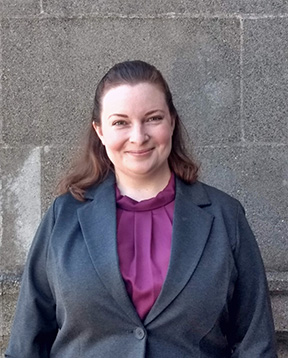 Our first phone call with Jan lasted almost an hour and a half. We both left with a page full of scribbled notes and promises to do additional research on our end and get back in touch. One thing was clear, however: this was a collection of items that would be beneficial to documenting the story of the organized blind movement. And with that arose another question—did we have anything in our existing collections related to Nyal McConoughey that would help enhance the items Jan had just told us about? It wasn’t a necessary prerequisite, but it might be helpful to make the link back to the National Federation of the Blind.
Typically, in terms of archival research, we are able to identify a range of years and locations that then correspond to unique folders in our collections, which might hold the content we’re looking for after combing through each individual page of print. Then again, of course, the search is much simpler when your catalogs provide an entire folder dedicated solely to your research subject. In this case, the Jacobus tenBroek Personal Papers Collection, Box 66, Folder 34, “Nyal D. McConoughey, Ohio, Negotiations with Air Force,” told the following fascinating story.
“Not the Slightest Doubt”
In the fall of 1955, a recently blinded federal employee named Nyal McConoughey reached out to the National Federation of the Blind. He explained in a letter, “I am newly blind with a multiplicity of problems, ambitions and frustrations.” The previous year, while working for the US government in Japan, McConoughey had lost his sight as the result of retinal detachment and cataracts. He was facing additional surgeries and felt uncertain about the future, but he expressed “hope that it may be possible to resume my former occupation.”
Jacobus tenBroek, President of the Federation, responded with a firm and encouraging message. He urged McConoughey to “give serious thought to the possibility of retaining your federal government job even assuming the continuation of your blindness. There are not many jobs which cannot be performed by blind persons. You would be much better off to continue at your present work if that is at all possible.” He asked McConoughey for more details about his duties and assured him that the Federation stood ready to help.
In January of 1956, McConoughey replied. He reported that he did not expect to regain “useful eyesight,” and so he had decided to “redouble my efforts toward necessary adjustment to blindness.” McConoughey had recently received a letter from his employing agency suggesting that “it does not appear certain that I would be considered acceptable” as a candidate in this role. However, he explained that his job duties depended far more on planning, coordination, and supervision than on visual inspection. Tasks requiring sight had long been delegated to other staff. He believed that, with reasonable adaptations, he could continue to perform effectively, and he asked tenBroek for his opinion.
tenBroek’s reply left no room for doubt. He insisted that McConoughey should “do everything in [his] power” to regain his job. As tenBroek explained, “There is not the slightest doubt but what you could continue the work. As a matter of fact, for the general supervisory functions you carried on, sight is not at all necessary.” The Federation offered concrete assistance: advocacy through its Washington office; a letter testifying to “the jobs blind people are doing” and “the methods you would employ in doing your work;” and guidance on obtaining training in travel methods and Braille.
McConoughey took tenBroek’s words to heart. By early 1956, he was enrolled in Braille classes, using a Braille writer, and preparing to travel to Washington, DC, to make his case. He recognized that the greatest obstacle was not his blindness but the lack of understanding about what blind people could do. As he wrote, “The biggest problem, I feel, is to get a chance to demonstrate the matter in which such little-understood abilities [as Braille] could compensate [for] the loss of physical sight.”
Securing McConoughey’s job was not easy. According to an article in the November 1957 issue of the Braille Monitor, “McConoughey and Federation representatives talked with the highest official in Washington in charge of civilian personnel appointments for the Army-Air Force. This official became convinced that McConoughey could do the work and should be reinstated, but those in charge at Tachikawa [Air Base] were adamant in their opposition.” New job requirements were even written to require visual inspection of work products, effectively excluding blind applicants.
Finally, as described in the Braille Monitor, “an agreement was reached that McConoughey would be given the first possible job at Tachikawa Air Base in Japan. On May 27, 1957, he was appointed administrative assistant to the military officer in charge of all billeting arrangements on the entire air base. He is now on the job and performing successfully.” McConoughey became the first blind person employed in a civilian federal position overseas.
More than a year later, writing again from Japan, McConoughey reported to tenBroek that he was thriving. He explained that he was able to “keep ahead” in his work, which was “quite often a surprise to my sighted counterparts.” Further, he said, “It has taken some time but, [I] can now report that I am being taken at face value by the ordinary business contact.” Along with his letter, he sent a family photograph and warm holiday greetings.
A 1958 Braille Monitor article reported on letters of commendation McConoughey received for his work. As McConoughey wrote in a letter to tenBroek, “These letters indicate some pretty solid achievements and I am grateful for the successes that I have had. Frankly, I do not see how it would have been possible without the effective representation provided by the Federation.”
“With Respect and Dignity”
Nyal McConoughey’s story reflects the stories of so many blind people, both in the United States and around the world. His story of resilience and perseverance, a desire to work and to provide for his family, was just as relatable in the 1950s as it is in 2026. These are themes that are constant in the Federation’s archives. And while it is easy for us to explain these ideas as concepts, they are so much more powerful and impactful when shown through the actual writings, possessions, and photographs of people who have lived and are living the philosophy of the National Federation of the Blind.
In November 2025, after much correspondence and quite a few phone calls with Jan and Reggie, the National Archives of the Blind People’s Movement received its first shipment of five boxes of artifacts related to Nyal. A precursory inventory was taken of the items, which include a flag flown over the US Capitol; items with Japanese Braille; copies of the publication “Friendship in Action” that Nyal managed; awards, photographs, and small Braille writers; and a subsequent Deed of Gift sent to Jan to complete the donation. As of January 2026, the items are in the legal possession of the Federation and are in the process of being fully accessioned and cataloged into the archives. This ensures not only the industry standard archival preservation in the stewardship of the items, but the dedication of the National Federation of the Blind to help interpret and make public the blind people’s movement. In one of our many phone calls, Jan said the following regarding the donation of her father’s items: “The goal was to hope to inspire future blind and low-vision people with respect and dignity.”
If you have items in your possession that you think might also help enhance our ongoing documentation of the organized blind movement, please contact our staff at [email protected].