The Meaning of Membership and Independence: An Excerpt from the Nation’s Blind Podcast
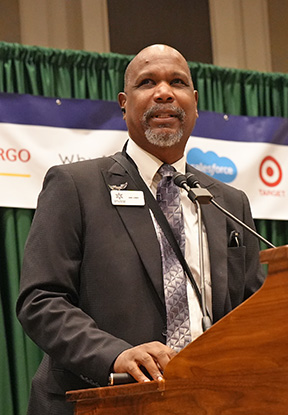
by Melissa Riccobono, Anil Lewis, and Denise Avant
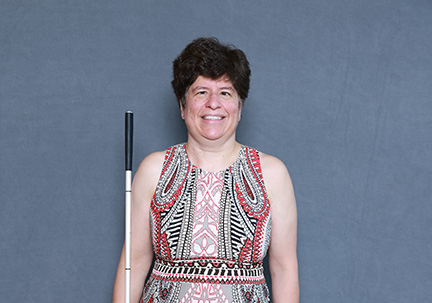 From the Editor: The following is an edited transcript of excerpts from an episode of the Nation’s Blind Podcast entitled “The Myth of the SuperBlind.” To hear the full episode or read the full transcript, visit the podcast’s homepage on the NFB website.
Melissa Riccobono: Hello and welcome to the Nation’s Blind Podcast. I’m Melissa Riccobono, and I am here with the man who is actually coming to you from Baltimore for a change.
Anil Lewis: Hey! How about that?
Melissa Riccobono: So, we have Denise Avant, who I believe has been on our podcast before. She is a member of the tenBroek Board of the National Federation of the Blind, and she is from Chicago, Illinois. How are you, Denise?
Denise Avant: I am doing great. So glad that you guys have asked me to join you this afternoon. And yes, I have been on other podcasts with you all during convention and even at other times. So I’m always glad to come and be part of your podcast.
Anil Lewis: Sure. And you’re still a co-chair of our membership committee or are you chair of the membership group?
Denise Avant: I am chair of the membership committee.
 Anil Lewis: Okay, got it. Yeah.
Melissa Riccobono: Oh, well, no wonder you’re on this podcast because we’re talking a lot about membership today. And we’re really trying to break it down and help people understand what being a member of the National Federation of the Blind means, but more importantly, what it doesn’t mean, because there’s so many rumors and misconceptions out there about what the NFB believes and what we don’t. And so we’re hoping that we can sort of break that down a little bit and talk about that. And Denise, I’m sure you get a lot of questions from people who are new members or who want to be members about these kinds of things. Is that true?
Denise Avant: That’s correct, because I currently serve as chapter president of our Chicago chapter. I’ve been chapter president for five years now. And oftentimes I do get calls from people asking, "Well, what does the National Federation of the Blind do? What do we offer? What will I learn?" And most are new to blindness. Others may not have had as much exposure to independent travel and living and things like that. So they come not knowing. And of course, myself and other more experienced Federationists, we are tasked with the responsibility of trying to really explain who we are and what we’re trying to accomplish and what we’re trying to really help them accomplish for themselves.
Anil Lewis: That begs the question of independence, right? So I guess we start there. What does independence mean?
Melissa Riccobono: Yeah. What does it mean to you, Anil?
Anil Lewis: When I hear it now, I reflect back on some work that we were doing back when we were looking at reasonable accommodations and all that kind of thing. So what I’ve adopted as mine is having autonomy and the power to make your own decisions that create little to no inconvenience to others. So I define that by saying, "Yeah, I want to be able to do what I want. I want autonomy in doing what I want, but that doesn’t give me the right to make someone else do what I need to do in order to get that degree of autonomy."
Melissa Riccobono: Denise, what about you?
.jpg) Denise Avant: I agree with that. I want to be able to go to the places I want to go, do the things that I want to do, and have the experiences that I want to have. And I don’t want to impose on people. I don’t want people to feel like they have to take care of me. If I need to request assistance, I can do that. But I try to limit that because I don’t want to impose on people, but yet I still want to get out and be out in the public because the public doesn’t meet and see a lot of blind people. And sometimes that has to do with why people in the public act the way they do, because they kind of put themselves in the position, “Well, if I were blind, I wouldn’t be able to do this. I wouldn’t be able to walk. I wouldn’t be able to stand up without holding onto something (Melissa laughs).” And it’s like, it’s not true. So I really do want to leave people with the impression, “No, you don’t have to take care of me, but if you could assist me with some directions or getting to a place, that would be great. But if I don’t need you, I’m just going to go on my own.”
Denise Avant: I agree with that. I want to be able to go to the places I want to go, do the things that I want to do, and have the experiences that I want to have. And I don’t want to impose on people. I don’t want people to feel like they have to take care of me. If I need to request assistance, I can do that. But I try to limit that because I don’t want to impose on people, but yet I still want to get out and be out in the public because the public doesn’t meet and see a lot of blind people. And sometimes that has to do with why people in the public act the way they do, because they kind of put themselves in the position, “Well, if I were blind, I wouldn’t be able to do this. I wouldn’t be able to walk. I wouldn’t be able to stand up without holding onto something (Melissa laughs).” And it’s like, it’s not true. So I really do want to leave people with the impression, “No, you don’t have to take care of me, but if you could assist me with some directions or getting to a place, that would be great. But if I don’t need you, I’m just going to go on my own.”
Anil Lewis: Melissa?
Melissa Riccobono: I think for me, it’s really a work in progress. I think that there was a time in my life where I felt like independence had to mean that I did everything all by myself all the time. And then in a variety of ways, partly by actually reading Dr. Jernigan’s wonderful speech, “The Nature of Independence,” I have come to believe that it also means having the belief in myself that I can get things done and that my blindness is not always going to be an obstacle. And if I don’t know how to do something, knowing that I can talk to other people and say, “Hey, have you ever done this before?” And then decide, okay, I could learn how to. And it’s also though, for me, sort of testing my theories a little bit at a time and really figuring out, am I doing this because I think I have to do it this way? Am I doing this because I don’t feel like I can do it any other way? Or am I doing it because yeah, I could do it a different way, but—you know what?—this is just easier or this is more cost-effective right now.
Anil Lewis: I think the key to this whole discussion is that my definition is somewhat different than Denise’s definition, is somewhat different than your definition. And I think that that’s the key. It has to be individualized. Christian, one of our members from Louisiana, said it the best. She says, "Independence looks different on everyone." And I think that’s the real important piece because I think if we don’t look at it from that perspective, then we think that there is one clear universal definition that should be shared by everyone. And then that’s when we get into places where we disagree and disconnect.
Melissa Riccobono: I love that. And I got to say, and we’re going to talk about this in a little while, but independence looked a little bit different for me when I was younger and before I got diagnosed with chronic fatigue syndrome, because once you have something else going on, sometimes the independence has to look a little bit different because there’s other things at play. And so I think that’s really important too.
Now, should we go into the common misconceptions? Or Denise, did you have anything else to say about independence before we go into some common misconceptions or some things that people might want to dive into with us?
Denise Avant: Well, one of the things that I just want to say, I think what we try to do is raise people’s expectations because people come to us not having ever tried a thing, whatever it is, whether it’s grilling a steak or doing a pie crust from scratch. And it’s like, "No, I can’t do it. I’m blind. I just can’t do it." And I’m like, "Well, why don’t I introduce you to some other blind people? And they will tell you about some of the things that they do, including making a pie crust from scratch." So I think that one of the things that we try to do, and maybe part of this is where misunderstanding comes in, we try to raise expectations because we are talking to people who have never had the experience. And so we are trying to raise those expectations and debunk some of the myths about the capabilities of blind people.
Melissa Riccobono: I love that, and sometimes the worst myths that we have to struggle against are the myths that we tell ourselves because it’s what society has told us or because we might believe something or know something in our head, but just don’t believe it in our hearts until we see somebody doing it. Or we feel like, “Well, they’ve been blind all their lives. Of course, they can do that. I just became blind three years ago, four years ago. I can’t do that, or I’m not them.”
Anil Lewis: You touched on something so powerful because it’s not even about just being newly blind. Some individuals who’ve been blind for an extended period of time and have really good skills have still been shaped by society’s perpetual bombardment of that message of lack of capacity.
Melissa Riccobono: So we try to raise expectations, but that sometimes creates misconceptions, including the perception that we as Federationists think we are superior to others. I think the hardest part with a lot of these misconceptions is that people have truly had conversations with others, and they have truly felt as if those other people have told them or have really looked down on them or had an attitude with them. Now, whether the other person did or whether the first person was just so set in their mind that, of course, they were going to be scorned, that’s all up for debate because, of course, communication takes two people. But I think it is hard once you’ve gotten that message or feel like you have truly gotten that message from someone who claims to be a member of the National Federation of the Blind. And then we come along and say, “No, it’s not really like that,” which is the truth. But how do we help people really experience our truth and give them the reason to try again if their first interactions with the NFB weren’t that great?
Anil Lewis: So Denise, how would you respond to that person that comes to you and says, “Well, I heard about you guys. You guys don’t like for us to use wheelchairs in the airport.”
Denise Avant: One of the things that I would first say is that we have all kinds of blind people in our organization. And just because you meet one person who might not have explained things in the way that would be inviting, that doesn’t mean that the rest of us feel that way. And we have evolved as an organization over time. The other thing is our organization, and also the Americans with Disabilities Act, recognizes that people have the right to make their own choices about what do you feel is best for you to use. Now, as a member of the Federation, I will suggest some alternatives, again, just to make you aware and just to maybe encourage you to try out something. And if you feel like you want to do the way you’ve always been doing, that you’re feeling more comfortable that way, then that’s not for me to say, and I’m not going to look down on you. If you feel more comfortable taking a wheelchair at the airport, then by all means, but also accord me the choice to say, “No, I want to walk because the people in the airport insist that this is best for me, and I want to show that as a blind person, there’s nothing wrong with my feet, there’s nothing wrong with my legs, and I can walk.” But each of us has the right to make the choice that you want to make. And one of the things that I know that we stress in the Federation is that you have the right to make your own decision, what’s best for you. I can show you, I can talk to you about it, but at the end of the day, the choice is going to be yours.
Anil Lewis: You said something that’s very important in that too, because I think it does work both ways. So yeah, as Melissa was saying earlier, you may run into a member who, based on the training they received, is really overzealous. What did Dr. Jernigan [say]? Radical independence.
Melissa Riccobono: Radical independence, yeah.
Anil Lewis: They reached a space of radical independence where they’re so proud of their independence that they may come off as being critical of you, not really recognizing that where you are is where they came from too. So it may not be as inspiring or encouraging. I try to be mindful, sticking with the whole analogy of the wheelchairs, when someone travels with me and they know I’m with the Federation, and they normally would take the wheelchair, choose not to take the wheelchair because they don’t want to feel diminished in my perception. I don’t put that burden on people, that’s something that they superimpose on themselves. So once they disclose that, I’m like, “No, let’s get you a wheelchair. That’s fine.”
Melissa Riccobono: When I went to guide dog school, they had something on my ticket that basically said she needs assistance. And so I got to the airport in Minneapolis and they had a cart for me. Now, this cart driver did not speak English hardly at all. There were also other people on the cart. And I was in a position where I had no idea where this cart was driving and I could not communicate well with the driver. I was so worried I wasn’t going to get to the gate where I needed to go because I didn’t know if he really understood where I needed to go. And when I finally got off that cart—and yes, I did get to the gate I wanted to go to—I just decided, “Never again, I do not ever want to give up my control again and just ride through the airport passively. I can’t do that. That takes away my autonomy and even the ways that I gather information.” But when my dad was dying, I had little tiny baby Oriana with me, and not only did I not have enough hands to get through security because I had this tiny little four-month-old, but I also was not in the head space to go around an airport and deal with people. I knew if somebody talked to me wrong or I got turned around or something happened, I was just going to break down and cry. And so yes, that day, I absolutely waited for the assistance, took every bit of assistance anybody would give me, every bit of kindness. I tell these stories to people so that they understand that you can make different choices at different times, and that’s fine, and you shouldn’t have to apologize for making those different choices.
Anil Lewis: Another misconception is that we don’t like guide dogs, and that our training centers do not allow them.
Denise Avant: Well, that’s not true either. Well, first of all, just let me say, if you really want to know the real information, just come to a convention, a national convention, and there are our share of guide dogs. We have a whole division that is devoted to guide dog use, and it has some of our more avid members in it. And we really devote the energy to making sure that guide dog users and their dogs are comfortable in our spaces, both at our national and our state conventions. And I know our training centers, because I’ve asked, they say, “You can bring your guide dog. You can walk to the class with him. And when lunch is, you can play and walk him and feed him, and also after class and on weekends. But when we’re doing classwork, we are going to ask you to use your cane because at the end of the day, if you’re a good cane traveler and are super aware of cardinal directions, that’ll really help your relationship with your guide dog because you don’t have the poor dog out there trying to figure out things for you.”
I’m not a guide dog handler, never have been, but anything that I think would strengthen that bond and would help you be a better traveler, even when you’re using a dog, you’re so much the better. But no, I think our training centers try to encourage you to be a strong cane user. You never know. Your dog might get sick or there may be places that you want to go, like a concert, and do you really want to take your dog to something where music is blasting and all of those kinds of things and there’s crowds of people? I don’t think so. But I’ll leave that to Melissa because I know that you’ve worked a dog.
Melissa Riccobono: What about blind people who have other disabilities? And I kind of did go over this just a little bit because now I do have chronic fatigue syndrome. I’m used to being blind. When I was first diagnosed with chronic fatigue, that was a whole new ball of wax for me. I had no idea what to do because all of a sudden everything that I had always just been able to count on wasn’t working for me anymore, particularly short-term memory.
Denise Avant: Well, I do want to say, as a leader, as a chapter president, I’m aware that we have an accessibility policy and that is designed so that we make sure that our physical space is accessible. A few months ago, one of our members broke her ankle. And so we were looking for a space to have our chapter meetings and we found this great restaurant. It was really wonderful. We had our own little room and it was quiet. There was only one problem. There were stairs, two of them only, but two stairs can be like a mountain to somebody who can’t get up those stairs. And so we were not able to meet at that place, even though the owner tried a portable ramp, but that didn’t work. And so I think that accessibility policy has made us aware that we need to be mindful that not everyone that’s coming to us is just blind.
They could have some other issues. Now, I will also say that sometimes we may need you to tell us what it is you need. That’s what the Americans with Disabilities Act is based on. And I would say that’s what the Federation is based on, is you letting us know what you need. I know that last year at our Washington Seminar, I wasn’t able to be at the seminar, but I’m told that one of the people who went was not as sure with walking and traveling as you might think as far as walking through the halls of Congress and getting to the different meetings, quick fast and in a hurry the way we do, getting off Capitol Hill and getting back, it would take them a little more time. I really was not aware of that. Had I known, I might’ve tried to schedule something a little different for that person. So if there’s something that you need, we’re not asking you to divulge your entire medical condition but at least let us know so that we can make arrangements. We have the DeafBlind Division and we now are starting to get the devices so that if people have trouble hearing during the meetings, we’re able to get that to them. So these are things that we really are working on as an organization. So if you had a bad experience, if you came to us once and you didn’t find that we met your needs, give us another chance and tell us what you need so that we can see what we can do. Chances I will be able to meet you where you are.
Anil Lewis: Any closing thoughts?
Melissa Riccobono: I would say that number one, read “The Nature of Independence,” and number two, really ask, have the conversation. If you feel like you’ve been dismissed or something has happened where you feel like your choices were belittled, have a conversation with maybe another member, maybe the person who talked to you. I don’t know. I think it just depends on what exactly took place, but I think communication is always so much better than just assuming. And I think giving each other grace, none of us are perfect. We’re all just trying to help each other be all that we can be and have high expectations because low expectations are really those things that create obstacles between blind people and our dreams. And we want blind people to be able to dream and to be able to have opportunities. And so I guess that’s my thing, just communicate, ask questions, keep looking for answers, keep exploring, and give us some grace, but also let us know. Let us know what you need or let us know when something really didn’t work out well, because we really can’t fix things if we don’t know what’s wrong or what you feel is wrong.
Anil Lewis: Yeah. The only advice I would offer is don’t make a decision about a whole organization based on a limited exposure.
Denise Avant: One person.
Anil Lewis: One, yeah, or even a small group of people because they may have found their group of people who believe as they believe, which is well within the grounds of the Federation. But I guarantee you, there are other people within the Federation that also resonate with you where you are and how you feel and your perspective as well. And one of the ways to find them is to get active, go to a chapter meeting. You get exposed to a lot of different people because that’s the purpose of our chapters, to put those hands on hands and have people really interact with people. So I encourage you to explore the organization because it’s more than just a conversation with one person or just a few people. But as was said earlier, I think Denise, you mentioned, go to a national convention. That’s where you can see all of it, all of it.
Melissa Riccobono: And even a state convention. And I would say, too, about chapters, if a chapter that’s closest to you, you’re just not clicking with them for some reason or they meet at a time that’s not convenient for you, it’s okay to go to another chapter as long as you can get there. Nothing says that you have to go to just this chapter. I mean, maybe the at-large chapter is better for you for whatever reason, or maybe there’s an evening chapter that’s better. That’s why we have a variety of chapters to try to make it so that people will enjoy coming to the meetings and really be able to get out of the chapter what they put into it.
Denise Avant: Well, I just want to let people know, yes, some people, we have our moments when, especially times of frustration, but as you all have said, we ask those of you who have come to us and may not have had a good experience to afford us a little grace. We are also striving to be better so that when we as leaders meet you, we are able to properly welcome you and meet you where you are. That’s what we want to do when you come to our chapters. We want to provide a safe and a comfortable space for you to come in and get to know members of the National Federation of the Blind. Some of the nicest people that I have known in this organization have been those who have very good blindness skills, but they’ve never once refused to help me and to show me how I can be better at what I’m trying to do as a blind person.
Anil Lewis: And there you have it. I hope this has been helpful for individuals who for whatever reason have adopted a different perspective of the organization, but trust me, there is room for you and we welcome anyone who wants to be part of the Federation family to come join us and do the work of the Federation, creating opportunities for blind people. Until then, remember, you can live the life you want.
Denise Avant: Blindness is not what holds you back.