American Action Fund for Blind Children and Adults
Future Reflections Winter 2020 ADVOCACY
Time for Action for Blind Students
by Kathryn Webster
Reprinted from Braille Monitor, Volume 63, Number 1, January 2020
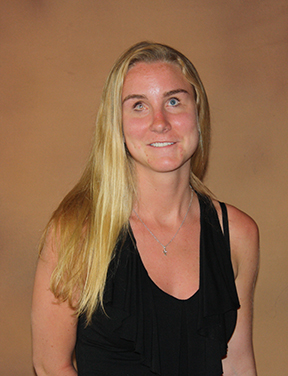 From the Editor: For three days each winter, Federationists from across the United States gather on Capitol Hill for the annual event known as Washington Seminar. Delegations from every state affiliate of Federationists visit the offices of lawmakers to acquaint them with pending legislation of concern to the blind community and to ask for their support. The work does not end with Washington Seminar, however. As Kathryn Webster points out, the passage of critical legislation calls for an ongoing effort by blind people and our allies. Kathryn Webster serves as president of the National Association of Blind Students (NABS).
On Friday, December 6, 2019, blind students across the United States of America marveled at the great news of the introduction of the Accessible Instructional Materials in Higher Education Act (H.R. 5312/S. 3095), fondly referred to as AIM HIGH. Until a market-driven solution for accessible materials is achieved, blind college students are often denied access to critical course content. The AIM HIGH Act will remove these barriers to accessibility in the classroom by creating a set of guidelines that clearly define accessible instructional materials.
Parents can celebrate the introduction of this bill, which will encourage their blind children to shoot for the stars because they would be welcomed with open arms in higher education. Educators, too, can back the bill, knowing that its passage would provide mentorship and support to blind students. Let's face it—colleges don't have all the answers, but they want to accommodate our students as fully as they can. To leaders in the disability community, this bill would be paramount; the push for accessible and inclusive education is top of mind, as it very well should be. Most significantly, for blind students this monumental piece of legislation would level the playing field so we would have opportunities equivalent to those of our sighted counterparts in the classroom and beyond.
As president of one of the most proud, determined, and mighty divisions of the National Federation of the Blind—the National Association of Blind Students—I applaud Congressman Phil Roe (R-TN) and Congressman Joe Courtney (D-CT) for recognizing the value of this legislation and introducing it to the House of Representatives in hopes of driving it to majority support, and ultimately, implementation for the benefit of our students. We are eager to push efforts forward to ensure that all students who are blind or otherwise print disabled have full and equal access to university course materials such as textbooks, research equipment, and online learning platforms.
I'd like to share one small example in an attempt to illustrate moments where accessibility would have furthered one's reach in attaining aspirations. In my pursuit of a bachelor of science in data analytics and statistics, I struggled to comprehend concepts covered in a high-level statistics course at Wake Forest University because of the lack of accessible materials. My inability to grasp visual topics had nothing to do with my mind and brainpower; instead, it had everything to do with inaccessible textbooks and graphical measuring tools. Too often blind students are forced to push courses to the following semester; encouraged to take other, more text-heavy classes; or asked to do less than our peers simply because accessibility is not seen as a possibility when it truly is an option, and a needed one. This bill would reduce those barriers by making sure colleges and universities have somewhere to turn in order to explore solutions that can create inclusion in the classroom.
The leadership and membership of the National Association of Blind Students vehemently applauds the introduction of this bill, and we will put forth all efforts to educate, spread awareness, and broaden understanding of our capabilities as contributing and active members of society. It is our time to take action! I am leaning on our communities to push this bill forward.
1. If you are a blind student, write a paragraph about your experience in the classroom, whether you dealt with an access barrier or one of those rare and fortunate encounters with positive accessibility. Share your remarks with board member Trisha Kulkarni by emailing [email protected].
2. If you are an educator, parent, or ally, contact President Kathryn Webster at [email protected] to learn more about how you can support this effort.
3. If you are a member of Congress, we need your voice to ensure that our students receive equal and adequate education, allowing them to shine and contribute as we all eagerly desire to do.
We are beyond excited to witness an initiative that could change the landscape for blind students for years to come. We deeply appreciate any support and assistance in making this possible.
Media Share
