American Action Fund for Blind Children and Adults
Future Reflections Special Issue: COVID and Beyond ANNOUNCEMENTS
Empowering Our Children: Maximizing Skills, Opportunities, and Dreams
by Carlton Anne Cook Walker
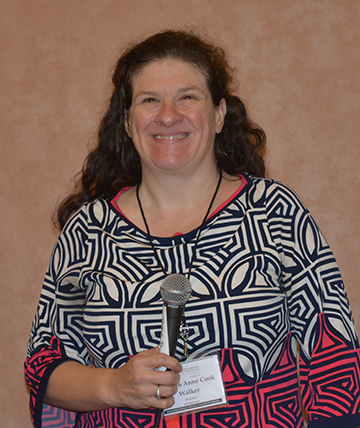 From the Editor: Carlton Anne Cook Walker serves as president of the National Organization of Parents of Blind Children (NOPBC). She is an attorney, a teacher of blind students, and the parent of a blind child.
"To everything there is a season, and a time to every purpose under heaven." Some view these words, verses from the Old Testament's Book of Ecclesiastes, as advocating a meek acceptance of the status quo, a mechanism to pressure people to accept their lot in life. Others have used these words to advocate for acting to bring about change to tip the scales and create a completely new world. Pete Seeger used this verse to plead for world peace in his famous song, "Turn! Turn! Turn!"
To me these words mean something between these two extremes. Rather than meek acceptance or drastic change, we can assess the positives and the negatives of our lives. We can then make changes to minimize the negatives while ensuring that we preserve the positives.
The current pandemic provides an example of this approach. In a very short time period, the world as we knew it was turned upside down. We could no longer rely on the ways we used to do things. Suddenly we needed to make significant changes in many areas of our lives, including work, school, medical care, and even grocery shopping. We didn't seek out this new world in which we lived, but we could not simply ignore the changes it brought about. Thus, we faced these enormous and unwelcome changes and learned to do things differently. Along the way we found that we actually liked some of the changes we initially resisted.
More time at home has helped me to grow in new ways. I have developed skills such as making sourdough bread—something I never thought I could do and would almost certainly never have tried until the lockdowns prompted many of my friends to share their positive experiences with the process. While I greatly miss in-person gatherings, I have had the opportunity to connect with more people more often through the use of Zoom and other online platforms. And I have made more progress toward my dream of achieving work-life balance than I have in more than a decade.
Are these positive changes? For me, yes, and I plan to keep these changes as part of my life. The pandemic has brought much heartache and pain, but it is a reality we cannot ignore. By recognizing and embracing how new experiences and tools have enriched our lives, we can grow and thrive. We can find purpose and meaning in these new times.
In many ways, my adjustment to pandemic life mirrors my adjustment to becoming the parent of a blind child. My child, Anna Catherine, was a preschooler before we actually understood that the "vision differences" we knew about constituted a significant vision loss and that Anna Catherine was "legally blind." For many months my husband, Stephen, and I didn't know what to do with that information. Anna Catherine was "getting by," but she kept insisting on getting terribly close to things—books, toys, the television, and people. Accidents and injuries were becoming more and more commonplace.
Eventually we became connected with the National Organization of Parents of Blind Children, a proud division of the National Federation of the Blind. This connection was hard for several members of our family. The word blind brought forth feelings of fear and loss. They didn't want Anna Catherine to be blind. They resisted both the word and the blindness skills Anna Catherine was starting to learn.
Of course, refusing to recognize blindness does not make it go way. Like the seasons of the year, blindness (including low vision) is an immutable reality. However, we need not meekly accept this reality. We help our children maximize their efficiency and their enjoyment of life during each season by providing them the clothes, the environments (with heat or cooling), and the knowledge to thrive. We can help our children do the same when they enter the "season" of blindness/low vision.
However, many parents of blind/low vision children have little or no experience with blindness. I could teach Anna Catherine how to dress for rainy days and find safe sledding places to enjoy new-fallen snow. But I did not have the experience to know what blindness skills my child needed or how to teach them.
Luckily, I stumbled into two incredible organizations: the National Federation of the Blind (NFB) and its parents' division, the National Organization of Parents of Blind Children (NOPBC). Together these groups transform the lives of blind/low-vision children and their families. With support from the Federation in terms of expertise, advocacy, and mentorship, we in the NOPBC empower blind children and their families. Instead of concentrating on the use of residual vision, we share knowledge about which blindness skills can help our children maximize their abilities both now and in the future. Instead of focusing on limitations, we explore and create opportunities for our blind children to experience the world in meaningful ways. Instead of erecting obstacles, we encourage our blind children to unleash their imaginations and work toward turning their dreams into reality.
As we have for almost four decades, the NOPBC will host our Annual Conference in conjunction with the NFB National Convention. For the second year in a row the conference and the convention will be held via distance technology. From July 6 through 10 we will offer activities and information for parents of blind and low-vision children birth through high school (and, sometimes, beyond).
We know that many of our children have disabilities in addition to blindness, and we design our sessions and activities to be inclusive. In addition, we have activities for youth ages eleven through eighteen through our Youth Track activities. Besides general and concurrent sessions on a wide variety of topics of interest to parents of blind and low-vision children, we plan to offer informal opportunities for families to mix and mingle, including the highly popular Family Game Night and our Exhibitors Fair.
Our Annual NOPBC Board Meeting includes updates and opportunities for our children as well as our Board of Director elections. As always, we look forward to hosting sessions on IEP meetings—another way we help families empower blind children by maximizing their skills and opportunities so that they may follow their dreams.
In addition to the NOPBC Annual Conference, the NFB Annual Convention offers general sessions featuring nationally renowned speakers who discuss emerging issues in blindness and topics impacting blind individuals of all ages. At General Session we, the membership of the National Federation of the Blind, will vote on the resolutions that set forth NFB policy. You'll hear how the National Federation of the Blind is helping us tear down the obstacles that separate blind people from our dreams. What more could parents want for their children?
We cap off the week with our wonderful Convention Banquet on Saturday evening. At the Banquet we enjoy the company of our Federation friends and hear the Banquet Address from NFB President Mark Riccobono. Also at the Banquet the NFB will award tens of thousands of dollars in merit scholarships to thirty blind college and graduate students from across the nation.
As you can see, we look forward to a week packed with information, ideas, and interaction with parents and experts in blindness. Please join us at the NOPBC Conference and the NFB Convention online this July. Please join our sessions, which will include information and ideas for families of blind students from birth through college.
There is no fee to register for either the NOPBC Annual Conference or the NFB Annual Convention. Even better, you may register for both events using one form found at: https://nfb.org/civicrm/event/register?reset=1&id=432. We look forward to seeing you there, anywhere and everywhere!