American Action Fund for Blind Children and Adults
Future Reflections Special Issue on Braille TEACHING
Beyond the Code: Teaching Braille as Literacy
by Casey L. Robertson
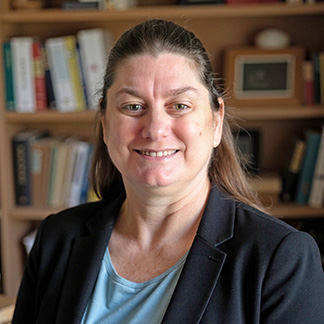 From the Editor: Casey L. Robertson is a nationally recognized educator, leader, and advocate in the field of blindness education. She has more than a decade of experience preparing professionals, supporting families, and advancing literacy for blind students. She serves through the Professional Development and Research Institute on Blindness at Louisiana Tech University and has worked extensively as a teacher of students with visual impairments across multiple school districts. She also leads independent consulting and curriculum development work focused on blindness education. In 2025 she was the winner of a Dr. Jacob Bolotin Award.
No child should have to wait for years to become a reader!
All too often that is exactly what happens to children who are learning to read Braille. Children may spend months—or even longer—working through tracking, letter recognition, and isolated code exercises before they are finally given the words, sentences, and books that make reading meaningful. By the time they have the chance to begin real reading, their motivation may have faded. The student may feel disconnected from classmates and doubtful that Braille is truly a tool for learning and independence.
I often hear parents, and even teachers, insist that Braille is hard to learn. I hear them say that their child or student is not interested in learning it. I hear this complaint most often from the parents and teachers of dual-media learners.
When I hear these concerns, I usually respond with a few questions. How is Braille being taught? What do the lessons actually look like? And perhaps most importantly, are we teaching Braille, or are we teaching literacy?
Braille is not inherently hard to learn, and in many cases, students do not begin by seeing Braille as difficult. Often they learn that attitude from the adults around them. Children want to please teachers and parents, and they absorb the messages we send them. They also tend to mirror the attitudes we model. If Braille is presented as complicated, frustrating, or secondary, students may begin to see it that way, too. If Braille is presented as a natural and meaningful path to reading, students are far more likely to engage with it as readers.
The Natural Order of Contractions
The Natural Order of Contractions (NOC) offers a very different path. Developed within the Professional Development and Research Institute on Blindness at Louisiana Tech University, NOC teaches contractions as they naturally appear in the words and texts students need to read. Instead of delaying meaningful literacy until large portions of the Braille code are memorized in isolation, NOC helps students move quickly into authentic reading.
In the NOC approach, teachers begin with foundational skills, but they do not stop there. As students encounter high-frequency words, classroom materials, and connected text, contractions are taught in the order they naturally occur. Students learn Braille within the context of reading, not as a separate, disconnected skill.
Too often, students are pulled out of the mainstream classroom during reading instruction to be taught the Braille code. While code instruction matters, literacy is larger than the code itself. Students need opportunities to read stories, engage with language, build comprehension, and see themselves as readers. When Braille instruction is disconnected from meaningful reading, students miss the very experiences that make literacy so powerful.
This matters, because relevance matters. Many traditional Braille programs isolate students into a separate curriculum with activities that may feel slow, artificial, and unmotivating.
This problem is especially serious for older students who are transitioning from print to Braille. These learners already understand the mechanics of reading; what they lack is access to the Braille code. Giving them babyish materials to read and forcing them through disconnected drills can feel burdensome and discouraging. NOC addresses this challenge by using interesting, age-respectful text and teaching the contractions students need in order to read that text successfully.
Meaningful Words, Meaningful Reading
The NOC approach aligns with longstanding reading research. Effective reading instruction includes phonemic awareness, phonics, fluency, comprehension, and strong teaching. NOC explicitly connects Braille literacy to these essential components. With the NOC approach, Braille instruction supports the full reading process. It does not postpone meaningful literacy while students move through a rigid sequence of symbols.
NOC offers an encouraging message to families: Your child does not have to be trapped in a slow march through isolated code work before being treated as a real reader. Children need meaningful words and meaningful books that encourage them to read. They need instruction that builds confidence as well as competence. When students have access to authentic classroom reading and learn contractions in the words they actually encounter, Braille ceases to be a code to memorize. It becomes a literacy system they can use to unlock the mysteries and delights of words on the page.
For teachers of blind or low-vision students, NOC offers a practical, flexible framework. It begins with tracking and alphabet work, and then moves into word recognition (what print readers refer to as sight words). Teachers introduce Braille contractions as they appear naturally in the text.
NOC cautions teachers not to present words in their uncontracted form when those words normally contain contractions in standard Braille. The use of mainstream reading materials, explicit instruction on specific contractions, and read-aloud support are strongly encouraged. Braille-rich environments should connect literacy to real life.
Perhaps most importantly, NOC helps preserve high expectations. Too often, Braille readers are expected to advance more slowly than print readers. It is assumed that they will read less or accept a narrower curriculum. NOC pushes against that pattern. It keeps students connected to grade-level materials, interesting content, and the broader curriculum alongside their peers. The goal is not simply to teach contractions more quickly. The goal is to help students become readers sooner—readers who can participate, comprehend, write, study, and grow in independence.
This goal does not belong to teachers alone. Parents and paraprofessionals play an enormous role in determining whether Braille is reinforced consistently and positively in a child’s daily life. Families build literacy through routines, expectations, and encouragement. Paraprofessionals often support instruction under the guidance of the teacher of blind students. They can help create more opportunities for practice and access throughout the school day. When the adults around a child understand Braille, the child benefits.
Summer Braille Class
To support these goals, I offer a Summer Braille Class for Parents and Paraprofessionals. This class is designed to give adults the confidence and knowledge they need to support a Braille learner more effectively. My course is intended for adults who currently work with a Braille learner, expect to support an incoming Braille student in fall 2026, or are the parents of a blind or low-vision child. The course is offered free of charge. It runs for sixteen weeks in an eighteen-week time frame. It requires participants to attend weekly virtual classes, complete homework, and participate actively. Participants need a Perkins Brailler and a copy of Ashcroft’s Programmed Instruction in Braille: Unified English Braille. The course does not provide college credit, and it does not certify participants as Teachers of Blind Students. However, participants may optionally pursue the National Certification in Unified English Braille (NCUEB).
This kind of training fits beautifully with the spirit of NOC. If we believe children should have meaningful access to Braille literacy, then we also must equip the adults around them to support that literacy. A child’s progress is strengthened when the adults at home and at school understand how Braille works, value it as a true reading medium, and know how to reinforce learning in everyday settings.
Braille instruction is at its best when it leads quickly to purpose, confidence, and independence. The Natural Order of Contractions is one promising way to make that happen.
An upcoming book, expected to be published early in 2027, will guide parents and teachers in the use of NOC. If you or a parent or educator you know wants to join the free summer course, reach out to me at [email protected].