



 Diabetes
often causes cardiac complications such as heart attacks, strokes, and the need
for heart bypass operations. Once prevention is no longer an option, the challenge
becomes an early and accurate diagnosis with timely treatment.
Diabetes
often causes cardiac complications such as heart attacks, strokes, and the need
for heart bypass operations. Once prevention is no longer an option, the challenge
becomes an early and accurate diagnosis with timely treatment.
Traditionally, physicians have used observation, electrocardiograms, and halter monitors. However, a heart problem may not be detected during a physical exam, or during an in-office electrocardiogram. This is especially true if the symptoms are episodic. A halter monitor, which is worn for three days, offers a more comprehensive evaluation, but there may be delays in transmission of information.
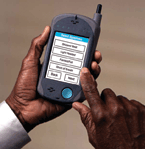
Thankfully, electronics are rapidly advancing and improving the diagnoses of heart conditions. Consider the CardioNet Ambulatory Monitor. The CardioNet Service provides physicians with the information they need for diagnosis and therapy management. The CardioNet System is like a halter monitor crossed with a Palm Pilot and a cell phone.
When used as a diagnostic tool, CardioNet’s signature service, called Mobile Cardiac Outpatient Telemetry (MCOT), allows doctors to capture significant arrhythmic events for up to 21 days. It may be worn for up to 21 days. CardioNet has three non-invasive/stick-on electrodes that connect to a sensor, which can be worn as a pendent or on a belt-clip. This sensor wirelessly relays the information to the monitoring device. This system provides more-or-less real time monitoring, and it allows users quickly to report an abnormal event to their caregivers via a wireless cellular technology. Information can also be sent to the doctor via fax, email, or Internet.
For more information, ask your doctor about CardioNet, or visit their Web site: www.cardionet.com, or call (619) 243-7500.