Dr. Joanne Wilson Retires
Another Jernigan Pioneer Enters a New Phase of Life
by Jim Omvig
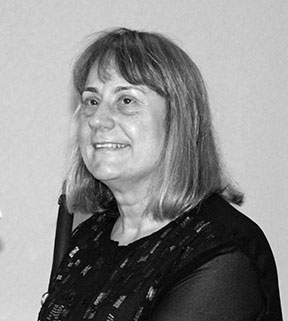 From the Editor: Joanne Wilson is one of the finest Federationists I’ve ever known. She is friendly, outgoing, energetic, and inspirational. Her brains and her energy have served the Federation well, and it is fitting that a friend such as Jim Omvig take on the task of sharing a little about Joanne in these pages.
But before we get to Jim, the first memory I have of meeting Joanne was on a convention elevator. Almost every Federationist who attends a national convention has an elevator story, but the elevator Joanne and I shared stopped between floors, and one of the passengers was quite upset and scared. My job was to calm him down and to work on using the telephone in the elevator to get us help. Now I wasn’t the first Federationist to hold Joanne’s new baby (more about her in Jim’s article), but I bet I was the first person other than Joanne to hold her while on a stuck elevator. Such is my claim to fame. Here is what Jim has to say about a wonderful person who has blessed us with so much of her time, talent, energy, and enthusiasm:
Dr. Joanne Wilson of the Federation's National Center staff in Baltimore retired as of December 31, 2014. Newer members of the Federation, newer Monitor readers, newer chapter members, or newer state or national convention attendees are more than likely familiar with her recent life as a National Office staff member but probably not with her earlier years. Newer readers may not think of her as one of the Jernigan Pioneers.
She joined our national staff in March of 2005 and among other things has served as head of our Affiliate Action unit; as a leader of many seminars both in Baltimore and at national conventions; as a presenter about Federation philosophy and training at various functions around the country; as an advocate with US congressmen and senators at many of our Washington Seminars; and as one of our national representatives at many state conventions through the years. All would agree that she is a wonderful woman and a fine leader.
This all sounds terrific, doesn't it? But there's more, much more. So, now, as Paul Harvey used to say, "I want to tell you the rest of the story." This is what one might call a teachable moment. I urge those of you who are newly blind, parents of a blind child, or the friend of someone who has not adjusted effectively to his or her blindness, to dig in your mental heels and read and re-read this profile until you understand and believe.
Joanne Wilson was born in Chicago, Illinois, on October 29, 1946. She was Joanne Zeihan (pronounced Zion). She tells me that, by the time she was three years old, it was clear to her parents and her doctor that she had a severe visual impairment. Her problem turned out to be retinitis pigmentosa (RP). For those who are not familiar with this eye disease, it causes a gradual narrowing of the field of vision (tunnel vision), a degeneration of the retina itself, and also what is commonly referred to as "night blindness." One who has RP can see fairly well outside in good daylight, but, when you come indoors, you are almost instantly totally blind. And of course it ultimately leads to total blindness.
Joanne's parents knew nothing about blindness. They wanted to help, but they didn't know what to do. They had originally come from Webster City, Iowa, and, after they learned about Joanne's poor eyes, they reasoned that a young visually impaired child would probably have a much better chance for decent help in rural Iowa than in the hustle and bustle of Chicago. So, when they got the chance, which was when Joanne was seven years old, they returned home to Iowa. What a fateful decision that turned out to be! Kenneth Jernigan would also come to Iowa only five years later.
Joanne describes her childhood as dreadful. She started school in a parochial school and attended it until the time came for high school. Her vision continued to deteriorate, but the school had no help for her. She read print very slowly and spent an inordinate number of hours reading each day just trying to keep up with her fellow students.
She confesses that, because of her tunnel vision and night blindness, she also developed an intense fear that she would trip and fall and either hurt herself or be embarrassed in front of others. And every time she had to go to an unfamiliar place, she worried whether there would be sufficient lighting for her. And also of course, as many of us with failing vision did, she faked sight whenever she thought she could get away with it.
This bleak pattern of life continued throughout her elementary, Catholic schooling, her attendance at Webster City Public High School, and another two years when she attended Webster City Junior College. But an Iowa Commission for the Blind Vocational Rehabilitation Counselor, Don Bell, began visiting her and trying to convince her that she should come to a new school for blind adults in Des Moines. This new school to which Bell referred was the new Orientation and Adjustment Center for Blind Adults that Kenneth Jernigan had established in 1960 as a part of the Iowa Commission for the Blind. But Joanne wouldn't come. She didn't want to be around those blind people. If she would be walking home from school and see Bell's car at her parents' home, she would go somewhere else and stay away until he was gone.
But finally in the fall of 1965 she relented and agreed to come to a one-day event at the Commission for the Blind in Des Moines, where this new commission director, Kenneth Jernigan, was holding what he called College Day for the commission-sponsored college students. This was the day when, at age nineteen, Joanne Wilson was introduced to a new philosophy of blindness and also learned about the National Federation of the Blind. This was the day when her life began to change completely and forever.
Joanne Wilson Meets Kenneth Jernigan
By this time Kenneth Jernigan had established what he called Commission for the Blind College Day each fall. He wanted to have the chance to prepare blind clients for their college years. But he also wanted to use the day to recruit current college students to the Orientation and Adjustment Center if they had not previously had the chance to attend it. Counselor Don Bell knew this and pressed hard to get Joanne to attend, which she finally did.
Joanne says, "The day was amazing. The commission's conference room was full of students. I had never had much of anything to be happy about, but these students were laughing and joking and teasing one another and having a great time. And Dr. Jernigan and other commission staff members were also a significant part of the fun."
Joanne also confesses this heartfelt emotion, "I found the students I met actually to be free inside, and they were not worried about their blindness. They were not all wadded up inside like I was."
A part of the custom of College Day also had to do with the evening meal. After the long, hard day of work and fun, Dr. Jernigan typically entertained the students for the evening meal at an elegant place called the Embassy Club. Counselor Don Bell arranged it so that Joanne Wilson sat next to Dr. Jernigan at dinner. Ingenious! I'm sure that some of you old timers have had the experience of being worked over for an hour or two by Dr. Jernigan. Think about it!
When the dinner was over, Joanne had one more major problem with which to deal. It was now totally dark, and, because of her night blindness, she couldn't see a thing. Somehow she had to get back to the commission, where she would sleep that night. What to do? She finally accepted an offer and took the arm of a totally blind student who was a trained cane user and let herself be led. The trained white cane user who had led the helpless, frightened Joanne was Federationist Ramona Walhof. After the entire day, and then after that last humbling experience with which to end it, Joanne began to think.
She tells me that that day she had also met and had instantly become friends with another untrained college student, Mary Ellen Halverson. Eventually they talked and made a pact: "If you will go to the Orientation Center, so will I. These students who have had the Jernigan training obviously have something, and we need it too. And this National Federation of the Blind that they all talk about really sounds neat."
So the decision was made. Joanne Wilson became a Kenneth Jernigan student at the Iowa Orientation Center in June of 1966, following the completion of her second year at Webster City Junior College. She continued to be a center student for the next nine months.
It would be impossible for me to detail those nine months of training in this article. Suffice it to say here that during those nine months of what later came to be called structured discovery learning, Joanne Wilson's life was changed completely and forever. She became personally empowered; she knew what it felt like to be free; and she also developed a passion for justice for the blind, and that deep passion continues to this day as evidenced by her many years of volunteer work in the National Federation of the Blind. It should also be noted that Joanne and Mary Ellen Halverson remain close friends to this day.
I will summarize the next forty-eight years of this blind woman's life. She graduated from the Iowa Center in March of 1967 and immediately enrolled at Iowa State University in Ames, Iowa. While she was a center student, she determined that she wanted to be a public school elementary teacher, and it was with this goal in mind that she entered Iowa State in March. (Iowa State operates on the quarter system, which explains college classes beginning then.)
The Jernigan alternative techniques worked splendidly for her, and that part of the college life was no problem. But there was another problem: a big one. When it came time for her to arrange for practice teaching, the dean of education said she could not do it. "Since you're blind, you won't ever be able to get a job anyway, so why go to the trouble?"
She finally settled him down to discuss the issue and asked, "If I find a school that will allow me to practice teach, will you send me?"
The Dean agreed that he would, so Joanne got hold of Dr. Jernigan for help in finding a school that would accept her. She knew that by this time he and the Iowa Commission for the Blind had become famous in Iowa, so she assumed that he could help.
What she didn't know was that he had also become an active Lion in the Des Moines Downtown Lions Club and that the superintendent of the Urbandale, Iowa School District was also a club member. Dr. Jernigan spoke with his club friend, and the practice teaching assignment was arranged.
And there is even more to this story. The Iowa State University Department of Education had tried for several years to get Urbandale to accept its education students for practice teaching assignments, since it was one of the finer schools in the state, but Urbandale would not agree. After it accepted Joanne Wilson and she performed splendidly, it also began routinely to accept sighted Iowa State students for their practice teaching assignments.
The year 1969 was a very big year in the life of our heroine. She successfully completed practice teaching; after many interviews she got that first teaching job — teaching second grade right there in Ames, Iowa; and she got married to Joseph Fernandes, an Iowa State professor. She taught second grade for two years, and then she switched to fourth for another two.
Joanne was the second blind Iowan to secure a public school teaching job in an elementary school. The first, also helped greatly by Kenneth Jernigan, was Judy Young. (For this entire story, see my article, "An Affectionate Validation," in the November 1995 issue of the Braille Monitor.)
Joanne says, "By this time I was having babies, so I needed to stay home and be a mom." She quit her fourth-grade teaching job. (A little later I'll touch briefly upon the fantastic story of the birth of the last, the fifth, baby.)
But even with busy motherhood, her passion for justice for the blind did not wane. She helped organize an Ames Chapter of the National Federation of the Blind of Iowa and became its first president. She was also elected as one of the vice presidents of the NFB of Iowa. Through these years she did what she could to help other blind people and also to support Dr. Jernigan and the Iowa Commission.
In 1978 Joanne's then husband was offered a teaching position at Louisiana Tech University in Ruston, Louisiana, and the couple and their children moved South. Joanne went on to tell me what I and others like us had already experienced. She said, "Dr. Jernigan and others always told us that Iowa is different and better than other state rehab programs, but I'm not so sure I believed it. Since the Iowa Commission for the Blind was so fantastic, wouldn't it be reasonable to assume that all state services these days would be just as good?"
But she learned when she got to Ruston that Louisiana services and conditions for the blind were absolutely atrocious. So, as Joanne would naturally have done, she involved herself immediately in the activities of the National Federation of the Blind of Louisiana. But what do you know: The Federation affiliate itself turned out to be no better than other programs for the blind in that state.
A lesser woman than Joanne might simply have given up and busied herself being a mom, but not our friend, colleague, and fellow Federationist. She thought, "I'm really needed here." So she joined the affiliate. Suffice it to say that she saw that both the affiliate itself and state services for the blind needed fixing, so she decided to do it. Think about it: She had worked on new membership and chapter-building for a couple of years "lying on her sofa" and talking on the phone for hours and hours, convincing people that they should join and participate. By the time of the 1982 state convention, her new recruits showed up, and she won the presidency. Yes, she won, but there were problems. She worked vigorously for the next two years building the affiliate and strengthening the membership. By the time of the 1984 national convention in Phoenix, she was able to set another record. She brought 149 Louisiana registrants to the convention—by far the largest registration Louisiana, or virtually any other state, had ever brought.
In 1984, when Joanne came to Phoenix, she was very pregnant with her fifth child. Actually, she probably shouldn't have come at all. During the night before opening session, she went into labor. Her fifth child, Jennica, was born at a Phoenix birthing center. But Joanne was so proud of all of the new members she had brought to the convention that she vowed to be present at opening session to introduce them. So she registered baby Jennica so that, when she proudly responded to the president's request for Louisiana in the Roll Call of States, the Louisiana affiliate record attendance that year was actually 150, not the 149 I mentioned earlier.
All five of Joanne's children attended conventions from birth to adulthood. What a record of pride and accomplishment! Also her first national convention was in 1966 when she was an Iowa Orientation Center student. Then, because of college and teaching and because her passion was not yet as intense as it ultimately became, her attendance at national conventions was sporadic before she moved to Ruston. But she has attended every national convention since that time. In the Federation we frequently speak almost religiously about dedication, commitment, and sacrifice. Here they are.
LCB Is Established
"I'm free! I know what it feels like to be free, and, if I can have this freedom, why shouldn't all blind people have the same chance as I?" Joanne hadn't been in Ruston long before she realized just how bad adult state services for the blind really were. So, as she worked on building the affiliate and other activities, she also began to dream. Before long, other things began to fall into place. Having been trained by Dr. Jernigan in Iowa, she knew what adjustment-to-blindness services could and should be. Her notion always was, "If I could receive such fantastic services, why shouldn't others have the same chance?" So she began thinking and dreaming about, not just repairing the disastrous existing state services, but actually trying to fix them.
She mused, "Why not establish a new, privately run orientation and adjustment center, based upon the Iowa model, right here in Ruston? I know what a center needs to be, and it could be managed and run by the National Federation of the Blind of Louisiana."
In the spring of 1985, when Joanne was working with members in the Louisiana State Legislature to improve conditions for the blind in the state, she met a state representative named Mary Landrieu, who later became a US Senator. Joanne told Representative Landrieu of her dream, and she arranged a meeting with then Louisiana Governor Edwin Edwards. They met, talked, planned, and, when the meeting ended, Governor Edwards told Ms. Landrieu to put a line item in his budget for Joanne's center, and it was done.
Also in the spring of 1985, I was working hard at my desk in Anchorage, Alaska, one morning when my friend Joanne called and asked: "Jim, how do I set up a nonprofit corporation to run an orientation center?"
"Joanne," I replied, "You are truly in luck. I have just finished re-doing my articles of incorporation and my bylaws for the Alaska Center for Blind Adults. If you like, I'll send you copies," and I did. I gather she used them in Louisiana.
Then things moved rapidly. When Joanne was at the 1985 NFB National Convention in Louisville, she learned that the Louisiana Legislature had approved the governor's request for her funding. Using the NFB network of friends, she had already identified and spoken with some possible startup staff members. She had been referred to Jerry and Merilynn Whittle and Susanne Mitchell of South Carolina.
They talked. And Joanne says they were all willing to dream and to gamble. They knew Joanne had only a one-year budget, but they were Federationists with dreams and a lot of guts, and they were willing to take the risk. The result of the dream, the Louisiana Center for the Blind (LCB), opened its doors on October 1, 1985. LCB started with a little rented house for offices and classrooms, and she also rented apartments for the students. That first teaching team was Joanne, Jerry Whittle, Merilynn Whittle, and Susanne Mitchell. How the world has changed since then.
Before long Joanne needed a student activity center. By this time the people and businesses of Ruston were so excited about the new Center for the Blind that they pitched in with dollars and the actual hands-on labor to build it. And LCB flourished. Two other Federation affiliates got excited about what Joanne had done in Louisiana, so private, nonprofit centers were established in Colorado and Minnesota, based on the Louisiana model.
Before very many years had passed, Joanne had purchased new buildings and new apartments for the Center, and also the staff was filled out completely with highly qualified Federationists from around the country. Joanne says, "I learned how to do it from those who had walked before me." In March of 1991 Joanne married Harold Wilson, and the two have worked together as a team ever since to make things better for the blind of America and the world. Part of that service was Joanne's presidency of the NFB of Louisiana for twenty-seven years and as a member of the national board of directors for fourteen years, a notable contribution.
Once the adult center itself was up and running well, Joanne began to think of expansion. She added kids programs for the summers: the Buddies Program for younger children, and the STEP program for youths of high school age. She then added an infants and toddlers program and a program for seniors.
A New University Training Program Is Established
Beginning as far back as the 1950s, university programs to train and educate future teachers of the blind were established around the country. But the sad truth is that they were all operated on the tired, old theory that the blind are helpless and pitiful creatures who mostly need to be taken care of and who can never truly expect to be independent or self-sufficient. And the follow-up sad truth is that, therefore, the people who graduated from those programs mostly hurt rather than helped blind people.
Ruston also has a fine college, Louisiana Tech University. So in the early 1990s Joanne began discussions with University officials about the possibility of starting a teacher training program for professionals in the blindness field right there at Tech. She reasoned that, if the Federation's positive philosophy about blindness worked so dramatically in adult orientation centers, why wouldn't it be equally effective in training future teachers of the blind? Those positive teachers could then pass on their understanding and beliefs about blindness to their students.
So by 1996 another of Joanne's dreams became a reality: she established the Professional Development and Research Institute on Blindness at Louisiana Tech. She began with one major program: teaching what we call travel, what the professionals call orientation and mobility (O and M) to students from throughout the country. Her tech program was different from all of the others in the country in two critical respects. First, it used the truth about blindness as developed and proven by the National Federation of the Blind as its belief system. And, second, it accepted blind as well as sighted students into its program. Immediately it flourished.
And before long a research program was added. The Institute has been directed by such notables as Dr. Fred Schroeder and Ron Gardner and for the past many years Dr. Edward Bell. In recent times it has also established a program to train teachers of blind children and another to train rehabilitation teachers.
A New Professional Certification Is Established
There were two major problems with the traditional professional certification program offered by AER (the Association for Education and Rehabilitation of the Blind and Visually Impaired). First, since the philosophy of the traditional schools was so poor and so negative, one certified by them could be expected to hurt rather than help blind students. And, second, since the philosophy about blindness of those running that certification was so negative, they refused to certify blind travel teachers at all.
Joanne, always determined to fix things, talked with Dr. Jernigan and other Federation leaders about the possibility of establishing our own professional certification. It took some time and some convincing, but by 2000 Joanne was able to persuade the Federation leadership to do it.
I recall well sitting at a meeting in Baltimore in Dr. Maurer's office in 2000 when we discussed the new certification and what we would call it. Finally Dr. Maurer said in the discussion, "What would you say we're going to do?"
Joanne answered, "It's simple: we're going to certify blindness professionals," so Dr. Maurer followed thoughtfully with "Then why don't we just call it the National Blindness Professional Certification Board (NBPCB)?" and we did. I served as its president for the first several years to get it up and running and accepted in the states, and I happily continue as a board member to this day.
Presidential Appointments And Other Honors
In 2001 Joanne Wilson received not one but two Presidential appointments. First, she was appointed by President George W. Bush to serve as commissioner of the federal Rehabilitation Services Administration of the US Department of Education; and, second, she was appointed by President Bush for a five-year term to one of the fifteen positions on the President's Committee for Purchase from People Who Are Blind or Severely Disabled. So she resigned from the NFB of Louisiana presidency and the national board, and she and Harold left Ruston and moved to Washington.
Joanne worked it out so that Pam Allen, one of her former LCB students, became the second ever director of LCB. Pam has done a fabulous job since she assumed her duties. And Pam's husband Roland is also a valued member of the team.
As I began working on this article to honor Joanne, I asked Pam how many adult students have been trained at LCB in its nearly thirty years of existence. After doing some checking, Pam tells me that there have been more than eleven hundred students at the adult training center. Just think about the lives that have been dramatically touched by this remarkable institution and the hundreds more who have been touched by the programs for babies, children, teens, seniors, and university students. And it continues its fine work every day of every year.
Sometime during those Washington years, Joanne received two additional honors. First she was presented with an honorary doctorate from Menlo College in Atherton, California; and, a little later she was honored similarly by Louisiana Tech University.
In 2005 the now Dr. Joanne Wilson left her federal position in Washington and joined our National Center staff in Baltimore. And it was there that she performed her recent work for us.
Sometime in the 1970s, Dr. Jernigan began talking about "The Pioneers" when he was discussing his early Iowa Commission students, and we made brief recorded clips, which were sent to radio stations across the country. Then we were referred to as "The Pioneers," and Joanne was one of them.
As I write this article in early 2015, Joanne and Harold spend part of their time back in Ruston and part in Alexandria, Virginia. Harold continues to manage his Virginia vending facility. But they are not finished giving to the cause yet. The last I heard, they were working with others to create a new NFB of Virginia chapter in Alexandria.
And as I wrap up and think deeply about Joanne Wilson, I am reminded of a marvelous quotation about "Giving" penned in a work called The Prophet, by Kahlil Gibran. He writes:
You give but little when you give of your possessions. It is when you give of yourself that you truly give.
There are those who give little of the much which they have—and they give that for recognition; and their hidden desire makes these gifts unwholesome.
There are those who have little, and give it all. These are the believers in life and the bounty of life, and their coffer is never empty.
There are those who give with joy, and that joy is their reward.
And there are those who give with pain, and that pain is their baptism.
And there are those who give and know not pain in giving, nor do they seek joy, nor do they give with mindfulness of virtue; they give as in yonder valley the flower breathes its fragrance into space.
Through the hands of such as these, God speaks, and from behind their eyes, He smiles upon the earth.
For it is well to give when asked, but it is better to give unasked, through understanding.
Joanne, thank you for your generosity of giving through understanding, and God bless you!
Media Share
