American Action Fund for Blind Children and Adults
Future Reflections Convention 2018 NOPBC BOARD MEETING
To Build a Better World
by Anil Lewis
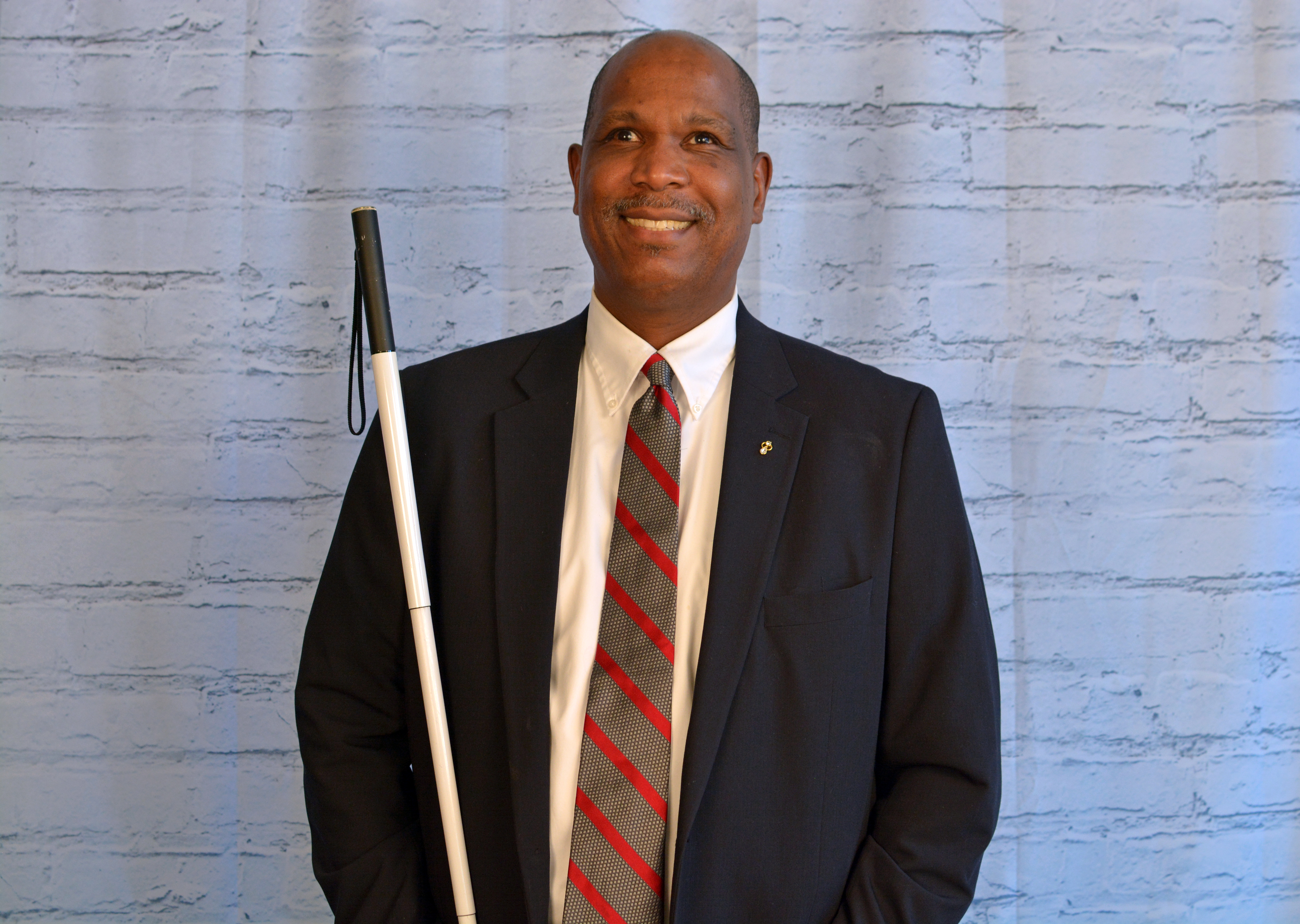 Introduction by Kim Cunningham: Mr. Anil Lewis is the executive director of the NFB Jernigan Institute. He's a great friend of mine, a great friend of the NOPBC, and he will be a great friend of yours once you meet him. When I first met Anil, he said that he had high expectations for my daughter. He expected her to do everything her classmates were doing. Nobody else had ever expected her to do much, except me, so I fell in love with Anil. He has helped me be a better parent, and he will be here for you also. So I will now hand the microphone over to Mr. Anil Lewis.
I love talking to parents, because you guys are responsible for growing the future of the National Federation of the Blind. Apart from all that, this is just a cool group to hang out with. I think it's important for me to disclose that I didn't grow up as a blind child. I lost my sight when I was twenty-five, so I don't have experiences from my childhood that I can share with you. Maybe it would be helpful if I could talk to you from the perspective of having raised a blind child, but I can't do that either. My son is sighted. But I know that there is crossover in a lot of the things that we do, and I think you will find that helpful.
Although I was not born blind and I am not the parent of a blind child, I have met many individuals who have been blind since birth and who became successful blind adults. I've also met many successful parents of blind children. One thing they all seem to have in common is that they wish they had found the National Federation of the Blind sooner. I have made a commitment to say this every time I have the chance to talk to parents: if you have internalized any degree of guilt about your child, I'm giving you permission to set it free. I lost my sight when I was twenty-five, and my older brother and sister also became blind as adults. I realized much too late that I needed to give my mother relief around this. My mother finally confessed to me that she felt real guilt about me and my brother and sister being blind. She had spent a lot of time trying to evaluate what she had done in her life to cause this to happen. We can't necessarily understand why things happen. We just have to get over it and move forward. I let my mother know that none of us, none of her children, had to miss out on anything because of being blind. I was very happy that I could give her that comfort before she passed, and I give you permission to let it go now. It's not your fault that your child is blind. Life happens. Now let's do our best with the lives that we have.
We want to build a better future for you as parents. We do that by instilling in you the desire to make your children the best that they can be. First you start with the expectation that your children can be just as effective and successful as they would be if they were sighted. Right, I know it's a radical idea! We really want our kids to be competitive with their sighted peers. I can tell you a lot of stories about how people try to benchmark blindness against blindness, but that doesn't make your child successful in the world. Start setting expectations for your child to be as bright, as talented, as charming, as charismatic as any other child, blind or sighted. Make sure your children get a proper education, and make sure they know how to advocate for themselves. As they move forward make sure they can become better students and good employees.
I want you to recognize that you have expertise as you move forward on this journey. You're going to go to IEP (Individualized Education Plan) meetings, and everybody there probably knows more about IDEA (the Individuals with Disabilities Education Act) than you do (unless you took Kim Cunningham or Carlton Walker with you!). But you don't have to know everything about IDEA. All you need to know is that your child can learn. Given the proper tools and the proper accessible instructional materials, your child can be successful at school.
You have expertise. Don't let anyone fool you. You know your child better than any of the professionals do, so make sure you assert yourself at every opportunity. You can help your child get opportunities in the educational environment that they wouldn't get otherwise.
In the National Federation of the Blind we recognize that the STEM fields are an area for employment. But if you don't receive the proper education, you can't be successful in the STEM fields. This is how bold we are—we brought two hundred blind kids from across the country to Johns Hopkins University and taught those kids to build and launch rockets. We taught them how to dissect sharks, how to build robots, how to build bridges, how to deal with nanoscience. It was awesome! We changed the game by creating opportunities for those kids to have those experiences. At the same time, we challenged our own perceptions of what was possible for those kids. I love learning along with the kids.
We smash down barriers in the sciences and other fields, and we send those kids back to school with attitude. A lot of our kids engage in what I call learned passivity. “Sit here, baby, I'll be right with you.” “I'll read it to you, don't you worry about it.” “You don't want to hear that, you want to hear this.” The kids learn to sit and be still. They learn not to engage. We challenge our kids in ways that make them go back and say, "No, I'll tell you what I need to read. Skip that page. Read that paragraph again. Slower. Okay, now faster." We have to empower kids to control their environment. If a kid uses a sighted reader, the reader becomes a tool for that child. The reader is not a benevolent offering, but a tool for the child to use to get information.
We want our children to learn academically, and we also want them to learn leadership skills. We want to build a better future for the National Federation of the Blind, and the only way we can do that is to build leadership skills in the next generation. You're doubtless aware that society tends to see your child in two ways: either the poor, broken, pitiful blind child, or the amazing, inspirational child. We all fight against these stereotypes—that's the chutzpah we're known for in this organization! That idea that our children are amazing and inspirational is just as fatal as the idea that they're pitiful and broken. Our kids walk around thinking that they're amazing just because they can tie their shoes. Okay, the first time they do it, applause! "Baby, you tied your shoes!" But that can't go on for very long, can it? You can't have a forty-year-old guy working in a law firm, "Baby, you tied your shoes!" [Laughter]
We don't want to think of our blind children as amazing for doing things that children their age ordinarily do, but we want to admire blind individuals who really are amazing. Some blind people really are amazing! I wouldn't be surprised if a blind person might someday find a cure for cancer, or end diabetes. I say this because in our lived experience as blind individuals we walk around every day problem solving. We live in a world where we have to solve problems and develop tools and strategies every day. We need to inspire our kids to have a commitment to make a difference in this world. We want them to be amazing, not by the world's benchmarks, but by true benchmarks. In that way we can build a better future for the National Federation of the Blind. I'm counting on you to help us with that.
When we build a better future for you as parents, we build a better future for your children, too. We build a better, stronger National Federation of the Blind that's going to be an agent for systemic change. We don't recognize often enough that we are integral participants in building a better world. We get very focused on the small circle of expertise that we have around blindness and visual impairment. But the leaders we help to build here can go forward and become world leaders. We have to focus on that. One of your children may be the first blind president. At one time people thought the presidential office was only limited to one kind of person, but that's not true. I believe that some day we're going to have a blind president—and maybe that president will give me credit for this speech—make me ambassador to Barbados or someplace like that. [Laughter]
The work we do here is meaningful and impactful to you, and the only way we can continue to be viable is for you to be active participants. We talk about being a family, and that really is how we feel. Kim said earlier that I will be available to you, and I really will. Chances are I'll refer you to someone with more knowledge and expertise than I have in a particular area, but if you need someone to sit and brainstorm with, I can do that.
Although I was not born as a blind child, and I did not raise a blind child as a parent, some of the tools and techniques I used to parent my sighted child were very helpful. I love the fact that some of the techniques I use dispel the myths people have about blindness, so I'll share a couple of stories.
One day my son, Amari, and I were sitting in the kitchen. He was about three years old at the time. I said, "Amari, will you please tie your shoes!" Everybody said, "Wow! His shoes really are untied! How do you know?" I wanted to say, "It's a special power!" But if I did that, I'd be perpetuating the myth, right? I said, "Those little plastic things on the ends of the laces, I hear them tapping on the floor." It wasn't magic.
I'll share one last story with you before I go. My wife and I ended up getting divorced, and I was awarded custody of our son. I had a lot of fear. I was a single dad. That's scary enough, but I was also a single blind dad. I'd always wanted to be a father, and I knew all the things I would do—but I'd never thought about all the things I would do as a blind father.
Dr. Maurer was a tremendous example as a father. President Riccobono was always supportive, helping reality-check me about the fears and apprehensions I had. With the help of this network through the National Federation of the Blind, Amari graduated from high school at sixteen. Now he's twenty, and he's about to graduate from college. The guy's on the fast track. He's my retirement plan! [Laughter] He might not be the outstanding young man that he is without the relationship I have with our extended family in the Federation. By working together we will all help you build a better future for yourself, your child, and the National Federation of the Blind, and yes—for the world!
Media Share
