


by Peter J. Nebergall, PhD
Some years ago, people thought a “diabetic diet” meant simply “thou shalt not eat any sugar!”
 We
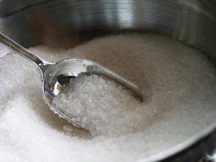
know better. Sugar, “table sugar,” is just another carbohydrate.
There’s nothing magical, or diabolical, about it. It isn’t even
necessary, strictly speaking.
We
know better. Sugar, “table sugar,” is just another carbohydrate.
There’s nothing magical, or diabolical, about it. It isn’t even
necessary, strictly speaking.
Sugar, as we know it, is from the Americas. Ancient Egypt rose and fell without it, as did Babylon. The ancient Greeks didn’t need it, and the Roman Empire was, healthily, sugar-free. The architects and builders of Notre Dame and Yorkminster never had a sundae, a cookie, or a rich, gooey piece of chocolate cake with icing.
And they did just fine.
Christopher Columbus and his immediate followers, the Spanish Conquistadores, encountered sugar cane. The Spanish brought it back to Europe, first as a curiosity, then as a potent new alcoholic drink, rum. Only later did it start creeping into our food supply.
At first, “sugar plums” and other treats were for special celebrations, or for the tables of the rich. Most people were self-sufficient farmers, and by today’s standards, most lived in poverty—but they didn’t overeat (there wasn’t enough food to overeat), and their necessary labors provided plenty of exercise. And chocolate was for the tables of kings.
An ever-rising standard of living brought more food, and less need for strenuous exercise to the masses, but it did not confer any better judgment about how to handle our growing dietary surplus. Especially in America, we have been handed a “horn of plenty,” with little concern about how to eat from it.
Look what we’ve done.
Sugar is a carbohydrate. It has calories. It has consequences. But our food grows ever more sugar-sweet, and not just the kiddie cereals hawked on Saturday morning TV. We’ve taught ourselves, and our children, that “sweeter tastes better,” and it’s a bad lesson. We’re making ourselves sick with it.
 There
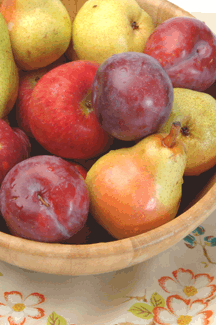
are “sugars” in fruit. If you eat a healthful, balanced diet, they
are more than sufficient. A small handful of raisins is plenty sweet. And, remembering
sugar is a carbohydrate, ALL carbs wind up in the same place—“simple”
carbs, sugars, merely get into the blood a few hours faster. The major distinction
some pop “fad diets” draw between simple and complex carbs, between
high and low glycemic index foods, is oversimplified and misleading. Those who
think the “net carbs” on the box are what really count—are
sadly mistaken. All carbs need counting.
There
are “sugars” in fruit. If you eat a healthful, balanced diet, they
are more than sufficient. A small handful of raisins is plenty sweet. And, remembering
sugar is a carbohydrate, ALL carbs wind up in the same place—“simple”
carbs, sugars, merely get into the blood a few hours faster. The major distinction
some pop “fad diets” draw between simple and complex carbs, between
high and low glycemic index foods, is oversimplified and misleading. Those who
think the “net carbs” on the box are what really count—are
sadly mistaken. All carbs need counting.
Our bodies convert all carbs into sugar. It’s part of the digestion process. If you count those carbs, and bring the total amount you consume under control, you will have better control over your diabetes. Eat too many: you’ll run high numbers (or you’ll need more medications.) Eat too few: you’ll starve yourself, you’ll lack energy, and you’ll risk hypoglycemia.
A sensible person avoids both extremes. Choose wisely. It matters.