_______________________________________________________________________________
Braille Monitor
Vol. 60, No. 4 April 2017
Gary Wunder, Editor
Distributed by email, in inkprint, in Braille, and on USB flash drive, by the
The National Federation of the Blind
Mark Riccobono, President
telephone: (410) 659-9314
email address: [email protected]
website address: http://www.nfb.org
NFBnet.org: http://www.nfbnet.org
NFB-NEWSLINE® information: (866) 504-7300
Like us on Facebook: Facebook.com/nationalfederationoftheblind
Follow us on Twitter: @NFB_Voice
Watch and share our videos: YouTube.com/NationsBlind
Letters to the President, address changes, subscription requests, and orders for NFB literature should be sent to the national office. Articles for the Monitor and letters to the editor may also be sent to the national office or may be emailed to [email protected].
Monitor subscriptions cost the Federation about forty dollars per year. Members are invited,
and nonmembers are requested, to cover the subscription cost. Donations should be
made payable to National Federation of the Blind and sent to:
National Federation of the Blind
200 East Wells Street at Jernigan Place
Baltimore, Maryland 21230-4998
THE NATIONAL FEDERATION OF THE BLIND KNOWS THAT BLINDNESS IS NOT THE CHARACTERISTIC THAT DEFINES YOU OR YOUR FUTURE. EVERY DAY WE RAISE THE EXPECTATIONS OF BLIND PEOPLE, BECAUSE LOW EXPECTATIONS CREATE OBSTACLES BETWEEN BLIND PEOPLE AND OUR DREAMS. YOU CAN LIVE THE LIFE YOU WANT; BLINDNESS IS NOT WHAT HOLDS YOU BACK. THE NATIONAL FEDERATION OF THE BLIND IS NOT AN ORGANIZATION SPEAKING FOR THE BLIND--IT IS THE BLIND SPEAKING FOR OURSELVES.
ISSN 0006-8829
Each issue is recorded on a thumb drive (also called a memory stick or USB flash drive). You can read this audio edition using a computer or a National Library Service digital player. The NLS machine has two slots--the familiar book-cartridge slot just above the retractable carrying handle and a second slot located on the right side near the headphone jack. This smaller slot is used to play thumb drives. Remove the protective rubber pad covering this slot and insert the thumb drive. It will insert only in one position. If you encounter resistance, flip the drive over and try again. (Note: If the cartridge slot is not empty when you insert the thumb drive, the digital player will ignore the thumb drive.) Once the thumb drive is inserted, the player buttons will function as usual for reading digital materials. If you remove the thumb drive to use the player for cartridges, when you insert it again, reading should resume at the point you stopped.
You can transfer the recording of each issue from the thumb drive to your computer or preserve it on the thumb drive. However, because thumb drives can be used hundreds of times, we would appreciate their return in order to stretch our funding. Please use the return envelope enclosed with the drive when you return the device.
Orlando Site of 2017 NFB Convention
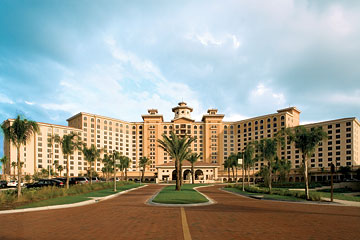 The 2017 convention of the National Federation of the Blind will take place in Orlando, Florida, July 10 to July 15, at the Rosen Shingle Creek Resort, 9939 Universal Boulevard, Orlando, Florida 32819-9357. Make your room reservation as soon as possible with the Shingle Creek staff only. Call (866) 996-6338.
The 2017 room rates are singles and doubles, $83; and for triples and quads $89. In addition to the room rates there will be a tax, which at present is 12.5 percent. No charge will be made for children under seventeen in the room with parents as long as no extra bed is requested. The hotel is accepting reservations now. A $95-per-room deposit is required to make a reservation. Fifty percent of the deposit will be refunded if notice is given to the hotel of a reservation cancellation before June 1, 2017. The other 50 percent is not refundable.
Rooms will be available on a first-come, first-served basis. Reservations may be made before June 1, 2017, assuming that rooms are still available. After that time the hotel will not hold our room block for the convention. In other words, you should get your reservation in soon.
All Rosen Shingle Creek guestrooms feature amenities that include plush Creek Sleeper beds, 40" flat screen TVs, complimentary high-speed internet service, in-room safes, coffee makers, mini-fridges, and hair dryers. Guests can also enjoy a swimming pool, fitness center, and on-site spa. The Rosen Shingle Creek Resort has a number of dining options, including two award-winning restaurants, and twenty-four-hour-a-day room service.
The schedule for the 2017 convention is:
Monday, July 10 Seminar Day
Tuesday, July 11 Registration and Resolutions Day
Wednesday, July 12 Board Meeting and Division Day
Thursday, July 13 Opening Session
Friday, July 14 Business Session
Saturday, July 15 Banquet Day and Adjournment
Vol. 60, No. 4 April 2017
Illustration: Cleaning Where No Human Has Cleaned Before
Walking a Mile: The Possibilities and Pitfalls of Simulation
by Mark Riccobono
Progress on the Pedestrian Safety Enhancement Act: The Regulations, the Law, and What They Will Mean for the Blind
by John Paré
Aira, the Next Technology Revolution in Devices for Blind People
by Michael Hingson
What Do We Really Think of Sight?
by Eric Duffy
There’s a List for That
by David Andrews
The Urgency of Optimism
by Marc Maurer
Dots from Space!: Voices from the Past
by Amy Mason and Anna Kresmer
David Young is a Champion for Blind Iowans
by Jim Omvig
Recipes
Monitor Miniatures
Copyright 2017 by the National Federation of the Blind
Cleaning Where No Human Has Cleaned Before
April is the month when we celebrate Earth Day, a tradition started back in the early 1970s when we realized the vulnerability of our planet and the need for humans to exercise some care for it. Many in that original movement hailed from California, a state long known for its progressive attitudes and the willingness to tackle big problems.
Always on the forefront of change, Californians, particularly members of the National Federation of the Blind of California, have turned their attention to other parts of the universe, creating the first-of-its-kind Mars Day. Why Mars, you might ask? The answer is best summed up by Ever Lee Hairston, the president of the affiliate. "Well, we know what we have done to our own planet, but what is more disturbing but less well known is what we have done to other bodies near us. We went to the Moon, walked on the Moon, and even golfed on the Moon. What did we leave: a sign saying we came in peace for all mankind—that's good, but think about the trash. We sent Ranger Seven to the Moon, admired its pictures as it soared toward the lunar surface, but we didn't land it—no, we crashed it. Any thoughts about picking it up: not on your life. That first lunar module that carried Armstrong and Aldrin: when we were through with it, what did we do? We crashed it into the Moon, and after observing the seismic impact, we haven't given it a single thought. We simply must be better neighbors in the solar system and in the universe at large, and if we don't start it here, who will?"
Brian Buhrow, a man with a technical background, good literary skills, and a keen sense of fairness and justice goes further: “At this point Mars is a pretty pristine place. It has a few foreign bodies on it and a rover whose warranty is about to run out, but it's never too late to start reclaiming our trash and disposing of it in a manner befitting of at least one intelligent species in the universe. All of us want good American jobs and to build infrastructure, so why not create and deploy the first trash truck capable of interstellar travel? Perhaps we'll have to work on revising overtime rules for the waste disposal engineers, but we can do this in a way that creates good, well-paying, and meaningful jobs for Americans and at the same time dispel the myth that there are some dirty jobs Americans just won't do. There can be no better project to demonstrate America's commitment to hard work and the harnessing of technology and being for the world that city on the hill made so popular by Former President Ronald Reagan."
Not surprisingly there are some Federationists who gently offer some cautionary advice. Lisamaria Martinez, the former president of the Sports and Recreation Division, worries that the gravity on Mars will be so much less than that of Earth that those who work there will become accustomed to the lower energy required to move about and heft objects into the space receptacles that will carry the trash away. "The gravity on Mars is about .376 that of Earth. This means it will take just over one-third the energy from our muscles to do on Mars what we do on Earth. Just how we will keep muscle tone when working, eating, and sleeping will be so radically different. Unless exercise is a part of our ambitious plan, I don't think our division can really get behind this, but I am confident that the Federation, given its tradition of negotiation in getting along with interstellar beings as evidenced by multiple incarnations of Star Trek, is up to the job."
For more information about Mars Day, call (111) MARSDAY or 627-7329. Because of the intense effort in planning and advertising this event, please use only the number above. Members of the California effort are too preoccupied to take calls for general information and have contracted with the publicist for the dissemination of further information.
Walking a Mile: The Possibilities and Pitfalls of Simulations
by Mark Riccobono
From the Editor: Since a central tenet of the National Federation of the Blind is to change the way people think about being blind and by extension to increase the opportunity for those who are, we must think seriously about the tools we have to bring about this transformation. Simulating blindness has for some time now been a way in which we and others have sought to increase the public’s understanding of what we need from it in order to enjoy lives that are as rich and productive as those of people who can see. In this article our President discusses the subject of blindness simulation, how it is used, the reasons for its use, when it is effective, and when it serves as a stumbling block that comes between blind people and our dreams. Here is what he says:
One of the highest aspirations of human beings is to understand one’s fellows, to know the world as they see it, and to share empathy without judgment or condemnation. Long before I heard the word empathy I was familiar with the adage, "You can never really know a man until you have walked a mile in his shoes." Since we don't all have the same size feet, what is the practical way to take this journey? Traditionally we have tried to do this by spending some time learning about and reflecting on another person's life situation: What is it like to have money? What is it like to be without it? What is it like to have a disability?
For the past few decades the attempt to understand another person's life has been to try simulating it. Some of the most popular simulations have involved letting a nondisabled person spend some time as a person with a disability. The motives behind these simulations are as varied as the ways in which they are conducted, and here I'd like to look at what they are, how well they work, and specifically what a simulation is intended to communicate.
Given the complexity of life, a reasonable question to ask is whether simulations not meant to train but to inform can ever serve a purpose. They can, but making sure they communicate what we want them to takes considerable thought, a clear definition of what we want to communicate, and an understanding of how much a person can absorb at one time.
Let's look at a common disability simulation that seems to work, one in which a person is asked to spend some time in a wheelchair. If I am a user of a wheelchair and want the public to understand the lack of access I face, putting someone in a chair and showing him how impossible it is to reach a doorknob, walk a flight of stairs, or cross a street at which there is no ramp works quite well. I have not asked him to function without one of his senses; I have only asked that he sit in a chair and observe how many things are beyond his reach because we have failed to make simple environmental changes that will benefit everyone in a wheelchair and everyone who is a pedestrian. The problems become obvious and so do the solutions, ones society can implement with minor physical changes.
If I spend an hour in a wheelchair, do I really understand the life of the man who uses one? I do not. I have to take his word for the way it feels when people talk down to him, stand behind his chair to converse, or show the pity they feel for him when they define his existence as being confined to that chair. To the extent that I am able to understand, that understanding comes through observation, conversation, and through the building of a personal relationship.
Of course the goal of his simulation is not to get me to understand the condition that requires his use of a wheelchair, but to glimpse the environmental changes to make dealing with it easier. I come away understanding why my city taxes go for ramps and why we require all public facilities to have elevators.
Before discussing the simulation of blindness, let's distinguish between simulations to help blind people function without sight and getting sighted people to understand blindness. We actively encourage blind students to do some or most long-term training under learning shades. If one has some vision, we encourage training that does not rely on it but relies on alternative techniques. In a society that is overly interested in visual cues, most people are quickly conditioned to subconsciously believe that vision is a requirement for success. Through our intensive training programs we break down the misconception that vision is the requirement for success and build the understanding that a variety of techniques including a robust set of nonvisual techniques can empower a blind person to live the life they want regardless of their level of vision. At the end of training, one's unreliable vision is no longer at the core of what he or she can do but serves as a supplement, and the individual can make an informed decision about which technique (nonvisual or visual) or combination of techniques is most effective. The loss of more vision due to age or deterioration through disease will be uncomfortable, but limited vision will not determine whether one can independently learn, travel, cook, clean, handle money, and a whole host of other things for which sighted people use vision. What is key in training is that students are allowed to proceed slowly in what they do under learning shades. There is time to explain the underlying philosophy in their use, they have the time to observe blind people doing what they will be asked to do, and the message is always that the students can and will be able to do what they need without vision. More importantly, the student has the opportunity to build an understanding of how to counteract the misconceptions and misunderstandings that come from interacting with a public who does not understand blindness.
Unless simulations are well planned in terms of what we ask people to do, what we tell them about blindness, and how long we have to work with them under shades, the experience is likely to be more negative than positive, reinforcing everything they have felt about the world of darkness in which they believe we live.
I submit that, in most cases, understanding blindness by one who is sighted is better communicated through observation than personal experience. Ask a newly blindfolded person to travel the streets so she comes to understand the value of traffic sounds, and her predominant emotion will be fear. Without understanding how blind people travel and having the confidence that she can do so safely, the experiment will scare rather than inform. How then can we make a case for modifications that are necessary for our continued independent travel? The answer is for us to do the traveling and for the person we are trying to influence to observe us. When I am observed walking with my cane and run into a guidewire hanging over a sidewalk at chest level, the person watching me understands the function of my cane, what it can and cannot detect, and how the problem I'm experiencing can be solved if the guidewire did not pass over the sidewalk or did so at an angle that wasn't impossible for a cane to detect. Now it becomes clear that the challenge is one for an engineer, and the work done will benefit everyone who walks that sidewalk be they blind or sighted.
Suppose I want someone with influence to understand the difficulty when I try to use an inaccessible program. If he is blindfolded and made to sit at a computer, what simulation can we do? He may understand the concept of a screen reader, but will he know that most programs say a line when the insert and up arrow keys are pressed? Will he understand that movement between programs is done by pressing the alt and the tab keys and that determining which program has focus is accomplished by pressing the insert key with the letter t? The answer is that he won't. His initial impression will be that using the computer as he knows it is impossible and that a number of complicated key presses is difficult when compared with the point and click methods that constitute the majority of his navigation.
On the other hand, suppose he observes me using a computer with a screen reader and a Braille display. When he watches the screen, hears what I hear through computerized speech as I navigate, and listens as I read what is presented under my fingers in Braille, he is likely to understand the problem that exists when I encounter graphics that aren't labeled, buttons that aren't identified, and programs that will not respond to keyboard presses. He will understand that navigation in addition to what is provided by a mouse is required and can see how easily arrow and tab keys can be used to efficiently navigate when I show well-designed programs.
I have talked with many sighted people about the difficulties posed by misguided individuals we encounter in airports and the extra stress it puts on blind people. The physical travel through airports is mostly straightforward, even if getting information generally posted on signs is not. Although I have talked with people about the problems we encounter, there is no better simulation than traveling with a sighted person and letting them observe for themselves. As they watch the looks on people’s faces; have the opportunity to tell people that they are not my caretaker but rather just a friend; witness me being grabbed, pushed, and pulled; and overhear the difficulty of my getting a simple question answered they understand in a meaningful way things that it was hard for them to believe when I first told them.
I think the question we really need to address is this: Do I want the general public to know what it is like to be blind? Not really. In the first place I don't think they can. Many sighted people are convinced the blind see darkness; the reality is that some blind people do not see anything while many others see some unreliable combination of light, shadow, and color (that often varies from day to day). The understanding of blindness is only complicated by people who have some usable vision and the obsession of the sighted in understanding what those people see, particularly when that vision varies from day to day. Those who can see think I live in a world which is dominated by the absence of light, a world that deprives me of much that is meaningful. I contend my world has all the elements that make life worth living: the ability to experience love, to know the joy of happiness, and to raise my family. I know both the joy and the stress of being needed, the imperative of making a living, and what it is like when my children look to me in their attempt to understand the world. In short, the important things in my life are the same as for the person who sees, with variations that are sometimes difficult but which never obscure the joy of being human.
I want the public to understand those parts of blindness that pose obstacles they can help me overcome. I want them to see how training can make all the difference and is deserving of their private and public support. I want them to understand that for training to be meaningful it must be followed by opportunity. True opportunity means more than failing to say no; it aggressively embraces the journey to determine how to say yes. I want people to understand that independent travel is crucial and that one important element that makes it possible is an environment in which cars make enough sound that I can hear and respond to them. I want people to understand that living in my own home is important and that my home is just as much a castle for me as theirs is for them. To live independently means being able to do the things they do: cook, clean, and enjoy the entertainments found in most homes. A challenge for me is that most new home appliances use visual displays that make no allowance for those who cannot see. Adding a function to make stoves, ovens, refrigerators, dishwashers, clothes washers and dryers talk is not only possible but inexpensive and beneficial to all, including senior citizens. I want the public to understand that the internet presents great opportunities for access to information as long as the websites are built with equal access in mind. Otherwise, I need to spend twice as much time trying to book an appointment at the doctor, find information about city services, read the calendar for the school our children attend, report crime information, or dozens of other things people take for granted. These are areas in which the general public can help, creating a community standard that considers unthinkable leaving out people whose inclusion could so easily be accomplished through inexpensive design and manufacturing techniques, of which there are many examples.
To restate, in time I believe I can change people's perspective about the meaningfulness I find in life, but that belief about living in a world of darkness may be something they take with them to their graves. Perhaps they can't really walk a mile in my shoes, but they can help me get to the place where I can purchase those shoes and enjoy my journey through days of adventure, activity, and living life to the fullest.
Even if we can effectively provide experiences to teach sighted people about the artificial barriers we face in the physical and digital environments we encounter, we cannot fully get them to understand the emotional experience of facing low expectations in society every day. A couple of years ago I was in a leadership program in Baltimore City. During that program we spent a morning in a “walk a mile” activity where we simulated the experience of navigating the struggle of a low-income family attempting to meet the demands of life. The activity helped me understand the barriers that poorly designed social services, lack of reliable transportation, and burdensome supports put on a family with limited means. However, my real understanding has come from interacting with and knowing people who live that experience daily and who can share all of the social bias they face. In other words, I think we need to be completely honest that any simulation activity does not impact some of the most important understandings we want the sighted to know in their heart and their head—that blindness is not the characteristic that defines us, that the misunderstandings and low expectations about blindness are our biggest obstacle, that those misunderstandings create artificial barriers that prevent us from fully participating, and those false limitations build into something that holds us back.
Short of training blind people to be blind, are there simulations we can do that will let sighted people glimpse how we do what they do? I believe the answer is yes. We must make it clear that they are not experiencing blindness but that we are giving them a taste of the way we do some of our daily tasks. Having them sit in a chair, covering their eyes, and handing them coins can show how we identify them by touch. Dropping a coin on a hard surface and helping them learn the denomination by sound provides them another clue about how we manage money and adds to the message that we have quality alternative techniques that serve well in our daily lives.
The tasks we give should not be threatening. If we want them to spend some time using a cane, explain that they will not be encountering steps and that their job is to find the wall in front of them. Tell them their task is to navigate around a chair and how the cane is used to detect it. Get sighted people to measure something with a click rule and mark a precise spot. Teach them how blind people effectively pour liquids without spilling, and give them an opportunity to practice. In a short amount of time I have been able to teach sighted people under learning shades to pour, and when I have given them the option of using the same technique to pour a cup of coffee for themselves many do so and have little trouble. There are dozens of other examples, and we should find ways to share information about the activities that work best. The activities must be supported by meaningful dialogue with blind people in an environment set up to facilitate honest communication. When those going through these experiences have an opportunity to engage blind people around some of the questions we know they are thinking about, a new avenue of understanding is created.
So far we have not touched on one critical facet that determines whether a simulation of blindness is helpful or harmful, that being the motivation for performing it. This is further complicated by the fact that simulations are often paired with fundraising. This incorporates all of the baggage and emotional strings that come with the typical charity model—people participate to help those less fortunate than they are. The biggest problem with simulating blindness is that it all-too-easily plays into the sense of loss and ineptitude that people believe to be our lot in life and the lives they would live were vision to disappear. This benefits organizations whose goal is to reverse or eliminate blindness, the recent activities of the Foundation Fighting Blindness being a prime example. If the idea is to eradicate blindness by raising money for research, scaring people is a powerful motivator. As much as all of us support research to preserve or perhaps restore sight, raising that money must not make living more difficult for we who are blind. Preserving sight should be supported on the many merits of vision and not on the portrayal of its absence as a significant barrier to the enjoyment of life.
So each of us must ask the question: At what cost is the way money is raised to do research too high? When we fight for the right of blind people to be parents and an organization suggests that the sighted try being a parent for one minute with their eyes closed, the experience can only serve to emphasize the danger when a young child is not observed, a situation bordering on leaving her unattended. The cost to blind people is too high! When one is encouraged to dine in the dark without first learning how to serve oneself, cut one’s meat, or have the experience of finding one’s mouth with a fork, how can the mess and the message be reconciled with blind people leading lives of independence in which we can feed ourselves, teach our children, and represent our employers without embarrassment when the job calls for us to attend lunches and dinners? Again, the cost to blind people is just too high! The potential to raise money through fear and pity is enormous, but so is the toll on the lives of blind people and the efforts we make to convince others we are capable of living in the world as competent human beings.
Everyone has freedom of speech, but with that freedom comes the responsibility to speak truth, to do no harm, and to advantage rather than disadvantage the people about whom one is speaking. Because we in the National Federation of the Blind are the authentic voice of blind people—representing the broad diversity of people who experience blindness firsthand—we must raise expectations and lead the way regarding best practice for simulation activities. We must also honestly evaluate what we do and whether it meets our goals, the test of our philosophy about blindness, and ensure that it is authentic to the experience of a blind person who has had training and opportunity. We must make certain that the simulations we do meet this standard and should demand that others do the same. These should be our guiding principles as we teach the world what it means to be blind, and these should be the standards to which we hold other organizations who would diminish our lives and opportunities in the misguided belief that a quality life can only be achieved if one is sighted.
Progress on the Pedestrian Safety Enhancement Act: The Regulations, the Law, and What They Will Mean for the Blind
by John Paré
From the Editor: John Paré is the executive director of strategic initiatives for the National Federation of the Blind, and he is the staff member who has put in the most time, energy, and intense concentration on the issue of silent cars. He shares the concern for the safety of pedestrians that all of us carry in our hearts and in our heads, but he is the person who has translated that concern into responses which distinguish the National Federation of the Blind by acknowledging our early work on the issue, our innovative ways to bring it to the attention of people capable of doing something about it, and riding herd over the process to make sure that it did not stall or go astray. Here is what John has to say about the fight to get a bill enacted, the challenge of getting that act into a proposed rule, and the difficulty in getting the Obama administration to publish a rule that the blind, other pedestrians, and the auto makers could accept as reasonable, doable, and in the interest of all involved:
Much of what we do in the National Federation of the Blind focuses on enhancing the quality of life for blind people through creating opportunities and raising expectations. Anything that comes between blind people and living fruitful and fulfilling lives is something we target. But on rare occasions we are called on to do more than work on quality of life issues and deal with the preservation of life itself. This was the case when we found that something essential to our independent travel was changing in a way that could take it away and could easily result in injury or death.
In 2005 the buzz was all about hybrid electric cars. They were coming to market, and many things about them were appealing: they used less fuel, emitted less pollution, and generated less noise. All of us were excited; all of these things we viewed as positive. But when we learned that less noise translated to no useable sound, a real issue of safety emerged for blind and sighted pedestrians alike that we could not ignore. Silent vehicles are essentially stealth vehicles to blind people, and although it is less obvious, they are nearly as dangerous for people who can see. This is because a pedestrian who can see is often alerted about where to look based on what he or she hears. For an in-depth discussion about how the Federation came to identify the problem of nearly silent vehicles, the denials that a problem existed, the work to find allies, and the struggle to get a bill passed and signed by the president to address the issue, I urge you to read an excellent piece written by Debbie Kent Stein entitled “Belling the Cat: The Long Road to the Passage of the Pedestrian Safety Enhancement Act,” which appeared in the June 2011 issue of the Braille Monitor. On January 4, 2011, President Obama signed into law the Pedestrian Safety Enhancement Act, requiring that the United States Department of Transportation write regulations to implement a minimum sound that vehicles must make when traveling the streets of this country. The signing of the act represented a big step forward in recognizing that it is desirable that vehicles be quiet, but that they be no quieter than safety will allow. Throughout this article I will simply refer to this as the act. Even in our most optimistic moments we realized that writing the regulations would take time, getting them reviewed would be painfully slow, and the phase-in period would leave us unprotected far longer than we wished. Even so, few of us believed it would be 2016 before the final regulations were published and probably 2020 before the act is fully implemented.
In drafting regulations, four distinct issues had to be addressed: safety, stakeholder agreement, conducting and interpreting the research, and embracing the global trend that would set the direction of carmakers. Although we tend to think of American legislation as something that primarily involves Americans and American policy, the automobile industry is one of the few uniquely global marketplaces. In September 2009, before the passage of the act and certainly strengthening the case for it, a report by the National Highway Traffic Safety Administration (NHTSA) said that hybrid electric vehicles were twice as likely to be involved in accidents with pedestrians than their internal combustible engine counterparts. In a second report issued in October 2011, using a much larger sample size, the same agency said that there was a 35 percent greater likelihood of accidents involving hybrid electric vehicles and pedestrians. It also found a staggering 57 percent greater likelihood in accidents involving quiet cars and cyclists.
In all, NHTSA produced three research reports that together totaled more than 900 pages. Separately and together, all pointed to the undeniable conclusion that sound and safety are inextricably bound together. Guidelines for the industry had previously stressed the reduction of sound through the establishment of a maximum noise emission standard. Noise was the enemy of the automotive engineer, a word so vile that there was no way to use it with these professionals and communicate anything hinting at something positive. "You will undermine your case for a minimum sound standard if you say you want the car to make noise. You do not want noise. You want usable sound, not noise." This was the message from one of the more vocal members at a meeting of the Society of Automotive Engineers back in 2008, and his vocabulary lesson was one we took to heart.
What the reports issued by NHTSA made clear was that safety would require a minimum sound standard so that pedestrians would be aware of vehicles in their vicinity and take reasonable precautions to avoid contact. What was needed was an addition to the law governing sound emissions by vehicles, a law that called for vehicles to be as quiet as they could safely be, but no quieter.
When the law was passed, it called for the issuance of a Notice of Proposed Rulemaking (NPRM) to be issued no later than eighteen months after its passage. The purpose of an NPRM is to alert interested parties about what the regulations for new laws will look like, offering a chance for those with an interest to comment on and influence how the final regulations will be crafted and the law enforced. But NHTSA did not issue a proposal by July 1 of 2012. That meant that the final rule that should have been issued by January 4, 2014, did not come out. The NPRM wasn't published until January 10, 2013, the agency arguing that the complexity of the issue and the research required meant that the time frames in the law for implementation could not be met. The NFB made our response to the NPRM in March 2013, and it wasn’t until December 2016 that the final rule, the one which was supposed to be published in January 2014, was issued. In the interim the United States Department of Transportation commissioned a study to determine how many hybrid electric vehicles were being sold in this country, and that study concluded that, on average, 1,563 are sold each day. These cars are not yet covered by the act or its regulations; luckily some manufacturers have seen the writing on the wall and have implemented systems to provide sound alerts. Although they may not comply with the regulations that have now been published, their presence is welcomed by those of us who regularly place our faith in safely crossing streets on what we hear.
So which vehicles are covered by the law and which by the regulations? What are the key points of each? We make a distinction between the law and the regulations because the regulations are not just a detailed prescription of how to implement the law, but differ from it in some significant ways. We are left to speculate as to why, but the rumor has been floated that differences exist because of insufficient data to support detailed regulations as envisioned in the law and that when such data becomes available the regulations may be modified accordingly.
Here are the main points you should know about the act as it will be implemented: only four-wheeled vehicles weighing less than 10,000 pounds are covered, meaning commercial trucks and motorcycles have been excluded. They are part of the law but not the regulations.
Fifty percent of vehicles produced after September 1, 2018, and 100 percent of vehicles produced after September 1, 2019, must meet the sound standard.
One issue that sparked significant debate even among allies for the law was whether there should be a switch that the driver could use to disable the audible alerts it mandates. We were opposed to what in the industry is called a pause switch, but what has come to be called a kill switch by the blind. For us the issue is simple: the ability to hear a quiet car should not depend on the judgment of the driver as to whether or not a usable sound should be emitted by his vehicle. This would be equivalent to allowing a driver to make his car invisible simply because he believed he wouldn't encounter pedestrians, animals, or other cars along his journey.
In the current regulation there is no selectable sound from which a car owner may choose, though the law clearly allows for a set of selectable sounds so long as those sounds are provided and certified by the manufacturer to meet the minimum sound standard. Although research indicated that duplicating the sound of a standard internal combustion engine would be the most identifiable sound by the greatest number of pedestrians, it also demonstrated that the sounds were not the most effective in penetrating the noise found in most rural and urban environments. Both pedestrians and automobile manufacturers were concerned that leaving the sound that a vehicle would make to the discretion of automobile owners could lead to situations in which a vehicle would not be identified as a danger to be avoided. Discussions on blogs indicated that if owners were allowed to select their own sound, some would choose the sound of a carousel, some an ice cream truck, and some the clatter of horseshoes. An arbitrary sound just would not do to provide certainty in identification. But a second concern was from the manufacturers. It was that a sound provided by a driver might be considered offensive, and the result would be the rejection by the public of all sounds. This would reflect negatively on the manufacturers, the law, and the pedestrians it was designed to protect.
In the law provisions were made for vehicles to come with several selectable sounds from which the driver of a quiet car could choose, but the regulations make no provision for these other than to say that a 2020 Toyota Prius will sound like every other 2020 Toyota Prius. The same is true for a 2019 Chevrolet Volt.
One point of contention between pedestrians and car manufacturers was whether a vehicle should emit some sound when not in motion. The car companies contended that where there was no motion there was no danger. The Federation took the strongly held position that knowing of a car's presence at a traffic light, a four-way stop, or any other kind of intersection was essential whether that car was moving or at rest. An informed decision to cross requires that one be aware not only of vehicles on the move but vehicles that are waiting for the opportunity to move. Both the law and the regulation make it clear that a vehicle is to emit a sound while stopped, but the regulation does provide that no sound need be made if the vehicle is in park.
Although most hybrid electric vehicles do not use a manual transmission, those which do must make sound any time the key is on and the parking brake is off. While we would have preferred that a quiet car make some sound when the driver’s seat is occupied, we have gotten most of what we wanted in this section of the regulation, and it is a far cry from what some of the manufacturers were demanding, provisions which, had they been adopted, would have done much to negate the safety issues spawning the creation of the law.
How loud must a vehicle sound be? From stationary to less than ten km/h [kilometers per hour], it must create a sound that is at least forty-four decibels. A moving vehicle going from ten km/h up to less than twenty km/h must generate a sound of at least fifty-one decibels. From twenty to less than thirty km/h, the vehicle must generate a sound of at least fifty-seven decibels. At thirty to thirty-two km/h the sound emitted must be sixty-two decibels. For vehicles traveling in reverse, a sound of forty-eight decibels is required. These figures were based on significant testing by NHTSA, and only time will reveal whether the published levels are appropriate to provide an adequate and reliable warning for pedestrians, particularly those who are blind.
With traditional internal combustion engines most of the sound generated by a slow-moving vehicle comes from the engine itself. At some point, no matter how a vehicle is powered, the majority of the sound comes from wind and tire noise. This is defined in the act as the “crossover speed.” With quiet cars the issue that had to be negotiated was when the artificial sound could be stopped, and the sound from the movement of the vehicle would be sufficient. The rule as it stands today says that the electronically generated sound must continue until a vehicle reaches thirty-two kilometers, or 19.88 miles, per hour. From the perspective of the NFB this is good news, a lower crossover speed would have been preferred by the car companies. What complicates arriving at any fixed number is the commendable attempt by the industry to reduce tire friction and wind resistance to increase how far a vehicle can travel with a specific amount of energy. When tire friction and wind resistance change, so too does the sound generated. Numbers that are used today may be irrelevant tomorrow, so again we may have to reevaluate these sound levels as we gain experience with new cars coming off the assembly line.
In negotiating what sounds a vehicle should make, blind people were committed to the idea that pitch shifting should be part of the car's sound emission. Pitch shifting is an easy way to detect acceleration and deceleration, and it is commonly heard with internal combustion engines. Although this provision was a part of the NPRM, it is not found in the law or the final regulation. Experience will again be required before we can say definitively whether the change in volume/amplitude will be sufficient to tell us what a vehicle is doing. If it is, the law can stand as is. If not, this may be something for which we press in future legislation.
The car companies have filed a petition for reconsideration to extend by one year the time by which they must fully comply with the law. Their argument is that the law envisioned a longer time in which to comply than does the regulation. If their petition is granted, it will be 2020 before full compliance is required. While we understand the need for protection and the frustration of having watched as six years have passed, and knowing that every day we extend that compliance date is one more day in which vehicles are manufactured which make blind and sighted pedestrians vulnerable to stealth vehicles, we must freely admit that the law did offer a three-year timeframe for compliance. We have to acknowledge that if we were on the other side and the regulations suggested a longer period for implementation than the law states, we might be the ones appealing for a change.
As complicated as all of this is, some points stand out clearly and require little explanation: we are the organization that brought this to the attention of the press, the industry, the public, and finally those who exercise the levers of power in the government. We have worked to turn a two-page law, which necessarily speaks in broad, guiding generalities, into a 375-page rule that seeks to be specific enough that manufacturers know precisely how to do what they must to make the streets safer for pedestrians. We have first sought to do this in the United States but are working to get standards that apply worldwide for pedestrians, no matter where they may live. No issue so clearly demonstrates our commitment to safe and independent travel, and no issue has tested our perseverance more than this one. At first we had no allies. The quiet car enthusiasts wanted less noise pollution, so they dismissed our concerns in favor of a quieter environment. The car companies started by denying there was a problem but eventually came to work with us. Bloggers asked why blind people would be so negligent as to attempt traveling by ourselves, and some even suggested that if we had no more common sense than this, it might be better for the intelligence of the world if we were no longer a part of it. But we know who we are, we will never go back, and we knew that with persistence, ongoing education, the goodwill of the public, and the dogged determination to see this through from start to finish, we would prevail. Keep following these pages for further details, but take some time to celebrate what it means to be a vital part of the National Federation of the Blind.
Aira, the Next Technology Revolution in Devices for Blind People
by Michael Hingson
From the Editor: Michael Hingson is a man who can boast of many accomplishments and who has made significant contributions in advancing the cause of blind people while keeping his Federation philosophy and active participation front and center. There aren’t many blind people who are electrical engineers, but Michael is one. There aren’t many people who are financial experts capable of making their living in the heart of New York’s financial district, but Michael is one. There aren’t many blind Californians who understand the techniques espoused by the National Federation of the Blind to lead active and independent lives and who are open to the positive changes that new technologies may bring, but Michael is one. Here is what he has to say about a new service being offered to the blind which harnesses the power of technology, joins it with the humanity of a highly-trained professional to relate what he or she sees, and merges these in meeting the infrequent but difficult challenges that blind people face when the blindness techniques we use aren’t quite enough. Here is what he says about Aira [pronounced I-rah]:
It isn’t often that any of us can be involved with the birth of a technology that will significantly change our lives. Helping in that birth is an even rarer occasion. I had such an opportunity in 1976 when our president at the time, Dr. Kenneth Jernigan, asked me to accept a job with the Federation to coordinate the day-to-day operation of a joint project between the National Federation of the Blind and Ray Kurzweil and his company, Kurzweil Computer Products Inc. to test and to bring the Kurzweil Reading Machine to market. Out of our joint project, blind people throughout the world gained access to a technology that brought the personal reading of print into our lives.
I never thought I would have a chance to help steer another great advance that offered as much potential for change as the Kurzweil Reading Machine. However, in early 2015 I received an email from Mr. Lawrence Bock asking me to join the technical advisory board of a start-up company, Aira Tech Corp. Through conversations with Mr. Bock and the company’s founder, Suman Kanuganti, I learned that Aira had developed a system that could provide blind people always-on information anywhere at any time. Far-fetched? Perhaps, but as I delved into the company’s operation and saw its product in action, I realized that indeed the claims of its founders could be true.
Here is how Aira works. The user puts on what is called a “wearable device,” which in this case is a pair of glasses that contain a high definition digital camera, miniaturized sensors, and the ability to connect to the internet using Wi-Fi and Bluetooth connections. The system also uses an app which resides on an iPhone or Android smartphone.
When the user wishes to use Aira, he or she activates the app, which in turn establishes a Wi-Fi connection with the wearable device. Once this connection is established, the user can press a button within the app to contact an Aira agent. As soon as the agent comes online, they see images transmitted by the glasses. The agent also sees geographical information and information about the user’s surroundings on their special software dashboard. The user has two-way voice contact with the agent through the smartphone and can request whatever information they require. The agent, through their dashboard, can access the internet, use the user’s visual surroundings, and incorporate other tools to provide answers to the user’s needs.
The information requested by users can be anything from asking for help with finding something in a store to requiring assistance while traveling through an airport to seeking assistance in assembling a product he or she has purchased. Literally agents can help with any task by providing visual descriptions and information wherever eyesight is needed to create access for blind people.
I became involved as an advisor with Aira because I saw the potential of the product and also to ensure that the technology, when brought to blind customers, would be provided in the most effective way possible. The most significant concern I had about Aira was how the agents presented information to customers. Given all my years in the NFB and from all my experiences with assistive technology, I know that good products and services work best when their feature sets consider what we who are blind want and need. Aira can either be a contributor to our independence and self-determination or it can be a barrier. If the agents, for example, are trained not only to provide information but to interpret that same information, then the product would be little more than the kind of service we presently get from untrained sighted people. For example, if I were using Aira to get information about a street intersection and the agent told me that it was now “safe to cross the street,” then the agent would be drawing a conclusion that I should be making for myself based on my mobility skills. If, on the other hand, the agent said that the light had turned green and that they did not see any cars traveling across my path, then the agent would be giving me information I could use to determine on my own when to cross. This example is a simple one, but the point is that the agent should be charged only with providing information and leaving all decisions up to me, the user. One of my main tasks has been to help set the philosophical tone for how the agents operate. To date fifteen agents have joined the Aira staff. Its hours of operation are from 7 AM Eastern time to 7 PM Pacific time seven days a week. Over the course of this year Aira expects to offer 24/7 service.
Aira has had a visible presence at the National Federation of the Blind national convention for the past two years and will be in Orlando again this year signing up users and showing any interested attendee how the product works. Aira is also gaining visibility with other organizations and agencies. Recently, at the Consumer Electronics Show (CES), Aira Tech Corp was chosen by PC Magazine as the best new startup company at the show.
The one drawback to Aira for many blind people is the same one that faced Ray Kurzweil in the 1970s, although not to the same degree. There is a cost to using Aira. At present, there are two pricing plans. Users can have unlimited access to Aira for a price of $199 per month. A lesser price of $129 per month will give users eight hours of access, and Aira anticipates a lower price plan in the next month. Aira is exploring ways to lessen the cost challenge by securing insurance coverage as well as looking for government agency subsidies for some of the Aira services. Aira is also working on rolling its free autonomous functionality through its artificial intelligence engine which is constantly learning. The National Federation of the Blind has partnered with Aira not only to help make the product the best it can be, but also to help find ways to make it available to all blind people.
Aira is only at the beginning of its existence. I am certain that over time the cost of the product will drop significantly. The cost aside, Aira offers any blind person the most full and complete access to whatever information he or she might need. I personally have used Aira to move through airports, malls, and shops. While on a speaking trip I used Aira to explore a three-story guest house provided to me by an event sponsor. An Aira agent assisted me in assembling a laundry cart I purchased and received in the mail. I assembled the cart independently, with assistance from Aira after I discovered that the instructions were only pictures with no text at all. I know of others who have used it to read the contents of computer screens and kiosks. At least one person has used Aira while bowling and when experiencing Disneyland, just to name a few; Aira’s uses are only as limited as our imaginations.
You can learn more about Aira by visiting www.aira.io. On Aira’s website is a link to a page you can visit to become an Aira Explorer and begin exploring the world around you in a way never available before. I truly believe Aira is the next revolution in technology that will help us further take our place as blind first-class citizens. I also believe that Aira will grow to provide services outside the specific needs of blind people, but Aira’s core purpose and philosophy will always start with the needs of the blind.
What Do We Really Think of Sight?
by Eric Duffy
From the Editor: Eric Duffy currently works for the New Jersey Commission for the Blind and Visually Impaired as a technological support specialist. He is a former affiliate president, having recently served as the president of the National Federation of the Blind of Ohio.
Many of us have come from backgrounds in which we were more dependent on vision than we now consider comfortable or necessary. We value the alternative techniques that give us independence, still realizing that from time to time we need the help of people with sight or, as is becoming more and more possible, the use of visually aware devices to help us. For some people this creates an internal conflict—how dependent must I be on vision? When am I using vision when I could rely on the nonvisual techniques I’ve worked so hard to master and to offer to other blind people as a way to become independent.
In this article, Eric Duffy discusses the extreme emphasis that was placed on sight by the family who loves him, his own journey to learn and use nonvisual techniques, and his awareness that in a balanced life there must be a merging of alternative techniques and visual ones to live the life he wants. Here is what he says:
At times in our lives many of us have had to consider how much we value sight. Sometimes we ask ourselves this question because of an experience we have had, and sometimes we ask because of a development in the medical or technology fields. Most recently I have found myself pondering this question because of a visual interpreting service offered by Aira.
Through a special pair of glasses or the camera on a smartphone, one can connect to a live agent who is looking at a computer screen and who can see exactly what the camera on the glasses or phone can see. During an Aira session the agent also has access to GPS on the user's phone, Google maps, and more.
Shortly before sitting down to work on this article, I went to a store that I had not been to before. I bought some storage bowls for my home and a coffeemaker for my son. That was the first time I have gone to a store and shopped without the assistance of a family member, friend, or store employee. How did I do it? I did it with the help of an Aira agent of course.
I first heard about Aira at the 2016 National Convention of the National Federation of the Blind, where I saw a demonstration of the service. At that point I asked myself what I would be saying about me and blindness in general if I began using such a service. How would using it fit into my own beliefs about blindness and my understanding of the philosophy of the National Federation of the Blind, which are very much one and the same? These two questions and the questions of several of my friends forced me to examine closely my attitudes about blindness.
So I asked myself how much I value sight. In large part the answer defines how I feel about blindness. I was one of eight children and the only one with a disability. I had very limited functional vision as a child. I did what I could to learn colors and to identify as many things as I could using that vision.
When I accurately identified colors, my parents were happy because I could see. When I misidentified colors or objects, I could hear the disappointment in their voices. They weren't disappointed with me; they were disappointed because I couldn't see. That told me how much they valued sight. I went to an endless series of specialists in Philadelphia, Baltimore, New York City, New Orleans, and too many cities to remember in Ohio, which is where I grew up. Although my mom didn't like to drive in big cities, she would do it if she had to in order to get me to an eye doctor. That told me how much she wanted me to see. Sight was quite valuable to her.
As a child I loved McDonald's. If I got close enough, I could see the McDonald's Golden Arches. One night as we were traveling in the car, my little sister asked if we could stop at McDonald's. My parents said they might stop at the next one they saw. My sister was quick to point out the next one that she saw, but my dad did not stop. I told my sister just to elbow me gently the next time she saw a McDonald's sign, and she happily agreed. When she not-so-gently elbowed me, I excitedly said, "There, I see it. I see McDonald's!" We stopped at that McDonald's.
On more than one occasion as a child, I found my mother crying. She told me that she was sad because I couldn't see. She said that she often prayed and asked God to let me see even if she had to sacrifice her sight so that I might see. I learned how steep a price she would pay in order for me to see.
In junior high school I lost the little bit of vision I had. A doctor told my parents and me that he could remove a cataract and perform a cornea transplant and that I would get some vision back if he did so. My mom thought that the eyes were too close to the brain to take such a risk, so I learned that she feared my losing my life or something else happening to me and that her desire to keep me safe was greater than my having sight.
What did I think? I wanted to have the surgery. I knew what my parents thought about blindness. I knew that even at the Ohio State School for the Blind those who had some vision were expected to do things and allowed to do things that the totally blind students were not. I knew how valuable sight was.
How does all of this relate to Aira? When walking into a crowded room, most blind people I know don't think twice about taking directions from someone with sight when looking for an empty seat. Getting assistance from someone with sight is the only practical way to do shopping. How many of us take the elbow of a sighted person (or for that matter even a blind person with usable vision) when walking through a noisy and crowded room? How many of us are willing to accept sighted assistance when going through a buffet line? Most of us need sighted assistance when at a restaurant that does not offer Braille menus. Many of us have at one time or another paid readers.
Many of us use apps on our smartphones to identify currency. There is an app that will let us know if the lights in a room are on or off. Working with our friend and colleague Ray Kurzweil, the National Federation of the Blind has developed an app that enables us to read the printed word, the KNFB Reader. To do these things we rely on the cameras on our phones and artificial intelligence. In short, we rely on artificial vision. Yet none of us question whether or not we should use these apps, and I think that is the way it should be.
Recently I called Aira and asked them to perform a relatively simple task on the internet for me. A friend asked me why someone with my technology skills would use Aira to do something that simple. My answer was immediate: "Because I could." I said we both know that we have the skills and confidence to walk to some of the places to which we wish to travel, but we also have the ability to use buses and trains. We could ask someone to drive us. We could in fact hire someone to drive us in a taxi. In fact we usually find it more convenient and less expensive to use one of those new-fangled ride-sharing services such as Lyft and Uber. All of these solutions insert sighted people and technology between us and walking to our destination.
After completing my shopping trip today, I told my son and Claire, the Aira agent, how happy I was to do my shopping without assistance from those around me. However, after discovering that I had left my iPhone in the Uber vehicle, I was delighted to have my sighted son go and retrieve it for me. I could have done it, but it was more convenient and less expensive for him to do it.
Aira provides sight assistance only when you request it. It is available when you need it, and there is no waiting until later when it is more convenient for someone to provide the visual information you have requested. Aira has not made me more dependent on sight; rather, it has changed the way I do some things. As far as I am concerned, this is a change for the better.
There’s a List for That
by David Andrews
From the Editor: David Andrews occupies one of the most active roles in our organization but with little visibility to members who are not a part of a Federation list. He has the unenviable task of reading almost every message that goes across our lists, and he does what he can to keep messages on topic and to deal with the most egregious of them when someone unfamiliar with or hostile to our mission tries to cause problems for list members. Our lists are a tremendous resource, and so too is our friend, colleague, and Federationist David Andrews. Here is what he says:
Those of you who have read the Braille Monitor for a while will remember that in the 1990s and early 2000s we used to publish articles talking about new lists on nfbnet.org. However, with the growth of technology and its use, the proliferation of our lists, and the increased use of social media, this is no longer feasible. Consequently, we are going to publish short monthly columns that talk about mailing lists in one area. That area can be geographic, such as a state, or it can be a topic, such as technology or blind kids. We will alternate between geographic and topical presentations.
As you may know, the site http://www.nfbnet.org offers hundreds of lists that discuss specific topics. These vehicles are often called listservs or listserves, make your choice. Technically, Listserv is a software package, not a list, like Kleenex is a brand, not a generic term for facial tissue. Personally, I prefer to call them “internet mailing lists.”
A list is something you subscribe to or join. It has a specific purpose and can be public or private, announce-only or open for discussion. Once you subscribe, your email address is on the list, along with that of everyone else who has joined. If it is an open list, anything you or anyone else who is subscribed writes is sent to all the other members. And if you reply to a message, it automatically goes to everyone else who is subscribed to the list. If it is an announce-only list, the number of people authorized to post is limited, and the list is only used for announcements, not discussions or questions. Overall, internet mailing lists are an easy, efficient, and quick way to get information out to thousands of Federationists and others in the blind community. It is a good way for local chapters, state affiliates, committees, divisions, and others to communicate and hold discussions. Who doesn’t have email?
An alphabetical list of all our public internet mailing lists can be found at http://www.nfbnet.org/mailman/listinfo/. There are approximately 240 lists on the page, so finding something can be a little overwhelming—hence this monthly column. As you can see from the webpage, each list has a list name and a short description. The list name is also a link and takes you to an info page from which you can subscribe. You can go directly to a list’s info page with the URL http://www.nfbnet.org/mailman/listinfo/listname_nfbnet.org, where “listname” is the aforementioned list name. You can also go directly to a list’s archive with the URL http://www.nfbnet.org/pipermail/listname_nfbnet.org. Finally, you can subscribe directly to a list using email by sending an email to [email protected] and put the word “subscribe” in the subject line by itself.
The NFBNet.org server also contains three lists to which you cannot subscribe, but you are probably receiving an occasional email from them. They are NFBNET-Members-List, NFBNET-Master-List, and NFBNET-Students-list. These lists are generated dynamically as needed. Their membership is automatically taken from the other lists on NFBNET.org. The Members List is composed of those lists concerned with the NFB and its business. The Master List is composed of everybody on all lists on the server—there are a few non-NFB lists that others may be on—generally dedicated to a specific topic, and the Students List is composed of people from all our student-related lists. We used to send important messages to all the lists that might be interested. This was time consuming for me and resulted in a person getting multiple copies of a message if she was subscribed to multiple lists, as many people are. This way you just get one message. You can ask to be excluded from these lists; however, they are the best way to keep up with what is happening in the Federation and with breaking events. We sometimes need to contact legislators on short notice, and other things frequently need immediate attention, and this is the best way to inform thousands of Federationists easily and quickly.
The NFBNET server also supports approximately forty-five websites for state affiliates, local chapters, and divisions of the NFB. There are also approximately eighty private lists that support various affiliates, chapters, divisions, and projects run by the Federation. These are private spaces where people can openly discuss things only of interest to them. Membership on these private lists is by invitation only, and their archives are not public.
Next month we will get started by telling you about the lists for the state of Maryland. Our lists are valuable resources, and the more we know about them the better able we are to make full use of them.
The Urgency of Optimism
An Address Delivered by
Marc Maurer
at the Banquet of the 2008 Annual Convention
of the National Federation of the Blind
Much has been written about the balance between optimism and pessimism—as if these two approaches to living were opposite, mutually exclusive but equally viable methods of thought.
McLandburgh Wilson said:
Twixt the optimist and the pessimist
The difference is droll:
The optimist sees the doughnut
But the pessimist sees the hole.
Frederick Langbridge said,
“Two men look out the same prison bars:
One sees mud and the other stars.”
However, some imaginative thinkers have suggested that optimism is not simply a way of looking at a set of circumstances, but a positive element of power.
William James said, “Pessimism leads to weakness, optimism to power.”
Nicholas Murray Butler said, “Optimism is essential to achievement, and it is also the foundation of courage and true progress.”
Colin Powell said, “Perpetual optimism is a force multiplier.”
For optimism to be an element in the acquisition of power, it must be more than a cheerful cast of countenance. Rather it must consist in a commitment to bringing into being a future containing elements of possibility that have not been a part of the past. Optimism and reality may (properly understood) be inseparable. If reality signifies all that has currently been created, this measure of existence is frozen in time. If, on the other hand, reality denotes both that which has been built and that which can be brought into being, the potential for growth encompasses a much more magnificent formulation of life than would otherwise be comprehensible. In other words, the grandest understanding of reality incorporates the optimistic anticipation of innovative thought, and it also implies commitment and effort.
Anaïs Nin said, “Dreams pass into the reality of action. From the actions stems the dream again; and this interdependence produces the highest form of living.”
Douglas Everett said, “There are some people who live in a dream world, and there are some who face reality; and then there are those who turn one into the other.”
Although a goodly number of Americans have been pessimistic (Henry David Thoreau said, “Most men lead lives of quiet desperation and go to the grave with the song still in them.”), ours is an optimistic nation. We have traditionally held the view that we could conquer the frontier, govern our futures, or invent the tools for our own success. There is even an American expression for this faith—Yankee ingenuity.
Just as individuals have a life cycle, the theorists tell us that organizations do. They are established; they grow; they mature; they prosper for a time; and they cease to exist. At least a part of the reason for the continued existence of an organization depends on its optimism. Every organization must possess a purpose and the faith that the purpose can be achieved. When that faith dissipates, the organization dwindles, becomes dormant, and ceases to be.
As we have observed in the National Federation of the Blind, leadership is one vital element of progress. As an organization must have faith in its future, the leaders of the organization must be optimistic. Pessimism signifies atrophy. Operating the same old program in the same old way will not encourage growth. Optimism and an openness to imagination must be a part of the leadership. Every organization is faced with the same imperative: build or wither, grow or die. The openness to imaginative thought and the faith to believe that better, more effective programs can be created are part of the spirit of the National Federation of the Blind.
Reflections on optimism and discussions about blindness are rarely found in the same place. People who write or speak about blindness often grieve, sometimes weep, and frequently employ the most dismal descriptive words to signify the potential for blind people. It is extraordinarily rare for somebody to write or think, “Oh good, a whole bunch of blind people!” In fact, a convention of blind people is, in the minds of many, an anomaly—almost a contradiction in terms. At conventions people are supposed to have fun. But, if most of the people at the convention are blind, how ineffably dismal could this be? Adding one miserable life to another in thousands of iterations simply magnifies the horror of it all. Blind people who are optimistic about their future—they must be deluded or liars. How could any substantial group of people wake every day facing the disadvantages that blindness brings and at the same time maintain optimism in their hearts? Is there any group so naïve as to take this position?
Well, one group of this character does exist. We have created it. It is the most powerful force ever established in the field of work with the blind in the United States, and it has a purpose that will not be abridged or thwarted or denied. That purpose is hard to achieve but simple to proclaim—it is that the blind will have recognition, that we will be known for the vital human beings we are with all of the talent, the energy, and the joy that we possess—that equality must and will be ours. The organization we have created, the organization that carries this banner, the organization with the optimistic drive to change our lives for all time is the National Federation of the Blind.
Some people depict the blind as unemployed, isolated, frequently uneducated, and beset with characteristics denoting inability. The assertion that this summation is reality is made by some of those dealing with programming for the blind. A senior official of the Department of Education responsible for rehabilitation of the blind said within the last few years that the 70 percent unemployment rate for blind people has remained unchanged for decades.
Why, I wondered, has this figure remained so high? Do blind people not want to work? Are blind people lazy, lackadaisical loafers who are turning down good jobs so that they can continue to receive government benefits, or has the system failed? Are rehabilitation programs unequal to the challenge? Are the programs conducted by the Department of Education unproductive? Is the 70 percent unemployment rate for blind people an indication of a lack of leadership?
“Not on your life,” said this high official in the Department of Education. “This rate of unemployment is an indicator that blind people cannot achieve success unless they are among the most talented 30 percent of the blind in society. Continuing to spend money on programming for the blind,” he said, “is a waste of state and federal resources.” Rehabilitation for blind clients costs more than rehabilitation for those with other disabilities. Therefore specialized programs for the blind should be eliminated because they cost too much. Never mind that these programs produce positive results, create tax savings by limiting the number of people receiving federal and state support, and bring trained and talented blind people into the workforce. They should be eliminated because they cost too much, he told me. This federal official in the Department of Education gave up on 70 percent of the clients assigned to the programs he is expected to supervise. He thinks that handing out government benefit checks to blind people is better than training them to work for their own lives. With such an attitude, with such a failure of optimism, with such a lack of faith in the clients the Department of Education is expected to serve, it is not the least bit surprising that the programs of this department are failing.
Sometimes it appears that certain officials of the Department of Education are seeking to punish the blind for demanding equality. Sometimes it appears that these officials are saying, “You can demand equality if you want to, but if you do, we will cut funds from your programs. If you do as we say—if you behave as we require—if you are docile, subservient, properly grateful blind people—we will grant you a modicum of support. However, if you want to be pushy, obnoxious, and uppity; if you want to be demanding and insistent, you will be sorry.”
Fortunately, though the Department of Education is responsible for making policies regarding programs it conducts, it has no power to make policy for the blind. We of the National Federation of the Blind determine our own policy and create our own destiny. Those who serve in government are responsible to the people who put them there, not the other way around. The blind of the nation have a right, perhaps even a duty, to examine the performance of the officials who are selected to conduct the programs to serve us. Those public officials are responsible to us to demonstrate that they have served well enough to continue to remain in office, and we demand an accounting.
At the time of the founding of the National Federation of the Blind in 1940, almost no blind people in America were employed. By the late 1950s estimates were that 3 or 4 percent of the blind of the nation had jobs. By the mid-1970s this estimate had increased to 30 percent. In certain programs the number of blind people who receive employment after training is above 80 percent, and some approach 90 percent. What makes these programs successful? They listen to the blind; they are responsive to the needs and wishes of blind people; they learn from the organized blind movement; they form partnerships with the most powerful entity dealing with blindness in the nation. Do officials in the Department of Education know these facts? Do they care? Have they studied the factors that are part of the success for the most productive programs?
Those who believe that inability or isolation or dismal despair describe our lives do not know us and cannot speak for us. We are the blind, and we will make our own way and live our own lives. We will do it with the support and encouragement of those who understand the reality we face. We will welcome partners from government or private programs for the blind who have the faith to believe in us. We will conduct our activities with the fundamental faith that blindness cannot inhibit our progress and with the optimism to know that we can face whatever obstacle may come. But above all else we will build our own future, and nothing on earth can stop us!
One of the elements necessary to the public acceptance of the blind as equals in society is a correct understanding of what blind people are. How are the blind perceived almost a decade into the twenty-first century?
A report circulated by Fox News in May of this year describes an incident in which a blind man was refused the opportunity to ride on a roller coaster because of blindness. The report says that the blind man had already ridden the roller coaster three times that day. When the owner of the amusement park discovered that the blind man was seeking a fourth ride, management refused. Management personnel said that safety requires a person to assume certain positions during a roller coaster ride. These positions can be anticipated only by those who can see well enough during the course of the ride that they can anticipate the twists and drop-offs before they happen. Furthermore, if the roller coaster were to malfunction, management said, a blind person could not easily escape from the contraption without danger.
The denial of the opportunity to participate in the experience of riding a roller coaster is an example of the idiocy that blind people often face. The blind man in question had already ridden the roller coaster three times without incident or injury. The owner of the amusement park ignored the evidence. He had already decided that blind people were not welcome. Evidence was irrelevant.
Of course evidence is not required from the sighted. If sighted people need not provide any evidence of their capacity to ride, blind people should not be expected to provide it either. Nevertheless, the evidence was there. Consequently, this is a case in which double discrimination has taken place. I am pleased to say that we in the National Federation of the Blind assisted in giving this case the publicity it deserved, and the amusement park owner has changed his mind. The blind are welcome to ride.
In 1997 the Portuguese Nobel Prize winning author José Saramago released the English version of his novel, entitled Blindness. The premise in this book is that the members of society become blind unexpectedly, totally, irreparably, and instantly. The description of society as an increasing number of its members become blind is one of filth, greed, perversion, and vice. Blind people are depicted as unbelievably incapable of everything, including finding the way to the bathroom or the shower. Saramago wants a world view that serves to offer an allegory for the worst description he can possibly imagine. He selects blindness as his metaphor for all that is bad in human thought and action. He describes the blind as having every negative trait of humanity and none of the positive ones. He argues that this is an allegory for a picture of the reality of the world today. The book was used as the basis for a movie of the same name, which has been shown at the Cannes film festival this spring. The only positive element to the release of this film is the almost universal reaction of the critics that it is a failure.
The depiction of the blind in this movie is fundamentally flawed for two reasons. First, blindness does not denote the characteristics the author attributes to it. The capabilities of those who become blind remain essentially the same after they lose vision as they were before they lost it. Although the loss of any major asset (including vision) will bring a measure of sadness to some and despair to a few, it will also stimulate others to assert their will. Blindness can be a devastating loss, but it also has the power to galvanize some to action. The reaction to blindness is not the least bit one-dimensional. Therefore the description is false.
In addition to this, the viciousness attributed to the blind is inconsistent with the assertion of incapacity. Viciousness demands both venality and ability—at least organized viciousness does. To say that the blind are completely incompetent and to assert that they have the ability to organize for the pursuit of vice is a contradiction in terms.
But leave the internal inconsistency. The charge that loss of vision creates a personality alteration of sordid and criminal character is in itself sordid and defamatory to an entire class of human beings. To give a man who writes such foolishness the Nobel Prize for Literature belittles what has often been regarded as a prestigious award. For as long as I can remember, certain comedians have thought it good sport to make fun of the blind, and as pernicious as this may be, most authors have not sought to make us objects of fear and revulsion.
The description in Blindness is wrong—completely, unutterably, irretrievably, immeasurably wrong. That such falsity should be regarded as good literature is revolting and amazing. We know the reality of blindness, we know the pain it can bring, we know the joy that can come from correcting the misinformation about it, and we are prepared to act on our own behalf. We will not let José Saramago represent us, for he does not speak the truth. He does not write of joy or the optimism of building a society worth calling our own. We do, and we will.
On November 13, 2007, an article appeared in USA Today entitled, “Blinded by War: Injuries Send Troops into Darkness,” which describes the incidence of eye injuries to military personnel facing enemy combatants in Iraq and Afghanistan. This article indicates that current conditions for combat cause a higher proportion of injuries to the eye than in previous conflicts. Though the article is quite sympathetic to the troops who are blinded, it contains a reiteration of many of the myths and stereotypes that have inhibited progress for the blind during the course of recorded history. Brief portrayals of the lives of three soldiers are part of this writing.
Here are excerpts from the article: “About 70 percent of all sensory perception is through vision, says R. Cameron VanRoekel, an army major and staff optometrist at Walter Reed Army Medical Center in Washington. As a result the families of visually impaired soldiers wrestle with a contradiction: The wounded often have hard-driving personalities that have helped them succeed in the military. Now dependent on others, they find it difficult to accept help.”
I interrupt to say that though the army major may not know it, blind people do not necessarily lead lives of dependency, some blind people have hard-driving personalities, and the old story about visual perception being the primary method of learning is a myth of long standing but little credence. However, there are other pieces to the article.
“Even now, more than a year after her husband’s return from Iraq,” [the article continues] “Connie Acosta is taken aback to find her home dark after sunset, the lights off as if no one is there. Then she finds him—sitting in their Santa Fe Springs, California, house, listening to classic rock. Sgt. Maj. Jesse Acosta was blinded in a mortar attack twenty-two months ago. He doesn’t need the lights. That realization often makes Connie cry. ‘You kind of never get used to the fact that he really can’t see,’ she says. ‘He has no light in his life at all.’”
Again I interrupt. If the article is merely reporting that this soldier is blind, I would have no argument with the fact. However, more is implied than the fact of blindness. The meaning is much broader and much more devastating. The spiritual, the poetic, the inspirational, the romantic aspects of life are no more for this combat victim, implies USA Today. Of course USA Today is only a newspaper. Its reporters have no extensive experience with blindness, and its editors have not studied in this realm or learned what reality is for the blind. Personnel at the newspaper have lived with the myth of deprivation, and this is what they report. They cannot comprehend that something else might be at least as important.
Is it really fair to say for those of us who are blind that we “have no light in our lives at all” with all of the unspoken implications contained in this phrase? Is sight essential for poetry? Can there be no inspiration without the visual sense? Is romance a thing of the past? Is the song of the spirit only a faint echo in the lives of blind people when compared with that robust clamor which thrills the inner being of the sighted? When blindness comes, does it invariably signify meaningless emptiness? This is what the article would have us believe. Consider what the reporter says. “Nothing in the house can be moved [the article continues]; he’s memorized the location of every chair and table.”
The final segment of the article poignantly sums up the grief. This is what it says: “The only good news for now is when he sleeps, Castro says. ‘I’ve had dreams where I know I’m blind and, guess what? I’ve regained my vision,’ he says. Reality floods back each morning. ‘There’s not a night that I don’t pray and ask God, when I wake up, that I wake up seeing.’”
This is the report from USA Today about the prospects for blinded veterans. The only good news is the dream of waking up seeing; everything else is bad. To imagine a life consisting in its primary elements of waiting from the time of each waking moment for the next hour when sleep can be coaxed to disguise the reality of daily existence with a dream world is to accept despair. What we say to this soldier, to USA Today, and to all human beings who have become blind is: “Don’t you believe it!” Your reporter has missed the good news. Blindness is indeed a loss, but it is the loss of sight only, not the loss of the ability to live. Nobody can give us hope unasked, and nobody can create for us the kind of spirit that will give meaning to what we do or who we are. However, the hope is abundantly available for those who seek it; the joy is part of the world we can build; and the future is as bright with promise as any imagination that exists or has ever existed. This is what our experience has demonstrated; this is what we know; and this is the story that should have been reported.
Incidentally, I get a little tired of the argument that 70 percent or 80 percent or 83 percent or 90 percent of all information comes through the eye. The implication is always that, although blind people have some information, we have only 30 percent or 20 percent or 17 percent or 10 percent of that which all other people have. This is false, and I find myself annoyed with the necessity of responding to this idiotic notion repeatedly.
I am told that the beginning of this argument came from an advertisement in 1923 put together by Thomas Edison. He was trying to sell film projectors to school systems. In an effort to sell his projectors, he said that “83 percent of all knowledge comes through the eye.” I wish he had found a better way to sell projectors. Though I presume sighted people might learn 70 percent of all they know by using their eyes, I also recognize that this is not the only way to learn. All of us learn through such senses as we have, and we learn through using such mental capacity as we possess. Sense impression is necessary for learning, but it is only one element in the process. Identifying and manipulating information involves pattern recognition. Sometimes visual observation helps in recognizing patterns, but other ways to recognize them also exist, and imagination is at least as valuable.
Even though I have been thinking seriously about the subject of blindness for almost forty years, I am still amazed by some of the things that people believe about blindness. When I read articles like this one, I think to myself, “Did you say that, did you really say that, how could you say such things about the blind?” Can you really think that our lives are meaningless, or empty, or without romance or poetry or passion? Have you observed any of us for more than a moment? Do you know the struggle that we face to gain recognition for our talent? Have you heard the ripple of our laughter or the cadence of the song we sing? If you believe that romance and passion are possible only through the eye, your experience lacks perspective and imagination. Love, joy, a fascination with the arts and sciences, exploration of the unknown, and the unquenchable determination to build a better life for ourselves and for others—these we claim as belonging to us, belonging to the human spirit which is ours. In your reporting you have not included these factors as a part of our lives, but we know that we possess capacity, and we will not let you forget it.
To give perspective to the thought of blind people and romance, consider the testimony of a Federation member who, as a college project, decided to find out how blind people fall in love. Here is a portion of the notice that this student distributed to a number of blind people in the Northeast:
This year I am a senior, and I will be working on an honors thesis investigating the attraction and courtship process for individuals without sight. The purpose of this project is to explore ways in which blind individuals use senses other than sight in choosing partners and in maintaining intimate relationships.
It is argued that sight is the most important factor in how people fall in love. What about those of us who lack the benefit of eye contact and visual cues? I want to explore the roles of other senses in the process of falling in love. This question is of great personal interest to me because I was able to experience ‘love at first sight’ when I met my future husband, despite the fact that I could not rely on my sense of sight. I am very interested in investigating the variety of ways that visually impaired individuals fall in love.
These are statements from the notice created by the student. She takes for granted that blind people have romantic interest, and she seeks less to know whether it exists than how it operates. I suspect that the research has already been concluded. However, if more evidence is required, I will let you know.
The National Federation of the Blind receives unsolicited proposals to support, endorse, or help to promote individuals, books, films, or projects about blindness on a very regular basis. Some of these make sense and get our support, but others have no redeeming social importance.
A few months ago we received a proposal that the National Federation of the Blind become a promoter of a project known as “Charlesville,” a housing community to be built in Georgia adapted to the specialized needs of the blind. The slogan of Charlesville, which gives an idea about the project, is: “A Community Where the Blind Can Really See.” The promoters plan to construct 164 homes for the blind in a housing development along with a theater, places for other small businesses, a supermarket, playgrounds, and a “work facility.” The proposal, laid out in a substantial notebook, contains statements such as, “Homes…will have Voice instructions to assist the Blind in being able to see in their homes, as well as in their outside yards,” and “The streets will be designed to have Voice controls to assist the Blind in seeing where their neighbors live, their playgrounds are, as well as their work facility.” One other statement in the notebook is, “Our firm has been given the ‘Vision of Creating Home Ownership, and Employment’ in Charlesville where the Blind can see themselves become normal independent citizens of our great country.”
Such are statements from the planners of Charlesville. And you thought you were normal; you thought you were independent—not unless you live in Charlesville. Move to Charlesville or you’re not even a citizen of this great country of ours, according to the movers and shakers of Charlesville.
I spoke with the people who sent this proposal to the Federation. They told me that they understood the problems of blindness; they sympathized with the plight of blind people; and they wanted to construct a living community in which the blind could have an experience of home as close as possible to that which is experienced by the sighted. With this in mind they imagined that specialized technology would be installed which would explain to the blind the interiors of their houses. Other technology would explain what was in the neighborhood. The explanations would include audible descriptions of where each neighbor lived and where each nonresidential building could be located. Special blind-friendly technology to control the streets would be one of the features of the community, though what this technology would do had not yet been completely planned.
The mind boggles at what might be incorporated in the audible descriptions of the neighbors. It is tempting to try to offer certain imaginative examples, but those that you have already constructed are no doubt equally good. I confess that I found myself intrigued by the notion that the streets themselves could be controlled. What would a human being want the streets to do? Although I did not express these thoughts to those visiting the National Federation of the Blind, I wondered if they meant that control gates would be installed at street crossings similar to those used for railroad crossings. When a blind person planned to cross the street, the press of a button could bring down the control arms, halting traffic and providing a tactile railing or fence for the blind person to follow from one side of the street to the other. Indeed, the concept of controlling the streets tickled my fancy. I wondered if I should suggest to these planners that they build their community so that a blind person stepping out for a walk could instruct the streets to go downhill. Maybe the new slogan for Charlesville could be, “The Community for the Blind: Where All the Streets Go Downhill.”
Those creating the community thought that having sighted people to assist the blind with their medications might be useful as well as having individuals dedicated to leading the blind from place to place. The planners wanted to know if I had any suggestions for other specialized technologies or services, and they asked for a grant of more than a million dollars.
I doubt that it will come as a surprise that I decided not to get the checkbook. I was polite, but I wondered if the people making the proposal had read any of the Federation’s literature. We do not recommend that the blind be segregated from society. We do not believe that specialized homes are required for the benefit of the blind. We do not recommend that communities be built to isolate the blind even with voice-controlled streets, whatever this might mean.
The concept of a segregated community is not merely offensive but also dangerously socially irresponsible. Some years ago in Japan, Dr. Kenneth Jernigan, who was totally blind, and Mrs. Mary Ellen Jernigan were walking along the sidewalk. A bicyclist almost struck Dr. Jernigan. In the brief heated discussion that followed the near-accident, the bicyclist said that a portion of the sidewalk had been set aside with tactilely raised identifying marks for the blind. This is where the blind should be, the cyclist said. Implied in the statement is the further thought that blind people should not be permitted outside the specialized areas designated for the blind.
Some people have advocated for a special college for the blind. The argument is that the needs of blind students are sufficiently different from those of other students that a college designed to serve the blind would be a significant advantage. Books could be provided in Braille or in recorded form. Blind people could have assurance that the lectures, the handouts, and the laboratories would be designed to ensure accessibility in nonvisual ways. However, we in the National Federation of the Blind have never endorsed such a concept; we have actively opposed it. No matter how useful it would be to have Braille books and tactilely labeled laboratory equipment, a college for the blind would segregate and isolate the blind from society rather than integrate us into it. We want to be a part of the society in which we live. We want to attend the colleges and universities of our own choice. We want our intellectual capacity to be recognized for the value that it has. We want all colleges to understand the necessity of making their educational curricula accessible to us and useable by us. We will fight for our right to be included in all aspects of community life. We oppose segregation for the blind, we oppose all schemes that would isolate us from the communities in which we live, and we promote full integration of the blind into society on the basis of equality. We demand equality of opportunity for all blind people, and we will settle for nothing less.
Sometimes people ask me how I approach blindness. It is as much a part of me as dozens or hundreds of other characteristics. I don’t forget it, but I don’t concentrate on it either, most of the time. Other people often magnify this one characteristic out of all proportion to what seems reasonable to me.
In the early 1980s I was conducting a law practice in Baltimore, Maryland. Each business day I traveled to my office, very often by bus, and each evening I returned home, using the same method of transportation. One summer evening I was standing at a bus stop in downtown Baltimore. I was dressed in a suit, which is my customary work attire. I had a briefcase with me, which is almost always a companion of my travels. I was also carrying a can of coffee. I had run out of coffee at home, and I needed this can, which, fortunately, I had on hand at the office. The evening was warm, and the bus was late. Because I had remained in my office to complete some work, the rush hour had already passed, and I was feeling weary. The breeze came off the hot asphalt and did little to dissipate the warmth. I was the only one at the bus stop, which suited me because I could review the events of the day without having to worry about fellow bus passengers or other distractions. A person came up to me and peered at me from one side. Then the person walked around to my other side and peered again. I was standing next to the pole that had the bus stop sign on it. My briefcase was sitting on the ground next to my left leg, I was leaning on my cane, and I had the can of coffee in my hand. After I had been examined from both sides, a man’s voice said to me, “Where’s the slot?”
“What?” I asked.
To which my companion responded, “Where do you put the money?”
Although I was startled by these questions, I realized suddenly that he wanted to put some change into the canister I was holding. He thought I was begging. What else would a respectably dressed blind man with a briefcase and a coffee can be doing?
“This is my coffee,” I said, and my companion left.
Sometimes we let others make us believe that blindness matters more to us than reality would suggest. Sometimes we let fear of the unknown control us, and we attribute the fear to blindness.
One of the presentations that I have made as president of the National Federation of the Blind deals with the topic of getting lost. I have been lost many times, and I expect to be lost many more. In my younger days I thought that being lost was bad. However, I have learned that accepting the uncertainty of being lost means that I can find new places, meet new people, have new experiences, and expand my horizons. I also tell other people it is perfectly all right to be lost. How different is this attitude from the one that I found on the Internet recently. Here is what one blind person said:
If I don't know a state, I won't take buses anywhere. Why on earth would I wish to get lost? I wouldn't even know how to tell the transportation where I wanted to go. I would ask others if they are going the same way I wish to go. If not, there isn't any reason to go there then. I would just stay home where I know I could get help if needed and not feel afraid of getting lost.
Many of us may have faced this kind of fear as part of learning who we are, and many of us may face it again. Nevertheless, with the support of one another we know that we can solve the problems that come to us, large or small, dramatic or mundane. Though I sometimes find myself in unfamiliar surroundings, I never find myself without capacity, and I never encounter a day in which my colleagues in the Federation are not willing to help me if I need it. I realize that I have the ability to learn what I need to know to get from the place where I am to the place where I need to be. Furthermore, I will always want to know what we can do to build a brighter, more productive future. I will always want to know what is around the next bend in the road or over the summit of the next hill. I will always want to know what I can do to bring joy to my friends. I will always want to know how I can show them that there is excitement in being lost.
Optimism is an element in the acquisition of power, and the power once derived fosters optimism. The power of optimism stimulates the optimism of power. Optimism is one element of our faith. It is inherent in all that we say and all that we do. Because it has come to be such an integrated part of our thought process, we sometimes fail to recognize the urgency of optimism.
For all time blind people have been regarded as dependent, incompetent, and subnormal—some would even describe us as subhuman. However, we know better than to accept such a description of us, for it is false. We have decided to correct the error of the authors who tell us that we are base and unhuman, of those rehabilitation officials who write off 70 percent of us as fundamentally incompetent, of the newspaper reporters who tell us that our lives are empty and meaningless, and of the amusement park operators who believe that we can’t even ride a roller coaster. We have made this decision because we know the strength which is within us, we share the spirit that is part of us, and we feel the determination to create the factors that will shape the future.
Who can tell us what our lives will become? Nobody can do this except us. There are those who would like to dismiss us, but we will be heard. There are those who would like to instruct us, but from our experience we have gained more information than they can hope to accumulate. There are those who would like to control us, but if they try, they will do so at their peril. Partners we seek from every aspect of public and private life, but those who would seek to dictate to us what our lives should be will be tolerated not at all.
As we face the struggles of the time to come, we know with absolute certainty that we will take whatever action is necessary to confront those who would stop our progress or belittle our ambitions. We will make whatever sacrifice is necessary; we will pay whatever price is required. We will demand the equality that must and will be ours, and we will never cease our efforts until we have it. We have the will, we have the strength, we have the optimism. The future belongs to us; we will make it our own!
Leave a Legacy
For more than seventy-five years the National Federation of the Blind has worked to transform the dreams of hundreds of thousands of blind people into reality, and with your support we will continue to do so for decades to come. We sincerely hope you will plan to be a part of our enduring movement by adding the National Federation of the Blind as a partial beneficiary in your will. A gift to the National Federation of the Blind in your will is more than just a charitable, tax-deductible donation. It is a way to join in the work to help blind people live the lives they want that leaves a lasting imprint on the lives of thousands of blind children and adults.
With your help, the NFB will continue to:
- Give blind children the gift of literacy through Braille;
- Promote the independent travel of the blind by providing free, long white canes to blind people in need;
- Develop dynamic educational projects and programs that show blind youth that science and math are within their reach;
- Deliver hundreds of accessible newspapers and magazines to provide blind people the essential information necessary to be actively involved in their communities;
- Offer aids and appliances that help seniors losing vision maintain their independence; and
- Fund scholarship programs so that blind people can achieve their dreams.
Plan to Leave a Legacy
Creating a will gives you the final say in what happens to your possessions and is the only way to be sure that your remaining assets are distributed according to your passions and beliefs. Many people fear creating a will or believe it’s not necessary until they are much older. Others think that it’s expensive and confusing. However, it is one of the most important things you will do, and with new online legal programs it is easier and cheaper than ever before. If you do decide to create or revise your will, consider the National Federation of the Blind as a partial beneficiary. Visit <www.nfb.org/planned-giving> or call (410) 659-9314, extension 2422 for more information. Together with love, hope, determination, and your support, we will continue to transform dreams into reality.Dots from Space!
Voices from the Past
by Amy Mason and Anna Kresmer
From the Editor: This is episode four from our monthly serial “Dots from Space!” If you missed any of the earlier episodes, refer to the January, February, and March issues.
Drawn ever onward by the mysteries left behind by the previous inhabitants, the team rolls through the maze-like corridors, paneled in smooth wood, to the far side of the empty building. At long last they reach the end of another seemingly endless hallway and discover that they are standing on the remains of a large deck. Watery sunlight shines down on the explorers as they spread out to examine the debris strewn across the deck, while the soft breeze brings the sounds of water in the bay to them.
“There’s nothing here but dirt and rocks, ma’am,” Lieutenant Commander Jot calls out, as she forms a trowel and eagerly begins to shove some of the detritus away.
“Wait! There’s something over here! You’d better come take a look at this everyone.” The triumphant urgency in Counselor Mote’s voice leaves the entire team with little choice but to clamor to see what she has found.
“Report, Counselor,” Captain Dottie commands.
The counselor rolls a few feet to the side to reveal the twisted metal remains of a large charcoal grill lying on its side on the ground. Putting her trowel to good use, the lieutenant commander begins to sweep away the dirt to reveal grilling tongs, now long rusted, and a heavy-duty grilling glove riddled with holes.
Eager to show off, the counselor quickly explained. “It appears to be the remains of a rudimentary cooking method, Captain. Unlike our species, which can simply absorb nutrition from the materials we come into contact with, I surmise that the inhabitants of this world burned their food with fire and then ingested it.”
“A most inefficient system indeed,” mused Doctor Spot.
Young Bean, curious as always, reaches into the pile of rusty metal utensils and pulls out the crumbling remnants of a pair of sleepshades. “What do you suppose this was used for? And why would they need it for food preparation?” he asks.
The crew all ponder this question for a moment, but it is Counselor Mote, rolling her rotund body in a small circle on the ground in her haste to be first, who beats them to the punch. She pulls the sleepshades from the ensign’s appendage and plasters the mask to the surface of her body, the impression of a nose and mouth appearing below it. “Isn’t it obvious? This is a ceremonial mask used to ask their deities to bless their food!”
“Interesting theory Counselor, however, I think there is a simpler explanation. Their mission was to teach others that there were alternatives to using sight to complete everyday tasks. I believe that this device was meant to discourage the use of sight during educational activities.”
“Sight, Doctor?” asks Lieutenant-Commander Jot.
“From the evidence that we have gathered on this planet so far, we have discovered that most of the inhabitants used the perception of light to interact with their environment. However, not everyone used this method. Those that did, used what was called ‘sight.’ While those who did not or could not rely on this sense used alternative techniques and called themselves ‘blind.’”
“And what are you basing this theory upon, Doctor?” Captain Dottie inquires.
“Simple, Captain. I read it in this article I found in the hallway.”
[Note: Link to “The Hierarchy of Sight”, by Eric Guillory, Future Reflections, Volume 33, Number 2, https://nfb.org/images/nfb/publications/fr/fr33/2/fr330211.htm]
David Young is a Champion for Blind Iowans
by James H. Omvig
From the Editor: James Omvig is a man with a long history of work on behalf of blind people and whose mantra has long been “Let’s go build the Federation.” This he has done in every part of the country in which he has lived and in every part he has visited on behalf of the organized blind of America. Jim has spent more than eight decades on this earth and has more than his share of health issues, but he still manages to put the work of the National Federation of the Blind as one of his highest priorities.
Jim did not attend the 2017 Washington Seminar, but he felt an obligation to carry forward the issues highlighted there. Here is an article which appeared in the Des Moines Register on March 2, 2017. Hats off to you, Jim, and thank you for writing:
National Federation of the Blind of Iowa, Letter to the Editor
Through the National Federation of the Blind, the world's oldest and largest educational and civil rights organization of blind people, the blind of America are working continuously to achieve security, equality, and opportunity for the blind. As we advance, many challenges still lay ahead. One of the most significant is the barrier the blind face with accessible technology. In the ever-changing market of computers, tablets, and phones, keeping devices accessible is always a work in progress for the NFB.
One recent issue the blind have encountered is the high cost of custom-made, accessible technology such as Braille displays, screen-reading software, and other technology that is specifically designed for the use of the blind. These necessary devices can be extremely costly, making it difficult for the average blind person to afford them. Leaders of the Federation have therefore developed the Access Technology Affordability Act, which will be introduced into the Congress soon. It would offer a refundable tax credit for blind purchasers of specialized technology to help defray cost and therefore help blind people have equal access to information.
At the Federation's recent Washington Seminar, hundreds of blind people from across America traveled to Washington, DC, to educate US congressmen and senators about this urgent need. After he learned of the problem of the exorbitant costs associated with this technology, Rep. David Young agreed to be our champion sponsor of the Access Technology Affordability Act. Congressman Young has repeatedly advocated for the blind and our causes and has sponsored legislation on our behalf several times now.
We wish to offer a public thank you to Young for his understanding, his help, and his support.
— James H. Omvig, National Federation of the Blind of Iowa
Independence Market Corner
The NFB Independence Market is the conduit through which our organization distributes our literature about blindness and how to adapt to living successfully with severe vision loss. Our members and friends use our literature to share our can-do approach to blindness to encourage other blind people and to educate the general public about the abilities of the blind.
Through the Independence Market the NFB also makes available some products, which enhance the independence of blind and vision impaired individuals. Perhaps the product which has the greatest impact on the independence of blind people is the long white cane. Once someone has learned to use the long white cane effectively, that blind person can travel safely and comfortably both in familiar and unfamiliar places. The freedom gained from such independent mobility has a tremendous effect on the self-confidence of blind people. It is, therefore, not surprising that the white cane has become a symbol of our independence and self-reliance.
Over the years the NFB promoted longer and lighter weight canes, as our members found the longer, lighter canes easier to use. The additional length provides users more advanced warning of obstacles in the environment, giving them the confidence and competence to walk at a faster pace. Knowing that one's longer cane will detect the top of a flight of steps with enough reaction time to approach the first step with ease contributes to a blind traveler's sense of safety and security. The NFB recommends that a cane is long enough that it reaches between the chin and the nose of the user. Some people who walk very fast prefer even longer canes. The NFB also pioneered the use of canes for young blind children, even toddlers. If young blind children already have canes in their hands when they start walking, then the cane becomes a natural tool to explore their environment. And once such early cane adopters reach the self-conscious teen years, they have already internalized the knowledge that using the long white cane enables them to move around safely and independently.
The NFB Independence Market sells several types of long white canes ranging from rigid ones to telescoping and folding ones for all ages and sizes from toddlers to tall adults. All our light-weight canes are hollow and made either from fiberglass or a carbon fiber composite.
The Care and Feeding of the Long White Cane, written by longtime member Tom Bickford, is a good introductory guide for those unfamiliar with using a long white cane as a mobility aid. This book gives good tips for using a long white cane in various everyday situations. The text is available on our website at https://nfb.org/Images/nfb/Publications/books/CFCANE/canetc.htm. The book can also be obtained in Braille or print from the Independence Market free of charge. Audio copies may be borrowed by NLS patrons from their local library for the blind.
For more information about the products and literature available from the Independence Market or to request a catalog in Braille or in print visit us online at https://nfb.org/independence-market. You may also contact us using email at [email protected] or by phone at (410) 659-9314, extension 2216, Monday through Friday from 8:00 AM to 5:00 PM Eastern Time. Our staff will be glad to assist.
Recipes
Recipes this month were provided by the National Federation of the Blind of Florida.
Corn Casserole
by Sylvia Young
Sylvia Young has been a sighted member of the NFB for about six years. She now serves as the Tallahassee Chapter and state affiliate secretary. She and her husband James have been married for seventeen years and have nine children and thirteen grandchildren in their blended family.
Ingredients:
1 can whole kernel corn
1 can cream style corn
1/2 cup sour cream
2 eggs
1 cup grated cheddar cheese
1 box Jiffy cornbread mix
1 stick of margarine (melted)
Method: Mix all ingredients together. Pour into a greased pan or dish. Bake for forty-five minutes to one hour at 325 degrees. Let stand for ten minutes before serving. You may slice it or scoop it out.
Traditional Lasagna
by Scott Wilson
Scott Wilson is a passionate cook, parent of two children, and a successful business owner for more than ten years. In his copious free time Scott enjoys learning new things, like languages. He currently speaks Irish, with more languages to follow.
Ingredients:
1 pound ground beef
3/4 pounds bulk pork sausage
3 cans (8 ounces each) tomato sauce
2 cans (6 ounces each) tomato paste
2 garlic cloves, minced
2 teaspoons sugar
1 teaspoon Italian seasoning
1/2 to 1 teaspoon salt
1/4 to 1/2 teaspoon pepper
3 large eggs
3 tablespoons minced fresh parsley
3 cups (24 ounces) 4 percent small curd cottage cheese
1 carton (8 ounces) ricotta cheese
1/2 cup grated parmesan cheese
9 lasagna noodles, cooked and drained
6 slices provolone cheese (about 6 ounces)
3 cups shredded part-skim mozzarella cheese, divided
Method: In a large skillet over medium heat, cook and crumble beef and sausage until no longer pink; drain. Add next seven ingredients. Bring to a boil. Reduce heat; simmer, uncovered, one hour, stirring occasionally. Adjust seasoning with additional salt and pepper, if desired. Meanwhile, in a large bowl, lightly beat eggs. Add parsley; stir in cottage cheese, ricotta and parmesan cheese. Preheat oven to 375 degrees. Spread one cup meat sauce in an ungreased thirteen-by-nine-inch baking dish. Layer with three noodles, provolone cheese, two cups cottage cheese mixture, one cup mozzarella, three noodles, two cups meat sauce, remaining cottage cheese mixture and one cup mozzarella. Top with remaining noodles, meat sauce and mozzarella (dish will be full). Cover; bake fifty minutes. Uncover; bake until heated through, twenty minutes. Let stand fifteen minutes before cutting. Yields twelve servings.
Yellow Squash Casserole
by Alicia Kilby
Alicia Kilby is a homemaker. As a single, disabled mother of two young children, she tries to be creative and likes to explore new recipes, keeping in mind children’s tastes are sometimes narrow and limited. She’s a responsible, independent, part-time student working on a degree in social work. She is also a volunteer and mentor at a local elementary school, living every day for a better tomorrow because she can live the life that she wants.
Ingredients:
8 medium yellow squash
16 saltine crackers
2 cups mozzarella cheese (or whatever you prefer)
½ cup milk
2 eggs
1 stick butter
Salt and pepper to taste
Method: Slice squash and boil until tender. Drain, crush crackers until fine, and beat eggs. Put all ingredients into two-and-a-half-quart casserole dish and mix well. Bake at 350 degrees for one hour. Serves eight.
Smothered Rabbit
by Tinetta Cooper
Tinetta is a legally blind, diabetic mother who has been an NFBF member for ten years. She loves to cook and bake. She says, “The recipe I’ve submitted is unique and simple to prepare, and the results are delicious!”
Ingredients:
1 rabbit, cut into small pieces
Salt to taste
Paprika to taste
Flour
3 tablespoons butter
1 to 2 onions sliced
1 cup sour cream
Method: Season the rabbit with salt and paprika. Coat pieces with flour. Melt butter in a crockpot, add rabbit, and cover meat thickly with onion slices. Sprinkle onions with salt. Pour in the sour cream. Cover and simmer one hour or bake at 325 until tender.
A Cup, A Cup, A Cup of Peach Cobbler
by Sylvia Young
Ingredients:
1 cup of canned peaches
1 cup of flour (self-rising)
1 cup of milk
1 cup of sugar
1 stick of butter
1 lemon
Method: Preheat oven 350 degrees. Place peaches in bowl, add 1/8 cup of sugar and squeezed lemon, stir and set aside. Melt butter in backing dish. Mix flour and the rest of the sugar and milk together. Pour into the pan with the melted butter. Add fruit on top (with some of the juice). Bake one hour. Serve with or without ice cream on top.
Floating Peach Cobbler
by Alicia Kilby
There’s always room for variations in life, especially when it comes to delicious desserts.
Ingredients:
1 cup self-rising flour
1 cup sugar
2/3 cup milk
1 29-ounce can sliced peaches in heavy syrup
1 stick margarine (not butter)
Method: Preheat oven 350 degrees. Melt butter then pour into a ten-by-ten-inch baking dish. Stir together flour, sugar, and milk until smooth. Pour into center of dish on the margarine (do not stir). Spoon the peach slices all over the batter gently (so you don’t stir). Then add the syrup from can. Bake forty-five minutes until golden brown. Serve at room temperature.
Florida Cracker Orange Pie
by John Bailey
John is a sighted board member of the NFB of Florida Statewide Chapter and has been an NFB member for about five years. He got interested in the NFB because of his girlfriend Tinetta Cooper. He truly believes in the NFB and its philosophy.
Ingredients:
6 large egg yolks
1 cup sugar
4 tablespoons flour
2 tablespoons sweet butter, melted
2 tablespoons grated orange zest
2 cups fresh orange juice
1 nine-inch deep dish flaky pie crust
Method: Preheat oven to 350 degrees. Put egg yolks in mixer bowl and beat until smooth. Beat in sugar, flour, butter, orange zest, and orange juice one ingredient at a time. Pour orange mixture into pie shell. Bake thirty minutes until set. Let cool completely. Top with whipped cream. Chill before serving.
Monitor Miniatures
News from the Federation Family
STEM Tutorials for Blind Students to be Offered at the 2017 NFB National Convention:
Are you a blind student interested in studying science, technology, engineering, or math? Do you feel daunted by the prospect of doing lab work in a chemistry class or producing visually readable results in a math class? Perhaps you're a professional in a technical field who finds it challenging to produce graphs and charts for sighted colleagues? If so, then come to the convention of the National Federation of the Blind and plan to arrive in time for Seminar Day on Monday, July 10. The NFB in Computer Science, the NFB Science & Engineering Division, and the NFB National Association of Blind Students Division will host the STEM tutorial workshop. STEM educators and technologists will come from around the world to help blind students and professionals learn to use a variety of tools to assist them in excelling in their chosen technical field. Best of all, individual tutoring sessions will be offered throughout the week for those folks who want one-on-one training from experts who are familiar with the access technology they're teaching, as well as the technical field it's being used for. The topics to be discussed and for which tutoring will be available include: access math in electronic materials directly or to convert it to Braille; write math in formats directly accessible to sighted people; read STEM graphs, charts, and diagrams, and create simple graphics; and participate in chemistry, biology, physics, and engineering labs.
There is no charge to attend either the seminar on Monday or the tutoring sessions throughout the week. The seminar on Monday will give an overview of the technologies to be taught, as well as an introduction to the tutors themselves. It is strongly recommended that folks who are interested in being a part of this invaluable opportunity plan to arrive at the convention in time to begin participating in events on the morning of July 10.
For more information, contact: John Gardner, STEM tutorial coordinator, at [email protected].
In Brief
Notices and information in this section may be of interest to Monitor readers. We are not responsible for the accuracy of the information; we have edited only for space and clarity.
State Resource Handbooks Available for Purchase :
I have created twenty-three screen-reader-friendly resource handbooks containing resources pertaining to the blind and visually impaired for use by consumers and professionals. This handbook is for the residents of specific states and includes the many organizations for the blind and visually impaired covering areas such as employment, housing, transportation, and more. Currently the handbooks are for Alabama, Alaska, Arizona, Arkansas, California, Colorado, Connecticut, Delaware, Florida, Georgia, Hawaii, Maryland, Mississippi, New Jersey, New York, Texas, Oregon, Ohio, Nevada, Pennsylvania, Illinois, Kansas, and South Dakota.
The handbooks include contact information on the local, regional, and national level. For more information on pricing, order form, and formats please contact Insightful Publications by email at [email protected], by phone at (808) 747-1006, or by visiting http://www.insightful.com/orderpage.html.
NFB Pledge
I pledge to participate actively in the efforts of the National Federation of the Blind to achieve equality, opportunity, and security for the blind; to support the policies and programs of the Federation; and to abide by its constitution.