The Evolution of Independence
by Elizabeth Rouse
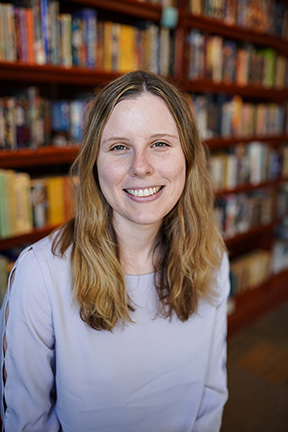 From the Editor: Elizabeth promised me this article some time ago. True to her word, she delivered. I love what she has to say about independence and hope you do as well. Here is her story:
When I was young, the concept of independence seemed simple. Independence meant learning to ride my bike without training wheels or receiving permission to ride said bike to the end of our curved road and back (without parental supervision). It meant staying at the community pool for a few hours after my parents left to go home if I promised to be home by dinner. But as I grew, so did my understanding of this not-so-simple concept. In middle school, independence meant having my first flip phone (with parental monitors, of course). It was not until my second year of high school that independence became a concept that left a nasty aftertaste in my mouth.
A large-scale milestone in a young person’s life is the ability to drive a car. Because of my blindness, I was unable to learn this skill along with my sighted peers. Add in the fact that my parents both served in the roles of driver’s education instructors and that my sighted brother had learned to drive about two years before, and you can imagine that I was a cocktail of bitterness, anger, and a myriad of other negative emotions. It took me most of my sixteenth year to recognize how much this denial of independence affected me emotionally. Almost ten years later, the only thing I can say now is that I was immensely lucky my parents did not reciprocate my disrespectful angst with whatever punishment I truly deserved. Instead, they chose to try and understand my confusion. After all, it was no secret that our one-square-mile town could make anyone feel claustrophobic from time to time, regardless of their level of vision.
At the end of my high school career, my understanding of independence shifted drastically once again. I chose to attend a private college about two hours down the road from my hometown that no one else I knew would be attending in the fall. Although I felt a wave of nervousness and more than a little sadness as my parents moved me into my first-year dorm, I knew that this was my chance to grow into a new version of myself, starting with my name. At my first floor meeting, I introduced myself as Elizabeth instead of Beth for probably the first time in my life, and the rest was history. Over the next four years, I made friendships that will last a lifetime, received mentorship and guidance from some of the most amazing professors I will ever know, and, quite possibly the most important, applied for a National Federation of the Blind Scholarship.
In the summer of 2018, I said goodbye to my parents about halfway through my summer break and boarded a plane to Orlando, Florida, for my first-ever national convention. I remember changing flights in St. Louis, Missouri, and finding other blind people boarding my second flight, which, even though I had been relatively active in my state affiliate over the past two years, still managed to surprise me. For the next six days, I was awed to meet blind people in so many different career fields, living these successful lives that I had always imagined for myself but never fully believed were attainable. After that week, I returned home, began carrying my cane full-time, and started self-identifying as blind instead of visually impaired, which was its own monster to tackle with my mom; however, the greatest period of growth was still yet to come.
During my senior year of college, I made the decision to attend the Louisiana Center for the Blind post-graduation. I knew many confident individuals who had gone through the program previously, and even more, I knew I wanted more of their independent spirits instilled in me. So, on January first of 2021, I began the twelve-hour journey to Ruston, Louisiana. The following nine months challenged me in more ways than I can count. I remember having conversations about failure with one of my home management instructors that left me in tears after not pouring enough oil onto a baking sheet. I remember threatening to throw my laptop against a wall when assistive technology became so frustrating that I wanted to rip out my hair. But I also remember feeling a distinct sense of empowerment the first time I successfully and safely operated the full roster of power tools in my wood shop class, and nothing has ever made me feel the sense of pride I felt the day I completed my first independent drop route in cane travel. Walking into the Center that day and hugging my travel instructor is one of the moments I will remember and cherish for the rest of my life.
Do I know everything there is to know about independence? Absolutely not. I have had to make some decisions in my life within even the last three months that have forced me to redefine independence entirely; however, I know that independence is a choice I get to make each day. Whether I choose to walk to a destination or call a Lyft is my decision. Whether I ask for help in a given situation is my decision, too. I do know this for certain: the National Federation of the Blind has given me the knowledge and sense of determination that allow me to continue shaping the presence of independence in my life. Through my day-to-day interactions with friends, mentors, and strangers both in and out of the Federation, I get to take pride in being an independent blind person. I actively choose to follow the wise words of William Faulkner, “We must be free not because we claim freedom, but because we practice it.” I will always be grateful to my Federation family for showing me not only that we can change what it means to be blind, but also that choosing to embrace independence can be one of the most remarkable changes of all.