Dogs, Donuts, and Much, Much More
by Gary Wunder
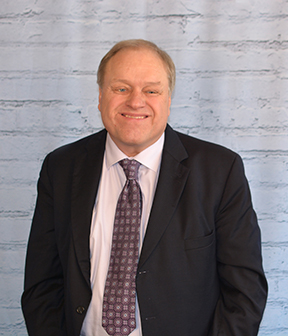 As I try to figure out ways to recruit new members to the National Federation of the Blind, I work hard to remember what it was like before I knew about and came to love this organization. While it was clear that I was as blind as one could get, my family and I thought that being a blind kid was very different from being a blind man. As sad as it is, I have to admit that I was afraid of becoming a blind man and had been assured that I would not. Science would save me from that fate. We firmly believed that, by the time I was of driving age, I’d be driving. Before I finished high school, I would be reading the newspaper. Just around the corner I would be able to see the faces of my mother and father, my brothers and sister. But for me the real excitement was going to be that I could see things that I could not detect through my ears, my fingers, or my other working senses.
So in my early years blind men and women were the other, the different, the people who were not like me. I would thrive as the exceptional blind child, but I would never be that blind man walking out on the street with a stick.
Of course, as the years ticked by and I was still blind, I began to have my doubts. So too did my family. We all began to prepare for the reality that, not only was I blind, but I would likely have to navigate my adult life as a blind man. Could I live on my own? Could I travel safely without someone’s arm? Could I get a job, and, if so, what in the world might it be? My grandma thought I could be a preacher, my cousin a lawyer, and my dad was certain I could be a musician. The tape recorder ruled out musician, the lack of what people referred to as “the calling” ruled out being a preacher, and learning that Perry Mason’s work life as a lawyer was television fiction and that he did more than work one hour a week for twenty-six weeks a year tainted my image of how wonderful it would be to adopt his profession.
When leaving home was not a distant possibility but something that was a little over a year away, I decided to look into what a guide dog might do for me. This required reaching out to blind adults, and it was the blind people with this information who loved me into the Federation. Their only agenda was listening to my interminable questions. When we shared experiences, I talked, and they listened. Only after it was clear that they cared about me did they ever so gently try to mold me, convince me that there were others like me, and help me to see a future I had not considered before. They introduced me to a successful blind vendor, an office supply salesman, a teacher, a law student, an accountant, the owner of an insurance agency, the proprietor of a hardware store—and all of this within Missouri and Kansas. They said there were lots of folks doing even more, and all of them were available to help me on my journey to independence and employment. I could come to know them through this organization they called the National Federation of the Blind.
The people who recruited me knew that, if they moved too quickly, they would push me away, but, if they put caring about me uppermost, they might just draw me in. I was offered help before I was asked to help. They proved how much they cared about me, and I wanted to return that care in any way I could.
Part of demonstrating caring on my part was being tolerant when they kept talking about this National Federation of the Blind. Part of caring meant going to some meetings because they wanted me to and not because I had some particular feeling of commitment to the organization’s goals. Last, coming to the meetings had something to do with dogs and donuts: the guide dogs I wanted to see and the donuts I was glad to eat.
I was sixteen when I came to my first meeting of the organization, and fighting discrimination, injustice, and unfair treatment against the blind were not a part of my agenda. It wasn’t that I came without a conscience; I simply didn’t know such mistreatment existed. At sixteen I was still under the protection of my mother and father and had never really had to face significant problems as a blind person. When I first began hearing about the unequal treatment of blind people, I am ashamed to admit that I wanted to blame the victims. That was easier than changing my view of the world. No agency had ever tried to bully me or narrowly restrict my options, and I was confident that, if they did, I’d just persuade them differently—me, the man with the silver tongue. Not surprisingly it wasn’t until I became a victim of some discrimination, some arbitrary treatment by powerful people and some choices that were given to me as “take it or leave it. I have all the power and you have none,” that I began to look with more compassion and understanding at those who alleged discrimination based on blindness.
The closer I came to graduation, the more the fear of growing up challenged the desire to do it. When you fear that despite your best efforts you will grow up to be a disappointment to those who respect hard work and success, and then you find a group that says, “We have lived through those fears and will show you how to push beyond them,” the world comes alive in a very new way. Narrow channels for staying afloat become wide rivers of opportunity.
Joining with an organized group of blind people meant rejecting some things I had heard and believed about myself and others who were blind. In my elementary school my parents were warned that they should be cautious about letting me associate too much with other blind folks. This could too easily lead to an unhealthy reliance on having only blind friends and not mixing with people who could see. When I mentioned to a blind friend that I was going to attend an NFB meeting, he became angry and said, “Now Gary, I really thought you were smarter than that.” I was confused and told him so. “I can’t believe that you would want to go and be a part of those Jernigan jumpers,” he said.
“What is a Jernigan jumper,” I asked, and “For that matter, what is a Jernigan?”
He said, “Kenneth Jernigan is the president of the National Federation of the Blind, and when he says ‘jump,’ people don’t ask why. They ask, ‘How high, sir?’ Now if you want to join an organization of the blind, you ought to join the one that I’m a part of. My God: going to a meeting of the Federation: I really thought you were smarter than that.”
These Federation people who had been nice to me had never said anything bad about the organization to which he belonged, and in fact they demonstrated the utmost regard for him as a man who had been quite successful in working a difficult job in private industry. If I had any doubts about going, he gave me the critical push by calling into question my brains, my good sense, and the character of people I had come to care about. There is a lesson in this when we are tempted to talk about other organizations of the blind. It is far better to speak about what we do than to characterize what they do. Presume that people will have the brains to find the organization that is best for them, and, if they are on the fence, encourage them to look. Last, my friend who questioned my brains never once told me he was a member of another organization until he challenged me about going to a Federation meeting. As much as I am sure that the Federation philosophy is just the right fit for me, I have the niggling sense that, had he asked, I might have chosen a different path. How many of us have friends who don’t know we are members of the NFB?
After attending several meetings, I decided to join, and that meant asking for admission. My request became a part of the agenda, I was introduced by those who knew me, I was given a chance to say hello, and then I was voted in unanimously. There followed a number of welcoming comments by people I knew as chapter leaders and by rank-and-file members I could not identify. All of them were clearly happy to see that I had joined, and I have to admit that I was impressed by the ceremony that officially tagged me as a member of this organization.
Finding the Federation began a paradigm shift in my life. What are the jobs I can do as a blind person soon turned into what are the few jobs I cannot do. Instead of fearing that I would have to be exceptional to get any kind of job at all, I began to hear and believe that the average blind person could do the average job in the average place of business and could do it as well as his sighted neighbor. If these people were as truthful as they were loving, they were offering a world very different from the one I thought I was about to walk into as I came closer to being an adult.
“We have some good news for you,” they said. “If you don’t have the talent or the desire, you don’t have to become a musician, but neither do you have to face the music of deprivation, disappointment, and despair you say you fear. You may think that your life is about to change for the worse because you don’t have everything figured out, but you don’t have to fear growing up. There are those who will tell you that because you are blind you are less capable, have fewer opportunities, and must choose among the small number of jobs fit for the blind. But don’t you believe it!”
Sometimes we make a judgment about whether people are interacting with us in a welcoming or off-putting way. Often it is a matter of perception and perspective. In my own case this usually means making the decision about whether to be open or defensive. When Federation members suggested that I should be doing better academically than I was, my first reaction was that the organization was off-putting. But when I listened to their message with the love they had amply demonstrated for me, I knew that they were not offering a criticism but a promise of things that could be. The choice would be mine about whether or not to embrace the opportunity to live a full life as a normal human being or a full life as defined within the small box of what I thought blind people could do. When I could get beyond the idea that my little box was being attacked and realized that it was being opened so that I could experience a greater sense of the world, I knew that any off-putting feelings came from my defensiveness and not their love.
Sometimes I talk with people who say, "Before I join the NFB, I have to decide how important it is to me. You see, I'm really an all-or-nothing kind of person. When I commit to something, I go all the way."
On the surface this sounds reasonable and even admirable. But at least in my life it doesn't stand up to the test of the way I really function. I am a supporter of public radio. I am saddened by world hunger and contribute to foundations that are fighting it. I care about equality of opportunity and a better chance for people of all races, so I contribute to education funds and civil rights organizations. I care about chronic illnesses and give to research for their cure and care for those afflicted, and I even donate so that caretakers can have a time to recharge. I don't believe I am letting any of these causes down because I do not give my all to them. I give greater time to my family than anything else. My job and my Federation involvement are a big part of my identity and thus get a big part of me. But I don't count myself out as a force for good in dealing with other issues affecting my community, my country, and even the world. I think the truth is that we all operate with many priorities and that each is brought to the forefront as the situation demands.
Not everyone needs to put the amount of time that President Riccobono does into the organization. Some are leaders, and some of us play different but important roles. The fact that we divide our loyalties, our energy, and our financial resources among many different interests should not determine whether or not we are Federationists. What I give this week will be very different next week if I have a family crisis, if there is a need in my community, or if a friend falls on hard times and needs much more from me than usual. Being a Federation member does not mean that the organization automatically gets a certain part of me or that my effort won’t vary. I am an active member, but I also try to live a life that is balanced: work and play, listening to music and enjoying silence, listening to and taking part in good conversations, being involved in all that is going on around me but then taking time for quiet time and meditation. The NFB wouldn’t have it any other way for me and for all of those we seek to help become integrated into the mainstream of our world.
Another reason I was given not to join the NFB was that they were interested only in the super blind. The term “super blind” was never quite defined, but I gathered from snippets of conversation that these people were those who were extremely bright, were employed in tremendously well-paying jobs, enjoyed fantastic travel skills, were excellent cooks, and could read Braille at hundreds of words per minute, some of them rivaling the print speed readers who were alleged to read more than 1,200 words a minute. I wondered if the warm invitation I had been receiving would be retracted when I was found to be lacking in so many areas. To this day my cane travel skills are pretty good: I manage to avoid head-on collisions with poles, find the stairs and make my way up when they go up and down when they go down; but my orientation is a different matter altogether. Sometimes I can walk into a restaurant, exchange pleasantries with the hostess, be guided to my seat, interact with my dinner companions, enjoy my meal, pay the bill, and then realize I have absolutely no idea which way is out. It has to be the opposite of the way I came in, but I somehow don’t have that information. My sense of level is atrocious. If you hand me a cup of coffee, the first thing I would do is say thank you; the second thing I would do is take a drink from the cup to determine its fullness and then decide an acceptable sense of level. This is a fine technique for me, but I suspect that not many people will be asking me to bring coffee to their table if holding it level means I take the first sip. I can read Braille all right, but I would lose out to both the hare and the tortoise in any slate-writing contest. I have been blessed with a good job for most of my life, but I won’t be leaving much to my children, the thing of most value being my advice to work hard and try to get along with others. No, the Federation has not demanded that I become a super blind person. They have instead encouraged me to be honest with myself—to push when my skills can be improved and to accept with gratitude those innate talents I got when placed upon this earth.
Do we admire and reward people who are outstanding in their field? Of course we do. Do we use their experience to motivate others and to change the public’s perception of our limits? Most certainly we do. But do we who are rank-and-file members have to meet this high bar? We do not, and we are loved and nurtured just the same. We are the examples who speak eloquently to members of the National Federation of the Blind being a cross section of the population.
Now comes the something really special that makes me glad to be a member. Blind people are quite frequently the recipients of help, sometimes needed, sometimes thrust upon us. But our Federation helped me see that I too have something to give—what a chance to turn the tables and to be a helper, a mover, and a shaker. In my time as a member, I have seen the passage of the Model White Cane Law; the right to vote by bringing a person of one’s choice to the polls; a massive expansion of the Randolph-Sheppard program to include cafeterias; a change in the insurance laws of many states so that blind people can buy life and health insurance; the Air Carrier Access Act, which clarified that we could keep our canes with us while flying; the Americans with Disabilities Act; the Help America Vote Act; the Pedestrian Safety Enhancement Act; the Space Available Act; and now the Marrakesh Treaty. Some of these changes have benefited me directly, but all have benefited me indirectly because I had some small part to play in bringing about something good in the world that did not exist before we willed it into being.
Before I became a part of an organization of the blind, I encountered a number of organizations for the blind. The difference is significant. Organizations for the blind invited me onto their luxury cruise ship and almost demanded to do everything for me. But the National Federation of the Blind invited me into one of their canoes, gave me an oar, and asked me to dip it in the water, move the canoe forward, and help determine its direction along with the rest of our fleet. When taken together, we make up an impressive armada fighting for change, but we are nothing without each canoe. We are not just the blind speaking for the blind; we are the blind acting in concert to make real the dream of life, liberty, and the pursuit of happiness for a segment of the population which historically has not enjoyed these fruits but has endured existence, restrictions on our freedom and activity, and the denial of many opportunities others have all-too-often taken for granted.
When we tackled quiet cars that put at risk our freedom to travel, Debbie Kent Stein wrote something that is deeply meaningful. She said:
As blind people we contend with a host of barriers and concerns. There are inaccessible websites and kiosks, and there are standardized tests with a visual bias. Setbacks and inequities are rooted in a long history of ignorance, prejudice, and discrimination. Furthermore, along with the rest of the world, we face more threats and dangers than we can count, from the fraying ozone layer to the constant menace of war. Before the enormousness of the world's ills I often feel overwhelmed and helpless. Our success in tackling the issue of quiet cars seems a featherweight in the balance. Yet the passage of the Pedestrian Safety Enhancement Act stands as proof that we as individuals have the ability to make a difference. When we commit ourselves to a cause and win the commitment of others, we harness the power of collective action. When we stand together, we can change the world.
What a fitting observation she makes about why we have the Federation.
I am thankful that I know what it's like to be enriched by finding a cause larger than myself, to tap into the expertise that collective action allows, and to speak with the amplification that the Federation provides. I share this with the hope that others will join and benefit in their own special way. I urgently want people to become a part of us so that their dreams and their views will come to constitute this wonderful force we call the National Federation of the Blind.
Media Share
