Can I Have an ABLE Account if I am Forty-Fifty-Sixty Years Old?
by Albert Elia
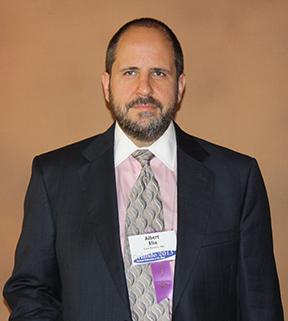 From the Editor: This informative article was taken from the Spring 2019 issue of the Braille Spectator, the newsletter of the National Federation of the Blind of Maryland. Here is the way it was introduced:
Editor’s Note: Recently, Congress enacted legislation that permitted the blind, and others with disabilities, to establish ABLE savings accounts that will largely not affect their eligibility for Supplemental Security Income (SSI), Medicaid, and other public benefits. Albert Elia, an ABLE expert, an attorney with TRE Legal, and a member of the National Federation of the Blind, gave the following presentation at the 2018 Annual Convention of the National Federation of the Blind of Maryland.
An ABLE account is kind of like a 529 college savings plan, only it’s for people who have disabilities. If you’re familiar with a ROTH IRA, an ABLE account works very much like that. You can invest money in an ABLE account and do not pay taxes on any growth that you get in the account; thus you can put money into it and use it like a savings account. The interest is tax-free, or there are investment options just like a typical retirement account and those, too, grow tax-free.
Now, it’s important to know whether you qualify to get an ABLE account. It is only for people with disabilities, and you must have had a qualifying disability—blindness is a qualifying disability—before the age of twenty-six. So if you are currently blind and are under the age of twenty-six, you need to have an ABLE account. For example: you win an NFB scholarship, and you have all this money that you got from the NFB, and you deposit it into your bank account. Then all of a sudden your Supplemental Security Income (SSI) benefit goes away because you have too much money in your bank account. That won’t happen with ABLE.
One of the main purposes of ABLE is to ensure that all of the means-tested government benefits, like Medicaid and SSI, are not affected if you have money saved in an ABLE account. As in the earlier example, say you are a student; you have scholarship money, all the money you get from your relatives to go to college and to pay for expenses, and anything that you earn from a college job. You put all of that in the ABLE account, and it does not impact your SSI.
Second, you can use it for any disability-related quality-of-life expense. This can basically mean anything that is legal. So no buying drugs, but otherwise you can pretty much use ABLE for anything that you want. You can use it to buy the self-driving car or to pay for an Uber. You can use it to pay for health care, or housing, or tuition. You can use it to pay for pretty much anything, as long as it is a thing that increases your quality of life.
Now, for everyone here who is not currently under the age of twenty-six, if you were disabled prior to the age of twenty-six you can still open an ABLE account. For instance, I am currently forty-four years old, and I became legally blind at the age of seventeen. Last year I was allowed to open an ABLE account because I was legally blind, I was disabled, and this disability occurred prior to the age of twenty-six. So if you were disabled—you were legally blind or had another qualifying disability—prior to the age of twenty-six, then no matter what your current age is, you can open an ABLE account that will, basically, allow you to save money tax-free for disability-related expenses or for retirement. However, you can use that money before retirement if necessary; it is basically like free money that can’t be taxed. And let’s face it, we need more free money that can’t be taxed so that we can support NFB, and then give NFB some of the money, right?
For those of you who don’t have an ABLE account, I want to give you two websites. One is www.ablenrc.org, and the second one, since we are here in Maryland, is www.marylandable.org. You can use either of these to sign up for an ABLE account.
In addition to a tax benefit for not having to pay taxes on the growth of funds, if you live in Maryland, you are a Maryland taxpayer, and you open a Maryland ABLE account through that marylandable.org website, then you actually qualify for a deduction on your state income taxes—up to $2,500 per year for the money that you put into your own or another person’s ABLE account. So, again you are going to save $2,500 on your taxes; save the money, donate money to the NFB, or keep more of your money for yourself.
It does not matter what age you are, if you had a qualifying disability, like blindness, prior to the age of twenty-six, you qualify to open an ABLE account, and you should all do so. I opened one. I am using it as an alternative to a retirement account because I work for a small employer, and we don’t have a retirement plan. But if you want to use it to simply save up money for that self-driving car when it comes out, or so you can pay for the Aira service, put the money in ABLE.
You can put up to $15,000 per year in an ABLE account. Or if you are working and contributing some of your earned income, you can contribute your earned income up to an additional $12,000. So basically, if you are working, you can contribute up to about $27,000 per year. I would love to be able to contribute $27,000 per year; that would be a great problem to have to hit that limit. In the meantime, even without the extra earned income, the $15,000 is still three times what you can contribute to an IRA. It is a really, really valuable financial tool for people like us who have disabilities. I urge you all to do it, and, like I said, especially you students out there. You really need one because the last thing you want is to have to deal with SSI, having your benefits terminated, and having to go through the reapplication process. Just put it in an ABLE account, and you don’t have to worry about it.
There is not a means test for ABLE. The goal of ABLE is to avoid a means test for benefits like SSI and Medicaid, which require means testing generally. This creates a way to avoid the means test without being penalized. However, ABLE does not reduce your income for purposes of income testing under the Social Security Disability Insurance (SSDI) Program and other income-tested programs. This is because ABLE accounts are exempted from means testing but not income testing.
Media Share
