A Blind Man Whose Business Was Doing Business
by Peggy Chong
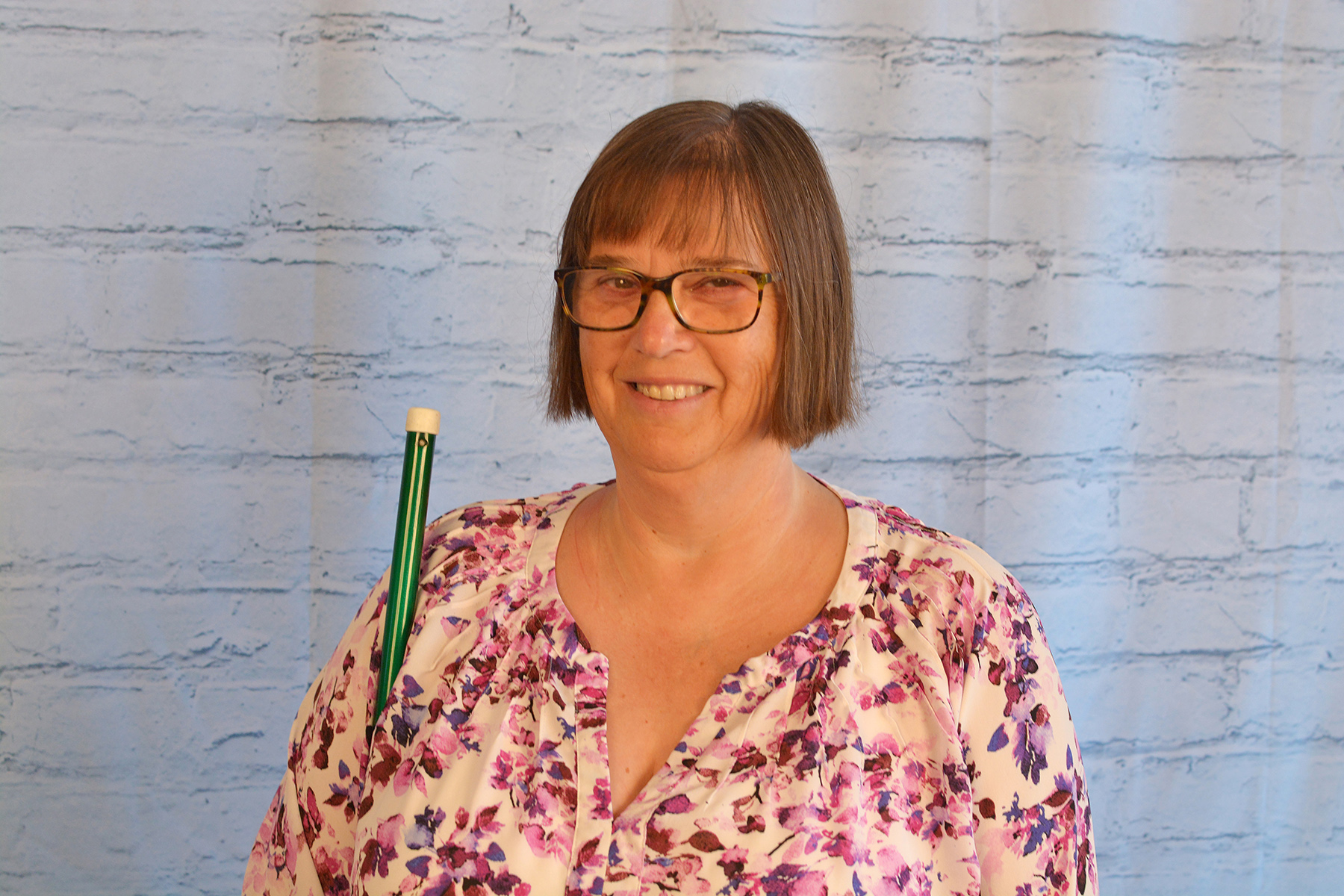 From the Editor: Peggy Chong is an exceedingly active member of the National Federation of the Blind, and she makes frequent valuable contributions to the Braille Monitor. In addition, each month she sends out an email to her growing list of subscribers, with the topic of the month from The Blind History Lady. Below is her April email. If you would like to subscribe to The Blind History Lady’s email, send a note to [email protected].
Happy Spring to my Blind History Lady fans. This time of year cures my cabin fever. I like to get out and find new places to go. My story this month is about a man who got out and tried varied careers and modes of transportation in the late 1800s. If not for a few newspaper articles, William would go unnoticed to the world. He thought of himself as just an average guy working at whatever he could to support his family. I am sure he loved spring as well.
He had little education and many hard breaks in life. In some ways, his hard breaks are what made him a relatively successful businessman, father, and husband. May I introduce to you William Branch.
William Nicols Branch was born in July of 1852 to William H. and Mary Branch in Hamilton County, Ohio. Soon after his birth, his parents moved to the Ramsey County area of Minnesota. Father William and an older brother also named William H. were carpenters and bricklayers, a good profession for the new state and its growing communities. The Branch family had six children in total, William being the third.
It is believed that William became blind at a young age. In about 1865, the school for the blind in Faribault knew of him but had not been able to convince his family to enroll him as a student at that time. The institution was new. The first class did not begin until 1866, and many parents labored under the false impression that the school was also an asylum—a place where one might put a family member away who was feeble-minded; a place where people went in but did not come out; a place to get sick or stay for the rest of one's life. They certainly did not think it was a school.
In 1867 at the age of 15, William was finally enrolled by his parents at the school for the blind. At that time the school for the blind and the school for the deaf were housed in the same buildings. There were far more deaf students than blind students, and there was only one instructor for blind children for the first few years of the program.
While at school William learned to play music for a trade. He played the piano, organ, violin, base, and flute in the school presentations, musical reviews, and annual concerts. During his time at the school, there was not a class in piano tuning. Indeed, the only occupational training that was available for blind students was that of a cooper (barrel builder).
After leaving the school in 1873, he moved back to the St. Paul area near family. He is not listed as a graduate, most likely because he was an older student who was focusing on employment. William's father had died on New Year's Eve of 1872. Because there was little support for a widow, William could not rely on his mother or family to support a blind child; he had to make it on his own.
For a time he tried being a milkman, delivering milk door-to-door on a horse for the rural neighborhood. His horse worked something like a guide dog. William listened for fences, groves of trees, or other landmarks to indicate a drive. William tugged the reigns to tell the horse what direction to turn. The job was short lived.
You may wonder how he even thought about riding a horse by himself. When he was a young boy, William showed off his horse-riding skills at the Dan Rice Circus one night. It was late after dark—a disadvantage to many of the boys and young men who wished to ride the trick mule pony of the circus. There was little lamplight for the sighted boys, but being blind and having little usable vision, the lack of light did not bother young William. He accepted the challenge of trying to stay on the bucking mule. He did stay on and won the five-dollar prize that night for his accomplishments. When he got home later that night and told his family that he won the money, he got a "licking" from his father for trying such a stunt.
Next, he took a job in a piano factory in St. Paul where pianos were built, repaired, and tuned. He worked in the tuning room with other blind and sighted piano tuners. Here is where he learned the profession most thought of as possible for the blind. According to William, the blind employees were the best at the shop because they paid attention to the little details. He befriended the blind men and eagerly learned their craft.
Music helped him to earn money. William played the piano, violin, cornet, flute, and clarinet. All of these he played with better-than-average skill. Knowing how to play several instruments meant that he could also get jobs playing music for many occasions. He could sit in for another musician in another band at short notice. He would travel by streetcar or walk to most of his engagements just as he did in getting to the piano factory.
In 1876 William married Nellie, a woman five years his junior, who immigrated from Sweden in 1869. The couple had four children. Sadly, their two boys died at very young ages. James was born in 1877 and George in 1879. Neither boy made it to his fifth birthday. The couple later had daughter Sara, born in 1888, and Lillian, born in 1898.
In 1890 William worked out of his home that he purchased that year at 981 Margaret Street in St. Paul. Few blind people could afford to purchase a home, so even though one of his businesses did not succeed, the combination of all his efforts provided for his family. Besides piano tuning he also advertised as an acupuncturist out of their home. This particular business was not very successful, and after a few years he no longer advertised the service. No records show where he received training for this profession.
Some tuners hired children to lead them around or had their own children do so. In William’s case, there is no indication that he used a sighted guide at all. His sons died before being able to do so. His daughters were born much later. There is no mention of William’s wife in news articles, leading me to believe that she did not act as his guide either.
To get to his various piano-tuning jobs, William rode a bicycle through St. Paul for many years. A blind man riding a bike? Yes, it was not as unusual as you would think in the Twin Cities. Once one piano tuner tried it and succeeded, others did the same. The ruts in the road from the wagons left a deep trail to follow and helped keep the wheels of the bike inside of the wagon rut. By listening and noting the changes in ruts, he recognized intersections and large alleys or driveways. He noted the change in the air. A sudden breeze could mean an alley or a taller building.
William rode a horse through town if he could rent one. Of course, it was important for him to know where he was going when riding. A horse does not want to injure itself and avoids obstacles that the blind rider might not notice; this made it even more difficult for William to know where he was and where he intended to go.
Walking alone on the streets of St. Paul, William often was offered help. Sometimes he needed the assistance; most times he did not. Sometimes he would ask for assistance or directions. Once in a while he would walk with a fellow citizen to his next destination or to a street he was looking for. This proved to be a great opportunity to educate the public about blindness and also allowed him to drum up a little business as a piano tuner and musician.
William passed away on May 26, 1907, in St. Paul. He was fifty-five and left his widow with one young child. In 1910 Nellie still lived in the house and had enough funds to support her young daughter without working. Daughter Sara, “Sadie” lived with her mother and was a piano teacher, a skill she had learned from her father. William left enough behind to keep his wife until her death decades later.
You can read my books at www.theblindhistorylady.com.
Media Share
