Words Matter
by Michael Hingson
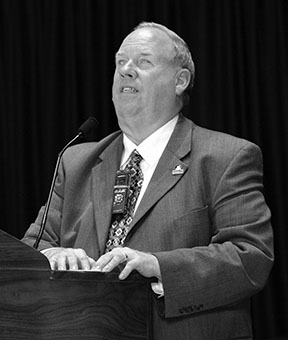 From the Editor: The author of this article is well known to many of us in the National Federation of the Blind. He has had more than fifty years in the organization, has done outstanding work academically to become an engineer, worked in that field for a while and then became a financial analyst and expert, spent more than two decades doing public speaking which he continues today, worked with us for many years selling the KNFB Reader, and is actively involved in issues aimed at making technology both usable and accessible. Here he shares with us some perspectives about the use of the words visually impaired, the word blind, and a way that may point to our being more inclusive.
In January of 2021, I joined the Israeli company accessiBe as its chief vision officer. Among my responsibilities, I was asked to create a podcast, which began operations in August of 2021 with the title Unstoppable Mindset: Where Inclusion, Diversity and the Unexpected Meet. The intent of the podcast was and is to be inspirational. I have had the pleasure of interviewing over 150 guests who come from a wide variety of jobs and life experiences, many of which have no relationship to the world of persons with disabilities. I’ve also had the opportunity to talk with a number of people who work in the diversity, equity, and inclusion (DEI) arena. Many of our discussions have been quite lively, and all have been constructive and informative.
When talking with these people, unless they have some specific relation to persons with disabilities, when I ask guests to define the term “diversity,” they mention a number of topics including race, gender, sexual orientation, and other things, but rarely if ever mention disabilities as part of their definitions of diversity. When the topic of blindness comes up in our discussions, I and others who happen to be blind are usually referred to as “visually impaired”.
Since beginning the podcast, I have thought a lot about this term “visually impaired”. I have listened to many people talk about it, and I have also listened to other terminologies that people have used to describe me and the rest of us. I thought it was high time to write an article about this in order to discuss why we need to move away from the term “visually impaired” to a different descriptor that is not only more accurate but better promotes who and what we are.
Language plays a crucial role in shaping perceptions and understanding of various aspects of life. When discussing people with sight loss, it is essential to use accurate and inclusive terminology that respects our experiences. By addressing the inaccuracies and misconceptions surrounding the term "visually impaired," we can foster a more inclusive and respectful society including helping to raise our own personal expectations and self-respect.
The term "visually impaired" is widely used to describe individuals with sight loss. However, this term is problematic for several reasons. Firstly, the word "visually" suggests that the person's appearance is affected by their sight loss, which is ridiculous by any standard. People with sight loss may have different visual acuity levels, but our physical appearance remains unaffected. We are not visually different simply because we may not see or we may not see well.
Secondly, the term "impaired" implies a sense of deficiency or inferiority. This terminology perpetuates the notion that individuals with sight loss are less capable or limited in some way, which is both incorrect and unfair. Instead, it is crucial to recognize that people with sight loss can lead independent and fulfilling lives with the right support and accommodations.
To address these inaccuracies, an alternative term that is gaining recognition and acceptance in some quarters is "blind or low vision." This phrase accurately acknowledges the potential range of sight loss without implying any physical changes or deficits in the individual's capabilities.
The term blind typically refers to individuals with complete or nearly complete vision loss. However, it is important to note that blindness is not an all-encompassing term. People who are blind often have some residual vision, and the degree of vision loss can vary greatly among individuals. We all know that people who are blind can use a wide variety of tools to accomplish the same tasks that nonblind people perform. By the way, those same nonblind people also use tools and technology to accomplish the same tasks.
On the other hand, low vision encompasses those persons with varying degrees of vision who typically have some eyesight and who often choose not to view themselves as blind. Like totally blind people, these individuals also benefit from assistive technologies, magnification tools, or other aids to enhance, to one degree or another, their remaining vision.
Adopting the phrase "blind or low vision" promotes inclusivity and helps challenge the societal misconceptions surrounding sight loss. It emphasizes the capabilities and potential of individuals with sight loss rather than focusing on any limitations due to a loss of eyesight. This shift in language fosters a more respectful and empowering narrative, ultimately leading to greater societal acceptance and integration.
To create meaningful change, it is essential to raise awareness and educate the public about the use of appropriate terminology. This can be done through various means, such as educational campaigns, media initiatives, and inclusive language guidelines in academic and professional settings.
Additionally, it is crucial for us to self-advocate and assert our preferred terminology. By expressing our preference for blind or low vision (BLV), we can challenge existing misconceptions and encourage others to adopt more accurate and respectful language. The concepts I am suggesting here have already been used by other minorities to work toward a change in their own self-image. For example, for many years people who had issues regarding hearing were described as “deaf or hearing impaired.” If you pay attention, you will not hear “hearing impaired” used today, at least not much. Today, and as I have learned through discussions with deaf people around the country, people who are deaf absolutely insist on being described as “deaf or hard of hearing.” Deaf people have already recognized the value and need to move away from any description of them that includes the word “impaired.” We can do the same thing within the blindness culture.
Language has a profound impact on how we perceive and interact with the world. When discussing individuals with sight loss, it is imperative to use terminology that accurately reflects our experiences and promotes inclusivity. The term "visually impaired" falls short in this regard, because it perpetuates misconceptions and implies physical changes that are not inherent to sight loss. By replacing it with the phrase blind or low vision, or BLV for short, we can foster a more accurate, respectful, and inclusive society that values our capabilities and contributions.