Rebuilding What I Should Have Known: Reflections on My Journey to be Accountable to the Blind Community
by Shir Ekerling
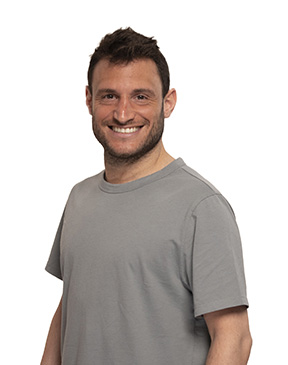 From the Editor: Few issues charge people up as much as access to the web because it is so crucial in functioning fully in commerce, education, and recreation. The fact that the web is generally far less accessible than it should be is a cause of tremendous concern, but recently how web accessibility is achieved has also become a hot topic.
At the 2023 Convention the National Federation of the Blind invited the founder and chief executive officer of accessiBe to address our convention. Here is what President Riccobono said in his introduction:
PRESIDENT RICCOBONO: Our first three speakers were invited to engage us in conversation about the things that we might be able to do together. You might wonder why this next person was invited.
In 2021, we pushed back on the very harmful marketing practices and business activities of this company, and this convention affirmed the action of the Board of Directors. The company, accessiBe, had planned to sponsor this convention in 2021. We sent the money back.
By the way, we haven't said it throughout this convention, but it came to mind in Jonathan's presentation. It's really powerful that companies come here and engage us meaningfully, and part of the way they do that is by sponsoring our convention. We appreciate that. [Applause] But just in case any of our sponsors think that by being a sponsor they have bought us off, it does not happen. [Applause] Over the years I sat with many of a sponsor who was upset about a resolution being offered by the convention because they were also a sponsor. The fact of the matter is, when you show up here, blind people are much more eager to give you feedback, which is why people come, right?
This situation was a little different. We felt it was very necessary to tell this company not to come, and that they needed to do some serious work to stop harmful practices that were taking advantage of the work that we're trying to do to advance blind people in society. They needed to stop attacking our people for being advocates, and they needed to work honestly to be good stewards of the message of accessibility that we want to happen.
Now, the idea of overlays have been around for, I don't know, fifteen or sixteen years. I think that is about the first time it was ever discussed at this convention that I remember, and we're still discussing the merits of those.
But we will not be misrepresented by the companies that are trying to sell tools into the marketplace to help us with our cause, which is equal access. We will not be used! [Applause]
Now, it wasn't a certainty that accessiBe would ever appear on this stage. And I have had some very frank—many very frank conversations with this gentleman. He sent a letter to our board of directors last fall, and the board decided to allow him to publish an apology in the Braille Monitor. We told him that you all would decide whether the apology was adequate or not and that making an apology does not build the trust. It's the first step. [Applause] We told him that building trust is going to take time. I also have told him that his appearance on this stage is not an endorsement, and I think he knows he's probably amongst the least popular people in this room.
But to his credit, he still came. [Applause] I could say more about the situation, but I want to give the platform to our guest to talk about his journey and his aspirations for how he can rebuild trust and potentially do something to advance our cause in accessibility rather than harm our cause. Here is Shir Ekerling!
SHIR: Hello, everyone. My name is Shir Ekerling. I'm the founder of accessiBe. I'm very excited to be here today and address you at the convention, and I want to thank NFB leadership and President Riccobono for giving me the opportunity to do that.
I believe that you have already read my apology letter, as Mark mentioned in May's publication of the Monitor or heard my interview on the podcast [by Jonathan Mosen] last month or at least heard about one of these things. The title of my talk here today is "Rebuilding What I Should Have Known: Reflections On My Journey to Be Accountable to the Blind Community." [Applause]
This is a continuation of our efforts to demonstrate our commitment and accountability to the blind community, and I will use my approximately fifteen to twenty minutes here to talk about that and our path forward.
Many don't know, but in the last two years we have been working night and day alongside many disability community leaders, individuals, and organizations to change and transform a lot of what we do, following two of the NFB's 2021 resolutions regarding overlay products and accessiBe. The NFB guidance was clear, instrumental, and very much appreciated. [Applause]
I'm aware that the changes I'm talking about took a long time to establish, and perhaps a little too long. But some of the things we have worked to change required us to do a complete overhaul in many aspects. We had so much to learn and understand to ensure that we never repeat the same mistakes again.
Accessibility is a basic civil right. So we wanted these changes to be as thorough, comprehensive, and correct as possible. Today I'm happy to tell you that we have addressed all the points you brought forward in the 2021 resolutions. [Applause]
I will give you examples in a moment. But before that, I want you to know that this does not mean that our work and changes are over. Far from it, actually. Today we are pushing forward even further and much, much harder. We know that building trust takes time. But we are here for the long term and not afraid for a long and hard process. There is still so much more that we need to learn, do, and change, and your feedback and criticism is what helps us do things correctly. We are here to learn from you. You are the experts, and you know best. [Applause] Also, I know that many of you already have heard or read about some of the changes I'm going to mention here. So after today, our communication to you in conventions and otherwise, will mostly focus on new projects, new initiatives, and all the new things that we are building together with the community. There is a lot of activities and work being done behind the scenes together with individuals and leaders from the blind community, which we have not publicly talked about yet, but you will hear about many of these very soon.
So the resolutions included multiple topics. Today I will focus on the four most major ones and give you examples on how we address the points relating to, one, our communication, feedback, and executive team; two, our products and services; three, our technical implementations; and four, our marketing activities and campaigns.
So, let me start with communications, feedback, and our executive team. I truly believe that the way we communicated in the past was very bad, to say the least. I think this was one of the biggest reasons for the issues we had and the mistakes we've made. There are so many reasons for these communication issues, but the biggest, in my opinion, is the fact that we, the three founders of the company, were very much inexperienced in business. We were not savvy businesspeople, and the cultural barriers also were no help. When we started accessiBe, we were very young and ambitious, twenty-six and twenty-seven-year-olds, who wanted nothing more but to do a lot of good to the world and create solutions that truly helped people. And although we were software experts in web accessibility, as we have been providing accessibility services for years, we did not really know how to listen, communicate, and receive feedback and criticism correctly. Many times we reacted inappropriately.
To follow the resolutions, address these issues, and overcome our weaknesses, we had to overhaul multiple departments internally, including replacing almost all the management and stakeholders in the company and bring new people that can teach us what we needed to change and how to approach the changes correctly. [Applause]
So we sought the help of leaders in the disability community who for two years have helped us shape the new version of accessiBe that knows how to handle feedback and criticism, how to communicate properly, and is accountable to and driven by the disability community. AccessiBe 2.0, you could say.
And here are a few examples of this. One, we have created a completely new product and research department that is focused on creating product and services with and for the community. This is a huge point, and I will talk a lot more about that in a few moments. But, two, we have incorporated professionals from the disability community into every aspect of our company. Today, everything we do is made with or by talent from the disability community in the process. This includes the creation, review, guidance, or approval in creating products and services, delivering marketing campaigns and customer communications, and much, much more.
Three, we have created community feedback testing and relations teams that focus on receiving feedback and addressing any problem quickly and swiftly. [Applause] Also, I personally hands-on lead the efforts to receive comments, issues, feedback and problems from users in meetings, emails, and anywhere else. I want to hear from you. Your feedback, your criticism, your advice: We want to learn from you, and we want to work together.
In the Braille Monitor letter, I gave everyone my personal email, because I wanted to engage with you and make sure your feedback gets to the right place and implemented correctly. So please use it, my email.
Four, we also have created completely new advocacy and nonprofit departments focusing primarily on working with hundreds of nonprofit and disability‑focused organizations to raise awareness and educate about the importance of inclusivity and accessibility in the world. Our focus today is on giving the disability community a platform to reach and educate the millions of businesses, developers, and the global population directly about civil rights and disabilities, without us representing or speaking for the community in any way. [Applause]
We have replaced our entire marketing department, including all the managers and executives who could not line up with our new way of doing things, [Applause] and with our accountability to the community. We moved away from emphasizing legal actions, and our marketing today is based on the positive aspects of becoming an inclusive business. We want businesses not to fear accessibility or disabilities but be excited about the opportunities accessibility provides to their business and all the new customers they will be able to attract. [Applause]
Also, we are focused on educating the professional community: developers, designers, and managers about accessibility, both technically and socially, so they can start building and designing accessible websites and applications right from the get‑go. [Applause]
The overarching point in our marketing communications today is that accessibility should become a pillar when building for the web or when doing business in general. We advocate and educate the business community in how to achieve exactly that in every business practice, both on the web and in general.
These and many others are the types of activities we are mostly focused on today and what we invest funding in.
Back to products and services. The changes we made on this front are even more significant. Our approach today is very different from our approach two years ago, and this is thanks to all the work we have done together with the community.
Today we no longer believe in an air quotes “one size fits all” approach to accessibility. We recognize that providing accessibility should be much more comprehensive than that.
In the last two years, we have created a comprehensive ecosystem of tools, products, services, solutions, and educational programs for businesses of all sizes to provide accessibility to the best of their abilities and resources. Our solution ecosystem today focuses on giving any business, even the tiny family business or mom‑and‑pop store, ways to address and learn about accessibility thoroughly as if they were a large corporation and budget was a non‑issue.
Our goal is to help businesses implement inclusive business practices through services, products, and educational activities, many of which we provide for completely free in order to eliminate any financial argument businesses sometimes raise not to include accessibility in a comprehensive manner. [Applause]
We advocate first and foremost for native accessibility as much as possible. And our company today provides the biggest variety of options, services, and tools for business to approach, learn about, and provide web accessibility to their users. Our services department provides all accessibility services, including in‑house human audits, user testing, document mediation, accessibility consultancy on every level, for any project, technical and social training, and educational programs for companies and for professionals; and we have already successfully run and finished hundreds of such projects. [Applause]
We also provide technical guidance directly to end users if you need it. This includes comprehensive operational guides, direct technical assistance, and providing feedback and bringing issues to our attention.
Before my time is up, I want to also tell you about a few other important products we have added to our comprehensive ecosystem. AccessFlow is our new platform to test, monitor, and remediate the accessibility of websites and web applications that help developers achieve and maintain native accessibility with complete source code remediation. With this product, we enable businesses to treat and address accessibility as another pillar to address while developing for the web. Just like businesses prioritize their security and performance of their websites and applications, with accessFlow, web accessibility now gets the same treatment and the same priority. [Applause]
In simpler words, what accessFlow does is to teach and help businesses and developers integrate web accessibility natively and seamlessly into their existing software lifecycle and development process. [Applause]
AccessScan is a completely free product but a critical part of our accessibility ecosystem. For businesses to consider web accessibility, they first need to be aware of it and its importance. Unfortunately, we see many businesses, especially small ones, getting so overwhelmed by web accessibility to the point that they sometimes choose to brush it off, ignore it, and hope things will be okay, but they will not.
AccessScan is designed to raise awareness in the simplest way possible so every business owner can understand where their website stands in regard to accessibility without technical knowledge required on their side.
The whole point in accessScan is that businesses can get streamlined, simple and friendly introduction to web accessibility and disability education without being overwhelmed or concerned. We see a lot of success with this approach, which is very exciting to me.
AccessCampus is one of the biggest focuses for the near future and a major part of our efforts to help businesses create native accessibility and become truly inclusive businesses when it is released. As the name implies, accessCampus is an online education platform only for teaching accessibility and inclusivity. This is both from the technical standpoint and the social standpoint. Teachers in accessCampus are diverse and made of experts from the disability and accessibility professional communities [Applause] who teach developers and businesses from their own lived experiences and expertise. For example, blind experts will teach developers and product managers to use a screen reader properly so professional communities will have that basic knowledge when building their projects right from the get‑go. Many of these programs are also going to be completely free. This is an attempt to dramatically increase awareness and further provide a simple and friendly way for businesses and professionals to learn truly how to implement accessibility natively on the web and in many other aspects of business.
Lastly, even though most services and projects today are used by developers and businesses, I'm very excited to tell you that we're working on three completely new products and services created directly for you, the end user, and not developers or businesses. We have partnered with community leaders who directly lead and manage the creation process of these products and services while we provide primarily the engineering capabilities, resources, and the funding.
Also we are funding community projects and initiatives, investing directly in talented individuals from the blind community who are top experts in assistive technologies so they can build new and very exciting assistive technologies both in software and in hardware, and more information on that will be coming soon. These are products and services made directly by the community for the community or by the users for the users with accessiBe support, assistance, funding, and expertise.
That's it. I truly appreciate the opportunity to address you today and am very much looking forward to expanding our relationship with NFB members in working together toward creating a much more accessible world. Thank you.
PRESIDENT RICCOBONO: So, this is a beginning to the conversation. But this organization has never shied away from difficult conversations. And this is part of our effort to do exactly what Jonathan talked about earlier. We have a responsibility to not simply tell these companies what we think, but to steer them in the right direction or to steer them out of business.
We do appreciate you being here, Shir. [A speaker asks for the floor.] Briley, go ahead.
BRILEY O’CONNOR: I think what we have here is not a communications problem but an honesty problem. I'm looking at the website, your home page right now, and you promise things that don't exist. You promise WCAG compliance with an automated solution that can't give that. You promise 508 compliance with automated solution, and that doesn't exist. You promise two-minute integration and immediate turn‑around. You can't provide accessibility. If I could do accessibility in two minutes, if the automated solution already existed, I would be out of a job. I don't see anything on your home page about the importance of native accessibility and how accessiBe can help people build a sustainable accessibility practice. There is a place for overlays when they're better, but all the things that you have just said don't seem to be reflected in the communications. Are you planning to change any of that?
SHIR: Thank you for the question. As I said, we're not afraid to have difficult conversations and the long process and hard work. And to answer the question, there are multiple layers to that. First, anything that you or anyone else believe that we have done wrong or gotten wrong on our Home page or any other place, I implore you to tell me—email, or here, or any other way—so we can sit down with you and formulate the way that these things should be phrased in a better way.
I can tell you a few other things. The work we have done with the community is exactly that. The website, almost all the pages, and other communication have been created with a lot of experts. Not just experts: experts and users from the community, not just review but actual creation. Still these will not be perfect and are subject to change. If we got something wrong, we will be sure to change that.
Now, in terms of automated remediation and integration, what our Home page promises, at least when I read it—maybe it's not what you get from that, and if that's the case, I want to sit down and make the changes so it will be clear to everyone. To me what our Home page says today is we have an ecosystem of tools and solutions that together, when you implement them, you can achieve accessibility.
The two-minute-integration, the phrase is not that you achieve accessibility in two minutes, but that our systems are installable and can get in your platform in two minutes. It does not mean you have fully remediated all your product forms and other practices in two minutes. It means you install in two minutes. If that's not clear, we will work to change that, with you or anyone else willing to give us that guidance. Thank you for the question. [Applause]
PRESIDENT RICCOBONO: We're running short on time, but I would say that we do appreciate you being here. This is the beginning of a conversation, and I think the truth will tell itself in what we see accessiBe do and what this audience says about it going forward. So, thank you for appearing on our stage.