It Matters What We Do, Not Who We Are
by Geerat J. Vermeij
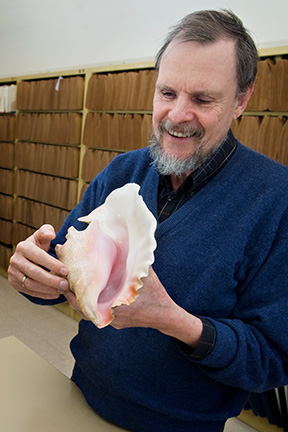 From the Editor: When I see something from Dr. Vermeij, I know with certainty that I will be called upon to think, and when I share his articles, I know the same is true for others. In this particular issue we have this article, which clearly expresses the view that we put much too much energy into identity rather than focusing on what we can do and letting that become the positive that defines us. I think one of the purposes of the Braille Monitor is to get people to think about divergent points of view and then synthesizing them into something that makes each of us more successful than we would be without the perspectives we have considered and absorbed. Here is the article:
Modern society seems obsessed with identity. Race, gender, sexual orientation, ethnicity, and disability—they all take center stage in defining us as individuals. At every turn, we are asked to identify ourselves according to society’s currently fashionable categories regardless of whether those categories can be unambiguously circumscribed. Thousands of sociological studies, government mandates, and policies at every level of society are founded on heterogeneous, ill-defined, and often highly fluid categories. Worse, these categories reinforce existing prejudices and biases. Those of us who are blind know all of this very well, yet even we often fall prey to this preoccupation with identity.
In his 1963 speech, “Blindness: Handicap or Characteristic” (reprinted in The Braille Monitor, Vol. 66, No. 6, June 2023), Kenneth Jernigan correctly asserted that blindness is a characteristic, one of many traits that affect a person’s life. With great clarity, he argued that blindness can be mitigated, so that it need not and should not be considered a sign of inability or inferiority. Indeed, a core mission of the National Federation of the Blind is to ensure that blind individuals have the tools, as well as the positive attitudes, to overcome the physical and social disadvantages that come with blindness. This necessary work continues, as it should.
But I would go a step further. Our characteristics, including blindness, do influence what we do and how others perceive us, but they do not define us. What matters, it seems to me, is what we do, not who we are.
Society’s preoccupation with identity is destructive. It reinforces stereotypes and prematurely determines the potential (or lack of potential) for individual accomplishments and diminishes the fairness of how the actions and contributions of individuals are judged.
My perspective on this issue derives not from social activism or advocacy, but from my lifelong study of the economic history of the world of living things, including our own species. Life-forms today and in the past have managed to persevere—and in the long run to improve—in a world full of changing challenges and opportunities. In my latest book The Evolution of Power: A New Understanding of the History of Life (Princeton University Press, 2023), I explore the premise that, like humans, all other forms of life have the ability to change and adapt to their surroundings to the extent that their power (the rate at which energy and material resources are acquired and deployed) allows. Although their station in the web of life is strongly affected by this power, it is the actions of living things that matter. By itself, power or energy, like money, means nothing. They become useful only when they are deployed to do something. In other words, characteristics in the abstract tell us nothing about what we do.
A shift in emphasis away from identity toward accomplishment would represent a healthy and refreshing reorientation in how we and others see ourselves. What can we do with the appropriate physical and educational tools? Isn’t it better to be evaluated on what we have done or are doing than to be classified according to preconceived, often socially loaded, categories based on characteristics in isolation? Our accomplishments and actions are far more diverse than our socially prescribed characteristics, and it is this diversity of doing that describes the richness of the human enterprise.