Neither Dog nor Cane nor Blindness Should Deprive Us of a Ride
by Chris Danielsen
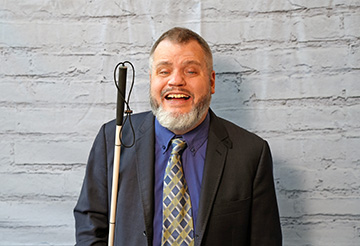 Many of us in the National Federation of the Blind have never known what it was like before the White Cane Laws and the Americans with Disabilities Act. Despite the occasional aberration, our right to go where we want when we want has been considered a done deal with the passage of these laws. But the rideshare companies and some of their drivers have taught us that passing a law is different from complying with or enforcing it.
The advent of Lyft and Uber initially seemed an unquestioned game-changer for blind people wanting door-to-door transportation. After working out some of the problems in each of the apps, ordering was a snap, and the usually speedy arrival estimates they gave were remarkably accurate when compared with those we were used to from taxi companies. The fares were cheaper, and the ability to pay from a charge card already on file made trips easier.
When we started to hear about guide dog denials, we approached both major rideshare companies to focus their attention on the problem. Uber was initially unresponsive, so we filed a lawsuit, which the company attempted to throw out of court. When that attempt failed, both Uber and Lyft began to talk with us. In the end, we reached agreements with both companies. Both Uber and Lyft required that existing and new drivers acknowledge their legal obligations to transport riders with service animals. Both companies adopted stricter enforcement policies—if Uber and Lyft drivers knowingly denied rides to individuals with service animals, the drivers were to be immediately terminated. Additionally, if either company received plausible reports that a specific driver refused to transport or otherwise discriminated against riders with service animals on more than one occasion, that driver was to be terminated, regardless of the driver’s intent. Uber and Lyft also agreed to improve their complaint procedures, including implementing more effective customer service responses to riders who registered service animal discrimination complaints. The agreements also set up collaboration between the companies and the National Federation of the Blind, with the NFB reporting complaints of ride denials that we received to both companies. To that end, we established a rideshare survey, which is still in effect and available at nfb.org/rideshare.
Having reached these agreements and put reporting procedures in place, we hoped that the number of ride denials would decline and ultimately that the discrimination would cease entirely. Sadly, this was not to be the case.
The denials continued, and further talks with the companies, along with media attention on the issue from across the nation and finally even on NBC Nightly News, did not bring change either.
So on the brisk, sunny morning of October 15, 2024, we took to the streets in front of Uber and later Lyft, both located not far apart in San Francisco. The turnout was spectacular, with more than two hundred people attending. Most of these were members of the Federation, as we had organized the rally, but supporters and allies from guide dog schools and other members of the broader blind community were present as well. Some had dogs, some had canes, and the message that we sent was unanimous: No matter how we travel, we demand that blind people experience independent mobility.
It has been a while since we have taken to public protests, so some of us visited a familiar past, while for others this was a new and exciting experience. On this White Cane Awareness Day (also officially designated by the White House as Blind Americans Equality Day), we loaded three buses, traveled to our first site, orderly disembarked, got our signs, lined up for instructions, and then began walking, chanting, and listening to members with stories of significant denials with significant consequences. These included missing a family Christmas party, problems in reliably reporting on time for work, and experiencing confrontations involving the police and having Uber, in phone conversations, support the right of the driver to have or not have whomever he wished in his vehicle, despite the company’s own stated policy to the contrary.
Chants that echoed outside the headquarters of these two corporate giants included: “Hey hey, ho ho, ride denials have got to go,” and “Don’t deny our right to ride with our guide dogs by our side.” Both humans and canine companions were disciplined and determined, demonstrating the dignity and good organization that have always been a hallmark of NFB rallies. The purpose was serious, but the atmosphere was cheerful and fun, with the chants and speeches interspersed with musical selections about cars and dogs, from the Seventies classics “Me and You and a Dog Named Boo” and “Hitchin’ a Ride” to the more contemporary “Who Let the Dogs Out?” and “Puppies Are Forever.” Local newspapers, TV, and radio stations were on hand to cover the event, as was the technology magazine Wired. Our friends from Aira had a team on site to describe the proceedings to those who could not attend through their free Aira Live service. After an hour and a half, the buses were loaded again, and we proceeded to the second rally before the Lyft offices.
The Post-Rally Presidential Release
After both rallies, tired but exhilarated Federationists returned to our headquarters hotel in Burlingame, just south of the City by the Bay. It was from the ballroom of this hotel that President Riccobono delivered his Presidential Release Live at 5:30 p.m. local time. Sharing the stage with him were Jessica Beecham, member of the national board of directors and president of our Colorado affiliate, and a guide dog user who had emceed both rallies; and Raul Gallegos, president of our National Association of Guide Dog Users (NAGDU). Both gave their own impressions of the rally, with Raul complimenting the conduct of the many guide dog teams in attendance and noting that he heard no yelping from dogs who were stressed out or had been stepped on by other dogs or humans. Raul further said that he recognized that change is slow, and the pace of progress is frustrating to all guide dog handlers, especially in the moments of hurt and humiliation when denials occur, but he was confident that we would succeed if we collectively kept up the pressure. He encouraged his fellow guide dog users to continue reporting denials to add to that collective pressure. Jessica reflected that the energy she had put into emceeing the rallies had been reflected back to her by the marchers, and the experience reminded her that as daunting and exhausting as repeatedly reporting denials can be, the energy of her Federation family reassured her that we will prevail.
President Riccobono then read a supportive statement provided by Maryland Congressman Steny Hoyer, which is as follows:
Representative Steny Hoyer (MD-05), the lead House sponsor of the Americans with Disabilities Act, said,
Equal access to transportation was one of my motivating factors when I championed the Americans with Disabilities Act. It is essential that all Americans with disabilities have equal access to all forms of public transportation. On this day—Blind Americans Equality Day—I urge all transportation companies—especially companies that provide rideshare services—not to discriminate against blind Americans who use white canes or guide dogs.
President Riccobono also noted that Kim Charlson, past president of the American Council of the Blind and current president of the North America/Caribbean region of the World Blind Union, attended the rally. He then presented a video statement from Thomas Panek, president and CEO of Guiding Eyes for the Blind, a leading guide dog school based in New York State with over ten thousand graduates and notably the only such school to provide financial support for the Rideshare Rally. Mr. Panek, who is blind and uses a guide dog, began his remarks as follows:
I admire the advocacy efforts of the National Federation of the Blind. I defer to NFB on important issues and trust we as guide dog school leaders are in good hands through your community advocacy, which most often surpasses my pulse on topics outside of my expertise. The rideshare issue is a topic I am personally vested in making better for all guide dog users. It is not acceptable to discriminate against a guide dog user in private vehicles chartered under rideshare apps such as Uber and Lyft. I stand with you in your rally to hold rideshare companies accountable for failing to address discrimination against me and other passengers based on the presence of a guide dog. I hope that together we can find solutions that can improve the likelihood that a driver will not refuse a passenger who is blind on the basis of a guide dog.
Mr. Panek then recalled his own experiences with rideshare denials, including one that occurred while returning from an anniversary outing with his wife. He again thanked the Federation for our support and anticipated further collaboration on this issue.
You can view and hear this entire Presidential Release Live, or read the full transcript, at https://www.nfb.org/presidential-releases.
Some Notes on the Rally Aftermath
No sooner had the Presidential Release Live wrapped up than a group of Federationists going to dinner experienced a denial right there in the companies’ own backyard, with Raul Gallegos and his guide dog both manhandled by the recalcitrant driver in an attempt to remove them from his vehicle. (The author of this article and President Riccobono witnessed this firsthand, and another member captured a video.) The only slightly encouraging development was that, when the local police were called, they behaved professionally, seemed to understand the issues at hand (with some help from NFB of California President Tim Elder, who showed them the relevant statutes via the NAGDU app on his phone), and took statements in anticipation of possible further action, which has not been initiated at this writing.
During the rally, an Uber team member briefly visited with President Riccobono and informed us of a pilot project that the company was implementing to facilitate voluntary self-identification by guide dog users. A couple of weeks after the rally, we learned that Uber intended to implement this option with a default user selection that lets the driver know, before they accept the ride instead of upon acceptance, that they will be transporting a guide dog team. This is unlawful and unacceptable, and President Riccobono emailed the Uber official who gave us the information to explain why. Here is the email:
Dear Mr. Byrne:
In our discussions with Uber during the past two years about the ongoing discrimination our members face when Uber drivers continue to deny them transportation based on their use of a guide dog service animal, we made several suggestions for how Uber could reduce such denials, and reduce the burden placed on riders in reporting denials. Among those, we suggested Uber provide an option for riders to save their use of a service animal in their profile/preferences and have the Uber platform inform drivers about those riders’ use of a service animal, alongside a reminder that the law and Uber policy require all drivers to transport riders with their service animals. We suggested the Uber system automatically suspend drivers who cancel rides after being informed that the rider uses a service animal, and automatically submit a denial complaint with the information about the denied rider, the denying driver, and other details necessary for an investigation that would result in the permanent deactivation of the denying driver.
We suggested the self-identification option in the belief that, even if some riders who use guide dogs choose not to use the option, they would benefit because the riders who do choose to use the option would help to more quickly identify and remove denying drivers, which would benefit everyone. That belief was and is premised on self-identification only identifying service-animal-using riders to drivers after they are paired.
When Uber representatives informed us in late 2023 that they were planning to implement self-identification, in a way that would identify riders with service animals on the offer card presented to drivers before pairing, we indicated in the strongest terms that we and our members would not accept or support such a system, as it would enable drivers to choose not to pair with riders who use service animals, and effectively shield those drivers from the consequences of their discrimination against such riders. We left that conversation believing that Uber understood the importance of only identifying riders with service animals to drivers after pairing.
Unfortunately, we learned last week that Uber intends to offer a default choice in the self-identification option to inform drivers of a rider’s service animal on the offer card prior to pairing. Providing this option, whether it is the rider’s choice or not, is unlawful. We will not support or condone such an option and will publicly denounce Uber’s use of it and tolerance of the discrimination it fosters.
Simply put, offering an option to disclose use of a service animal prior to pairing is unlawful.
The Americans with Disabilities Act prohibits Uber from discriminating against riders “on the basis of disability in the full and equal enjoyment” of Uber’s services (42 U.S.C. §§ 12182(a) and 12184(a)). Uber may not “directly or through contractual or other arrangements, utilize ... criteria or methods of administration that have the effect of discriminating on the basis of disability; or that perpetuate the discrimination of others who are subject to common administrative control” (42 U.S.C. § 12182(b)(1)(D)). It may not apply “eligibility criteria that screen out or tend to screen out an individual with a disability or any class of individuals with disabilities from fully and equally enjoying” Uber’s services (42 U.S.C. § 12182(b)(2)(A)(i) and 12184(b)(1)). Finally, it must “make reasonable modifications in policies, practices, or procedures, when such modifications are necessary to afford” Uber’s services to riders with disabilities (42 U.S.C. § 12182(b)(2)(A)(ii) and 12184(b)(2)(A)).
By offering an option for riders to disclose their use of a service animal on the offer card prior to pairing with a driver, Uber uses a criteria or method of administration that has the effect of discrimination by providing drivers with an option to undetectably refuse to transport an identifying rider with a service animal. It also perpetuates the pervasive discrimination by drivers who deny riders with service animals, whether they use self-identification or not, because it does not in any way reduce the number of drivers on the Uber platform who refuse to transport riders with service animals. Rather, it allows them to do so with impunity. In contrast, identifying riders with service animals after pairing can result in the discipline and removal of drivers who discriminate, redounding to the benefit of all riders with service animals whether they self-identify or not.
Offering an option for riders to disclose their use of a service animal on the offer card prior to pairing with a driver also presents an eligibility criteria for driver pairing that screens out or tends to screen out riders with disabilities who use service animals from pairing with otherwise-eligible drivers who undetectably and unlawfully choose not to accept those riders. Uber must therefore modify its practice or procedure for self-identification to disclose riders’ use of service animals only after pairing so that driver-discrimination against those riders is weeded out.
We hope Uber will consider this and our prior statements about how self-identification must function and never identify a rider’s disability or use of a service animal until after they are paired with a driver.
Sincerely,
Mark A. Riccobono, President
National Federation of the Blind
Some Final Thoughts
Some have asked why we protested in front of Lyft and Uber when our agreements secured policies that seem to demand drivers transport blind people with their guide dogs and canes. First, as amply recounted above, the agreements are not working, and the denials continue.
In addition, when denials occur it is difficult to report them, especially if the driver preemptively cancels the ride upon spotting the guide dog team on the curb. Furthermore, often there is no follow-up from the companies explaining what action they have taken as a result. The fact that often in our time of need Uber and Lyft representatives, when contacted by phone, have sided with the defiant drivers points to the need for real education and better enforcement mechanisms, such as establishing a hotline staffed with trained experts both to take complaints and to tell drivers (and the police, if need be) that we do have the right to ride and the driver does not have the option of denying us. Riders who are denied service should get more than a five-dollar credit, a promise to “educate the driver,” and a pro-forma apology from the companies, and someday soon the statistic (reported by Guide Dogs for the Blind) that 83 percent of guide dog users encounter denials should be a thing of the past.
Some have also pointed out that, unlike taxicabs, many Uber and Lyft vehicles are also the private vehicles of their drivers, the argument being that just like a private car owner, drivers should be able to choose the passengers they prefer. This argument is unfounded. Once a driver chooses to connect to the Uber or Lyft platform and therefore make their private car available to the public, they must accept blind passengers until they disconnect from the platform and make their car unavailable for service. By signing up to use the Uber and Lyft platforms, drivers have expressly agreed to this arrangement, and they do not get to change the terms of the agreement on the fly. The companies, in turn, have both the right and the responsibility to demand performance of the agreement and compliance with the law.
Blind Americans demand a zero-tolerance policy for ride denials, a reduction in the burden of reporting denials, and more robust education both for drivers and company representatives. That is the very least rideshare companies can do.
“We want no strife or confrontation” has been a continuing theme in our message to the public and to one another, and so too is our message that we know who we are, and we will never go back. Both came through clearly on the day recognized by our nation to speak to the desire for blind people to be productive and independent. Lest the companies conclude that this is the end of hearing from us, let them review our repeated confrontations with the National Accreditation Council for Agencies Serving the Blind and Visually Handicapped, and instead of stalling, let them make real moves to see that we can travel as first-class citizens with the mobility aid of our choice.