GAAD Is Good – But it's not Enough
by Peter Slatin
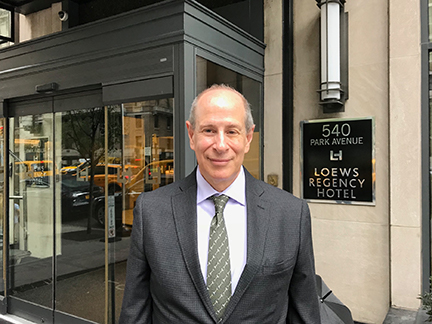 From the Editor: Global Accessibility Awareness Day is something all of us are excited about, but unfortunately we do not plan early enough to make it a reality in many of our affiliates and chapters. Let us hope that Peter’s remarks give us the heads up we will need to see that when May comes around, we are ready. Let us also heed the concluding remarks he makes that go far beyond technology.
Here it comes again: GAAD, Global Accessibility Awareness Day, a non-astronomical yet light-filled occurrence on the third Thursday of each May.
GAAD was created by Joe Devon and Jennison Asuncion, two tech pioneers intent on—no, insistent on—digital accessibility as the standard structural principle and prerequisite undergirding every website or app or virtual reality product, video game, etc. Its creation a dozen years ago was in response to the ubiquity of inaccessible websites and pages. Estimates of the proportion of web pages with inaccessible content are as high as 96 percent globally. (Check out this compilation of digital inaccessibility stats: https://accessiblyapp.com/blog/web-accessibility-statistics/).
These numbers show us the status quo a quarter-century after the first publication of the Web Content Accessibility Guidelines (WCAG), which, for context in internet time, arrived one year after the public launch of Google in September 1998. This pre-climate change glacial pace of progress in the basic incorporation of accessible design precepts and processes into any digital product design reflects one thing only: society as a whole remains at best uncertain and at worst terrified of disability.
The willful ignorance siloing accessible design from the rest of the digital world tells us that, from schools and universities to corporations and government, creating space of any kind to fully welcome disabled people remains a thought too far. Reluctance to provide the accommodations that would open so many doors to so many people also has nothing to do with the oft-cited negative impact that investing in digital accommodations would have on profit. When we want to adopt and deploy technology to our advantage, we don’t really drag our heels or look the other way. Think of the velocity with which AI has become a part of the advancing world. How quickly is it becoming indispensable to everything from education to commerce. Capital pours into it, seeking alpha and regardless of risk to either money or time. Yet devoting a fraction of that financial and temporal energy to fulfilling digital accessibility would yield enormous rewards by enabling millions of disenfranchised humans currently restricted in their ability to harness digital technology to learn, work, shop, or play in the ordinary, everyday way of the mainstream. As has been said by many, think of how curb cuts have made life better for anyone pushing a stroller, pulling luggage, or walking with even a minor mobility challenge.
It isn’t technological or financial shortcomings that restrain the flowering of digital inclusion, or indeed of any kind of disability inclusion and access. The challenge that must be overcome is the one facing society of ascribing equal value to the lives of people with disabilities. It is the imperative to jettison historical fear and superstition surrounding disability.
The fight to unleash digital accessibility embodied by GAAD and its celebration of all things being digitally accessible is a primary building block of global disability inclusion. Another, somewhat more accepted foundation of inclusion is the mandate for physical accommodations in the built environment that is the unifying directive and most visible target of the Americans with Disabilities Act of 1990. But even together, these two building blocks of accessibility are not enough to drive us past the pushback against inclusion created by ignorance and fear.
There is a third, more foundational element of this movement, without which neither of the other two can be fully realized. This is social accessibility. Simply put, it’s the way people behave toward other people. Unlike either digital or physical/environmental access, social access cannot be achieved through either legislation or published standards. It will instead come as stories of people with disabilities leading so-called normal lives doing what we want, whether that involves great achievements or simply going through each day without the encumbering weights of low expectations and even lower value, penetrate and dissolve the long-accepted boundaries that enable exclusion.