The Golden Rule, the Platinum Rule, and the Right to Speak for Ourselves
by Gary Wunder
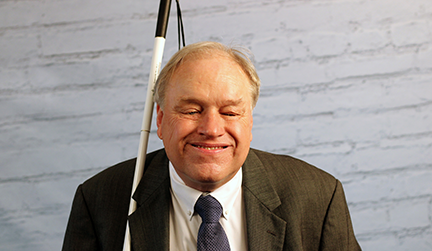 The Golden Rule is one of the most beautiful moral teachings ever given to humanity: “Do unto others as you would have them do unto you.” It is simple, memorable, and powerful. It calls us away from selfishness and toward sympathy. It asks us to imagine ourselves in the place of another person and then act with the kindness, fairness, and mercy we would want if the situation were reversed.
There is a reason the rule is called golden. It shines. It reminds us that other people are not obstacles, tools, cases, problems, or projects. They are people. They have feelings. They have hopes. They have fears. They can be hurt. They can be encouraged. They can be respected or dismissed. The Golden Rule asks us to begin with this basic truth: I should not treat another person in a way that I would regard as cruel, degrading, dishonest, or dismissive if it were done to me.
For this reason, nothing in this article should be read as an attack on the Golden Rule. The world would be far better if more of us lived by it. Public life would be kinder. Families would be stronger. Workplaces would be more decent. Schools and other public institutions would be more humane. The Golden Rule has restrained many a cruel impulse and inspired many an act of generosity. It deserves our respect.
But there is another rule, sometimes called the Platinum Rule: do unto others as they would have you do unto them. Its purpose is not to replace the Golden Rule but to carry it further. The Golden Rule charges me to look within myself and ask, “How would I want to be treated?” The Platinum Rule charges me to look beyond myself and ask, “How does this person want to be treated?” It requires not only sympathy but curiosity. It requires not only kindness but humility. It requires not only a good heart but a willingness to listen.
This distinction matters deeply in the lives of blind people. A sighted person who lives by the Golden Rule may sincerely want to help. That person may say, “If I were blind, I would want someone to take my arm, lead me across the street, order for me in the restaurant, tell me where to sit, explain what I cannot do, and protect me from embarrassment.” These impulses may come from kindness. They may be rooted in a desire to prevent danger or discomfort. But they may also be rooted in misunderstanding. The sighted person is imagining blindness from the outside. They are asking, “What would frighten me if I suddenly could not see?” That is not the same as asking, “What does this blind person know, want, need, and prefer?”
This is where the Platinum Rule becomes especially valuable. It says: do not merely imagine yourself as blind and then act from that imagined fear. Get to know blind people. Ask us. Listen to us. Learn from our experience. Understand that blindness is not a costume sighted people can put on for an hour and then understand. Real curiosity demands fuller answers than a temporary simulation can provide.
Blindness is not best understood by closing one’s eyes and trying to cross a room. It is understood by listening to people who live with blindness every day. It is understood by learning from blind people who work, raise families, travel, read, cook, teach, lead, worship, vote, love, argue, build, and contribute. It is understood by recognizing that we are not symbols of tragedy, courage, helplessness, or inspiration. We are human beings.
There is a familiar saying about walking a mile in another person’s shoes. It is meant to encourage empathy, and in that sense it is useful. But we should be honest about its limits. We can never fully walk a mile in another person’s shoes. At best we can listen, observe, learn, and be changed by what the other person tells us. Otherwise, taking another’s shoes only leaves them without shoes and with a mile of distance between us.
Blind people do not need the public to pretend to be blind for a day and then announce what blindness means. We need people to listen to those who live with blindness every day. We need people to understand that the meaning of blindness is not best defined by fear, pity, or cinematic imagination. It is best understood through the lived experience of blind people themselves.
This is why the philosophy of the National Federation of the Blind matters. We are not an organization speaking for the blind from the outside. We are the blind speaking for ourselves. When we say that we are the voice of the nation’s blind, we do not mean that every blind person thinks exactly alike. No group of human beings does. We mean that blind people must be central in defining what we need, what we want, and what kind of future we intend to build.
This principle does not reject help from sighted people. Far from it. Blind people want and need allies, friends, teachers, employers, family members, public officials, readers, drivers, technology developers, and neighbors. We need people who care enough to stand with us. We need people who will use their influence when it can help open doors. We need people who will read a document; describe a picture; offer transportation; support sound public policy; and make room for us in schools, workplaces, churches, and civic life.
But help must not become control. Assistance must not become ownership. Friendship must not become management. The Golden Rule may move a sighted person to offer help. The Platinum Rule teaches that the help should be shaped by what the blind person says is helpful.
There is a difference between saying, “May I help you?” and seizing someone’s arm. There is a difference between saying, “Would you like me to read the menu?” and ordering for someone without asking. There is a difference between saying, “The empty chair is two steps to your left,” and pushing someone into it. There is a difference between making information accessible and deciding that a blind person need not have the information at all. The first approach respects the person. The second approach treats the person as an object of custodial care, or worse, of neglect justified as realism.
This distinction matters beyond social courtesy. It affects education, employment, transportation, technology, rehabilitation, and public policy. If sighted people decide what blind people need without listening to blind people, even good intentions can produce bad systems. Schools may protect a blind child from ordinary responsibilities and call it compassion. Potential employers may assume that blindness means inability, call it realism, and spare the blind person not only from failure, as they intend, but also from success, which they consider impossible. Public agencies may provide services that keep blind people dependent and call it care. Technology companies may build inaccessible products and call blind people a small market. In each case, people may believe they are being reasonable. Some may even believe they are being kind. But kindness that refuses to listen is still a barrier.
Federation philosophy challenges this. We know that blindness is not the characteristic that defines our future. We know that low expectations create obstacles between blind people and our dreams. This is not a denial that blindness has practical consequences. Blindness changes how we read, travel, gather information, and perform many tasks. But it does not reduce us to helplessness. With proper training, opportunity, accessible tools, and public attitudes that make room for our competence, we who are blind can live full and meaningful lives.
This is why the Platinum Rule is not merely a matter of politeness. It is a matter of justice. If you assume that I need what you would need if you suddenly lost your sight, you may offer me pity when I need opportunity. You may offer protection when I need training. You may offer charity when I need a job. You may offer a handout when I need a chance to give. You may offer sympathy when I need respect.
Blind people do not want to be cast permanently as receivers. We want to be givers. We want to serve on boards, raise children, pay taxes, teach classes, run businesses, lead organizations, comfort friends, solve problems, and contribute to our communities. Sometimes we need assistance, as everyone does. But needing assistance in some circumstances is not the same as being needy as an identity. Every human being is dependent in some way. The question is whether dependence is treated as a mutual part of human life or as a reason to lower expectations.
The Golden Rule can help sighted people begin the journey. “If I were treated with contempt, I would be hurt, so I should not treat blind people with contempt. If I would want access to information, I should support access for blind people. If I would want the chance to work, I should not deny that chance to someone else.” This is a worthy beginning.
The Platinum Rule asks for the next step: “Let me learn what blind people themselves say about blindness. Let me listen when they say that pity is not respect. Let me believe them when they say that low expectations hurt more than the absence of eyesight. Let me understand that help is best when it is requested, negotiated, and respectful. Let me recognize that blind people are not all alike and that one blind person may want assistance that another does not. Let me ask rather than assume.”
This approach also requires blind people to speak. We cannot demand that others listen if we are unwilling to explain. We must say what we need in public policy and in personal interaction. We must teach the public when the public misunderstands us. We must elect leaders, build our organization, write articles, testify before legislatures, mentor one another, and speak directly in the situations of daily life. The right to speak for ourselves carries with it the responsibility to speak clearly, honestly, and with enough patience to change minds. We must not make the public a victim of our preconceived notions of who they are but practice the Platinum Rule with as much vigor as we wish to benefit from it.
Of course, the public must be willing to receive what we say. Listening is more than hearing words. A person can hear a blind person say, “I can do this,” and still think, “That is brave, but not realistic.” A person can hear us say, “We want opportunity,” and still think, “Of course they say that, but they are very limited.” A person can hear us say, “Blindness is not the tragedy you imagine,” and still hold tightly to the assumption that blindness must be a life of sadness, dependence, and diminished humanity.
That kind of listening is not listening with both the head and the heart. The head is needed to understand the argument. The heart is needed to accept its legitimacy. The head may follow the logic that training, opportunity, and access make a difference. The heart must be willing to let go of pity as the central response to blindness. The head may understand that blind people can use canes, Braille, screen readers, guide dogs, Structured Discovery training, and other tools. The heart must be willing to believe that a blind life can be a full life.
This is where attitudes matter. In the Federation we have long understood that the real problem of blindness is not the physical absence of sight but the misunderstandings and low expectations that surround it. We believe blind people have value, and we act to enhance that value and bring sighted people to recognize it. That work requires both blind and sighted people to change. Blind people must reject the limitations imposed by fear and low expectations. Sighted people must reject the assumption that they already know what blindness means.
The Platinum Rule is useful because it reminds us that love must learn. Respect must listen. Generosity must be guided by the person receiving it. The question is not only, “Would I want someone to help me?” The question is also, “What kind of help does this person want? What kind of help preserves dignity? What kind of help opens doors rather than closing them? What kind of help allows this person to become more free?”
A blind person standing at a street corner may want assistance crossing. They may not. A blind student may need a book in an accessible format, not a reduced assignment. A blind employee may need accessible software, not a reassignment to fewer duties or less responsibility. A blind traveler may need accurate directions, not someone grabbing his suitcase. A blind voter may need a private and independent way to mark a ballot, not someone else deciding that marking their ballot for them is good enough. A blind child may need Braille, cane travel, high expectations, and chores at home, not sentimental protection from ordinary life.
The same principle applies to organized advocacy. When blind people speak collectively through the National Federation of the Blind, we are not being ungrateful for the help of sighted people. We are exercising the basic human right to define our own needs. Public officials, educators, employers, and service providers should welcome this. They should want policy shaped by those who live with its consequences. They should want programs tested against real experience. They should want blind people at the table: not as decoration, not as testimony after the decision has already been made, but as a dominant force in deciding what the decision should be.
Good intentions are a wonderful starting point. They are not the destination. A person may intend kindness and still block a doorway. A teacher may intend protection and still deny a child literacy. An employer may intend fairness and still never interview a qualified blind applicant. A public official may intend efficiency and still create a process blind people cannot use. Intention matters, but results matter too. The Golden Rule may purify our intentions. The Platinum Rule is more likely to improve our results.
So let us keep the Golden Rule. Let us honor it. Let us teach it to our children. Let us practice its call to decency, sympathy, and fairness. But let us also understand that the Golden Rule reaches its fullest expression when it leads us to the Platinum Rule. If I truly want to treat others as I would want to be treated, then I should want others to learn who I am before deciding what I need. I should want them to ask, listen, and respect my answer. I should want them to see me as a person, not as a category.
That is what we ask. See us as human beings. Listen to us as people with knowledge. Help when help is wanted. Step back when independence is called for. Join us when justice requires collective action. Do not make blindness smaller than it is by pretending it has no consequences, but do not make it larger than it is by turning it into the defining fact of our existence.
The Golden Rule says, “I will remember that you are like me.” The Platinum Rule says, “I will also remember that you are not me.” Both truths matter. We share a common humanity, and we live that humanity in different circumstances. The best relationships honor both.
For blind people, this means that the public must move beyond pity to partnership, beyond assumption to understanding, beyond charity to opportunity, and beyond speaking for us to listening when we speak for ourselves. That is not a rejection of the Golden Rule. It is its flowering. It is the Golden Rule made more careful, more humble, and more effective.
And if we can live there—where kindness listens, where help respects, where blind people define our own needs, and where sighted people join us as partners rather than managers—we will have moved closer to the world both rules are trying to build: a world in which every person is treated not as we imagine them to be, but as they truly are.