Trainers Committee for Structured Discovery: A Name Change Reflecting Expanded Mission and Professional Impact
by Jimmy Morris, M.A., NOMCT
 From the Editor: The author is chair of the Trainers Committee for Structured Discovery of the National Blindness Professional Certification Board.
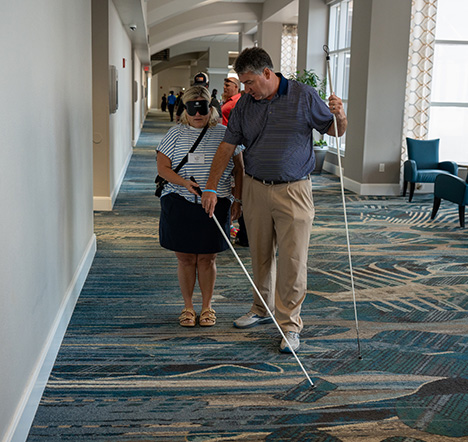
Within the organized blind movement, the concept of Structured Discovery is well-known to be the pillar of excellence and high quality non-visual training grounded in a positive philosophy of blind people. Structured Discovery is a teaching methodology trademarked, developed, and overseen by the National Blindness Professional Certification Board (NBPCB), and this professional organization has historically maintained a strong partnership with the National Federation of the Blind due to their aligned belief in the blind.
An important development within the NBPCB reflects both institutional growth and a continued commitment to professional advancement within. The committee formerly known as the National Orientation & Mobility Certification Trainers committee (NOMCT) has adopted a new name: the Trainers Committee for Structured Discovery (TCSD), a committee of the NBPCB.
This change is not cosmetic. It reflects an evolution in scope, responsibility, and direction as we align our work with the full range of certifications administered by the NBPCB.
A Name That Matches Our Work
In recent years, our efforts have expanded beyond supporting orientation and mobility certification alone. We now contribute to initiatives affecting all NBPCB credentials, including:
- National Orientation Mobility Certification (NOMC)
- National Certification in Rehabilitation Teaching for the Blind (NCRTB)
- National Certification in Access Technology for the Blind (NCATB)
By adopting the name Trainers Committee for Structured Discovery, we acknowledge our broader responsibility: to develop training practices, projects, and strategic initiatives that strengthen professionals across all Structured Discovery disciplines.
Structured Discovery as a Professional Foundation
NBPCB certification programs are grounded in Structured Discovery training methods, which draw on cognitive learning principles and consumer-driven expectations. This perspective differs fundamentally from traditional models; it encourages active exploration, problem-solving, and self-directed strategy development. Our mandate is to advance professional excellence while promoting the conviction that blindness itself is not a barrier to achievement. To accomplish this, the TCSD operates through three primary pillars: Recruitment, Education, and Mentoring.
Strengthening the Pipeline through Recruitment and Outreach
A vital component of our mission is ensuring a steady influx of talented individuals into the field. The Recruitment Subcommittee works tirelessly to spread the word about NBPCB certifications and the pathways to obtaining them through graduate school or apprenticeship programs. By demystifying the process for future instructors, we ensure the longevity of our profession. Recent initiatives include:
- Resource Development: Creating a comprehensive and concise flyer and information sheet detailing pathways to NBPCB Certification.
- Active Presence: Includes tables at multiple National Federation of the Blind state conventions and career fairs.
- Diverse Collaboration: Partnering with the National Organization of Blind Black Leaders to host panel discussions highlighting the success of Structured Discovery professionals of color, ensuring our recruitment efforts are inclusive and representative.
Education Committee Expands Professional Development
In line with recruitment, our Education Subcommittee focuses on equipping current practitioners with the knowledge and ethical grounding necessary for modern instructional environments. Since 2025, more than 500 participants have engaged in these offerings, which include:
- Targeted sessions on Structured Discovery philosophy and instructional best practices.
- Extended discussions addressing workplace ethics and professional responsibility.
- A five-part disability training series designed to deepen cultural understanding.
Mentoring Initiative Solidifies Professional Identity
Once recruited and educated, professionals must be supported. Our Mentoring Subcommittee launched a program in November 2025 that pairs experienced practitioners with newcomers. This initiative transfers institutional knowledge and reinforces philosophical consistency. By building these relationships, we reduce isolation among early-career practitioners and build collaborative networks that benefit the field as a whole.
Implications for the Field
Taken together, the committee’s name change and the coordinated efforts of our subcommittees signal a new era of professional standards. These developments provide:
- Unified Identity: Aligning under the TCSD name clarifies our role across all certifications.
- Leadership Cultivation: Recruitment and mentoring develop confident, philosophically grounded professionals.
- Elevated Standards: Expanded education improves instructional quality and ethical accountability.
We are positioning ourselves not merely as a support body for credentials, but as an active contributor to professional culture. Our trajectory reflects a continued commitment to building capacity while maintaining fidelity to the core philosophy of Structured Discovery.
Practitioners, prospective certificants, and those interested in mentoring opportunities may direct inquiries or suggestions to Committee Chair Jimmy Morris, Trainers Committee for Structured Discovery at: [email protected].