Future Reflections Summer 2000, Vol. 19 No. 2
Children�s Books: Reviews and Comments
Reviews and Comments by:
Rachel Becker
Barbara Cheadle
Peggy Chong
Kenneth Jernigan
Emily Ann Mitchell
Jordan Powell
Books Reviewed:
The Night Search
Mandy Sue Day
The Doll on the Top Shelf
T.J.�s Story
The Seeing Summer
From the Editor:
In my local newspaper there is a small column about children�s literature. In
that column is a section where children comment about what they like�or do not
like�about particular children�s books. As much as I appreciate the adult
reviews, I am always fascinated by what the children have to say. It seemed to
me that it might be both fun and instructive to ask children�some blind, some
sighted�to make comments about a few children�s books for Future Reflections. Of course, these are not just any books. Each
of these books features a blind character.
Mrs. Peggy Chong also reviews
two of the books, The Night Search
and The Doll on the Top Shelf. Both
of these books are in print and Braille, and so can be read independently by
either a print reader or a Braille reader. Her reviews are followed by comments
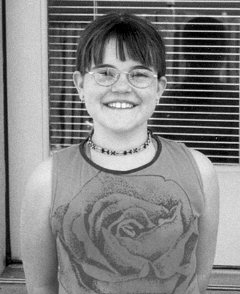
from fourth grader, Rachel Becker (who is blind), and her sighted friend and
neighbor, Emily Ann Mitchell. And, as Editor, I�ve taken the liberty of adding
my two-cents-worth here and there.
The next two books, Mandy Sue Day and T.J.�s Story, are reviewed by sighted third grader, Jordan Powell.
I also made some observations about the book T.J.�s Story. Readers may remember that Mandy Sue Day received a very favorable review from Peggy Chong in
the last issue of Future Reflections.
Mandy Sue Day is available on tape
through your regional library for the blind and will soon be available in
Braille, too. T.J.�s Story was
recorded and Brailled by the Washington Library for the Blind. Your regional
library for the blind can get you a�
copy� through interlibrary loan.
Finally, the last review is
about a book for slightly older children, The
Seeing Summer, by Jeannette Eyerly (the books described above are all
picture books for young children). Dr. Kenneth Jernigan wrote this review when
the book first came out in the mid-eighties. Since the regular print book is
once again available for purchase (thanks to the National Federation of the
Blind) it seems appropriate to reprint the review for our current readers. The
Library of Congress, National Library Service for the Blind and Physically
Handicapped recorded the book shortly after it was originally published. Check
with your regional library for the blind for the recorded copy. Here are the
comments and reviews:
THE NIGHT SEARCH
by Kate Chamberlin
Illustrated by Dot Yoder
�1997, Jason and Nordic Publishers
Review by Peggy Chong
Heather is a blind girl who is
going on a family camping vacation with her new pet, Crackers, a puppy. Heather
does not want to take her cane on the trip. She thinks it is stupid. But Mom
brings the cane along, anyway.
Heather�s mother tries to
convince Heather to use her cane, reminding Heather that Crackers is just the
family puppy, not a trained guide dog. But Heather, who has been to the camp
many times, believes that she can find her way around the camp just fine
without her cane.
The first night, after
everyone is in bed, Heather has to take the new puppy out into the rain.
Heather decides, since she has to go out anyway, to go up the path to the
bathrooms. She does not take her �stupid� cane. While Heather is in the
bathroom, Crackers runs away. Heather sets out to search for him. She remembers
he loved going to the pond earlier that day, so she heads down the path toward
the pond.
Heather tries to use all the
other alternative travel techniques she has learned from her travel teacher.
She listens for the sounds of her puppy, and finds the path to the pond by the
smell of the pine trees. But she has a difficult time finding her way and is
soon frustrated. First, she steps in a mud puddle, then she trips over a hump
of grass, and then she falls over a rock and hurts her hands. Heather begins to
wish for her cane back at camp.
She finally reaches the pond
and steps in at the edge. She calls again for Crackers. She hears Crackers, but
he will not come. When Heather finally finds him, she discovers that Crackers�s
leash has gotten tangled with a log. Heather frees her puppy, and they both
turn to walk back. But Heather trips again and falls to her knees. Under her
fingers, she finds a long stick. Heather happily picks up the long stick and
makes her way quickly and safely back to the cabin.
This delightful little story
for young children has print and Braille text with color illustrations. It is
not only a wonderful story for kids, but I also think it might be a great story
for many blind adults who are struggling with the idea of carrying a cane.
Orientation and mobility instructors should find the book useful as a way to
introduce discussions about the cane to their students.
The Night Search
 |
|
Rachel
Becker
|
I really enjoyed this thrilling adventure. I liked the way Heather realized that her cane is helpful even in places where she�s been before. The story is realistic. It tells how real blind people feel, and what happens when they don�t take their canes with them. It also has a happy ending. You should read this book. You�ll enjoy it.
The Night Search
 |
|
Emily
Ann Mitchell
|
Comments by:Emily
Ann Mitchell,
sighted student,
Fourth Grade,
Frederick, Maryland
I like The Night Search because it shows that blind people can do anything. Heather, the girl in the story, went out to find her dog without her cane and found him. I liked that book a lot!
Mandy Sue Day
by Roberta Karim
Illustrated by Karen Ritz
� 1994, Houghton Mifflin Company
Review by Jordan Powell
This book was about Mandy Sue
and her day (a day that is hers). Mandy Sue is a blind girl even though the
book doesn�t say she is blind until toward the end of the story. The book tells
us that she is blind by describing the four senses she uses. It also shows us
she is blind by using pictures that make us think she might be. Also she tells
little Jeremy she can�t see toward the end of the book. When I read the book
with my dad, he asked, �Are you sure she is blind?� because the story doesn�t
make a big deal out of her blindness. This is good because blind people are
just like other kids.
Mandy Sue lives on a farm. It
would be cool to meet her because she knows the whole way around the farm and
would be able to show you around even though she is blind. She could also teach
you how to ride Ben, her horse. I think it is very interesting that Mandy Sue
can do all this stuff even though she can�t see. She probably got good at this
by practicing and because her parents probably helped her. I also think it�s
interesting because, since Mandy Sue can do all these things, little Jeremy
forgot that she is blind. Mandy Sue would be cool to meet.
I liked this book for a lot of
reasons. First, I thought the length was good for my age group. The
illustrations were cool because they looked like 3-D. I liked that Mandy Sue
could do so many of the things she did. I would recommend this book to my
friends. It is a good book.
THE DOLL ON THE TOP SHELF
by Ruth Turk
Illustrated by Per Volquartz
� 1998, Owl�s House Press
Review by Peggy Chong
The Doll on the Top Shelf
is a story set in a toyshop at Christmas time. This oversized children�s book
for young readers, published by Owl�s House Press, is novel because the Grade
Two Braille text is embossed on regular Braille paper which has been glued to
the regular page. Therefore, the Braille, the print, and the illustrations are
all on the same page.
Annie Mae is an old doll with
a faded dress. She is plain of face and dusty from sitting on the shelves of
the toyshop far too long. On Christmas Eve, a grandmother comes into the shop
to buy a doll for her blind granddaughter. They are told that the only doll
left is Annie Mae. Because the little girl is blind, she can fall in love with
the plain doll with the faded dress and plain face. The grandmother buys the
doll, and they all live happily ever after.
The last page is an
explanation and history of Braille. A diagram of the Braille alphabet and some
of the Braille contractions is also included. Readers are encouraged to use
their fingers, after studying the Braille code, and try to find certain words
in the book. This part of the book is well done.
Hopefully, this section of the
book leaves the last impression on the reader, and not the simple, sweet story
line that seems to imply that the blind child does not need or want the new
toys, or has a special, mystical ability to see beneath surface appearances
with her heart. I would read The Doll on
the Top Shelf to young children, but I would be careful in how I
interpreted the story for them.
The Doll On The Top Shelf really made me feel a special feeling�something that�s indescribable. It is a really heart-touching book about a girl named Natalie who would buy the last doll in the toy store�a plain doll with woolly hair and a pink polka-dot dress. Natalie thought she felt nice and bought her. The Doll On the Top Shelf is a wonderful book. You should read it. You�ll enjoy it.
Rachel Becker (blind
student)
Fourth Grade
Frederick, Maryland
I like the book, The Doll on the Top Shelf, because I love
dolls. I have a friend who is blind, and she plays dolls with me. The book
shows that blind people learn to love the doll even if it looks ugly.
Emily Ann Mitchell
(sighted student)
Fourth Grade
Frederick, Maryland
Editor�s Note:
I thought it interesting that Rachel picked up on the fact that Natalie, the
blind child, liked the feel of the doll on the top shelf. This raises a
question about the difference between visual and tactual attractiveness. Dr.
Kenneth Jernigan addressed that very issue in his Kernel book article, �The
Barrier of the Visible Difference.�
�A thing that looks beautiful
to the eye,� he wrote, �can feel ugly and dirty to the touch.� He goes on to
write, �If a thing looks better to the eye and feels worse to the touch, that
doesn�t make it better or worse. It simply means a different point of view, a
visible difference. I thoroughly understand that we live in a world that is
structured for the sighted, so if a blind person intends to get along and
compete in society, he or she must learn how the sighted feel and what they
think is beautiful and attractive. But this has nothing to do with innate
loveliness or quality. It is simply a visible difference.�
I wonder what would happen if
Rachel and Emily Ann, with a little parental guidance, were to discuss whether
the doll is pretty because she feels nice, or ugly because she looks faded,
old, and plain. Maybe such a discussion would help everyone (including parents)
come a little closer to understanding, and overcoming, the �barrier of the
visible difference.�
T.J.�s Story
 |
|
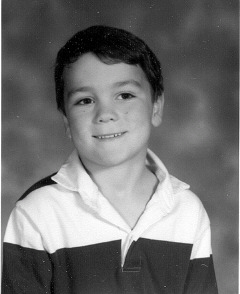
Jordan
Powell
|
Text and photographs by Arlene Schulman
� 1998, Lerner Publications Company
This story was about T.J.
Olsen. He is blind. In the book he talked about being blind. He talked about
his life and what it�s like to be blind. He talked about school, friends,
family and what he likes to do. T.J. sounds like a regular kid.
After reading this book, I
decided I would like to meet T.J. Olsen. This book helped me understand that
blind people are not all that different from sighted people.� For example, he likes a lot of the same
things I like (swimming, school, playing with friends, and playing the piano).
At the science museum, he likes to touch animals and so do I! I think T.J.
would be nice to meet.
I like this book for various
reasons. First, I thought that the length of the book was good for my age group
(3rd grade). Second, I liked the pictures because they were real photos.
Finally, I liked that he is narrating the book. That makes it seem like he�s
right there talking to me. I would recommend this book to other kids. It�s a
good book.
Editor�s Comments: Jordan
gives a good description of the story line part of the book, which is obviously
meant to be read by children. However, there is another section at the end of
the book which, while still readable by children, seems to be mostly targeted
at adults. This section includes a narrative called �Information about
Blindness,� a glossary of terms, a resources list, and a list of books for
further reading. The inclusion of these sections leads me to believe that the
author intended the book to be used as a resource by elementary teachers doing
a unit on disability, blindness, or the eye.
My reaction to this book was
mostly positive, but with some reservations. I was glad to see that a typical
sighted child had such a wonderfully positive reaction to it. Jordan gave an
excellent summary of all the best qualities and strengths of this book.
Clearly, the book succeeds in conveying the message that blind kids are more
like other kids than they are different. However, the book is less successful
when T.J. stops speaking and the author takes over. For example, in the
�Information about Blindness� section there are a couple of factual
inaccuracies (more on this later).
There are also a few
descriptions�or depictions�of educational practices which well-informed blind
adults, teachers of the visually impaired, and parents of blind children may
find troublesome. For example, T.J. is often let out early so he doesn�t �get
trampled� (p. 18), and the only time he is shown using a cane is during his
mobility lesson. By contrast, Rachel Becker, the blind 4th grader who reviewed
a couple of books at the beginning of this article, uses her cane at all times
when outside her classroom and is seldom excused early on any occasion. Her
mobility lessons include techniques for keeping up and managing in a crowded
hallway. I hope T.J.�s teachers are planning goals like this for him, soon,
too. He clearly has the capacity to achieve this level of independence.
In regard to factual errors,
in the last paragraph of the section on �Information about Blindness� the author
says, �There is no cure for blindness. But technology is always improving. One
day someone may invent an electronic eye that will give T.J. and others sight.�
This statement is simply not
true. There are many causes of blindness, and therefore many different
treatments. Excellent treatments exist which can prevent, delay, or restore
vision loss caused by such conditions as senile cataracts, glaucoma, retinal
detachments, and diabetic retinopathy. Corneal transplants continue to restore
vision for a selective group of people with a certain type of eye condition.
On the other hand, the concept
of the �electronic eye��which the author speculates might someday restore sight
to T.J.�is so complex that any practical applications for significant vision
restoration is still far, far down the road. Furthermore, since the causes of
vision loss are so varied, the likelihood that one miracle invention will cure
all causes is nil. I understand that the author needed to simplify and condense
material, but I believe she stepped over the line between simplification and
misinformation.
Another minor inaccuracy was
the reference to all guide dogs as Seeing Eye Dogs (p. 34). The commonly
accepted generic term is guide dogs. Seeing Eye Dogs are dogs that have been
trained at Seeing Eye, Inc. in Morristown, New Jersey. Calling all guide dogs
Seeing Eye Dogs is as incorrect as calling all copy machines Xerox machines, or
all facial tissues Kleenex�.
�� My recommendation to parents and teachers is by all means to use
the story about T.J. with your child or students, but please, skip the last
sections or use them with caution and check the facts. The National Federation
of the Blind and the National Organization of Parents of Blind Children (see
address on the contents page) will be glad to help you with these.
 |
The Seeing Summer
�by Jeannette Eyerly
Review by Kenneth Jernigan
Editor�s Note: The following review is reprinted from an early issue of Future Reflections. Print copies of The Seeing Summer are available for $10 from the Materials Center, National Federation of the Blind, 1800 Johnson Street, Baltimore, Maryland 21230. Call (410) 659-9314 and ask for the Materials Center� for more information. Tape copies should be available through your regional Library for the Blind and Physically Handicapped.Here is Dr. Jernigan�s review:
Mrs. Eyerly is a woman of
diversified interests and numerous accomplishments. Among other things, she is
a widely published author of children�s books. Now, she has written a story
about blindness�and it is first-rate! It is not sensational, not melodramatic,
not drippy or sentimental�none of these. It is simply factual and interesting
and down to earth. But this takes nothing away from its effectiveness. It is
entitled The Seeing Summer, and it
deals with the experiences of a young blind girl moving into a new
neighborhood.
In a very real sense The Seeing Summer by Jeannette Eyerly is
a professional book dealing with blindness, for it provides knowledge and
information which every professional in the field (rehabilitation counselor,
rehabilitation teacher, librarian, teacher of blind children, and
administrator) should have.� It is also
a textbook on psychology, for it contains insights into human behavior and
motivation which are unique and instructive.
In addition, it is a textbook
on sociology, for it shows how individuals relate to each other and to groups.
To say all of these things does not detract one bit from the fact that the book
is a delightful and entertaining story for children. Indeed, its readability
and unpretentious style enhance the value of the book as a serious work.� It may well be one of the most valuable
contributions yet made to a real understanding of what blindness is �and what
it isn�t.
Regardless of all of this, The Seeing Summer is worth reading�if
for nothing else, just because it�s fun. Perhaps it goes without saying (but I
will say it anyway) its appeal is not limited to children. It is a must for
those who want to increase their understanding of blindness, or for those who
simply want to read a well-written children�s book.