American Action Fund for Blind Children and Adults
Future Reflections Special Issue on Ethnic and Cultural Diversity INTRODUCTION
Navigating Toward Equity
A Guest Editorial by Rosy Ramirez Carranza
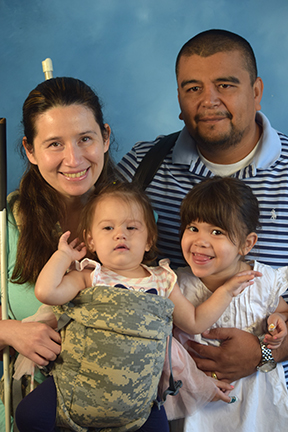 From the Editor: A graduate of the Louisiana Center for the Blind (LCB), Rosy Ramirez Carranza taught blind students in Washington, DC before embarking on a PhD in minority and urban education at the University of Maryland. With Shawn Callaway, she co-chairs the NFB’s Committee on Diversity and Inclusion.
I am the proud daughter of Mexican immigrants. Throughout my childhood, I witnessed my parents, both employed as farmworkers in California's Central Valley, arrive home with exhaustion in their voices, aches in their bodies, and layers of dirt on their clothing. Their skin was often red and cracked, most likely from decades of stressors such as weather, pesticides, and undervaluing. These images kept me moving through school as the print got too small, the lighting too dim, and the expectations too low. And when a classmate shoved me against the brick wall of our elementary school, declaring to the kids on the playground that I was a dirty Mexican, my pride in my family and my culture lessened the sting.
This special issue of Future Reflections explores the complexities that blind students and their teachers experience in the US public education system. It also examines issues around identity for blind children and youth who also belong to other minority groups, both ethnic and cultural. I hope that these writings will serve as a window and a mirror—an urging to absorb the richness of the human experience and a vehicle to engage in the transformative self-reflection that lies at the core of any educational revolution.
Research agendas in the field of visual impairment largely have emphasized medical, scientific, and psychological understandings of disability. Within this framework, disability eclipses other salient characteristics, generating a diminished, one-dimensional view of blind students and their educational settings. In this publication we seek to build equity by listening to voices that all too often go unheard. We hope to inspire curiosity and action around our students and to improve their access to educational opportunity.
Writing about deeply felt personal issues can be difficult and painful. I want to recognize the emotional labor and social implications that our contributors negotiated as they prepared their work for this issue. For many of us who have experienced educational marginalization and continue to confront inequitable systems because of our race, ethnicity, religious affiliation, immigration status, gender identity, social class, or other identity markers, it is not just a matter of writing our story. Often our personal narrative involves painfully peeling back the layers to reveal a hidden piece of ourselves in the hope that someone will be better off for the struggles that we have endured. It means considering the implications that our words can have on the communities that we represent. It means hoping that these snapshots into our lives will not provoke harsh criticism against us or our families, but instead will lead to a deeper understanding.
If you do not see yourself or your community represented in these pages, we realize that this omission may be painful and disappointing. In assembling the articles for this issue, we did not focus on checking off specific boxes; rather, we sought to attract contributors with diverse and unique perspectives who could stretch our understanding and ignite thoughtful discussion. This special issue gets the conversation going, but it is just the beginning. We encourage you to reach out to the editor of Future Reflections, Deborah Kent Stein, to share your story.
In adopting a broad perspective, it is important to recognize that the United States public education system exhibits continued and intensified segregation by race and class, placing countless poor and minority students in a state of educational peril. Our blind students are not shielded from these realities; rather, disability status can draw them even closer to the center of educational dysfunction and social marginalization. An increased knowledge about creating more equitable educational systems and greater access to our blindness movement are central to building a world in which blind students can live, learn, and lead. As teachers, parents, students, and advocates, this task may take us down unfamiliar paths. Social contexts may blur the lines between blindness advocacy and the broader inequities that threaten the life trajectories of our students.
Whether you are a teacher, parent, or blindness advocate, we urge you to navigate toward the goal of equity. The lives of our blind students are inextricably connected to the failures and successes of all children in the educational ecosystem.
Media Share
