American Action Fund for Blind Children and Adults
Future Reflections Special Issue on Ethnic and Cultural Diversity BUILDING UNDERSTANDING AND FORGING CONNECTIONS
Beyond Eye Reports and IEPS: Seven Strategies to Connect with Blind Students from Diverse Backgrounds
by Mandi Bundren
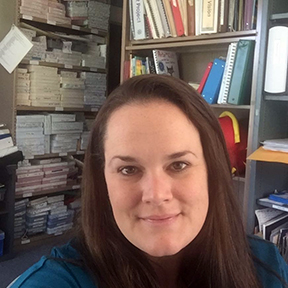 From the Editor: Blind and low-vision students come from every conceivable background. Teachers face a host of challenges as they attempt to help their students meet their fullest potential. Drawing upon her extensive teaching experience, Mandi Bundren suggests ways for teachers to connect with their students and their families across the cultural divide.
I am a white teacher of blind students, and I didn't grow up in a multicultural family or context. People in my immediate circles didn't tend to discuss perspectives on racial and ethnic equity or gaps in resources across social class. However, I have moved frequently throughout my life, and moving has placed me in many diverse communities. In these communities I have been able to make new connections and gain important insights that strengthen my teaching.
As a fifteen-year veteran teacher of blind students, I have been blessed with diverse caseloads. My students have expanded my perspective beyond my personal background or any assignment I completed in college. I have taught in rural, urban, and suburban settings across the United States. I have taught blindness skills to newly arrived immigrants from around the globe, students who identify as LGBTQ+, students who have survived traumatic life events, and students who live in poverty. As an itinerant teacher I have spent my days traveling between worlds—teaching in vastly under-resourced schools and also serving students in opportunity-rich environments. In every setting I have taken the time to learn about my students' backgrounds and cultures. In this article I will share some tips that have helped me better connect to my diverse students.
1) It goes without saying that the very best way to connect with any student is to develop a positive, supportive relationship. This comes naturally to me as a teacher of blind students, as I generally work one-on-one with students, and I may retain them over several years. Showing empathy and expressing an interest in your students' lives will go a long way toward helping teachers develop a bond.
2) Be aware. Our students are not only blind; each of them possesses a variety of characteristics that can limit or bestow educational opportunities. We can work to become informed about their histories, and we can learn about contemporary issues that they may confront because they identify with a particular community. Don't ignore their struggles, but stand beside them. Indifference will never build trust. Recognize that your students may experience privilege or marginalization due to personal and community characteristics in addition to blindness. Our students are more than eye charts and IEP goals! To support them we need to be mindful of their lived experiences, and we must not be afraid to challenge our own belief structures.
3) Develop or modify your teaching tools to make them relevant to a broad range of cultures. I have a personal library of Braille books on my shelves. My books are transcribed in English, Spanish, and even some French and Italian. I have books that include narratives about refugee children and children whose parents are in prison. I use English and Spanish to label many of my manipulatives. I encourage and assist on field trips that expose my students to different cultures, and I try to be well informed so I can answer the questions my students may ask.
4) Get to know your students' culture and celebrate with them. Showing an interest can help you break down cultural barriers. Don't be afraid to ask detailed questions.
One of my current students is turning fifteen in three-and-a-half weeks. She is ecstatic, and she has been talking nonstop about becoming a quinceañera. I knew what a quinceañera is, but I've never been to a quinceaños celebration, and I never knew all the details that go into planning the event. Now I'm learning from my student as she tells me about the food, the ceremony, and the guests. We've been looking up quinceañera dresses online during our down time. I'm assisting her with the online search and describing the details of the dresses that she cannot see. It's been a fun bonding experience with this student. I'm grateful that I'll be better equipped with knowledge of this rite of passage as I connect with students farther down the road.
5) Don't be afraid to share your own culture with your students. I've often given small gifts to my students at Christmastime. Years back I had a student who had recently immigrated from Pakistan with her family. Although she knew about Christmas, I explained to her about the ritual of gift-giving in the holiday season. She came to school the next day with a Christmas gift for me. She and her mother had gone out and purchased a little coin purse for me and wrapped it in paper with a bow.
6) Educate yourself about your students' rights. Children without citizenship are still protected by the Constitution from discrimination, and they still have a legal right to an education. They are entitled to FAPE (free and appropriate public education) and access to the terms of IDEA (the Individuals with Disabilities Education Act). However, many students and their parents may not realize this. It may be up to you to educate them about their civil rights.
Provide your students and their families with information about social programs to assist with postsecondary planning. About ten years ago I had a student, Eduardo, who had come to the US from El Salvador. His parents had escaped from a dangerous area in their home country, and they came as refugees with their three children, one of whom is totally blind. Eduardo had never received Braille instruction or any formal blindness training. He quickly learned Braille and became proficient with his cane. He moved from being completely reliant on others to being age-appropriately independent. He was only a few years away from graduating, and I knew he had a great shot at going to a university. However, he would need additional training in the skills of blindness before he could fully realize his potential. With an interpreter, I sat down with his mom to explain my hopes for her son and the steps the family would need to take. I shared a local resource with her that would help Eduardo obtain the citizenship status he needed for vocational rehabilitation after high school.
I've had similar conversations with many other parents, helping them understand the supports that are available to help their children thrive. One of the greatest connections that I work to cultivate is a relationship with the National Federation of the Blind. I know that the blind community will be there to offer encouragement and support long after the student leaves my caseload.
7) Don't assume you know why parents aren't involved. I work hard to get to know parents and develop a line of communication that is open and optimistic. Many of us, especially those working in urban or rural/remote regions, find that about half of the parents we work with participate regularly in IEP meetings, while the other half seldom or never attend. It is easy to assume that parents who don't show up just don't care about education. However, by developing deep connections with families, teachers can discover new perspectives on parental involvement. Parents who are unfamiliar with IDEA and special education law may yield to educators as the experts. They may let education professionals take the lead, convinced that this attitude will result in better academic outcomes for their children. Working multiple jobs or having to negotiate with inflexible employers for time off may prevent parents from attending meetings or school functions. Learn why your students' parents aren't getting involved, and make time to communicate with them outside of the scheduled meetings. Call parents when you know they are free. Let them know you understand that sometimes work demands or life circumstances present barriers for involvement in the IEP. Have a brief conversation over the phone to get their feedback and explain their child's IEP. All of these measures can go a long way toward fostering parental involvement as well as establishing a positive rapport with parents.
Never be afraid to use an interpreter. Every time I've used an interpreter I have found that parents who seemed reserved and unwilling to speak up actually have quite a lot of insight and questions.
In closing, I'd like to leave you with a few words from the great community builder Cesar Chavez: "We need to help students and parents cherish and preserve the ethnic and cultural diversity that nourish and strengthen this community." I hope my experiences will help build stronger connections between you and your students.
Media Share
