American Action Fund for Blind Children and Adults
Future Reflections Special Issue on Ethnic and Cultural Diversity BUILDING UNDERSTANDING AND FORGING CONNECTIONS
My Education Narrative: Negotiating School and Culture as a Blind Chinese American
by Colin Wong
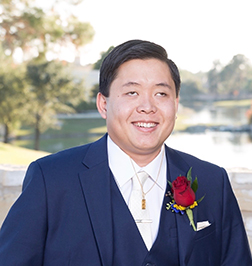 From the Editor: Colin Wong works as an orientation and mobility instructor in Phoenix, Arizona. He serves on the board of the NFB of Arizona, and he is second vice president of the Phoenix Chapter.
I grew up in a poor, traditional, Chinese household. Our individual lives revolved around providing whatever we could for the family. Grandma often misquoted John F. Kennedy by saying, "Ask not what you could do for yourself, but what you can do for your family." My parents had little formal education, but they were hardworking, determined, proud refugees. My dad came from China, and my mom came from Cambodia.
During my junior year of high school, I unexpectedly lost my vision. My parents and the culture that surrounded them viewed blindness as a life-ending, crippling, infectious disease that rendered a person helpless and useless. Nevertheless, my dad was unwilling to give up on me or to let me give up on myself. His Chinese values of remaining courageous during struggles, relying on family, and working hard gave me support and helped me cope with my vision loss. My dad taught me that I would need to face discrimination and prioritize education in order to be successful.
Blindness and the Myth of the Model Minority
Cultural beliefs and practices can make positive contributions to our lives, yet simultaneously they can usher in discrimination. The myth of the Model Minority is one stereotype that imprinted itself upon my life and the lives of my family members. This widely held myth views Asian Americans as a monolithic group of highly successful, obedient, innately intelligent individuals for whom the American dream is accessible and deserved.
You may wonder why this myth is problematic. I will point out some of the issues involved. First, the myth ignores the uniqueness of each ethnic group in terms of its cultural values and traditions. First of all, it lumps Chinese, Japanese, Indian, Korean, and other Asians into the same category, regardless of their diverging cultures or specific needs. Second, the Model Minority myth pits Asians against other minority groups, sending the message that African Americans, Latinx, and other groups would succeed in American society if they just tried hard enough. It holds up Asians as examples of excellence while failing to recognize that racism, economic inequities, and social structures continue to place barriers in the lives of African Americans and Latinx.
When it came to blindness, the Model Minority myth created an educational resource gap for me. This line of thinking assumes that Asians will be successful no matter what due to their will and determination. I witnessed firsthand how governmental and educational resources were directed away from my Asian friends and neighbors, neglecting those who truly needed help. I vividly remember my Latinx friends receiving Spanish versions of documents to take home to their parents, while my teachers told me that documents in Chinese were not available. I always interpreted when parent-teacher conferences or IEP meetings took place, even though I was the main subject of the conference. I also received very little support with homework assignments, as everyone assumed that I was good at math.
These attitudes among educators had some positive aspects for me. I was forced to take an increased amount of responsibility for my educational outcomes. On the negative side, my school's failure to implement culturally relevant practices meant that my parents' responsibilities became my duties. I matured quickly as a result.
Blindness, Cultural Demands, and Dual Expectations
Even before I lost my vision, my dad told me to prioritize education. I was taught that education is the determining factor that separates successful people from those who don't make it in life. I knew that failing in academics was not an option. I proceeded through eleventh grade as a newly blinded young man, carrying the weight of this cultural and familial expectation on my shoulders.
After I became blind, the expectations around my capabilities decreased at school and within my family. My parents told me to graduate from high school and get into a good college, yet they had zero expectations regarding my career. My teachers expected less out of me than they did when I was sighted. They told me that I should take fewer honors classes because of my blindness. My O&M instructor even told me that my dream of teaching other blind people how to get around was impossible because my blindness would not allow me to observe students safely. Yet I started getting awards and special recognition as a newly blind high school student, even though the attention was not well deserved.
I had many struggles related to my intersectionality. My high expectations of myself as a Chinese student seemed out of reach because of the lowered expectations that my disability created. I struggled to understand whether to associate with my Chinese identity by valuing education or to take the easier path and follow the expectations that the world held for me as a blind person. I was also viewed through the Model Minority lens at times, which further complicated my situation.
Although I graduated from high school and enrolled in college, these conflicting perspectives had an impact on my confidence. In college I changed majors at least eight times because I struggled to understand what career was possible for me. Yet I couldn't drop out because my values regarding education persisted.
Advice for Teachers
Eventually I left behind all the warnings about things I couldn't do. I moved forward toward realizing my dream of becoming an orientation and mobility instructor. The strength that I drew from my family and my persistence to gain an education are the two factors that turned me into the successful person I am today. My ability to advocate for rehabilitation services and my connection with the blind community were also critical elements.
When I became blind, I had many issues with my education that I never had as a sighted student. The biggest issues stemmed from inaccessible documents and low expectations. From my experience, low expectations are the largest barrier that prohibits blind people from living their dreams. The failure of educators to recognize that students may have needs associated with their race or ethnicity also can place students at a big disadvantage in terms of their opportunities.
As a Chinese American, I was stubbornly taught that I could not give up on my education or expectations. Without those values, I could have dropped out of school. I might have lowered my own educational expectations because of what school authorities believed was possible for me. Here are a few things that teachers of blind students can take from my education narrative:
- Maintaining high expectations is the most important thing that teachers of the blind can do to help their students achieve. I often ask myself the question that I was constantly asked while I attended graduate school at Louisiana Tech University: What would the student be capable of accomplishing if they were sighted?
- Consider how you can empower your students to fulfill their dreams. I was given the message that my career path would be limited because of my disability. I now know that blind people can enter any career that they choose. I always wonder how many blind people never got to pursue the careers they hoped to choose.
- Prioritize making materials accessible for both students and their families. Braille literacy is essential for long-term success. In addition, educational documents in the student's home language can foster increased parental involvement, thereby enhancing school achievement.
- Intersectionality, diversity, and culture should be celebrated and understood in their proper context. It is vital to remember that students are unique individuals. Their uniqueness should be valued and not viewed as an additional barrier to proper education.
Parting Thoughts
I am fortunate to have survived the school system despite the barriers and lowered expectations that were placed in my path after I lost my vision. The Chinese values that I adhered to allowed me to understand the importance of education and work past my disability. I know that I am not a model minority or a broken sighted person. I am not someone who let circumstances draw me away from my cultural foundations. I am lucky to have made it to the place where I am, and I hope that my story can help other students reach their potential.
Media Share
