American Action Fund for Blind Children and Adults
Future Reflections Special Issue on Ethnic and Cultural Diversity BUILDING UNDERSTANDING AND FORGING CONNECTIONS
Mentoring "Bad" Students
by Melissa Lomax
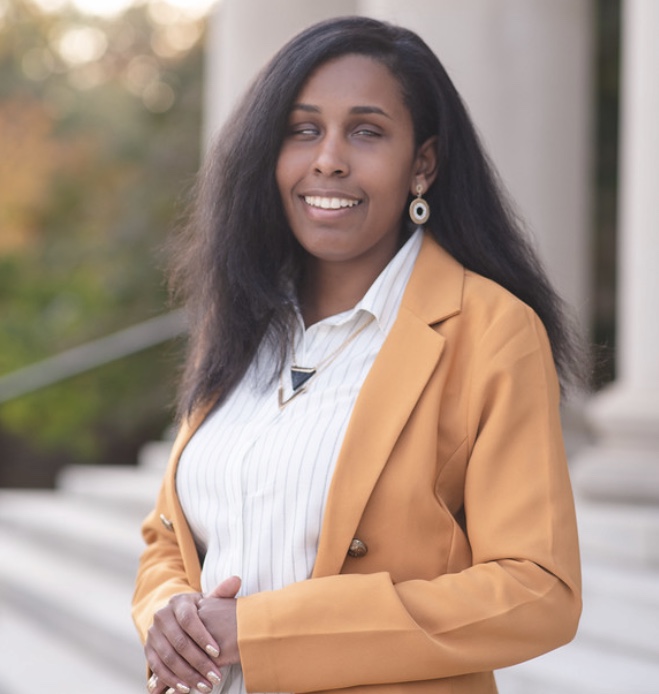 From the Editor: The stereotypical blind student is compliant, even a bit passive. In reality, of course, blind students run the gamut, like students everywhere. Some quietly follow the rules, some now and then are risk takers, and some flagrantly buck the system. Drawing upon her experience as coordinator of youth programs at Blind Industries and Services of Maryland (BISM), Melissa Lomax shares some strategies for mentoring students whose behavior has earned them the label “bad.”
In my work as a youth services manager in a program for blind teens, I sought to hire summer counselors who valued strong mentoring relationships. When I interviewed for the job, I asked each applicant, "Do you have a blind role model? If so, tell me about this person." Each year I was disappointed with many of the responses. Stevie Wonder was the most frequent answer, while other candidates simply said no, they had no one. Luckily, however, several applicants had had experiences similar to my own. We were honored to have had blind role models who made time to learn about us and teach us.
The disparity in responses to my question led me to wonder why so many blind youth continue to miss out on life-changing mentor relationships. I noticed that many blind youth from the inner city unjustly receive the label of bad, and consequently they miss out on mentorship. Though it is not always spoken aloud, the label bad can be identified by the actions of professionals and teachers. It all starts with negative assumptions. If labels regarding a student's behavior are ever acceptable, a more fitting term than bad would be misunderstood. In my role in their lives, I made sure not to operate under the belief that young people were anything close to bad. I knew such labeling would diminish the quality of the services I could provide.
During discussions with me, some students expressed themselves through foul language, raised voices, and abrupt departures. Never will I claim that these actions should be overlooked and accepted. As one who values respect, I would be doing a disservice to these students by failing to address such behaviors. However, I choose not to take punitive steps to achieve my desired results. I choose to understand.
In this field I am primarily asking students to do three things: to learn and rely on new skills and techniques, to become more self-confident, and to accept that their blindness is not the end of life but the beginning of a series of adaptations to reduce its impact to a mere nuisance. For many educators, mentors, counselors, and other like-minded professionals, these three goals appear attainable—we have seen too much success to think otherwise. But for most students, these goals are scary. Students may express fear by crying, shutting down, or making excuses. Other students deal with fear more aggressively.
Contrary to commonly held misperceptions, students who resort to disrespectful behavior fit no set categories. They are not always younger or older, male or female, or black or white. As an African-American woman I am acutely aware of social perceptions regarding minority communities. I made sure to look past the superficial label of bad that several of my black adolescent students carried when they arrived. I set out to assure them that, though others may have given up seeking connections and finding common ground with them, I most definitely would not.
Initially, I believed I had this population figured out, but I was wrong. One young male student in middle school taught me lessons I would later implement for all of my students.
This student—I'll call him Tony—decided to express his fear in a disruptive way while he attended one of my summer programs. I was determined to find the source of his fear so I could encourage him to get beyond it. During his third outburst, I had my opportunity. When I heard screaming from across the building, I ran toward the sound.
It turned out that Tony had refused to help clean the kitchen after class, and as he protested he stopped using his inside voice. Hastily I removed him from the scene and helped him express himself calmly. As Tony described his class, I realized that two issues were at play. First of all, Tony did not know how to clean, and he did not know how to ask for help. Second, he liked and valued his instructors as people, but in that moment he did not feel comfortable sharing his need for help with his teacher. He could not trust people easily unless they were African-American females.
I knew our program could help Tony deal with both of these issues. I assured him that his outbursts were not enough to deter us from giving him the opportunities the program could provide. I assured him that we could work together to transform his thinking about the issues that troubled him. Once I validated his feelings and gained his trust, I explained that his negative behavior would no longer be tolerated.
When I contacted Tony's guardian, it was not to have him depart my program after his third strike. I scheduled a meeting to celebrate his breakthrough and consult with her on solidifying our new plan of action. In the end, Tony and I both won. His outbursts disappeared, and his skills and confidence increased! Moreover, I worked with him to step away from his need for a mentor just like his nurturing grandmother. I helped him see that in this program, he needed someone who could help him build confidence. When he shared that he loved to create music but did not feel equipped to broadcast his talents, I connected him with a male counselor who happened to be a musician. This connection produced results I can still see today. Tony produces instrumental music that he uploads to YouTube. The confidence he gained has spread to other areas of his life.
Experience remains my best teacher. This phrase holds great significance when I reflect on my journey to connect my students with great mentors. Tony attended our program in 2018. I know that my success in working with him grew out of a similar situation that occurred three years prior. While I was managing a summer program for high schoolers, I pulled aside a student named Rick to speak with him about his conduct. The conversation quickly escalated, and he began to raise his voice in frustration. It turned out that he had a problem with his assignment to talk to mentors I had chosen for him because he felt that none of them could fully understand his position. He felt that blindness was an injustice for him in a family and neighborhood where he was expected never to show weakness. I, too, am African American, but I realized that although I looked like him, I was not really like him. At that time in his life, he did not need a person in his dream career, from his state, with his eye condition, or even possessing his same skin complexion. He needed a blind individual who faced and triumphed through the same struggles he faced back in his hometown.
That conversation altered my approach to pairing students with mentors. When my organization had an opportunity to create a year-round program for transition-age students, I knew that in addition to workshops, the students needed mentors. I took on the task of mentoring each student myself. This approach not only fit with our limited resources at the time, but it also gave me an opportunity to pinpoint my students' specific needs. While some needed academic guidance or help dealing with social situations, others needed instruction on independence skills or advice coping with difficult experiences. I let the students choose which aspect of me they needed in that time.
In 2019 I made the choice to resign from my youth management position to pursue a career change. Before I left I spoke with the students who were interested in continuing a mentoring relationship. I asked them, "What type of person do you need to learn from at this time?" From there, I set out to establish strong matches that would elevate each student to a higher level of confidence and independence.
I encourage anyone who sees the tremendous value in connecting students with an insightful blind mentor to follow the same steps I did. First, get to know the student well enough to have an open, honest conversation about the type of guidance needed in that moment. Next, look for mentors outside of the unspoken "mentor catalogue," as the desired demographic may not be represented well due to a lack of awareness. Then encourage students to customize their own experiences by assessing any changes in their needs and finding mentors best suited to help. With these steps it is my hope that more youth will grow to realize that they can indeed give back to future generations. We can work to eliminate the belief that students of color, students from low-income backgrounds, or those with a variety of life circumstances are not needed or valued in the mentorship arena. In fact, these students, with their unique perspectives, deep community connections, and boundless gifts, can bring increased diversity, equity, and inclusion to our blindness movement.
Media Share
