American Action Fund for Blind Children and Adults
Future Reflections Special Issue: The Federation in Partnership TEACHERS AS PARTNERS
Developing the Teachers of Tomorrow Today
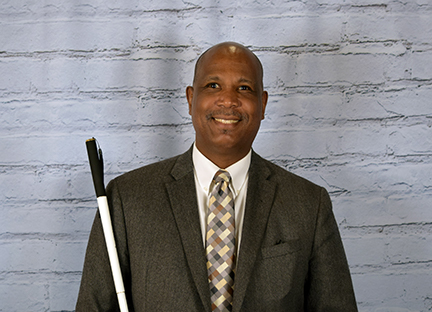
by Anil Lewis and Karen Anderson
 From the Editor: The NFB has long recognized that high expectations and a solid grounding in the skills of blindness are the best recipe for the success of our blind and low-vision students. Teachers of Tomorrow is an exciting program launched by the NFB to build partnerships with teachers of blind/low-vision students.
In classrooms across America, blind students are all too often underestimated, underserved, and overlooked. The cumulative impact of these educational experiences is devastating: illiteracy, unemployment, and isolation. Once in motion, these patterns represent a significant threat to the social and economic vitality of the blind community.
Most teachers of blind and low-vision students are sighted, and they often lack the experiential disability know-how to counteract blindness stereotypes and to unleash the full potential of their students. Furthermore, many university teacher-preparation programs in visual impairment lack the resources to establish meaningful and sustained relationships with the blind community. In some cases they do not even provide prospective teachers with interactions with blind students prior to graduation. The lack of face-to-face exposure to blind children and adults has been shown to lead directly to negative conceptions about blindness and pervasive low expectations for blind youth. The Teachers of Tomorrow program was developed to meet the need for a community of networking and support for new and early-career teachers of blind students.
Launching the Program
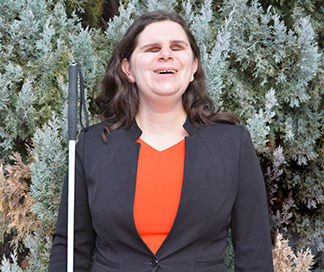 Through the generous financial support of the Gustavus and Louise Pfeiffer Research Foundation, the NFB Teachers of Tomorrow program was revitalized in January 2021. The program brought together twenty-two new and early-career teachers for monthly virtual professional development sessions that centered on the lived experiences of blind people. These gatherings created a direct path between program participants and successful blind adults, offering an unobstructed view of the types of educational opportunities and disability outlooks that prepare blind students for lives of personal and professional fulfillment. While each session had specific learning objectives, these overarching goals served as the foundation for all program activities:
- Engage teachers in discussions that question how blindness attitudes and systemic forces influence schooling practices and related life outcomes.
- Highlight the various blindness skills (Braille, cane travel, accessible technology, etc.) that blind people use in school, at work, and in their communities.
- Develop a more complete portrait of the blind experience as articulated by blind individuals with diverse backgrounds and identity markers.
- Develop a professional identity that is informed by the blind experience.
A Year of Teaching and Learning
 During our sessions and throughout the duration of the program, the teachers had access to national experts in blindness education, dedicated mentor teachers, and a transformative environment of positive blindness attitudes. The following is a brief overview of the monthly session topics that were discussed.
January: "When Blind People Drive: Introduction to the Organized Blind Movement"
In this inaugural session, participants began to build community by describing their professional roles and by sharing their motivations for becoming teachers of the blind. NFB President Mark Riccobono provided an overview of the historical and philosophical landscape underpinning the Federation's perspective on blindness education. The teachers gained insights on the use of blind mentors, the value of Braille, and the role of high expectations. This session established the foundation for a professional identity that is informed by the lived experience of blind people.
February: "Assisting Students in Developing a Positive Blindness Identity"
This session explored the ways social perceptions about blindness influence identity development among blind youth. A diverse panel of college students provided an intersectional perspective on achieving self-acceptance and becoming situated in the blind community. The vital roles played by families and general education teachers in communicating positive blindness attitudes were discussed. Since all but one of the cohort participants were fully sighted, learning about the social and personal implications of possessing a disability was an especially relevant topic to unpack.
March: "Braille Literacy: Teaching, Advocating, and Assessing for a Lifetime of Literacy"
This session provided resources pertaining to Braille literacy in the areas of advocacy, assessment, and teaching strategies. The discussion explored the routine challenges experienced by teachers of the blind and the range of techniques employed to circumvent barriers to quality Braille instruction. A featured speaker shared her story: as a low-vision youth she was not provided with Braille instruction, leaving her unprepared when she suddenly lost her remaining vision later in life. Society's prejudice against Braille hindered her academic productivity and chipped away at her self-confidence—an experience shared by many blind people. The teachers reflected upon their own Braille teaching practices and were provided with resources to help them gain professional growth in this area. They had time to reflect upon their students and the role that Braille can fulfill in employment and personal enjoyment.
April: "A Solid Foundation for Success: A Close-up on Early Childhood Education"
This session provided information and teaching strategies for blind students in early-childhood settings. Presenters engaged the participants in considering how best to implement inclusive teaching practices among general education teachers to maximize meaningful learning and age-appropriate independence for young blind learners. Braille learning and early exploration with a white cane in both school and home contexts were also discussed. Participants also received information regarding the specialized needs of blind students with additional disabilities. This session underscored the need for establishing high expectations and a positive blindness identity as essential aspects of the early childhood curriculum.
May: "Supporting Professional Growth through Mentorship"
The purpose of this session was to establish professional mentorship connections between program participants and our team of teacher/mentors. During our program interviews and subsequent sessions, participants, as early as career teachers in a low-incidence field, often reported experiencing professional isolation and insufficient understanding among the special education community. This session underscored the value of professional growth and demonstrated how our seasoned blindness-education professionals implement a teaching outlook that empowers blind students. Each participant established virtual contact with their individual mentor and learned how to seek support from others on the mentoring team.
 June: "Reimagining STEM Education for Blind Students"
This session provided participants with techniques and resources to enhance their knowledge of nonvisual STEM teaching strategies. Providing meaningful and equitable opportunities in STEM education has long been a Federation priority. Systemic issues, including low expectations, inaccessible materials, inadequate teaching techniques, and a legacy of low-quality special-education services are some of the issues hampering the achievement of countless blind students in STEM. The teachers were provided with a novel framework grounded in a nonvisual STEM perspective that challenged the teachers to create an accessible lesson for their students. Collectively, this session encouraged the teachers to reimagine the STEM field as a place rich with opportunities and possibilities for their students.
July: "NFB Virtual National Convention"
NFB Teachers of Tomorrow participants were invited to attend the NFB National Convention, the largest annual gathering of blind people anywhere in the world. This virtual gathering showcased the outlook and skills that blind people employ to succeed in school, work, and life, providing encouragement and resources to program participants. Teachers interacted with blind individuals working in various occupations, heard from families of blind children, and gained knowledge about innovations in access technology. In addition, we initiated mid-program individual interviews during this month to pinpoint some of the primary professional and philosophical needs of the teachers and to gather details to assist us in enhancing our program.
August: "Thriving in the New School Year"
The purpose of this session was to provide teachers with resources and strategies to support their work in the new school year. We spotlighted skilled and enthusiastic teachers who could share stories from their classroom experiences. These stories are especially important since many teachers of the blind experience professional isolation, contributing to disengagement and burnout. This session also featured a panel of blind individuals—a college student, a job-seeker, and a Mary Kay consultant. Each speaker traced their educational path, highlighting the things their teachers got right. Finally, our teacher mentors held small-group discussions to address challenges and fears expressed by participants during the mid-program individual interviews.
September: "Highlighting Intersectional Perspectives in Blindness Education"
This session explored the role of intersectional identities in the education of blind students. Often the academic experiences and social lives of this population are viewed through a medical lens, eclipsing the powerful influence that personal characteristics or community/social contexts impose on schooling. To bring these elements into focus, our presenters shared detailed accounts of their educational pathways, describing the impact of factors such as language, class, immigration status, race/ethnicity, religious practices, and gender identity. The session also addressed strategies for supporting students who are blind and identify as LGBTQ. Our final speaker shared how white teachers of the blind can build meaningful relationships with diverse students.
 October: "Supporting Transition-Age Students"
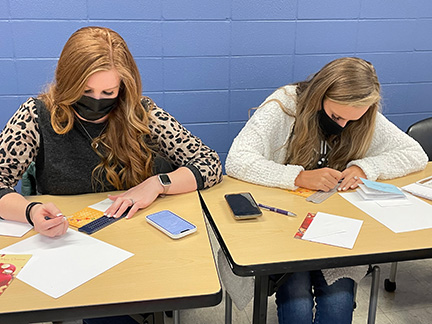
This session provided resources and perspectives to support the postsecondary aspirations of blind students. For blind youth ages fourteen through twenty-two, the path from school to college and career often introduces academic and social obstacles that can derail dreams and hamper economic mobility. These challenges often are more pronounced for blind students with additional disabilities, for blind youth who are first-generation college attendees, and for students who choose not to attend college. A panel of blind college students highlighted these experiences by detailing their path through high school and the challenges and opportunities that they encountered along the way. The student narratives served as the foundation for a deeper exploration of specific supports, including vocational rehabilitation services, mentorship, self-advocacy, and vocational career options. The session concluded with small-group discussions, where participants built upon their personal knowledge and collaborated with other educators to enhance their skills for serving the complex needs of transition-age youth.
November: "Fostering Autonomy and Agency in Blind Students across the School Years"
The goal of this session was to increase knowledge and to provide resources that teachers can implement to promote bodily autonomy and personal agency among blind students. Blind students often are socialized to relinquish their bodies in various ways—"not being permitted to decline assistance, by forced hand-on-hand teaching strategies, or by the failure to introduce tools that promote independent movement. Personal agency is stifled when blind students are exposed to these practices, along with other strategies that reduce the locus of control and independent decision-making. These issues were described and placed in context via an activity that asked teachers to problem-solve various social scenarios. The teachers also drew from experiences in their own classrooms to seek support on topics including sex education, personal space, advocacy, shopping, etc. The session concluded with a presentation by Dr. Arielle Silverman, who provided insights from her disability memoir. Dr. Silverman shared stories and tips around developing friendships, dating, working with families, and upholding high expectations.
December: "Lessons from the Blind Bayou"
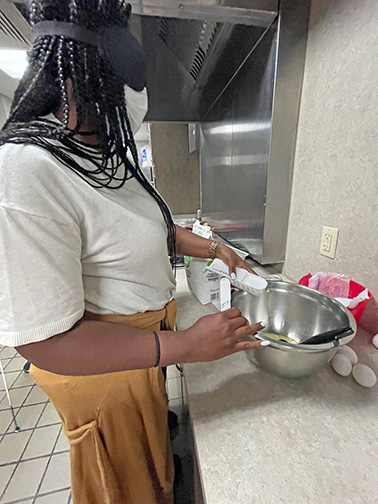
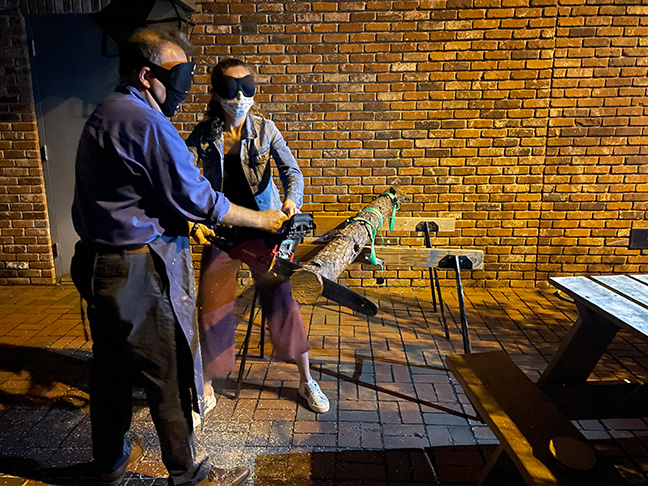
Teachers traveled to Ruston, Louisiana, for an in-person session that included twenty-six hours of hands-on learning. The group engaged with students and staff at the Louisiana Center for the Blind, a residential training center founded by blind people in 1985. Here participants gained experience with Structured Discovery—a model for teaching and learning created by blind people. Teachers wore sleepshades to bake brownies, to learn basic cane travel concepts, and to cut wood with a chainsaw (an exercise in confidence building and an important demonstration of the effectiveness of nonvisual skills). They also spent a day at the Institute on Blindness at Louisiana Tech University, where they learned about the development of Structured Discovery and its application in K-12 settings. Both the Louisiana Center for the Blind and the Institute on Blindness are widely recognized for their innovations in education and rehabilitation. Their programs instill confidence; prioritize the perspective of blind people; and elevate expectations, reflecting the educational practices and outlook that we hope will inspire program participants on their journeys toward professional growth and student empowerment.
What the Teachers Thought
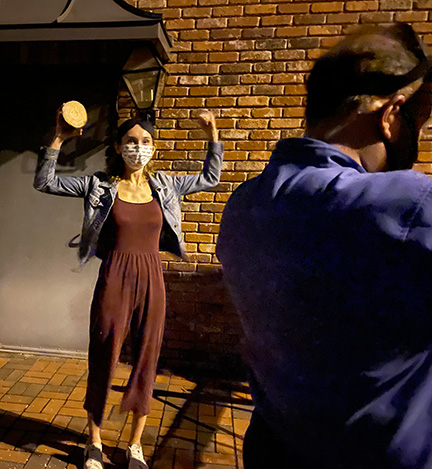
Mark Riccobono, President of the National Federation of the Blind, also participated in our Louisiana session, and shared his personal experience as a blind student who "didn't know he was blind." Rather than being taught the alternative skills of blindness, he spent a significant part of his K-12 life attempting to "pass" as a sighted student. As one of our confidence-building activities, he taught the teachers how to use a chainsaw while blindfolded. One of our Teachers of Tomorrow described the experience as follows: "As a souvenir, I brought home the piece of the tree that I cut off while blindfolded. I have never used a chainsaw, let alone blindfolded. This task helped me overcome my fear. On the piece of log I put "ANYTHING IS POSSIBLE 2021," using black rhinestones to create Braille dots."
Another teacher states, "During the experience at the Louisiana Center for the Blind, we had the opportunity to make brownies from scratch while being blindfolded. The activity was called "Cooking without Looking." I took the recipe that we used during the experience and had my ninth-grade student make the brownies (we added a Christmas touch to them by adding crushed candy canes). We made two pans for a total of forty-eight brownies to share with his classmates and to take home to his family. The brownies were gone in ten minutes. Comments from his family were that they could not believe that he had made such amazing brownies."
Still another teacher states: "As a sighted person, I was unsure of where I fit in. I knew that people at the NFB had something to offer me as a new teacher, and certainly something to offer my students that I couldn't provide them with myself. My participation in Teachers of Tomorrow not only benefits me professionally, but it benefits my students. One day my students will no longer be mine . . . They will graduate, and have the rest of their lives ahead of them. Now that I relate to the NFB, I can connect my students with this huge network of people who share lived experiences as blind individuals. Their families can meet blind adults who are 'living the lives they want,' and have that same goal for their children."
More Participant Feedback
Following the July session, each participant was invited to take part in a mid-program interview. Although we distributed a survey after each monthly session, these in-depth individual interviews were conducted to enhance the program and to learn how best to address the specific needs of each teacher. Here are some of the ideas the interviews revealed:
Every teacher expressed eagerness to continue learning from the blind community, recognizing that our life experiences are vital sources of knowledge for educational excellence and positive life outcomes.
The stories shared by blind panelists created an increased sense of urgency for participants to provide blind students with solid Braille instruction.
Teachers began to view themselves as key contributors to the future lives of their students.
Participants began to understand that blind mentorship can serve as a game-changing resource for blind students.
Based on these mid-program interviews, the following program changes were implemented to meet more fully the needs of the teachers:
More time was allocated in the virtual sessions for small group discussions during which participants could share successes and address teaching challenges.
Mentoring partnerships were expanded to create increased access to the various areas of expertise that each teacher/mentor possesses.
New session topics were created, and additional resources were disseminated based on the interviews.
Stronger connections were established between program participants and the NFB affiliate in their state.
The following statements from participants illustrate the impact of the NFB Teachers of Tomorrow program and the Pfeiffer Foundation's invaluable support:
"Now that I am connected with the NFB, I can connect my students with this huge network of people who share lived experiences as blind individuals. Their families can meet blind adults who are 'living the lives they want' and have that same goal for their children."
"This organization and this group have gotten me through so much this year. I look forward to every month because I feel so supported and learn so much. Sometimes day-to-day can feel like I'm drowning in work, and then I come to one of these meetings and I go, 'Okay. I can do this. I can be a TVI. And my students can do this.' So thank you. From the bottom of my heart, thank you."
"The Teachers of Tomorrow Cohort Program has been such an enriching program, allowing us access to experienced professionals and individuals in the field. I feel such a program is important to the new teachers and leaders in the field and hope this program will continue in the future."
Plans for the Future
As you have read, the NFB Teachers of Tomorrow was an invaluable resource to the participants. As a result of their experiences, the program will impact the lives of countless blind students for years to come. We hope to continue this program long into the future. Thanks to the generous support of the Gustavus and Louise Pfeiffer Research Foundation, we have the financial groundwork to do so. The COVID-19 pandemic altered the original design of the program, shifting all of the sessions except one to virtual experiences. This was not ideal, but under these circumstances we learned valuable lessons about the positives and negatives of this medium, as well as ways to improve program delivery at a distance.
In order to better align the next cohort with the academic calendar that so greatly impacts participants' day-to-day lives, we will begin the next program year in late summer 2022. We hope that this structure will allow for more confidence in planning and holding in-person events in light of the COVID-19 pandemic. The virtual sessions have demonstrated a significant impact, and we have learned ways to improve this method of program delivery. However, there is no substitute for in-person interaction with peers and blind mentors. Therefore, the 2022 cohort will have the benefit of multiple in-person sessions interspersed with virtual sessions carefully tailored to meet the needs of new and early-career teachers of blind students.
In our work to change what it means to be blind, we know that teachers of blind students have unparalleled influence in our children's formative years. As someone who grew up as a blind student in a public school, I (Karen Anderson) know that these teachers are changing the lives of their students in ways they can't even imagine. The impact that one teacher can have on the lives of countless blind students means that supporting these educators is one of the most important things we can do. We are proud of this year's cohort. We know that these teachers will undoubtedly go on to raise the expectations of what blind people can achieve—showcasing to the world that we can live the lives we want; blindness does not hold us back.