American Action Fund for Blind Children and Adults
Future Reflections Special Issue: The Federation in Partnership PREPARING FOR INDEPENDENCE
Stepping Out with Confidence: Strengthening Partnerships with the NFB Training Centers
by Casey West Robertson
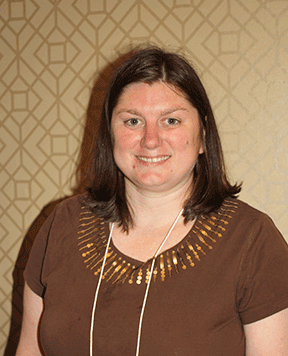 From the Editor: Casey West Robertson is the parent of a teenager with visual impairments who has the Usher's gene, and she is the aunt of an independent blind niece. She serves on the board of the National Organization of Parents of Blind Children (NOPBC). In addition, she is a certified Teacher of Students with Blindness/Low Vision, she is a professor in the Teaching Blind Students Program at Louisiana Tech University in the Professional Development and Research Institute on Blindness (PDRIB), and she is vice-president of the National Blindness Professionals Certification Board (NBPCB). Throughout the country she advocates to obtain better services for blind/low-vision students.
I play many roles and wear many hats in the field of blindness. Of all my roles, advocating for blind/low-vision students is at the heart of everything I do. I have been involved with the NFB and the NOPBC since 2002, when my niece was a mere toddler. My partnership with NFB, NOPBC, and the NFB training centers grew as my niece grew and reached school age. Without the NFB and the NOPBC, I would have been lost. I would not have had the knowledge I needed to advocate and set high expectations for my niece, my daughter, and students across the nation.
As an advocate for blind/low-vision students and their families, I am constantly drawn to the NFB philosophy of setting high expectations for students. Whether I am advocating for school-age students or training my graduate students to become teachers of the blind, my partnership with the three NFB training centers offers education for all aspects of life. The NFB operates three training centers: Blindness: Learning in New Dimensions, Incorporated (BLIND, Inc.), in Minneapolis, Minnesota; the Colorado Center for the Blind (CCB) in Littleton, Colorado; and the Louisiana Center for the Blind (LCB) in Ruston, Louisiana. These training centers offer Structured Discovery learning that transcends the center program and readies students for real-life situations.
Building toward Independence
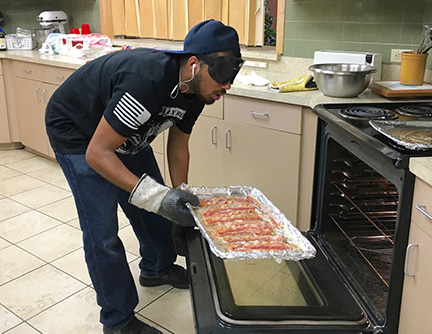
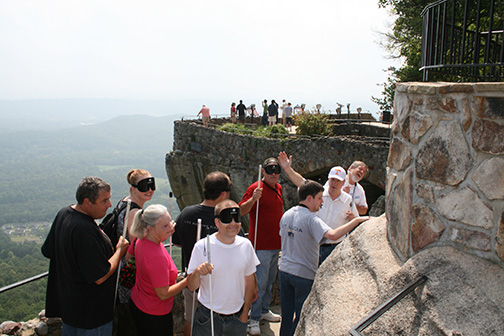
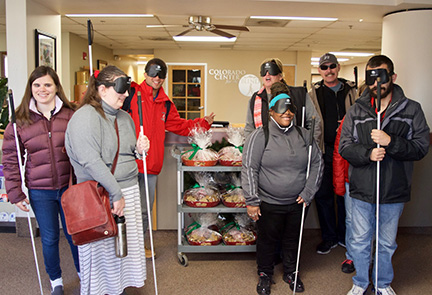 The NFB training centers provide opportunities for children and young adults during the summers to meet a wide variety of needs. LCB and BLIND, Inc., have Buddy Programs for children ages nine through thirteen. CCB runs the Confidence Camp, a day program for children ages five through nine. For high school students there are the Summer Training and Employment Project (STEP) in Louisiana and the Postsecondary Readiness Empowerment Program (PREP) in Minnesota. CCB offers various opportunities for youth, from Fun Activities and Skills Training (FAST) to Learning Box and Study buddies. Administrators review these programs regularly, based on feedback from students and staff.
Each center focuses on training blind people through Structured Discovery, helping them develop and enhance the skills of blindness. The centers help students adjust to blindness and carry their skills beyond the center into real-life settings such as college, apartment living, and the workforce. Each center also works with senior adults who are newly blind to help them participate fully in community life by using alternative techniques to accomplish daily tasks.
The training centers provide ongoing partnerships with students and their families. Once connected with a center, a person has a lasting bond with the staff. Center grads can reach out to the experts at any time for information and support. These partnerships clearly last a lifetime.
"Our blind/low-vision children benefit from the guidance, support, and mentorship they receive through relationships with blind mentors and teachers," says NOPBC President Carlton Anne Cook Walker. "Our NFB training centers offer an environment of immersion in blindness skills with instructors who use those skills throughout each day. Many of these instructors are blind themselves, and they serve as powerful role models for their students."
Carlton Walker, who is a teacher of blind students and the parent of a blind young adult, goes on to say, "The NFB training centers infuse all areas of instruction with the Structured Discovery educational philosophy, a teaching method that recognizes the importance of the student being a full and indispensable participant in learning. Structured Discovery equips our children to critically examine, analyze, and problem solve when they encounter new situations and find themselves in unfamiliar environments. Our NFB training centers are uniquely equipped to provide the student-centered, empowering instruction our children need to build their confidence, prepare for future challenges, and achieve their goals throughout their lives."
To learn more about Structured Discovery, visit https://www.nbpcb.org/pages/what-is-structured-discovery.php.
Seeking Answers and Raising Standards
 Over the past two years each of the NFB training centers has gone through extensive training to strengthen the services it provides and to raise the standards for all age groups. The centers could not have done this without strong partnerships with their boards of directors, NFB, and NBPCB. To ensure that deeply personal concerns were treated with sensitivity and investigated thoroughly, the NFB formed a partnership with RAINN (Rape, Abuse, and Incest National Network).
Unfortunately, throughout this process much misinformation circulated on social media. It is important for families and colleagues to have the correct information. At the end of this piece, I list links to articles and webpages that display the work completed thus far. I want to highlight the aspects of the process that were most important to me as I continue to recommend the NFB training centers to families, students, and teachers every day.
The NFB Code of Conduct
Early in 2018 the NFB began to look at its Code of Conduct in order to make changes that would strengthen this crucial document. Each participant at an NFB training center is held to the Code of Conduct by the NFB. Each professional teaching at the centers is also held accountable under the Code of Conduct by the NBPCB. By adopting and implementing a strong Code of Conduct, NFB and the training centers can carry out their vital mission of increasing knowledge and skills for blind participants.
 While working on the adoption of the current Code of Conduct, the NFB and the training centers partnered with RAINN, the nation's largest anti-sexual violence organization. NFB was also guided by a survivor-led task force that provided input into potential process improvements, training, and actions to be implemented throughout the Federation and the training centers. NFB sought feedback from members to help with the process of creating an improved environment throughout the Federation and its training centers.
The current Code of Conduct was published on December 19, 2021. It is very important to view official documents that were created during this critical process.
You might ask, "Has this effort really changed the centers for the better?" Adult students in the six- to nine-month program at NFB training centers have always had access to quality mental-health counseling options, nutrition planning assistance, and other support services to help them become self-advocates, even after leaving the center. However, greater emphasis now is placed on ensuring that each student is fully aware of these services throughout their program. Students also are encouraged to continue counseling if needed after they leave the center. Pam Allen, director of the Louisiana Center for the Blind, states that the centers have changed the way they talk about boundaries and mental health. She says a focus has been placed on teaching students about personal space and how not to defer situations and feelings to others but to trust their judgement and know what to do if they have concerns in any aspect of life. These skills are taught during training center time; however, instructors are preparing the students for the future outside the center. Pam explains that there has been a great deal of focus on empowering students by giving them knowledge, so they are aware and can make good decisions in other areas of life, even outside the center. The centers have leveraged partnerships with various people to ensure safe places to learn. By teaching this during center training time, students can carry these skills into real life outside of the center to always create a place of safety and knowledge wherever they may find themselves in life. As youth come into the centers for summer training, the changes that have been made allow families to connect with strong blind mentors and gain the knowledge they need to continue to strive in their schools outside of the summer trainings.
Julie Deden, director of the Colorado Center for the Blind, comments, "We have always made it our top priority to ensure that our students are supported and safe in our programs. In the past two years, we have further built this resolve and are offering a wide variety of training opportunities to staff and students." She continues, "We have passion for our work, and we love seeing each student gain pride in being blind. We love seeing that they realize they can take on new challenges with success!" She stresses, "CCB continues to be committed to providing positive instructional programs to students of all ages so that they will gain full belief in themselves as blind people." Jennifer Kennedy, director of BLIND, Incorporated explains, "We are committed to expanding understanding of complex issues by our staff and students. We partner with national and local experts on issues that include sexual misconduct, intersectionality, mental health, professional behavior, and social justice. Through ongoing discussions and workshops with staff and students alike, we will foster a safe, supportive, and respectful environment where everyone can learn and work."
Change is never easy; however, change is always needed. We must continue to change and mold our programs as we gain knowledge. Every successful program must be willing to look at its strengths and weaknesses and advocate to change for the better. I believe this is what the NFB training centers have done over the past two years.
The training centers have developed a culture based on continuously assessing their programs. They have further improved to create a safe, respectful, and professional culture conducive to learning.
The NFB training centers are not the first organizations or programs to examine their policies and see opportunities to better their programs. In his book Good to Great: Why Some Companies Make Leaps and Others Don't, Jim Collins says that the greatest obstacle to greatness is settling for good. The NFB training centers have always been “good” places to train; now, through partnerships and processes of change they are making their way to becoming “GREAT!”
Further Information
Current NFB Code of Conduct
- NFB Code of Conduct (HTML): https://nfb.org/about-us/history-and-governance/code-conduct/code
- NFB Code of Conduct (Braille Ready Format): https://nfb.org/sites/nfb.org/files/2021-12/National-Federation-of-the-Blind-Code-of-Conduct.brf
- NFB Code of Conduct (MP3 audio): https://nfb.org/sites/nfb.org/files/2021-12/national_federation_of_the_blind_code_of_conduct.mp3
- NFB Code of Conduct (PDF): https://nfb.org/sites/nfb.org/files/files-pdf/national-federation-of-the-blind-code-of-conduct-final-2021-12-30.pdf
NFB Code of Conduct Frequently Asked Questions: https://nfb.org/about-us/history-and-governance/code-conduct/code-conduct-frequently-asked-questions
Safety and Support Initiatives of the National Federation of the Blind
- December 16, 2020: Open Letter of Apology: https://www.nfb.org/blog/open-letter-apology-president-riccobono
- January 4, 2021: January Presidential Release: https://www.nfb.org/resources/publications-and-media/presidential-releases
- January 4, 2021: Partnership with RAINN: https://www.nfb.org/about-us/press-room/national-federation-blind-announces-partnership-rainn
“When Survivors Lead: Introducing the Survivor Task Force,” Braille Monitor, February 2021: https://www.nfb.org/images/nfb/publications/bm/bm21/bm2102/bm210207.htm
- April 15, 2021: Open Letter on Safety and Support Progress: https://nfb.org/blog/open-letter-safety-and-support-progress
- June 6, 2021: Survivor-led task force open call with external investigator of code of conduct complaints describing sexual abuse or misconduct Tonya Baña to answer questions from the community. Access the recording: June 6, 2021 Open Call with Tonya Baña Audio: https://nfb.org/sites/nfb.org/files/2021-07/Open-Tonya-Bana-MP3.mp3 | Transcript: https://nfb.org/programs-services/safety-support/june-6-open-call-tonya-bana-transcript
- June 10, 2021: 2021 June Board Resolution to Establish Fund to Support Survivors under Our Code of Conduct: https://nfb.org/get-involved/national-convention/2021-june-board-resolution-establish-fund-support-surviviors-under
- June 26, 2021:
- Special Committee's Interim Report (PDF): https://nfb.org/sites/nfb.org/files/2021-06/Special-Committee-Report-with-Addendum-20210620.pdf
- Special Committee's Interim Report (MP3): https://nfb.org/sites/nfb.org/files/2021-07/special_committee_report_on_sexual_misconduct_and_the_nfbs_response.mp3
- June 28, 2021 Climate Assessment Report completed by RAINN: https://nfb.org/sites/nfb.org/files/2021-06/RAINN_NFB_Climate-Assessment_2021_Report.pdf
- June 29, 2021: Statement of the NFB Board of Directors Regarding the Interim Report of the Special Committee: https://nfb.org/sites/nfb.org/files/2021-06/RAINN_NFB_Climate-Assessment_2021_Report.pdf
- July 22, 2021: NFB Board of Directors Statement Regarding NFB’s Constitution and Code of Conduct: https://nfb.org/blog/nfb-board-directors-statement-regarding-nfbs-constitution-and-code-conduct?fbclid=IwAR3kaOxIGu9VXlC2eGO2uEg_36H5uGgVTsxmdxcDgJvcokkEhLGNJimBp6I
- November 11, 2021:
- Special Committee's Final Report (PDF): https://nfb.org/sites/nfb.org/files/2021-12/NFB-Special-Committee-Final-Report-2021.PDF
- Special Committee's Final Report (MP3): https://nfb.org/sites/nfb.org/files/2021-12/NFB-Special-Committee-Final-Report-2021-audio.mp3
- December 8, 2021: Statement of the NFB Board of Directors Regarding the Final Report of the Special Committee: https://nfb.org/blog/statement-nfb-board-directors-regarding-final-report-special-committee
- “Raising Expectations Every Day: The Challenge of the Federation's Community Standards,” Braille Monitor, February 2022: https://nfb.org/images/nfb/publications/bm/bm22/bm2202/bm220201.htm