American Action Fund for Blind Children and Adults
Future Reflections Convention 2022 NOPBC WORKSHOPS
Stepping Back and Letting Go: Preparing Our Blind Children to Live in the World
by Carol Castellano
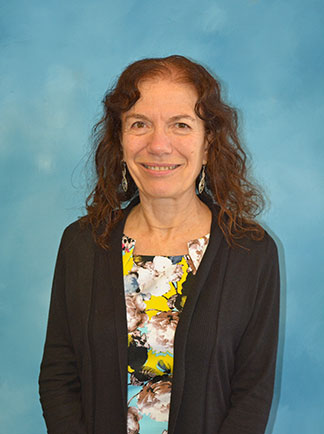 From the Editor: Carol Castellano is a past president of the National Organization of Parents of Blind Children (NOPBC) and the founder of New Jersey Parents of Blind Children (NJPBC). Her commitment to blind children has been unflagging for four decades. She is the author of four books, including Making It Work and Getting Ready for College Begins in Third Grade. This article is based on a workshop she led at the 2022 NOPBC Conference.
I find that parents of blind children have pretty much the same hopes and dreams as any other parents. They hope their children will have satisfying relationships, and that they will have meaningful work that they enjoy. They hope their kids will be happy, contributing members of society. But with blind kids there is a real difference. The difference is that our kids have a few barriers in front of them in order to have the future their parents hope for.
Barriers to Success
I'm not sure that our next-door neighbor or our mail carrier would think we're being realistic when we talk about our hopes for our blind children. Out in the world the expectations for blind kids are pretty low. When people see a blind person they automatically think, If I were blind it would be so scary! They don't understand that our kids practice being blind every day, and it isn't scary to them.
Years ago I visited a preschool to enroll my daughter, and they told me they couldn't meet her needs. The teacher said, "She needs to go . . . she needs to go . . . where the blind people go!" In the NFB and the NOPBC we're trying hard to make a world where blind people fit in, where they don't have to go to some special place. There's room for everybody. We still have a way to go.
When they were trying to decide which reading group my daughter would go into in first grade, the principal told me, "We'll put her in the lowest group." She was a good Braille reader at that point. I said, "Why would you put her in the lowest group?" He said, "Because in the middle group we expect the kids to understand what they read."
I once went to a doctor who knew that my daughter was looking for a job in social work. I commented that a lot of people have prejudice against hiring a blind person. The doctor said, "I don't understand why any employer would hire someone who has a disability, when they can hire someone who has all their parts working." After that he was no longer my doctor!
I think that sometimes we as parents, being part of society, have these ideas inside us, too. I've met a lot of parents who secretly, or maybe not so secretly, feel sorry for their blind children. Sometimes it comes out as, "It's so hard for him, I'm not going to make him do chores." We want an independent future for our kids, but we have to cope with our own prejudices and uncertainties.
Facing Uncertainties
Think about these questions. Do you or others make decisions about your child's activities based on their blindness? For example, do you factor in blindness when you think about the chores they might do or the courses they might take? Have you thought, She can't take geometry, that's so visual! Is your child as independent as sighted children their age?
Asking yourself these questions is a way we can test how we're doing in preparing our kids for the future. Maybe we talk the talk of independence, but are we walking the walk?
Sometimes we parents can be seriously off base about our kids' abilities. I knew a family that had triplets, and one of them was blind. One day the mom called and said her child was really frustrated about his blindness. The child was five at the time. I went over to find out what was going on. It turned out there was a set of steps in the house. The sighted kids were allowed to go up and down the steps, but the blind child was not. The mother had put up a gate to keep him away from the stairs. It wasn't blindness that was frustrating this child; it was the restrictions his family had placed on him. His mother didn't understand that limiting him in this way caused him to feel frustrated. She assumed he was frustrated about his blindness.
Three Stories
I'm going to share stories about three blind people. The first one is Dr. Abraham Nemeth.
Dr. Abraham Nemeth: Dr. Nemeth was the creator of the Braille code for mathematics. Blind from birth, he grew up in New York City, where he traveled on the buses and subways. He studied at Columbia University and earned two doctoral degrees, one in psychology and one in mathematics. During his thirty years as a professor, Dr. Nemeth taught a variety of undergraduate mathematics courses. He also taught graduate courses in computer science, such as programming, automotive theory, and artificial intelligence. Until his death in 2013 at age ninety-four, Dr. Nemeth remained involved in research in computer technology.
Dr. Nemeth was discouraged from making mathematics his undergraduate major by his vocational counsellors because of his blindness and the lack of Braille materials. He acquiesced and switched to psychology. But as electives he chose analytic geometry, differential and integral calculus, modern geometry, and statistics—just about any math course he could get his hands on! He said later that his counsellors were correct—there were no Braille materials for mathematics at that level. What did he do? He created them himself.
The code that Dr. Nemeth invented in order to complete his courses on time became the code in which most mathematics is written for blind people in the United States and other countries. Dr. Nemeth wrote, "I hope my experience demonstrates how important are the early acquisitions of Braille skills, mobility, a knowledge of print practice, and good attitudes. Equipped with these skills, a blind person can progress as far as his motivation, ingenuity, and talent will permit. Without them, a blind person is restricted to semi-literacy and lack of independence."
Dr. Geerat Vermeij: My next story is about Dr. Geerat Vermeij. Dr. Vermeij, blind from age three, developed a love of nature as a young child. He knew by the age of ten that he wanted to become a biologist. He, too, was discouraged from his desired path by vocational rehabilitation counsellors. They felt that a science that depended so much on observation couldn't possibly be a fitting occupation for a blind person. These counsellors were acting on the mistaken belief that observation is solely a visual skill.
In spite of these warnings, Dr. Vermeij went on to study biology at Princeton and Yale, and he became a preeminent scientist in his field. His teaching and research interests include the coevolutionary reactions between predators and prey and their effects upon morphology, ecology, and evolution; and the paleobiogeography of the Arctic and its influence on the Atlantic and Pacific Cenozoic fauna. It's even hard to read that, let alone understand it!
Dr. Vermeij's life and work have been featured in magazines and a PBS special. He says, "There is nothing about my job that makes it unsuitable for a blind person. Of course there are inherent risks in the fieldwork. I have been stung by rays, bitten by crabs, and detained by police who mistook my partner and me for operatives trying to overthrow the government of their African country. I have slipped on rocks, scraped my hand on sharp oysters and pinnacles of coral, and suffered stomach cramps. There isn't a field scientist alive or dead who hasn't had similar experiences. Life without risk is life without challenge. One cannot hope to understand nature without experiencing it firsthand."
Erik Weihenmayer: Finally I'm going to tell you about Erik Weihenmayer. When Erik was an infant his parents took him to nearly a dozen eye doctors, trying to find the cause of his jittery eye movements. When they finally received the diagnosis, they were told that their son would be blind by the age of thirteen.
As his vision decreased, Erik went deeper and deeper into denial. He behaved terribly with his Braille teacher because he thought learning Braille would mean that he was blind. He even tossed his white cane off a bridge so it would get run over by oncoming traffic.
It took a while for Erik to adjust and realize that he could do things in alternative ways. When he did, he went big time! He became a world-class mountaineer and all-around athlete who climbed to the top of the world's tallest peaks, including Mount Everest. He kayaked solo down the Colorado River the whole length of the Grand Canyon, 277 miles. He went through fifteen-foot waves, twenty-six-foot waterfalls, giant whirlpools, and rapids with names like Upset and Specter and hundreds of others. One magazine said they could merit names such as Satan's Maw and Dead Man's Neck.
Before Erik became blind he had seen a photo of a person climbing a frozen waterfall. When he became blind he decided a blind person could learn to do that kind of climbing. An expert told him, "You can't just swing the tools that attach to the ice indiscriminately, because large chunks of ice could be knocked off and hit you." Erik found through trial and error that he could tap his tools very lightly against the ice face and listen for a certain sound to know whether it was safe to hit or whether hitting would shatter the ice.
Though most people thought you have to be able to see to climb, Erik showed that there are other ways to do it. Erik says, "A summit isn't just a place on a mountain. A summit exists in our hearts and minds. It is a symbol that, with the force of our will and the power of our legs or backs and two hands, we can transform our lives into whatever we choose them to be, whatever our hands are strong enough to create."
Talking about a climb up a thousand-meter wall of ice in the Canadian Rockies, Erik says that halfway through the climb he took off his glove and ran his hands across the surface of the ice. "It was cold and smooth as a window on a winter's day. I had to take a deep breath because of the beauty I was feeling with my fingertips. Many sighted people believe that the eye is the only pathway to beauty, but we know that's just not true."
I love these stories! They make me feel good about people, about blind people, and about all our hopes. These people pushed the boundaries. They ignored the experts and found ways around obstacles. They persevered, and they followed their passions.
I have a kid who's never going to climb Mount Everest. Most of our kids are ordinary humans who aren't going to do fabulous things. But we can grab onto the ways Dr. Nemeth, Dr. Vermeij, and Erik Weihenmayer made their achievements. That's what we can teach our kids. We can encourage them to be determined, to persevere. We can make sure they've got the skills they need, and we can encourage them to be problem solvers.
Raising Problem Solvers
Certainly our blind kids are going to face challenges in their lives. We all do! For our kids it might be anything from putting the sheets on a bed to navigating a college campus. We want our kids to feel that they can meet the challenges that come up. When they come upon a challenge, we want them to think, "Hmmm, what are some possible solutions to this problem." Give your child practice in brainstorming ideas. We parents get really good at teaching our kids, and it can be hard to step back and enable them to teach themselves. That's a big piece of becoming an adult, becoming an independent person. It's also critical for us to make sure that our kids are aware of the tools and techniques that are out there for accomplishing tasks. We have to make sure that our kids know how to get information when they need it. And we have to bring them up to use their network. Do they know they have a network? It consists of other blind people—peers and adults, almost always happy to share information—teachers and rehab professionals, perhaps OTs and PTs, and, of course, the internet and YouTube!
Skills and Accommodations
I want to talk a bit about what I call the skills vs accommodations approach to life. You probably hear a lot about accommodations at your IEP meetings. An accommodation is when someone thinks something is too hard and finds an easier way to do it. Lightening the student's workload is frequently offered as an accommodation. I think it should be erased from the books! How are you going to feel as confident as everybody else when you only do half the work? Looking at it another way, if half the work is good enough for you, why does everybody else have to do double?
I got a call one day from a mom who lived in a beach community. The family had a boat, and they belonged to a yacht club. This mom was irate because the yacht club refused to build a little fence along the dock. She felt that her daughter was in danger, and she believed she needed that accommodation under the ADA. I thought, okay, if they build that fence and your daughter safely gets onto your boat, what happens when you cross to the other side of the bay? They don't have a fence on the dock over there. There aren't going to be fences on all those docks!
Using a cane would be a good solution to walking along a dock. The lesson for that child to learn is how to keep herself safe on a dock or a subway platform, wherever there might be an edge. It would be very limiting always to depend on having a fence or having a sighted person along to help!
If you think that maybe your child needs an accommodation, usually there's a skill your child can learn so the accommodation won't be needed. For instance, the school might say, "The halls get very crowded. We'll let your child leave class five minutes early to avoid the congestion." That's a very common accommodation. But maybe someday your child will work in a big office building with crowded halls. Will they know how to navigate a crowded hallway? They won't know, because they've been accommodated.
Instead of letting the child leave class early, the school could let them out into the hall with everybody else so they learn to get where they need to go. Maybe the child needs some travel instruction. Give them instruction and practice time. Let them become competent and confident. Confidence brings respect. One thing builds upon another. And your child won't lose the last five minutes of every class!
When my daughter was in college, there was a fire at a college down the road. Suddenly at her school there was a big emphasis on fire safety. Serena called me one day and said, "If there's a fire they want me to wait in my room till Security comes to help me."
We chatted a bit about that. What does a person need to know about getting out of a building when there's a fire? You need to know the closest way out, and maybe a couple of alternative ways out, too. Did you ever notice that exit doors are different from interior doors? Exit doors have a bar across them.
We went through the hallways in Serena's dorm and made sure she knew where all the doors were. She could easily recognize an exit door because of the bar. That was a skill she learned. It wasn't an accommodation that would have left her in harm's way.
Sometimes accommodations can be critically important. I'm not against them in general. However, I suggest that you ask first, "Is there a skill my child can learn?" If learning a skill won't help, fine. Maybe an accommodation is necessary in that particular case. But you can bring up your kid with the sense, "I can do this!" Maybe they can even help think about the skills they might need.
Parents’ Fears
In New Jersey I teach a course for parents of blind high school kids. I've made a list of the concerns that come up most often in our discussions. Here are the ones I hear most often.
Creating Barriers: Am I, as a parent, going to create barriers for my child? Am I going to let my worries and fears limit my kid? Am I going to think it's too dangerous for a blind person to do this or that?
Think about things that sighted kids your child's age are doing. Do you let your blind child handle sharp knives in the kitchen? Have you let your child turn on the gas? Have they walked to the school bus on their own, if it's within walking distance? Have they crossed streets independently?
I find these to be filter questions. If you say no to any of them, take a look at your own fears. It's likely that your fears are holding your child back. Think about what your child can do to be able to cross that street or use that knife. Those are skills your child can acquire.
What can be the antidote for your fears as a parent? You can educate yourself. You can call upon your network. If you have no idea how a blind person safely holds a knife, call someone in this organization, and they'll tell you. Think about what will happen if you continue to hold your child back. Raise your expectations and empower your child with skills.
Facing the Real World: What will happen in the future, out in the real world? Who will assist my child when I'm not there? What if someone takes advantage of them?
What are some ways to get our children to the point where we don't have to have these fears? We can teach them to self-advocate. We can teach them to speak up. Think about how we educate our sighted children and prepare them for the future. We can do the same things for our blind kids. Sometimes we look at things differently for our blind kids. Maybe we get a little protective. If we put it all together— higher expectations, skills, techniques, awareness, problem solving, networking—we can make it all happen.
Independence in Daily Life: How will your child cook? How will they shop? How will they organize themselves? Can they ever spend a week alone?
There are summer programs where they teach our kids how to manage many basic tasks on their own. If you're considering a program, check it out carefully. Some programs have pretty low expectations, and some are very strong on teaching skills and self-advocacy.
Public Attitudes: Parents are concerned about a lack of understanding and lack of acceptance on the part of the public. These attitudes can make it hard for our kids to show their abilities and get a place at the table.
One answer is joining an advocacy organization like ours where we work to change public attitudes. Another is again for our children to learn skills and be able to self-advocate. When they know how to do things, they can show the public what they can do. If we get these basics in place, we can give a wonderful gift to our kids.
One blind friend told me she wanted to volunteer in a soup kitchen with her church group. When she got to the kitchen, everybody started fussing at her, "Here's a seat! Sit down, sit down!" She walked over to the counter and said, "Where are the vegetables? I'm here to cut vegetables." People started freaking out: "Aaaaa! A knife!" But she knew the jobs that would be required in that kitchen, and she knew she had the skills to do them. She was able to say, "I can do this," and show that it was true.
Going to College: What happens when our kids go off to college? We won't be there to help!
Actually, we don't want our kids to need much help from us when they get to college. Think about the things a blind college kid might need help with—getting accessible materials, navigating the campus. Let's problem solve. We're worried about getting access to materials. Encourage your child to be involved in getting their materials while they're still in high school. Suppose the student needs something for a course that simply isn't available in an accessible format. Suppose they got a PDF file that was supposed to be accessible, but JAWS simply won't read it. What's a possible work-around?
One solution isn't talked about much anymore, but it's very important. Our kids need to know how to use human readers! There will be any number of times when they need to direct a human being to read what they have to have read. A reader is the ultimate, bottom-line work-around! Make sure your kid gets experience in directing a human reader. If you need more information, see my article, "Using Readers—The Human Variety," https://nfb.org/sites/default/files/images/nfb/publications/fr/fr35/1/fr350105.htm. For help with things like avoiding alcohol and drugs, this is no different than for any kid. We pass along our values as best we can.
Lack of Confidence: What can we do if a kid lacks confidence? What can we do when kids limit themselves? We can bring them to a convention or put them in some other situation where blind kids are being active and involved. This exposure can help your child raise their own expectations. Then we can make sure they get the skills training they need to accomplish tasks. Once you're competent, it's much easier to feel confident.
High Expectations
Through all of these discussions, we keep circling back to the idea that we need to have high expectations, to make sure our kids know how to do things, and to bring them up to be problem-solvers.
The world is waiting for your child to go out and conquer it. Get them the skills and then step back with a big smile on your face. Thank you!