American Action Fund for Blind Children and Adults
Future Reflections Special Issue on Cooking GETTING STARTED
Cooking Madness
by Carol Castellano
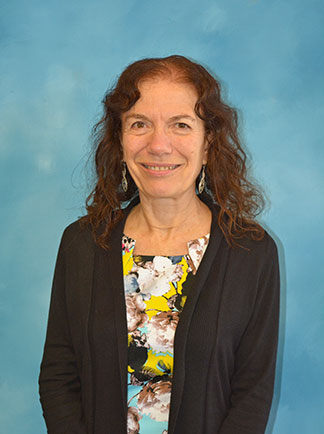 From the Editor: Carol Castellano is a longtime leader of the National Organization of Parents of Blind Children (NOPBC), and she is the founding president of New Jersey Parents of Blind Children (NJPBC). An earlier version of this article appeared in the Fall 1989 issue of Future Reflections. Carol is the author of four books, including Making It Work: Educating the Blind/Visually Impaired Student in the Regular School and Getting Ready for College Begins in Third Grade.
Why anyone would want to spend two or three afternoons a week cooking with a couple of little kids, I don't know! (Serena, my blind child, was four-and-a-half at the time, and John, my sighted one, was two.) But then again, if I didn’t cook with them, supper simply wouldn’t get on the table, because at four-thirty or five o’clock my two formerly pleasant, reasonable children turned into ClingOns. That is, they would wrap their now whining, tearful bodies around my legs. It is difficult to move briskly about the kitchen weighted down by sixty pounds of baby! Ordinarily I would give up and go play with them on the living room floor until my husband came home, whereupon he would either relieve me, go call for takeout, or, in desperation, cook supper himself.
Then I discovered cooking with my two little dumplings. They really loved it, and their dad was happier, too. SO ... everything took three times as long. SO ... we made quite a mess. We did eventually get a decent meal on the table, and my kids were gaining a good knowledge of cooking tools and terms.
First they'd drag chairs over to the sink for washing hands. I’d run the water so Serena could hear where to bring her chair. (The layout of our house was a bit confusing, and it took some time for her to learn her way around.) Then they would scurry about gathering ingredients and searching for pots in the cabinets. “I need the very large pot way in the back,” I’d tell them. “See if you can find its cover.”
At the refrigerator we practiced with terminology such as “bottom drawer on the right” and “the compartment on the door.” Together we’d scrub the vegetables at the sink. Then the kids climbed up on their “cooking chairs” at the table.
The children usually began with peeling the skin from onions or cloves of garlic. If necessary, I’d get them started by making a slit with a knife. Serena could easily tell by touch when the garlic was completely peeled.
Then we’d put all the vegetables on a large cutting board. I'd tell them to choose one vegetable and get ready for cutting. We talked a lot about the fact that the blade of a knife can be dangerous and that they were never to handle sharp knives without an adult supervising them. Then I'd pick up the knife and put one child's hand on it over mine.
When we cut large items such as carrots, I would let the children hold the knives themselves with my hand over theirs. Serena liked to feel the tips and stems we were going to cut off. So she could really understand what the knife was doing, we’d pause mid-cut so she could feel the slit it was making. After the cut, I often pushed the carrot or potato back together and let Serena slide it apart so she could relate the whole to the parts. When we sliced small items such as garlic, I explained that the garlic was too small and I didn't want the knife blade to get too close to their fingers.
Sweet potatoes lent themselves well to math lessons. “Choose a potato, Serena. Now, let’s cut this potato in half. Here, see what the halves look like. Are they big or small? Yes, they’re still too big to go in the pot. Let’s cut them in half again. Make the pieces stand up on their flat end.” Slice! “Now look. They’re much smaller, but we still need to cut them some more. Make all the pieces lie down.” All this handling of the pieces helped Serena build a concrete knowledge of many concepts.
If the vegetables had to go right into boiling soup or water, I usually inserted the extra step of having the children pick up the pieces and put them into a bowl first. Serena checked to see if any pieces were still too big and made sure the cutting board was empty. Sometimes they loaded the vegetables into the upper section of the food processor (nowhere near the blade, and again, with much discussion of safety). Then together they pressed the start button (it took two of them to do it!). After I removed the blade, we examined the results of the processing.
I did all the work at the stove or oven, explaining to the children why they couldn’t use the stove yet. Then we talked about the sounds and smells of cooking. We listened for the water to boil; we noted the sizzle of sauteing food. I explained the various plops, splashes, and bubblings in the hot pots as I poured and stirred.
Dry ingredients were a lot of fun. The children opened all the containers, learning about lids, spouts, corks, twist-offs, screw-ons, push-ins, pop-tops, and pull-tabs while they developed their dexterity and strength. I gave each of them a measuring cup and spoons and a stainless steel bowl (good for noise!). Then we scooped and poured many more times than we actually needed to, listening to the sounds, digging in to feel the textures, and, yes, tasting, too. John preferred raw macaroni; Serena favored flavored breadcrumbs. There's no accountin’ for taste!
When the children opened oil and spice containers, we sniffed and enjoyed their pungency. Then we poured and sprinkled, letting the oil drizzle and the flakes filter over Serena’s fingers so she could learn what they felt like and how they came out. Of course, this appealed an awful lot to John, too. They took turns sprinkling the spices on. Serena’s turn. John’s turn. Serena’s turn. John's turn. They never forgot whose turn it was, and our food got awfully spicy!
We opened cans at our house with a primitive tool, the manual can opener. We worked hand over hand, and I explained as best I could how the wheel cuts into the can; it’s hard to feel. But the click as the cover detaches is very noticeable, and Serena certainly knew when it occurred. Again we discussed safety, and they learned how to handle the sharp edge of the top with care. Then little fingers dipped into the liquid within for licking.
Among the foods my children liked to cook the most were eggs and fish. Eggs make the supreme mess—I'm sure that was why. We cracked them hand over hand and then, I have to admit, I let them stick their hands into the slime below. They loved it! We washed our hands again.
Fish was fun to cook because the children got to slap it into the pan. The children really liked doing that. They even enjoyed having smelly hands. I made them wash up again.
For some unknown reason, both of my children believed that they should make the messes and Mom should clean them up. They were unanimous and unwavering in their opinions on this point. I never did conceive of an effective means of combatting their united stance. I did a lot of sweeping up of raw rice and elbow macaroni and couscous.
But then came the end result. When Dad came home, the sweet smell of supper was wafting through the air. The kids were hungry for food that they cooked. Our family would eat that night.
Epilogue: Well, the years went by, and the kids are now all grown up. John grew into a person who likes to cook. I have to admit to feeling a bit of pride when we arrive at his house and he is competently serving up a family favorite. On the other hand, cooking is not Serena’s favorite activity, but she does enjoy eating; so, alas, the task gets done.