American Action Fund for Blind Children and Adults
Future Reflections Summer 2024 NEWS
Introducing a STEM Learning Toolkit for Parents of Blind Children
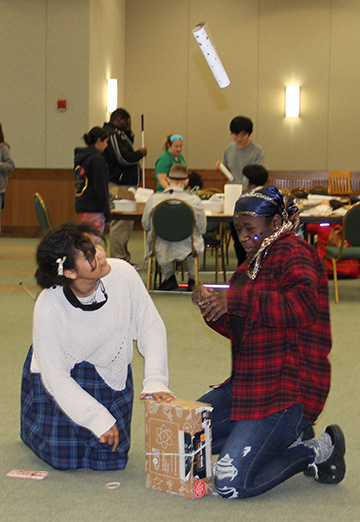 It is often assumed that it is extremely difficult or even impossible for blind people to enter the fields of science, technology, engineering, and math (STEM). However, the National Federation of the Blind understands that, with the proper tools, environment, and encouragement, blind people can participate equally in almost any career field they choose.
This is where you come in! As a parent, you want to support your child's active participation in every area of their education, including science and math. The NFB has developed toolkits to support you in guiding your child's successes in STEM and much more.
In our toolkit, you will find:
- A variety of suggested activities to get you started in helping your child build key skills for success in STEM
- Links to the free NFB EQ Curriculum, full of helpful information on supporting your child and exciting lesson plans to get them engaged
- Information and links to other helpful resources, including the National Center for Blind Youth in Science (NCBYS) and the National Organization of Parents of Blind Children (NOPBC), a network of parents just like you.
Why Is It Important for My Blind Child to Participate in STEM?
You may be thinking to yourself, "My child has no interest in science," or "My child wants to be a musician, so STEM isn't important."
There is a common misconception that science and math are primarily visual studies, and that they are of little interest or use for blind children. If that is the case, why have we put together an entire toolkit to help you encourage your child's STEM learning?
Let's take a step back. Why is it important for children in general to participate in STEM? Blind or sighted, not every child wants to become a scientist someday, but science is part of every school curriculum.
Researchers have demonstrated the benefits of STEM education for all students. The benefits of science education include the development of problem-solving and decision-making skills. Learning opportunities in STEM have been shown to benefit children in all areas of academics, including literacy and language. When children learn through STEM activities, they build skills and knowledge that will help them prepare for careers in a variety of fields.
Your blind child should be able to participate equally and effectively in the same STEM learning opportunities that are available to their sighted peers. With accessible technology, practice, and alternative techniques, your child can have fun and enjoy successful learning experiences. We hope that the information provided in our STEM toolkits will help you set high expectations for your child's ability to be an active learner in their classrooms and at home.
Skill-Building Activities
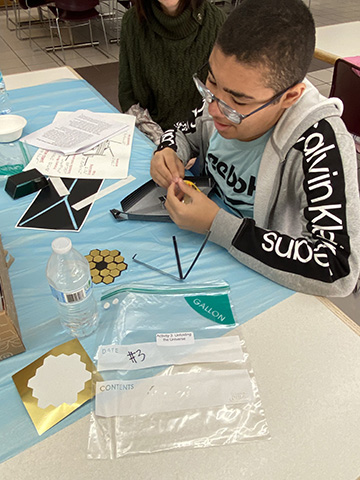 Here are some great activities to help you and your child build key skills to support their STEM education. The grades given here are only suggestions. Please feel free to explore the activities in all the grade levels and do whatever activities are appropriate for your child's skill level and interest. These activities are meant to be a springboard. We encourage you to explore and expand on the main ideas presented here.
Kickstarting Their STEM Journey: Activities for Blind Students in Preschool and Elementary School
Learn about shapes and tactile drawing, tools and technology, DIY (do-it-yourself) accessibility tricks, and building nonvisual skills in our preschool and elementary activities section.
Preschool and Elementary Activities [https://nfb.org/node/15497]
Nurturing Independence: Activities for Blind Students in Junior High and High School
Learn more about drawing, adapting tools and technology, and building nonvisual skills in our junior high and high school activities section.
Junior High and High School Activities [https://nfb.org/node/15498]
Getting Creative: Affordable and Simple DIY Adaptations
Learn about the many simple and low-cost strategies that can make everyday items more accessible in our section on additional details for DIY adaptations.
Additional Details on DIY Adaptations [https://nfb.org/node/15499]
You can find the NFB EQ for Parents: A STEM Learning Toolkit for Parents of Blind Children online at https://nfb.org/programs-services/education/national-center-blind-youth-science/nfb-eq/nfb-eq-parents.