American Action Fund for Blind Children and Adults
Future Reflections Winter 2025 DARE TO BE REMARKABLE
Innovate to Elevate: Fostering Excellence in Rehabilitation Services for Blind Youth
by Carlos R. Serván
Reprinted from Braille Monitor, Volume 68, Number 2, February 2025
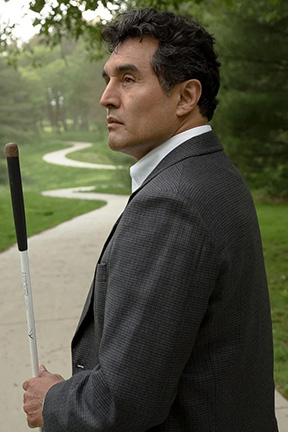 From the Editor: Carlos Serván has worked at the Nebraska Commission for the Blind and Visually Impaired since 1998, and he has served as its executive director since 2017. Before he took a position in Nebraska, he coordinated transition from school to work programs in New Mexico. He holds a law degree and a master’s degree in public administration. On the final day of the Dare to Be Remarkable Conference, he gave the keynote address.
As I prepared for this presentation, I reflected on the name and meaning of our conference, “Dare to Be Remarkable.” It is more than a title; it is more than a buzzword. It is about striving for greatness, aiming to be extraordinary, and challenging ourselves to excel. It means embracing our uniqueness and going beyond the ordinary. It’s about having the courage to stand out and pursue excellence.
Each of us has the potential to be remarkable. It begins with a mindset—a belief that we are capable of more than we think. It requires us to step out of our comfort zones, take risks, and push our boundaries. It’s about setting high standards for ourselves and not being afraid to fail, because every failure is a steppingstone to success.
Remarkable people are not afraid to dream big and work hard to turn their dreams into reality. Being remarkable is not always easy, but it is always worthwhile.
Why do I start with these words? The Workforce Innovation and Opportunity Act (WIOA) mandates that at least 15 percent of basic support funds be expended on Pre-Employment Transition Services (Pre-ETS). Yet many state rehabilitation agencies are returning funds to the federal government because they don’t know how to utilize all of that 15 percent. They get stuck in red tape and fiscal obligations, and they become gatekeepers. While fulfilling these responsibilities is necessary, we must not allow them to paralyze us. Furthermore, some states are allocating funds in areas that do not yield meaningful outcomes. We need to focus on having high expectations, challenging ourselves, and being innovative.
For decades we have worked on transition services, investing time and resources into what we know is achievable. We uphold high expectations and determination, ensuring that our students master nonvisual skills and know how to deal with public misconceptions about the capability of blind people. It took several decades for the federal government to recognize that investing in youth is essential for successful rehabilitation. I recall being monitored in the early 2000s when the Rehabilitation Services Administration (RSA) suggested we focus only on adults rather than providing services to those under eighteen. Today, the law requires us to allocate 15 percent of our budget to youth services.
While the law can influence behavior, it does not necessarily foster understanding. Many agencies allocate funds to unproductive areas. To shift attitudes and raise expectations, we must first recognize that blind individuals can live full, productive lives when given proper training and opportunities.
It is highly fitting to mention Dr. Kenneth Jernigan during a Structured Discovery conference, at the institute bearing his name, and especially on November 13, his birthday. Dr. Jernigan revolutionized the Iowa Department for the Blind, establishing the best services for blind people ever known in the nation. At a time when the rehabilitation system did not believe in the capabilities of blind individuals and most states considered them too severely handicapped to benefit from rehabilitation, Dr. Jernigan dared to challenge the system. He dared to raise expectations, dared to invest in quality services, and dared to confront federal officials who prioritized fiscal responsibility over innovation.
In February 2024, RSA Commissioner Danté Allen wrote a letter of introduction to the rehabilitation community. Some highlights from his letter and his remarks from yesterday include:
“Individuals with disabilities must experience equity in the workforce and every aspect of our society to take their rightful place as first-class citizens who lead purposeful lives. ‘Just enough is not enough.’ If RSA programs do not add value to the lives of those we serve, we are wasting our time and resources. We must raise our expectations, leave behind the status quo, and deliver on our nation’s promise of economic security, equal opportunity, and independence for Americans with disabilities... If you have not done so already, I encourage you to take steps within your programs to revisit longstanding practices and implement strategies to maximize VR services, fully engage with individuals with disabilities, and advance high-quality competitive integrated employment.”
In other words, Commissioner Allen urges us to rethink our methods and discover innovative ways to provide high-quality services for individuals who are blind. This includes helping them secure jobs on par with their sighted peers. He emphasizes the importance of engaging consumers—partnering with organizations of blind individuals—to foster new and creative ideas.
As society advances rapidly, we must prepare our students to succeed in various fields. Pre-ETS services are designed to equip blind students with the skills, knowledge, and confidence necessary for a smooth transition from school to the workforce. These services include a range of learning opportunities, including five required activities, four coordination activities, and nine authorized activities.
The five required activities are job exploration counseling, work-based learning experiences, counseling on postsecondary education opportunities, workplace readiness training, and instruction in self-advocacy. Instruction in self-advocacy includes peer mentoring. These categories offer a framework for innovation and diversity in service delivery. Examples include job fairs, university tours, college workshops, résumé writing, drafting cover letters, going on mock job interviews, meeting blind role models, finding mentors, attending placement conferences, gaining on-the-job experience and on-the-job training, participation in integrated summer work experiences, mobility training, social skills development, advocacy and self-esteem activities, networking with employers, training at orientation centers, technology training, and opportunities for integrated school or after-school activities.
The NFB’s National Student Seminar and Washington Seminar are well suited for many of these activities. Students have the chance to engage with blind mentors, learn about colleges and universities, practice social and mobility skills, network with peers from across the country, develop advocacy skills, and advocate for initiatives with US Congress members.
When contracting for these programs, it is crucial to collaborate with entities that believe in the capabilities of blind individuals—those who have high expectations and challenge us and our students. In Nebraska we have partnered with organizations such as the Jernigan Institute for our mentoring program for Pre-ETS consumers and job-hunting skills for center students; services for summer work experience, including attendance at national convention; retreats for independent living and advocacy skills; and national college workshops including the Washington Seminar; Independence Science for STEM activities such as organ dissection, chemical experiments, and forensics; and Blind Savvy and Sky’s the Limit for networking skills development; employment conferences, college workshops, financial literacy, and events for blind seniors. These organizations and events, led by successful blind individuals, share a core belief that blind people can live full, productive lives and perform on par with their sighted peers when given proper training, encouragement, and opportunity.
Now let’s discuss the importance of sending consumers and staff to state and national workshops and conventions organized by organizations of the blind. As directors or counselors, we often find ourselves buried under red tape, reports, and administrative tasks, leaving us little time or energy for innovation. However, these opportunities are knocking on our doors, reaching out via email, or presenting themselves during conferences and networking events such as this one. If we focus solely on what feels safe, we may inadvertently filter out valuable possibilities.
Some states hesitate to send staff and clients to national conventions of the blind, fearing RSA disapproval. However, in Nebraska, we have consistently sent staff and consumers to national conventions for over twenty-five years. Throughout this time, RSA has never questioned our decision, as long as we document how these experiences benefit our clients’ vocational goals. Like any other services, we simply need to document the benefits, emphasizing exposure to mentors, advocacy events, social skills training, mobility skills, job counseling, networking with professionals, and learning about new technology. Attending national conventions aligns perfectly with Informed Choice and the required Pre-ETS activities.
Initiatives by the National Federation of the Blind, such as science camps and leadership programs, provide substantial benefits that RSA and state auditors also recognize as valuable. They evaluate these experiences just as they would any other program and acknowledge the significant advantages they offer.
In addition to the five required activities, four Pre-ETS Coordination Activities help foster relationships between schools and businesses to support students. Collaborating with local educational agencies and American Job Centers is vital for creating work opportunities for students with disabilities. Furthermore, once a VR agency reserves sufficient funds for direct services to students, it may allocate any remaining funds for the nine authorized activities. However, the agency is not required to wait until all students have received direct services before spending on these activities.
The nine authorized areas broadly address activities that enhance support for Pre-ETS students in obtaining services. These activities can include financing agency staff and teachers of blind students to attend the same conferences to which we send our consumers.
When we examine WIOA, the letter “I” stands for innovation, and the letter “O” stands for opportunity. Innovation is the driving force behind advancements that shape our world. It ignites new ideas, powers growth, and transforms challenges into opportunities. In every aspect of our lives—technology, health, employment, and rehabilitation—innovation plays a crucial role in creating a promising future.
The enemy of innovation is complacency. We risk becoming outdated and disconnected from the realities of those we serve. It is about improving what exists and finding better ways to meet their needs. Collaboration with consumer organizations enhances our ability to innovate. As Commissioner Allen reminded us yesterday, innovation is in the DNA of the National Federation of the Blind.
Opportunity represents the potential for growth, change, and success. It allows us to step out of our comfort zones and embrace the unknown. In the context of rehabilitation, this is our greatest opportunity to be innovative.
Opportunities often appear as challenges. As Thomas Edison said, “Opportunity is missed by most people because it is dressed in overalls and looks like work.” Our ability to see potential where others see problems sets us apart.
Three weeks ago, during a national conference, Commissioner Allen reminded VR state administrators to be bold and invest in clients. Yesterday, he quoted Mary Switzer, “We cannot accomplish our mission for individuals with disabilities simply by doing more of the same in the same way. It calls for the minds, experience, and courageous determination of many people in many places to produce and utilize the improvements we will need.”
Several organizations that have high expectations are already focused on developing innovative ideas and programs for the blind. We don’t need to “reinvent the wheel.” By collaborating, we can challenge and support one another, exposing our consumers to successful partnerships. In Nebraska, we actively seek diverse opportunities. If the NFB offers science training for youth, we send our students. The same applies to mentoring, advocacy, and employment programs.
Pre-employment services for blind students are not just about preparing them for employment, but for high-quality employment; they empower them to live fulfilling, independent lives. We need to reflect this belief through our policies, our training, our programs, and the risks we take. It is our collective responsibility to expose our students to high expectations—expectations drawn from the collective experience and wisdom of blind people. We need to be innovative, ensuring these services are accessible, timely, effective, and tailored to each student’s unique needs. We need a rehabilitation system that does not primarily see itself as a gatekeeper. While we must fulfill certain fiscal responsibilities, approaching rehabilitation solely from that perspective risks hindering our ability to be remarkable and help individuals reach their full potential. Such gatekeeping can lead to dysfunction. There are countless examples: if you’ve ever sought authorization from RSA or your state to implement a new idea, by the time you receive a decision, it may be too late. The funds could be returned to the federal government after navigating unnecessary red tape.
In conclusion, good rehabilitation means that consumers leave the system knowing they have received timely and valuable services that elevated their expectations. We need to provide innovative, high-quality services so blind youth will not just survive but thrive, not just get by but get ahead, and not just move forward but charge forward. As we look to the future, let us dare to be remarkable; let us embrace the spirit of innovation, nurture our curiosity, and work together in partnership with consumers to create new ideas and opportunities.